If you’ve been wanting to start a podcast, there’s never been a better time!
Creating a new podcast is easy – you can set up an account and upload your first episode in just minutes.
Here are the four steps to launch your podcast today:
1. Sign up for a free account
2. Add your podcast’s details
3. Record and upload an episode
4. Hit publish and promote
Easy right? Let’s go!
1. Sign up for a free podcast hosting account
Create your free RSS.com account with your email address and a password.

Next, verify your email with a special code sent immediately to the email address you used to sign up.

2. Create your podcast
Click the “New podcast” Button, and begin adding your podcast’s details.

Add the title of your podcast, a brief description, a category, and the language of your show. Then click “Next.”

Now it’s time to record your first episode.
If you don’t have a mic, no worries – you can record an episode on your phone!
Need help? Check out this guide on how to record and edit a podcast episode.
3. Record and upload an episode
Once you’ve recorded your first episode, select “New episode” in your podcast dashboard.
Upload your audio file, then add your episode title, description, and season and episode numbers, if applicable. RSS.com supports MP3, M4A, WAV, AAC, AIFF, FLAC, OGG, MP4, and MKV files.
Recording a video podcast? Our Max Plan includes video podcast hosting and YouTube publishing, plus video distribution to Apple Podcasts. For video file uploads, RSS.com also makes the audio available to fans using audio-only podcast apps.

4. Publish and share
The only thing left to decide is whether to publish your episode now or schedule it for a later date.
Either way, you’ve just set up your podcast – congratulations, you’re now a podcaster!
Now that you have a podcast, it’s time to let the world know about it!
The easiest way to get your show in front of millions of potential followers is to submit your podcast RSS feed to the top podcast listening apps and directories. The good news is RSS.com takes care of this for you with automatic distribution to Apple Podcasts, Spotify, Amazon Music and more.
Ready for more?
The four steps above will get your podcast live, but if you want to make a podcast that actually grows an audience, sounds professional, and makes money, the rest of this guide is for you.
The Beginner’s Guide to Starting and Growing a Podcast
This guide walks you through every step of launching your new podcast.
It’s written for someone who has never recorded anything before. If you follow it end to end, you’ll have a real podcast published and distributed, and you can do the whole thing without spending a dollar.
Here’s what you’ll learn:
- How to pick a topic and format that will actually hold your attention past episode three
- What equipment you really need (and what you can skip)
- How to plan and record your first episode without overthinking it
- Basic editing that makes you sound more polished than you are
- Where to host your show for free, and how distribution actually works
- How to get listed on Apple, Spotify, and every other major directory
- What to do in your first month to actually grow an audience
Step 1: Nail Down Your Topic, Audience, and Format
Most podcasts die around episode seven. The reason is almost always the same: the host picked a topic they thought would do well, not one they could talk about for hundreds of hours. Before you buy a single piece of gear, get this part right.
Pick a topic you can sustain
Ask yourself three questions:
- What do I already talk about with friends for hours without getting bored?
- What do I know more about than most people I meet?
- What am I curious enough about to keep learning, even after the novelty wears off?
The intersection of those three is your zone. Pop culture deep dives, faith-based conversations, industry interviews, small business stories, true crime, history, hobby communities, local news, niche sports, you can build an audience around almost any topic if you genuinely care about it.
Learn more about picking the perfect topic for your podcast here.

Related: What to Do If You Want to Change Your Podcast Topic
Get specific about who you’re talking to
A podcast for “people who like business” is going to lose to a podcast for “first-time founders under 30 building bootstrapped SaaS companies.” The narrower your listener, the easier every decision becomes: what to talk about, who to interview, what tone to use, how to promote it.
Write down one sentence that describes your listener: who they are, what they do, and what they’re trying to figure out. Tape it somewhere you can see it.
Choose a format that matches your strengths
The five common formats:
- Solo monologue. You in front of a mic, talking through a topic. Easiest to produce, hardest to keep energetic.
- Interview. You plus one guest per episode. Great if you like talking to people, but booking guests takes real work.
- Co-hosted. You and one or two regulars. Feels like a conversation among friends, which listeners love.
- Narrative or documentary. Scripted, edited, layered with music and sound. Highest quality bar and the most time per episode.
- Hybrid. Most successful shows mix formats. Solo episodes between interviews, or a co-hosted Q&A once a month.
If this is your first show, start with either solo or co-hosted. You can add interviews in season two.

Decide on length and cadence
How often should you release a podcast episode? Don’t commit to a weekly hour-long show right out of the gate. The best cadence is the one you can maintain for a year. Twenty to thirty minutes every other week is a better start than sixty minutes a week that you burn out on by month three.
How to Start a Podcast with Friends
Many podcasters develop co-hosted shows with friends or colleagues. Not only does going this route give you something fun to do with like-minded people, but it allows you to split things like the costs and workload.
Items to discuss with your potential co-hosts include:
- Who’s in charge of each task?
- Who will be responsible for the equipment?
- Will you each buy your own microphone and headphones or will one person own it all?
- Where will the recording setup be located?
- Will you record online via a platform like Zoom, Squadcast or Riverside.fm? Or does everyone need to come to one person’s house/office to record?
- Is everyone going to be listed as a host of the show? Or will there be one host with rotating guest hosts?
- What’s the plan for the costs associated with the show? (Equipment, web hosting, advertising, etc.)
- If the show starts making money – who gets paid? What’s the split?
- What happens if one of you moves or loses interest in the show?
Be as clear as you can about things like costs and division of labor right from the start to avoid disagreements in the future.
If your show becomes a huge success, you don’t want it to end abruptly, jeopardizing both your show and friendship. The more you can plan ahead, the better.
Step 2: Name Your Show and Design Cover Art
Choosing a podcast name
A good podcast name does three things: it hints at the topic, it’s easy to say out loud, and it’s easy to search. Before you commit, check two things:
- Is the name already taken? Search Apple Podcasts and Spotify to make sure no active show is using it.
- Is a reasonable web and social handle available? Check the .com and your preferred social platforms.
Clever names are fine, but clarity beats cleverness when you’re starting from zero. A listener scrolling past your cover art should have a rough idea of what the show is about within a second.
We’ve written an entire blog post on how to choose the right name for your podcast here.

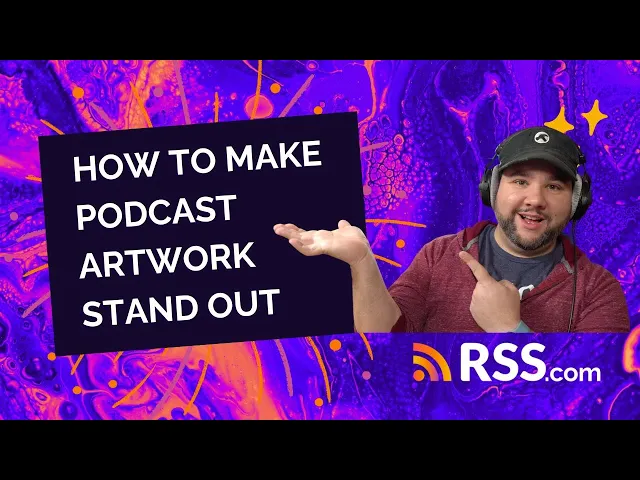
Cover art requirements
Podcast cover art has specific technical requirements because it shows up at tiny sizes in phone apps. Apple and Spotify both require:
- Square format, 3000 x 3000 pixels at minimum
- JPG or PNG, RGB color
- Under 500 KB for some directories
- Text large enough to read at thumbnail size (test it at 150 x 150 pixels)
Free tools like Canva have podcast cover templates that hit these specs automatically. If design isn’t your thing, hire someone on Fiverr for $30 to $100.
Don’t overthink this, but don’t ship something ugly either, the cover is the first thing anyone sees.
Need more info? Check out our full guide on how to make podcast cover art here.
Step 3: Get the Right Equipment (Without Overspending)
You can start a podcast with the microphone built into your phone. You’ll sound bad, but you’ll ship. If you want to sound decent, the budget tiers look like this.
The $0 starter setup
Your phone, a quiet room, and free editing software (Audacity on desktop, or GarageBand if you’re on a Mac). Put a soft cloth or blanket near your recording spot to absorb echo. This is real, working podcasters have launched shows this way.
The $100 to $200 budget setup
This is where most new podcasters should start.
- Microphone: A USB dynamic mic like the Samson Q2U ($70) or Audio-Technica ATR2100x ($100). Both plug directly into your computer, no extra gear needed.
- Headphones: Any closed-back wired pair will do. The Sony MDR7506 ($100) is the podcaster standard.
- Pop filter: A $10 foam or mesh shield in front of the mic. Stops the puffs of air on words starting with P and B.
- Software: Audacity (free, Windows and Mac), GarageBand (free, Mac only), or Reaper (60-day free trial, $60 personal license).
Check out our full guide on choosing the best headphones for podcasting here.
The $500+ upgrade
Once you have 20 episodes and you’re sure you’ll keep going, you might consider an XLR dynamic mic (Shure SM7B or SM7dB), an audio interface (Focusrite Scarlett Solo), and acoustic treatment for the room. Don’t buy this on day one. Spend the money on consistency first.
Check out our full guide on the best podcasting mics here.

Recording software and remote guests
If you’re doing remote interviews, don’t record through Zoom or Google Meet directly, the audio quality is inconsistent and if one person’s internet drops, you lose the take. Tools like Riverside, SquadCast, or Zencastr record each person’s audio locally, then upload the clean files. Most have free tiers for short episodes.
Check out our full guide on the best podcast editing software here.

Step 4: Plan and Record Your First Episode
How to Create a Podcast Editorial Calendar
Before you start recording episodes, it’s a good idea to have several weeks or even months of content planned.
Creating a podcasting editorial calendar ensures you’ll have things to talk about each week, or multiple times a week depending on how frequently you’ll be releasing new episodes.
A podcasting editorial calendar is similar to one for blogging, where you’ll keep your titles, topics, notes and release dates.
When creating your calendar, you’ll need to know ahead of time what your publishing schedule will look like. Audiences like consistency, so if you promise new episodes every Tuesday and Thursday, you’ll want to have a calendar with new episodes planned and in production ready to release Tuesday and Thursday for 3-6 months in advance.
How to choose your episode topics
To start filling out your editorial calendar, you’ll want to begin with a brainstorming session. Start thinking about all of the subtopics related to your niche. If you will be doing an interview series, write down a full list of everyone you’d like to interview.
You’ll want to start scheduling interviews and adding those dates into your calendar so you’ll have plenty of time to record and edit your shows before they go live.
There are plenty of options for creating your own editorial calendar on sites like Airtable, Stackby, and Asana.
You can use a paper calendar that you physically write information into, an Excel spreadsheet, even a simple Word or Google Doc will work great. The point is you want to have an overview of 3-6 months ahead of time so you can stay organized and on-track.
💡 Pro Tip: Check out these posts on the RSS.com blog to learn more about episode batching and scheduling, and managing your podcast workflow for maximizing efficiency.
How to Create a Podcast Editorial Calendar
Before you start recording episodes, it’s a good idea to have several weeks or even months of content planned.
Creating a podcasting editorial calendar ensures you’ll have things to talk about each week, or multiple times a week depending on how frequently you’ll be releasing new episodes.
A podcasting editorial calendar is similar to one for blogging, where you’ll keep your titles, topics, notes and release dates.
When creating your calendar, you’ll need to know ahead of time what your publishing schedule will look like. Audiences like consistency, so if you promise new episodes every Tuesday and Thursday, you’ll want to have a calendar with new episodes planned and in production ready to release Tuesday and Thursday for 3-6 months in advance.
Outline before you record
Scripting every word makes most people sound stiff. Winging it makes most people sound rambling. A bullet-point outline is the sweet spot. For a 30-minute episode, aim for 8 to 12 bullets that cover:
- A hook in the first 30 seconds that tells the listener what they’ll get out of this episode
- Three to five main points or segments
- A closing recap and a call to action (subscribe, follow, review, whatever you want them to do)
Also see: How to Manage Your Podcast Workflow
Recording basics that make a huge difference
- Record somewhere soft. Closets full of clothes are genuinely great. Empty rooms and kitchens are terrible, they echo.
- Keep the mic 4 to 6 inches from your mouth. Too close and you get pops; too far and you sound distant.
- Do a test. Record 30 seconds, listen back with headphones, adjust. Don’t record your whole episode at levels that are too quiet to fix later.
- Leave 3 seconds of silence at the start of every recording. It gives you a clean sample of room noise your editor (or editing software) can use to remove background hum.
- If you flub a line, pause, clap once, and restart the sentence. The clap is an easy visual marker when you’re editing.
How long your first episode should be
Shorter than you think. Twenty to thirty minutes is plenty. The myth that podcasts need to be long is a holdover from commute-era listening habits. If your idea runs out at minute 22, end the episode. Don’t pad.

Step 5: Edit Your Episode
You don’t need to be a sound engineer. You need to do three things:
- Cut out the bad stuff. Long pauses, flubs, the UHHH at the start of a thought, anything that drags.
- Balance the volume. Your voice should be consistent throughout. Most editing software has a “normalize” or “loudness” function that does this in one click.
- Add a simple intro and outro. A few seconds of music, a one-sentence tagline, and your name. Templates and royalty-free music are available free on sites like Pixabay and the YouTube Audio Library.
Related: Best Places to Get Free Podcast Music
Export your final file as an MP3 at 128 kbps for talk-heavy shows, or 192 kbps if music matters. Most hosts accept MP3 and M4A.
AI-assisted editing tools like Descript and Alitu have changed the game for beginners. They let you edit audio by editing a transcript, deleting a word in the text deletes it from the audio. If traditional waveform editing feels intimidating, start there.

Step 6: Set Up Podcast Hosting
Here’s the part most beginners misunderstand: your podcast doesn’t actually live on Apple Podcasts or Spotify. It lives on a podcast host. Those directories just pull from your host’s RSS feed and display your episodes to their listeners.
A podcast host does four things for you:
- Stores your audio files
- Generates the RSS feed that every podcast app uses to find your episodes
- Provides analytics so you can see how many people listened, where, and for how long
- Submits your show to the major directories (or gives you the RSS feed link to submit yourself)
Learn more about podcast hosting: what it is, and why you need it.

What to look for in a host
- Unlimited upload storage, so you’re not rationing episodes
- Automatic distribution to Apple, Spotify, and other major directories
- A podcast website included, so listeners who don’t use an app can still find you
- Reliable analytics
- A free plan or low-cost starter tier, so you can launch without a credit card
Popular hosts include RSS.com, Buzzsprout, Podbean, Transistor, and Libsyn. Any of them will get your show live. RSS.com has a free plan that includes unlimited episode storage and distribution to every major directory, which is a reasonable place to start if you want to launch without paying anything upfront.
Check out our full guide on how to choose the best podcast hosting here.

Launching your show (four clicks)
Whichever host you pick, the steps are nearly identical:
- Create an account. Enter your email and set a password.
- Add your podcast details. Title, description, cover art, category, and language.
- Upload your first episode. Most hosts accept MP3 and M4A files. Add a title, description, and any keywords that describe the episode.
- Publish, or schedule it for later. Your RSS feed goes live the moment you publish.

Step 7: Submit Your Podcast to Spotify & Apple Podcasts
Publishing on your host doesn’t automatically put you on every app. Most directories want you to submit your RSS feed once, and after that they pull new episodes automatically.
Podcast hosts like RSS.com, handle this submission for you across the most popular listening apps and directories including:
Check out The Complete Podcast Directory List.

Step 8: Launch With Three Episodes, Not One
This is the most commonly skipped step, and it’s the one that most affects whether your show grows. Don’t launch with a single episode. Launch with three.
Here’s why:
- A brand-new listener who likes your first episode will immediately check for more. If there’s only one, they leave.
- Apple’s new-show section gives more visibility to shows with multiple episodes available.
- Three episodes lets you establish your format and voice before you have an audience watching closely.
Record three episodes. Publish them the same day. Set your cadence to weekly or every other week, and stay ahead of your schedule by at least one episode.
Record a podcast trailer before you launch
Before your three episodes go live, record a trailer. It’s a 60 to 90 second preview of your show, and it does a job nothing else can: you can publish it weeks before launch, submit your feed to Apple and Spotify early, and start building anticipation while your first episodes are still in production. By launch day, your show is already live in every app and anyone you’ve told about it has something to follow.
A good trailer covers:
- Why you created the podcast
- Who it’s for
- Your format and who’s hosting
- How often episodes drop
- Your launch date
Unlike your episodes, script the trailer word for word. It’s supposed to be short and punchy, and rambling kills that. Write it, read it, cut everything that isn’t pulling weight.
Get more tips on creating a compelling podcast trailer here.
Step 9: Promote Your Podcast (First 30 Days)
Podcast discovery is brutally word-of-mouth. Unlike YouTube or TikTok, there’s no algorithmic “for you” feed pushing strangers to new shows. Your growth in the first month has to come from effort, not luck. Here’s your podcast promotion checklist and timeline:
Write your podcast elevator pitch first
Before you post anything, write a short paragraph that describes what your podcast is about, who it’s for, and who’s hosting it. That’s your elevator pitch, and you’ll reuse it everywhere: your hosting description, your social captions, your launch posts, and every email you send pitching yourself as a guest or reaching out to sponsors.
Writing it once saves you from improvising a slightly different description every time someone asks what your show is about. It also keeps your messaging consistent, which matters when a potential listener sees your show in three different places before they finally hit play.
Do this in week one
If you published your trailer early, some of this started weeks ago. Launch week is where you turn the volume up.
- Tell everyone you know, personally. A group text, a LinkedIn post, a story on Instagram. Don’t rely on one announcement, people miss things.
- Pin a launch post on every social platform you’re active on.
- Record a 60-second audio trailer and share it as an Instagram Reel, TikTok, or LinkedIn video with captions.
- Ask five friends to leave a review on Apple Podcasts. Those early reviews matter disproportionately.
“I’ve seen a pretty wild strategy from supposed podcast consultants saying you should only launch to Apple and Spotify for the first month, which is bananas. That’s like saying I’m only open on Sunday mornings between six and 8 AM. You want to make sure your podcast is everywhere on day one, because not everybody is on Apple and Spotify. There are people on YouTube or PocketCasts or Overcast or a bunch of other apps. Make it as easy as possible for people to listen to your show.”
— Joe Casabona, Podcast Coach
Do this every week after that
- Clip the best 30 to 90 seconds of each episode and post it as short-form video. Audiograms and video podcast clips dramatically outperform plain audio in every feed.
- Write one social post per episode that delivers the insight, not “new episode out!” Give people a reason to listen.
- Reach out to podcasts in your niche and offer to guest. Being on other shows is still the most reliable way to find real listeners.
Learn how to get your first 1,000 downloads:

Think about your niche, not the charts
Trying to beat Joe Rogan is not a strategy. Being the best podcast for [very specific group of people] is. The early wins come from being indispensable to a small audience, not visible to a giant one.
Can You Make Money From a Podcast?
Yes, eventually. Not on episode one. The most common monetization paths:
- Sponsorships and ads, usually kick in once you have a few thousand downloads per episode
- Listener support via Patreon, Buy Me a Coffee, or tip jars built into some podcast hosts
- Selling your own product, course, consulting, or service (this is how most creator-hosts actually earn, long before ad dollars)
- Affiliate links to tools and products you actually recommend
- Premium or bonus episodes behind a paywall
Don’t design your show around monetization. Design it around being genuinely useful or entertaining to a specific group of people, and the money follows.
Learn more about how to make money podcasting.
Common Mistakes New Podcasters Make
- Waiting for perfect gear. The listener cares about the idea, not the mic.
- Trying to sound like an existing podcast. You’ll always be a worse version of someone else. Be a recognizable version of you.
- Publishing inconsistently. A show that drops every three weeks loses listeners faster than one that drops every week and is slightly worse.
- Ignoring feedback from the first 10 listeners. They’re telling you exactly how to improve.
- Giving up at episode 10. Most shows find their audience between episode 15 and 40. The hosts who quit too early never see it.
Frequently Asked Questions
How much does it cost to start a podcast?
It can cost zero. Free hosting (with limits), a phone mic, and free editing software will get you on Apple Podcasts and Spotify. A reasonable starter setup with a USB mic and headphones runs about $150 to $200 one time. Recurring costs, like a paid hosting plan, typically run $5 to $15 a month once you outgrow the free tier.
How long should my first episode be?
Twenty to thirty minutes is a good target. Long enough to deliver value, short enough that you can sustain the effort across many episodes.
Learn more about podcast episode length.
Do I need a website for my podcast?
Most podcast hosts include a free website for your show, so you don’t have to build one separately. It’s a place listeners can find episodes, show notes, and a link to every major app.
Also see: Should I Have a Website for My Podcast?
What is an RSS feed and why does my podcast need one?
A podcast RSS feed is a structured link that lists every episode of your show. Apple Podcasts, Spotify, and every other podcast app pull new episodes from that feed automatically. Your podcast host generates this for you.
Can I start a podcast for free?
Yes. Between free hosting plans, free editing software, and free distribution to every major directory, you can launch a podcast without spending a dollar. You’ll need to upgrade eventually if you want more storage, better analytics, or custom features, but “free to start” is real.

How often should I publish new episodes?
Pick a cadence you can sustain. Weekly is the standard for growth, but every other week works well and is much less burnout-inducing. Consistency matters more than frequency.
How long does it take to get approved on Apple Podcasts and Spotify?
Usually a few days. Spotify is often instant. Apple can take anywhere from a few hours to a week for first-time submissions.
Start Your Podcast Today
The hard part of starting a podcast was never the technology. It was always the decision to actually do it. If you’ve read this far, you already know enough to record and publish your first episode this week.
Pick your topic. Borrow or buy a mic. Record something rough. Upload it. Ship.
Your show will get better. Your audience will find you. But only if you start.