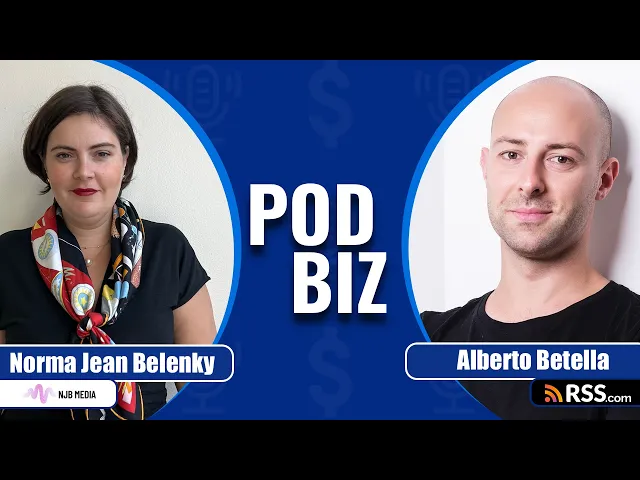
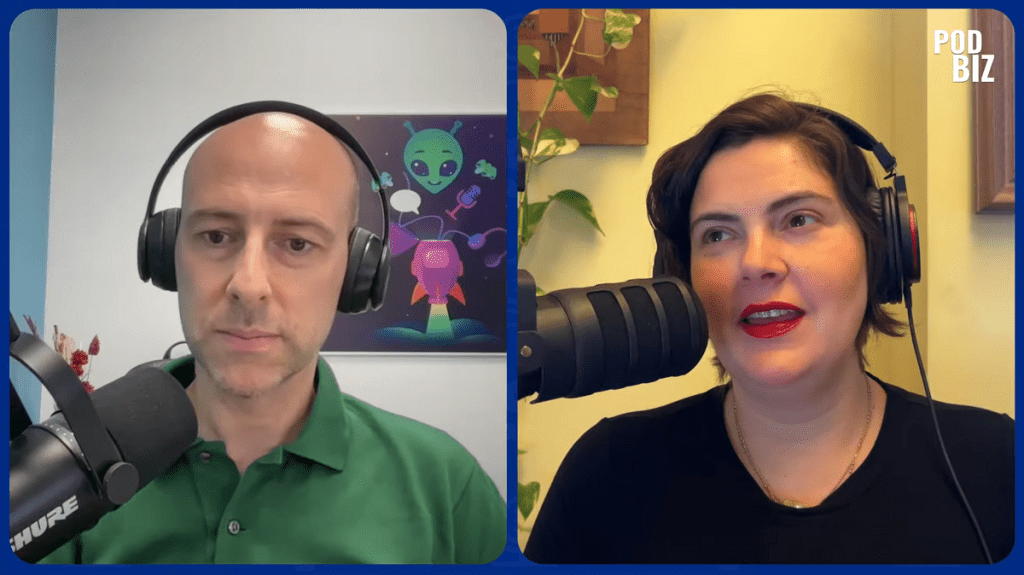
If you’ve ever wondered how podcasters actually make money, you’ll want to keep reading. It’s one of the most common questions in the industry. Alberto Betella, co-founder of RSS.com, sat down with the PodBiz podcast to talk through exactly that. What he shared is practical, honest, and useful whether you’re just starting out or trying to grow a show you’ve had for years.
Watch the full episode here:
The Short Answer: Ads Are Big, But Not the Only Option
When it comes to total money in podcasting, advertising wins. The ad market is in the billions and growing steadily toward 2030. By comparison, the podcast hosting market is estimated somewhere between $50 million and $100 million. So if you’re building a tech platform, Alberto points out that ad tech is where the bigger opportunity sits.
However, it’s important to recognize that ad revenue is driven by volume. The more downloads you have, the more attractive you are to advertisers. That means if you’re a smaller or niche podcaster, chasing ad deals right out of the gate may not be the most realistic path.
“If you are a small podcaster and you have a small number of listeners, if you appeal to them and you cater your message and you ask for funding, it kind of works.”
So where do you start? Alberto’s answer is simpler than you might expect.
Related: Learn how small podcasters can make money with PAID.
Start With the Funding Tag
Podcasting 2.0 introduced a feature called the funding tag. It sounds technical, but the concept is straightforward. It adds a button to your podcast that listeners can tap. That button takes them to a page where they can donate. It could be a small tip or a recurring monthly contribution.
RSS.com supports it, and apps like Pocket Casts, Podverse, and Fountain display it.
Alberto’s advice on the podcast call to action? Don’t write “Buy me a coffee.” Instead, say something like “Support us with a donation.” It sounds like a small difference, but it positions your ask in a way that feels more meaningful and ongoing, not just a one-time transaction.
There is no shame in asking your listeners for support, especially when you’re providing real value. The direct connection between creator and audience is one of podcasting’s biggest strengths. Use it.
Apple Subscriptions: Make It Easy to Pay You
Apple Podcasts Subscriptions have been a real shift for independent creators. Apple presented on this at the London Podcast Show in 2025, and the momentum behind it has been building. RSS.com was one of the first four companies to launch with Apple’s delegated delivery service, which lets hosting platforms support Apple subscriptions directly.
Why does this matter? Because friction kills conversions. If someone has to visit a third-party site, create an account, enter their credit card, and confirm twice just to support your show, most of them won’t bother. Apple already has billions of devices set up for payments. One tap and it’s done.
Alberto put it plainly: “It’s all about friction and reducing friction.”
One feature worth knowing about is Early Access. You don’t have to lock your episodes behind a paywall permanently. Instead, you can let paying subscribers hear episodes two weeks before they go out to the general feed. Your content still reaches everyone eventually. But your supporters get a little extra. It’s a small perk that can make a real difference in someone’s decision to subscribe.
The Biggest Gap: Education
Alberto is clear that the biggest challenge for podcasters isn’t the technology. It’s awareness. Most creators simply don’t know what options exist.
RSS.com has worked to close that gap over the years, starting with FAQs and a knowledge base, then building out a blog, then launching a YouTube channel, and most recently creating the RSS Space, a Slack community for paid users. Each step gave creators a more direct line to the information and support they needed.
The advice he gives applies to the whole industry, not just hosting companies. When coaches, apps, directories, and hosting platforms all share the same clear message, it compounds.
Creators hear it from multiple directions and it sticks. When the message is inconsistent, it just creates confusion.
“Simplicity Is Complex”
On a trip back to Lake Garda in Italy, Alberto spotted a sign outside a restaurant that read: “It’s difficult to be simple.” It stuck with him.
It became a guiding principle for how RSS.com builds its product.
Think about the iPhone. It launched without an instruction manual. You just picked it up and figured it out. That was the point.
Alberto thinks about RSS.com the same way. No matter how complicated the technology running underneath, the experience for the user should take two or three clicks at most.
This matters for podcasters too. If you want someone to follow your show, support your work, or sign up for a subscription, make the path as short as possible. One clear call to action beats five vague ones every time.
How RSS.com Started (The Short Version)
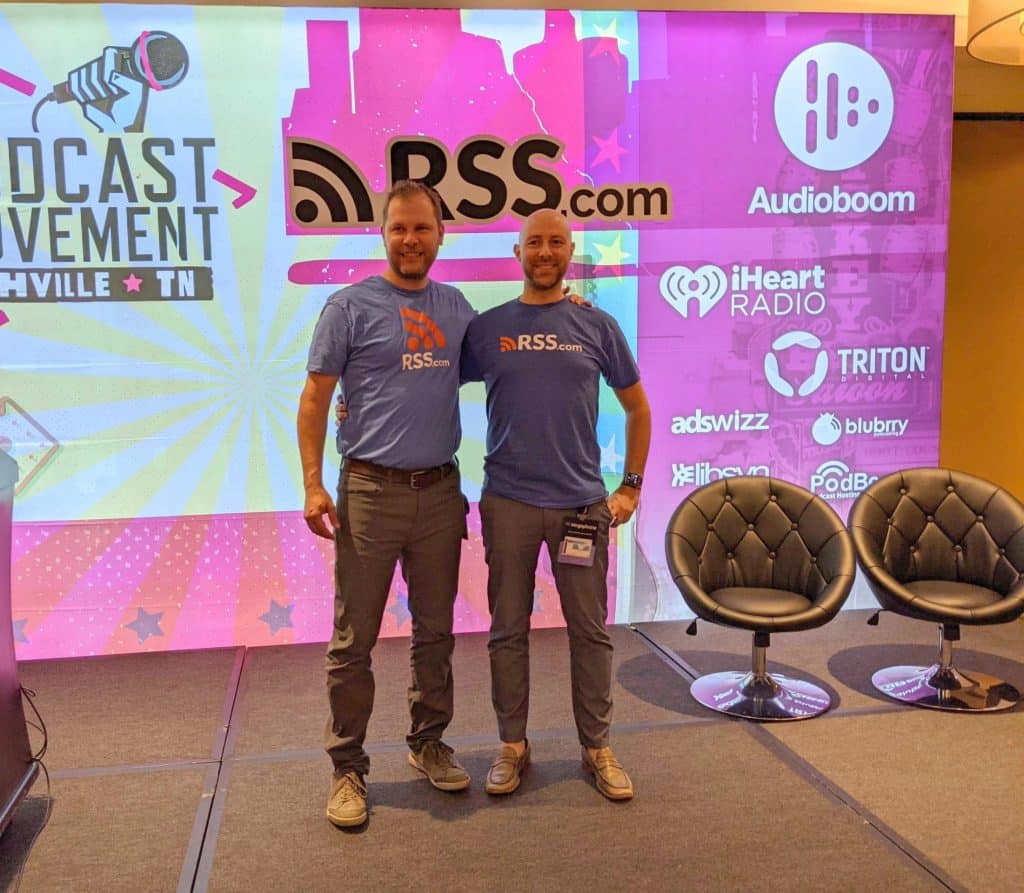
Alberto built Podcast Generator in 2006, while still studying languages and literature in Italy. It was open-source software that let anyone set up a podcast with their own hosting. Schools, universities, and churches used it. He maintained it for over a decade in his spare time.
Ben Richardson had purchased the domain RSS.com back in 2013 and originally built an RSS reader with it. When users started asking if it supported podcasts, he tracked down Alberto. The two connected, launched RSS.com on top of the Podcast Generator foundation, and added a payment layer to handle hosting.
They bootstrapped the whole thing. What started as two or three people grew into what RSS.com is today.
Alberto describes the key mindset behind that growth simply: “You need to do something you love.”
He’s not being cliché. He worked nights and weekends on Podcast Generator for years, not because he had to, but because he wanted to. That kind of sustained effort is only possible when you genuinely care about what you’re building.
Read more of our history here.
The Difference Between Chance and Luck
One of the most useful things Alberto said in the conversation had nothing to do with ad tech or subscriptions. It was about persistence.
“There is a difference between chance and luck. Chance is math. If I open 100 doors, the chance that I find something that works is higher than if I open one door and hope to win.”
For podcasters, this applies directly. Post consistently. Try different formats. Experiment with monetization. Ask your audience what they want. The more you put out there, the better your odds. Luck is passive. Chance is something you can increase.
The Industry Is Getting Better at Working Together
Alberto is genuinely optimistic about where podcasting is headed, and not in a vague way.
RSS.com is part of The Podcast Standards Project, a group that includes Buzzsprout, Transistor, Blubrry, and others. These are competitors that meet in person at events like Podcast Movement and the London Podcast Show to align on how new features and tags get implemented.
When companies agree on a standard, the data in the open RSS feed becomes more accurate and more useful. Alberto used the location tag as an example.
If implemented consistently, it could power features like “podcasts recorded near me” or “shows about museums in Paris.” The potential is real, but it only works when everyone builds it the same way.
The competitive energy is still there. But Alberto sees it more like athletes at the Olympics. Everyone is pushing each other to improve. And after the race, you might end up having dinner with the same people you just competed against.
Key Takeaways for Podcasters
If you take nothing else from this post, these are the things worth holding onto:
– Start with the funding tag. It costs nothing and gives your audience a direct way to support you.
– Look into Apple subscriptions and Early Access. Reducing friction around payments directly affects how much revenue you can earn.
– Pick one clear call to action. Five options is the same as no options for most listeners.
– Keep things simple. On your show, in your marketing, and in anything you ask your audience to do.
– Open more doors. The more you try, the better your chances. Not luck. Chance.
Ready to start your podcast? You can launch 100% free with our Free Local and Niche Plan. Start here now!