Most podcasters understand host-read sponsorships: a brand chooses a show, the host records an ad, and listeners hear the message during the episode.
Programmatic advertising works differently.
Instead of buying one show at a time, advertisers use technology to reach podcast listeners across many shows based on audience signals, show categories, content fit, location, brand preferences, and campaign goals.
For podcasters, that can make programmatic ads feel harder to understand. Who is buying the ads? Why do certain campaigns run on some shows and not others? What makes a podcast eligible? And how do advertisers decide where their message should appear?
We tackled all of that in a live session with Greg Wasserman, Head of Relationships at RSS.com, and Scott Taylor, EVP of Publisher & Platform Partnerships at Katz Media Group. Below is the replay of our How Podcasters Can Earn More with Programmatic Advertising masterclass, plus a breakdown of what you actually need to know.
Programmatic in Plain English
Programmatic advertising means letting a marketplace place ads for you instead of selling them yourself. Katz Media Group delivered ad impressions to over 600,000 shows this year alone, working across podcast hosts, broadcast publishers, and even outlets like the BBC. That scale is the whole point. No single podcaster could build those advertiser relationships alone, and no single sales team could either.
If you’re on an RSS.com paid plan, you can turn on programmatic ads once you hit just 10 downloads. No massive audience required. You choose whether ads run pre-roll, mid-roll, or post-roll, and you control the ad break placement even though you don’t pick the specific ad.
Programmatic Isn’t Just for Big Shows
One of the more useful moments in the conversation: Scott made the case that a small, passionate audience can matter just as much to an advertiser as a huge one. His example was a podcast about tomato growing in Idaho with 250 listeners. That’s a tiny audience, but those listeners are engaged and specific, which makes them valuable to the right advertiser. Katz packages niche shows together into what they call “pod packs,” grouping shows by topic so advertisers can buy an audience segment instead of one show at a time.
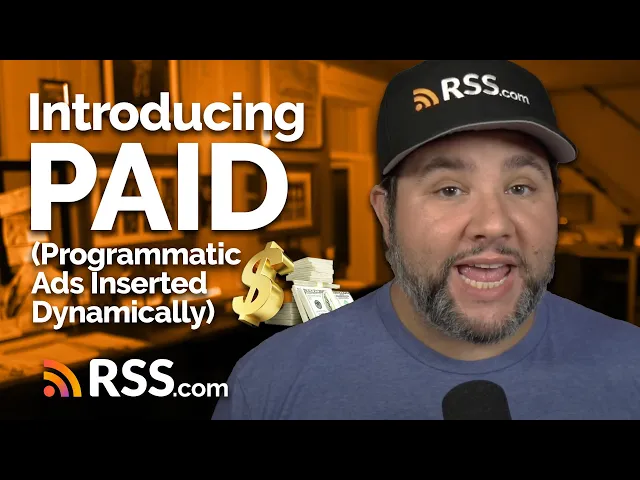
The takeaway for you: you don’t need to be a top-ranked show to make programmatic ads inserted dynamically (PAID) work for your show. You need a clear topic and a real audience that shows up.
Location Matters More Than You’d Think
About 80% of Katz Media’s ad business targets specific geographies. Advertisers want to reach listeners in particular cities, regions, or even congressional districts, not just people who happen to listen to a certain genre of show. That’s part of why RSS.com built a local niche plan and pushed location tagging so hard. If advertisers are buying by geography, your location tag is doing real work behind the scenes to get your show matched with the right campaigns.
How Brand Safety and Targeting Actually Work
This was one of the more technical parts of the session, so here’s the plain-language version. RSS.com works with third-party tools to analyze what’s actually being said on your show.
Our tools scan your RSS feed and transcript for keywords and flags anything that might be a brand safety issue. They also help match your show with advertisers looking for similar audiences, even if your content isn’t identical to theirs.
You also get some control here. Through IAB categories, you can block ad types you don’t want, like political ads, alcohol, or gambling. Just know there’s a tradeoff: political advertising in particular brings serious ad dollars, especially from September through early November in election years, so blocking it isn’t free. It’s your call, and there’s no wrong answer, but it’s worth knowing what you’re opting out of.
You Won’t Know Which Exact Ads Run
A few attendees asked whether RSS.com shows which specific ads get served on their show. The answer is no. That’s actually the nature of programmatic: your audience gets served automatically. Two listeners on the same episode can hear completely different ads depending on where they’re located and what an advertiser is targeting.
One attendee mentioned getting a BMW ad on her show, while a listener in a different state might hear something else entirely.
Greg made a good point here: if a listener reaches out to tell you what ad they heard, that’s free market research. It tells you what advertisers think your audience looks like, which you can use to pitch other advertisers on your own.
Where This Is Headed
Scott was direct about this: podcasting is still in a growth phase compared to other forms of streaming audio, and Katz is investing accordingly. They recently launched a CTV offering, giving them the ability to retarget podcast listeners with connected TV ads and vice versa. If that trend holds, it means more advertiser dollars flowing toward podcasts, not fewer.
Both Greg and Scott were clear about one thing: programmatic shouldn’t be your only podcast monetization strategy. It’s one channel among many, including host-read sponsorships, affiliate deals, and direct advertiser relationships. But it’s one of the easiest channels to turn on, and it starts working at a download threshold most podcasters hit early.
How to Turn It On
If you’re on an RSS.com paid plan, go to your monetization tab and flip the switch that says “Monetize with Programmatic Ads.” From there, you can choose pre-roll, mid-roll, or post-roll placement, and decide how many ad breaks you want. You don’t pick the specific advertiser, but you control everything else about how it shows up in your episodes.