Digital Health Transformers Podcast

Digital Health Transformers Podcast

by OSP
Season 1
AI in Health System Operations
In this episode of the Digital Health Transformers podcast, Alfred Woo, Chief Product Officer at AliveCor, explains how artificial intelligence and patient-focused design are transforming cardiac care. He describes how AliveCor applies principles from consumer technology and AI to address access and understanding in heart health, enabling patients to monitor their cardiac status outside episodic clinic visits. Alfred discusses how AliveCor’s FDA-cleared ECG devices and deep learning models convert raw biometric signals into meaningful insights and actionable recommendations. He explains how AI supports clinicians by identifying subtle cardiac patterns, enhancing diagnostic accuracy, and improving workflow efficiency. Alfred also emphasizes the importance of trust, regulatory compliance, and ethical AI guardrails that ensure clinical oversight remains central. The episode concludes with a forward-looking perspective on personalized heart health, highlighting continuous data integration, predictive analytics, and patient empowerment as key drivers for future innovation. Key Moments Bringing Consumer Product Thinking Into Healthcare Alfred Woo was introduced as Chief Product Officer at AliveCor Shift from clinician-centered to patient-centered product design Applying simplicity, usability, and engagement principles from consumer tech Solving Access and Understanding in Cardiac Care Severe cardiologist shortages across rural and underserved regions AI-enabled tools provide support outside traditional clinic visits Focus on making cardiac data understandable and actionable for patients From Episodic Care to Continuous Monitoring Healthcare should extend beyond in-office visits Daily insights, trend analysis, and real-time feedback redefine care Continuous monitoring fills gaps between clinician encounters AI for Insights, Action, and Clinical Support AI transforms raw ECG and biometric data into meaningful insights Trend analysis enables earlier detection of cardiac issues Action-driven intelligence guides patients on next steps and escalation Clinician Efficiency, Trust, and Safety Guardrails Deep learning models detect subtle cardiac patterns that humans may miss The FDA cleared six lead ECG devices improve diagnostic visibility Strong compliance, privacy controls, and clinician escalation ensure trust The Future of Personalized and Predictive Heart Health Integration of multiple biometric signals for holistic health insights Shift from measurement toward AI that recommends and initiates action Patients are empowered as active partners in maintaining long-term wellness
AI-Driven Patient Visibility and Risk Prediction
In this episode of the Digital Health Transformers podcast, Meghna Misra, Head of Product at ClaritasRx, discusses how AI is transforming patient visibility across specialty, rare disease, oncology, and CAR T therapies. She explains how predictive analytics enable care teams to identify risks such as prior authorization denials, refill delays, and therapy drop-offs before they occur. Meghna emphasizes that the real value of AI lies not only in prediction but in turning insights into clear actions embedded within existing workflows. The conversation explores the importance of transparency, explainability, and trust in high-stakes healthcare use cases. Meghna shares real-world outcomes from ClaritasRx, including measurable improvements in fill and refill rates driven by AI-powered risk models. She also discusses the role of healthcare leaders and policymakers in creating frameworks that support innovation while ensuring equity, data quality, and patient privacy. The episode concludes with practical advice for organizations adopting AI, focusing on problem-first design, explainable models, and keeping humans in the loop. Key Moments Introduction and AI Focus in Healthcare Meghna Misra introduced as Head of Product at ClaritasRx Discussion centers on how AI is reshaping patient visibility and healthcare delivery Emphasis on impact-driven AI rather than technology-driven adoption Solving the Patient Visibility Problem Fragmented healthcare data limits understanding of the patient journey AI connects data across pharmacies, providers, hubs, and access programs Shift from reactive analysis to proactive, predictive visibility Predictive Analytics for Early Risk Detection Identification of risks such as prior authorization denials, refill delays, and therapy drop-offs Use of foresight to predict when and why risks will occur Integration of social determinants of health to improve accuracy Turning Insights Into Action Predictive insights embedded directly into existing workflows Next best action models guide care teams on what to do next Focus on reducing administrative burden and enabling timely intervention Measurable Outcomes and Real World Impact AI-driven models deliver approximately 20 percent improvement in fill rates Refill rates increase by more than 17 percent across brands Improved care coordination helps patients start and remain on therapy Trust, Transparency, and the Future of AI in Care Explainable AI is essential in high-stakes healthcare decisions Healthcare leaders and policymakers play a role in ensuring equity and data quality AI evolving into a decision partner that supports proactive, patient-centered care
AI and Video in Behavioral Health Ft Loren Larsen
This episode of the Digital Health Transformers podcast features Loren Larsen, CEO and Co-Founder of Videra Health and former CTO of HireVue, discussing how artificial intelligence can extend behavioral healthcare beyond episodic, in-office interactions. The conversation focuses on maintaining a continuous provider-patient connection through AI-driven video check-ins without increasing clinical workload. Loren explains how Videra Health uses AI to monitor verbal and nonverbal signals between visits, allowing clinicians to identify risk earlier and intervene when it matters most. He shares a real-world case in which an AI check-in identified emotional distress in a high-risk adolescent after hospital discharge, enabling timely provider outreach that likely prevented self-harm. The discussion also addresses the limits of general-purpose AI tools in behavioral health, emphasizing the need for safety guardrails, escalation protocols, and human oversight. Loren highlights how responsible AI can reduce provider burnout by enabling targeted attention rather than constant manual monitoring. Ethics, fairness, and data privacy are central themes, informed by Loren’s experience building AI systems at scale. He outlines the importance of transparency, bias testing, and strong security controls in earning trust. The episode concludes with a forward-looking view of AI as a continuous health monitoring layer, supporting earlier detection, better outcomes, and more equitable access to behavioral care. Key Moments Reframing Behavioral Health Beyond Episodic Care Introduction of Loren Larsen as CEO and Co-Founder of Videra Health Discussion on the limitations of visit-based behavioral healthcare Need for continuous provider-patient connection outside clinical settings AI-Powered Monitoring and Clinical Visibility Use of AI-driven check-ins between appointments Analysis of verbal and non-verbal cues to assess mental state Continuous visibility into patient status without added clinician workload Early Intervention and Real World Impact Case study involving a high-risk adolescent after psychiatric discharge AI detection of emotional distress and medication non-adherence Timely provider intervention enabled through automated alerts Human Oversight and Limits of General Purpose AI Risks of off-the-shelf AI tools in behavioral health use cases Importance of escalation protocols and clinician involvement AI positioned as clinical decision support rather than therapy replacement Ethics, Fairness, and Data Protection Bias testing and fairness informed by experience at HireVue Transparency in AI use to build trust Strong privacy, security, and access controls for patient data The Future of AI-Enabled Behavioral Healthcare AI as a continuous health monitoring layer using multimodal signals Shift toward earlier detection and prevention Long-term potential to expand access and improve outcomes globally
Smarter Care With AI: AI’s Role In Preventive & Behavioral Health
In this episode of the Digital Health Transformers podcast, Peter Conroy, CEO of The Difference, discusses the transformative role of AI in preventive and behavioral health. He emphasizes how predictive and personalized AI solutions can help individuals manage weight, optimize wellness routines, and prevent health risks. Peter shares his experience in integrating AI into everyday healthcare workflows, highlighting how The Difference provides actionable guidance for both users and providers. The conversation covers the challenges of adopting AI in preventive care, the potential benefits for health outcomes, and the importance of designing inclusive, culturally aware AI solutions. Key Moments Introduction & App Overview Peter Conroy, CEO of The Difference, discusses AI in preventive and behavioral health. Introduces The Difference, a weight management app using predictive analytics. Focus on reducing barriers for users to enter health data with a user-friendly interface. AI in Preventive Health Predictive analytics and pattern recognition for early risk detection. Integration of behavioral and physical health for comprehensive care. Role of wearable technology in monitoring health metrics and delivering personalized interventions. Predictive Analytics & User Engagement App predicts users’ weight changes to improve motivation and accountability. Intuitive design enhances user experience and long-term engagement. Reducing Data Entry Burden Importance of minimizing time spent entering data into health apps. Future AI features may include recognition of food and exercise via images and speech. Enhances overall user experience by simplifying interaction with the app. Ethics & Data Privacy Ethical considerations in AI use, including transparency and accountability. Ensuring data privacy and user trust through best practices. Maintaining ethical standards while leveraging AI for healthcare solutions. Preventive Care & Target Demographics Shift toward proactive, preventive health management. Insights from non-Hispanic black women inform culturally sensitive solutions. Encouragement for healthcare leaders to prioritize user-centered design and value creation.
AI-POWERED CLINICAL DECISION SUPPORT IN MENTAL HEALTH: Strategic Applications of AI and Analytics in Behavioural Health Systems
In the podcast episode, Nawal discusses AI in Mental Health. He said that mental health still lacks parity with physical health in terms of coverage, which limits investment and slows the progress of care delivery. He emphasized that without this parity, mental health services will continue to face structural challenges. Roy explained that Holmusk is building a scientific-grade database to convert raw, unstructured data into standardized, actionable insights. This enables healthcare providers to stratify patients by risk and improve care delivery. He noted that the data have already supported studies with major health organizations. Looking ahead, Roy expressed optimism about the future of mental health care, highlighting that increased investment and advancements in AI and analytics are driving scalable innovation across the sector. Key Moments Introduction The discussion focuses on integrating AI in mental health care. Mental health lacks parity with physical health in coverage, limiting investment and patient outcomes. Holmusk, led by CEO Nawal Roy, is working to transform mental health care through data and technology. Roy’s Vision for Data-Driven Care Roy moved from finance and consulting to digital health to solve the problem of missing objective data in healthcare. He underscores the role of data in better understanding and managing chronic conditions, especially mental health. Challenges in Mental Health Care Mental health care lacks standardization and consistency in evidence-based practices. AI has the potential to enhance care, but it depends on access to structured, high-quality data. Roy stresses the importance of achieving parity and building an evidence-driven foundation. Evidence and Data Utilization Holmusk curates and normalizes real-world data to build a scientific-grade mental health database. The company collaborates with pharmaceutical firms to support clinical research. Roy notes the database’s potential to be used as a regulatory-grade data source. AI Applications and System Integration A case study from NHS Mercy Care shows that predictive analytics reduced crisis events by 12%, and Stratification of high-risk patients improved care outcomes. Holmusk is forming partnerships to integrate virtual care into its data-driven model. The dataset includes records from 35 million patients, supporting scalable care insights. Systemic Barriers and Future Outlook Roy points out that mental health is often neglected in healthcare systems despite its cost burden. Structural incentives are needed to support lasting improvements. He highlights growing investment and innovation in AI and data integration. The sector is poised for accelerated growth and better care delivery through technology.
TELEHEALTH 2.0: Virtual Healthcare, Reimagined With AI & Real-Time Monitoring Leading the Way
In the podcast episode, Pallav discusses the evolution of telehealth into Telehealth 2.0. This new phase leverages AI and IoT to enhance care coordination, improve patient engagement, and streamline operations for caregivers. Pallav emphasizes the importance of accessibility, affordability, and the need for innovative solutions to address challenges faced by healthcare providers and seniors. He highlights how myEZcare aims to democratize senior care by integrating technology that enables proactive monitoring and personalized care while reducing costs. Key Moments Technology-Driven Care Coordination Pallav Saxena, CEO of My Easy Care, shares a vision for integrated digital care: Aims to streamline communication and coordination across care teams Mission to democratize senior care Focus on reducing costs Enhancing the quality and reach of care for aging populations Evolution and Capabilities of Telehealth 2.0 Telehealth has advanced beyond video consultations: Now supports intelligent, integrated care delivery Incorporation of AI and IoT technologies Enables real-time data access and continuous remote monitoring Supports early detection of health issues through predictive analytics Enhancing Engagement and Adoption Improved patient engagement through user-centered design Simple interfaces and personalized alerts increase usability Supports independence while allowing timely intervention My Easy Care simplifies digital adoption Offers intuitive tools Provides onboarding and support for providers adapting to virtual care Accessibility, Affordability, and Efficiency My Easy Care offers scalable solutions for all provider sizes: Suitable for small clinics and large healthcare systems Integrated features lower operational costs: Consolidates functions to reduce system complexity and administrative burden Future of Virtual Care and Innovation Virtual care will continue evolving through AI and remote monitoring: Trends include self-service models and proactive care strategies My Easy Care is investing in innovation Prioritizes AI, IoT, and workflow simplification Maintains commitment to expanding access to high-quality senior care globally

Transforming Student Health Through Virtual Care
In this episode, Luke Hejl, CEO and Co-founder of TimelyCare, dives into the growing mental health challenges faced by college students and how his platform is addressing them. Sparked by personal experiences and a passion for student well-being, Luke shares how TimelyCare provides 24/7 access to virtual mental health services across 400+ campuses. From digital self-care tools to success coaching and peer support, the platform empowers students with fast, personalized care. He reflects on the impact of COVID-19, the shift in how students seek help, and the importance of tech-driven, human-centered healthcare. With over 2.3 million students served and measurable improvements in health outcomes, this conversation highlights the innovation, empathy, and purpose driving the future of student mental health support. Key Moments Introduction The podcast discusses students’ challenges in accessing healthcare, particularly mental health services. Luke Hejl, CEO of TimelyCare, shares insights on how their platform addresses these issues. Many students experience long wait times for counselling services, often four to six weeks. The Mission of TimelyCare TimelyCare aims to improve student health and well-being by providing immediate access to virtual healthcare. The platform serves millions of students across over 400 campuses and has raised over $65 million in funding. Luke emphasizes the importance of quick access to care for student success. Personal Journey and Inspiration Luke shares personal experiences of grief and anxiety that shaped his mission to help students. As a parent, he understands the pressures students face today, including academic and social challenges. The need for immediate and quality care inspired the creation of TimelyCare. Evolution of TimelyCare TimelyCare was founded in 2017, with its first customer being Abilene Christian University. The COVID-19 pandemic accelerated the demand for telehealth services, prompting rapid growth and partnerships with prestigious institutions. TimelyCare now serves over 20% of community college students in the U.S. Trends in Student Mental Health Students are increasingly open about discussing mental health issues, partly due to the pandemic. There is a growing expectation for immediate access to healthcare, similar to other services like food delivery. TimelyCare provides 24/7 access to mental health resources, helping students stay on track academically.
Power of AI in Achieving Patient- Centric Communication
In this episode of the Digital Health Transformers podcast, Dr. Grin Lord, CEO of mpathic , discusses the transformative role of AI in enhancing patient communication. She emphasizes the importance of empathy in healthcare, sharing her experiences as a clinical psychologist and her research on effective communication styles. She says, mpathic aims to bridge the gap between technology and compassionate care by providing real-time feedback to healthcare providers, improving their communication skills, and ultimately enhancing patient outcomes. The conversation highlights the challenges healthcare providers face, the potential of AI to address these challenges, and the future of patient-centric communication. Key Moments Introduction Dr. Grin Lord, CEO of Empathic AI, discusses AI’s role in patient communication. Focusing on how AI can enhance communication and improve patient outcomes in healthcare. Dr. Lord shares her journey from clinical psychologist to founder of Empathic AI. Importance of Empathy in Healthcare Discussion on how research improves patient outcomes, such as higher remission rates in substance abuse. Dr. Lord stresses the need for healthcare providers to receive training in empathetic listening. AI’s Role in Enhancing Communication Discussion on how empathic analyzes doctor-patient conversations to assess empathy and communication effectiveness. Elaboration on how AI provides objective feedback to healthcare providers to enhance their communication skills. Challenges in Patient Engagement Addressing the barriers to effective patient engagement, such as the shift back to in-person care and the need for human interaction. Discussion on empathic’s aim to enhance human communication, not replace it with automation. Future Trends in AI and Healthcare Discussion on advancements like real-time translation services and personalized care. Highlights the importance of maintaining a human touch in AI-powered patient interactions. Conclusion and Vision for the Future Conclusion with reflections on AI’s potential to transform healthcare communication. Discuss optimism about empathetic care and AI integration in improving patient experiences.
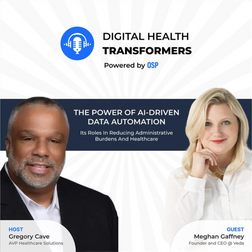
The Power Of AI-Driven Data Automation: Its Role in Reducing Administrative Burdens in Healthcare
Summary In this episode, Meghan Gaffney, CEO of Veda, explores the impact of AI-driven data automation in healthcare. She discusses the importance of accurate provider data, the challenges patients face in accessing specialized care, and how AI is transforming healthcare operations. Meghan explains how Veda automates the transfer of provider data to health plans, helping patients find in-network providers quickly and efficiently. She highlights the company’s focus on humanizing data by providing detailed provider information, and ensuring patients connect with the right specialists. Meghan also emphasizes the ethical use of AI, the need for client education, and Veda’s commitment to improving healthcare outcomes through innovative and responsible technology. Key Moments The Challenge of Inaccurate Healthcare Data Discussion on AI-driven data automation in healthcare. Importance of specialized care access, such as for eating disorders. Challenges in finding accurate provider information. The issue of $24 billion spent on emergency visits due to data inaccuracies. Meghan Gaffney’s Journey and the Birth of Veda Transition from political consulting to healthcare technology. Experience in Washington, D.C., during the ACA’s development. Understanding the need for better healthcare infrastructure. Personal motivation as a new mother to improve access to care. How Veda’s AI-Driven Solutions Improve Healthcare Automation of provider data transfer to health plans. Helping patients quickly find in-network providers. Reducing surprise billing and improving healthcare efficiency. Acting as a “digital Rosetta Stone” to streamline data processing. Enabling healthcare providers to process data 10-12 times faster. Reducing costs and minimizing risks of Medicare sanctions. Ethical AI and Overcoming Hesitancy Commitment to ethical AI development. In-house AI models to prevent data breaches. Transparency in AI decision-making to build trust. Educating clients on AI’s applications and impact. Helping clients determine if AI is the right solution. Achievements, including the granting of Veda’s 10th AI patent. Real-World Impact and Healthcare Transformation Case study of a major Blue Cross organization. Improvement of CMS accuracy score from 43 percent to 97 percent. Significant operational cost savings and efficiency gains. Reduction in direct mail and call center inquiries. Focus on making healthcare data more meaningful. Enhancing access to specialized care, particularly in behavioral health. The Future of AI in Healthcare and Final Thoughts Expansion into retail pharmacy and dental markets. Enhancing provider onboarding and telehealth access. Addressing delays in care and improving behavioral health support. Encouragement for healthcare organizations to adopt AI responsibly. Final thoughts on AI’s potential to transform healthcare when used ethically.
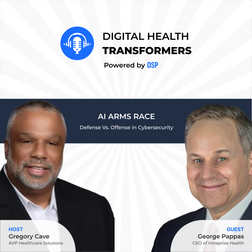
AI Arms Race: Defense vs. Offense in Cybersecurity
In the latest episode of “Digital Health Transformers,” George Pappas, CEO of Intraprise Health, discusses the escalating cybersecurity threats in healthcare, particularly in the context of AI advancements. He emphasizes the importance of investing in AI-driven security tools to protect sensitive patient data, highlighting the sophisticated tactics used by cybercriminals. Pappas shares insights on the need for healthcare organizations to adopt a proactive approach to cybersecurity, balancing costs with the risks of inadequate protection. The conversation also covers the evolving arms race between cyber attackers and defenders, the role of automation in mitigating risks, and practical steps healthcare executives can take to enhance their cybersecurity posture. Key Moments Introduction to Cybersecurity in Healthcare Discussion on the growing sophistication of cyber threats targeting healthcare organizations. Introduction of George Pappas, CEO of Intraprise Health. Overview of historical technology deployment in healthcare and the increasing number of cyber-attacks. Real-life experiences with hacking incidents and their impact on the industry. The Role of AI in Strengthening Cybersecurity Exploration of how AI is transforming both cyber defense and cyber attacks The complexity of healthcare networks leads to vulnerabilities. Examples of sophisticated phishing attacks using AI for personalization. Identification of essential AI-driven security tools, including intelligent mail filtering and third-party risk assessment. Implementing AI Security Solutions Guidance on how healthcare organizations can start small with AI solutions. Emphasis on domain-specific AI applications for effective problem-solving. Discussion on how AI can significantly reduce manual efforts in cybersecurity while improving efficiency. Insights into automation’s role in streamlining risk assessments and reducing operational costs. Overcoming Barriers to AI Adoption in Healthcare Security Advice for healthcare executives on the benefits of investing in AI security tools. Importance of understanding the evolving cyber threat landscape and current cybersecurity posture. The necessity for collaboration between CEOs, CIOs, and security teams to implement robust security strategies. The Growing Arms Race Between Cybercriminals and Defenders Predictions on the continuous escalation of cyber threats and defenses. The role of the dark web in facilitating cybercrime and its impact on healthcare security. The need for a proactive approach to cybersecurity and the visualization of healthcare data security is a constantly evolving challenge. The Future of AI-Driven Cybersecurity and Key Takeaways Speculation on AI’s potential to rapidly detect and neutralize cyber threats. Critique of current responses to cybercriminals and the need for stronger preventative measures. Recap of the importance of incremental improvements in cybersecurity. Encouragement for healthcare organizations to adopt a stepwise approach to security and invest in protecting patient data in a rapidly evolving digital landscape.
1 of 4