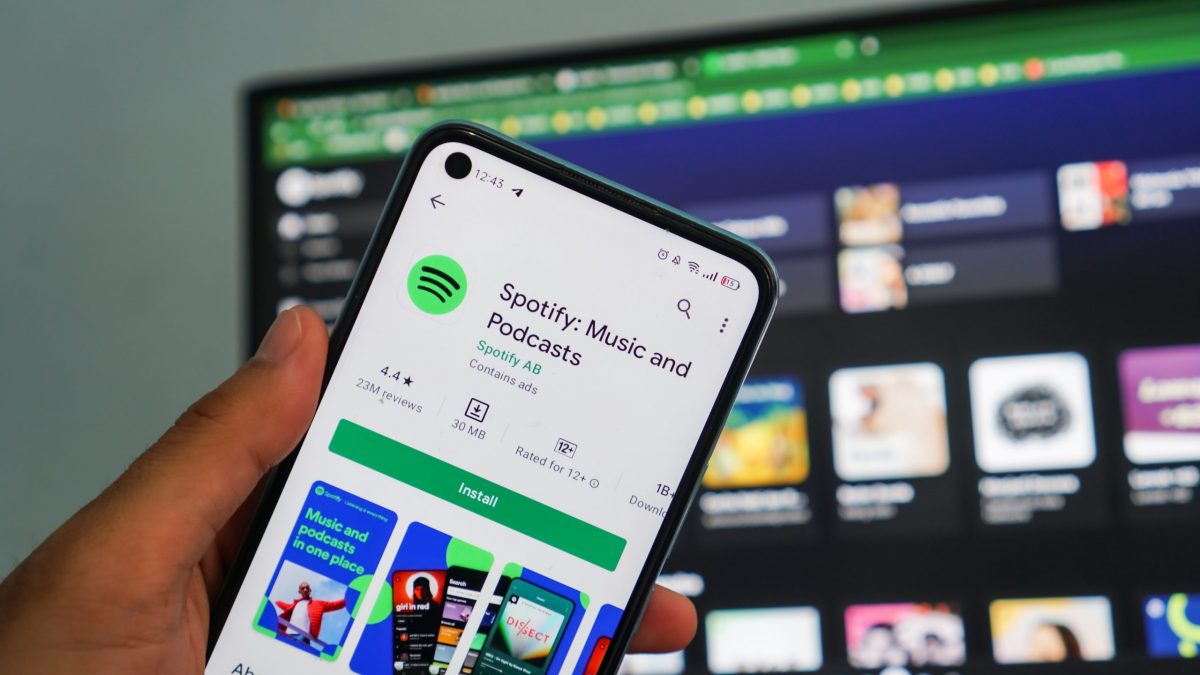
Starting a podcast on Spotify is easier than you think, and you can do it free in about 10 minutes.
Here’s the short version: sign up for RSS.com for free, upload your first episode, and flip on automatic distribution. We’ll send your show to Spotify, Apple Podcasts, Amazon Music, and 40+ other platforms automatically. No manual submissions, no RSS feed headaches, no paid plan required to get started.
The rest of this guide walks you through each step in detail, including how to avoid the common mistakes that get podcasts removed from Spotify and where to grab royalty-free music for your show.
Ready? Let’s go.

How to Get Your Podcast on Spotify
Here are the 3 steps you need to get your podcast on Spotify:
Step 1: Sign up for podcast hosting.
You’ll need a podcast hosting platform to store your episodes and distribute them to the top podcast directories like Spotify and Apple Podcasts.
✨ You don’t upload your podcast directly to Spotify – you’ll need a podcast host like RSS.com to distribute it for you.
➡️ Click here to set up a free RSS.com podcast hosting account.
Creating an account on RSS.com is easy. Just enter your email address and set a password.
You can start for free – no credit card required.
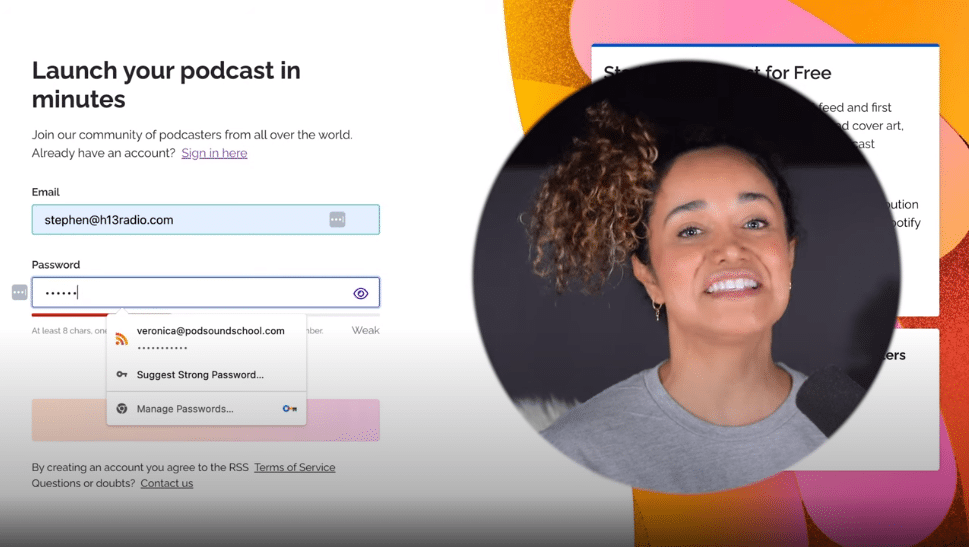
You’ll get an email from RSS.com to validate your account with a six-digit code.
The next step is to click “New podcast.”
This will take you to a new page where you’ll enter your podcast title and description, and upload your podcast cover art.
Heads up: Spotify requires your podcast artwork to be square (1:1 aspect ratio), at least 1400 x 1400 pixels, and in JPEG or PNG format. Apple Podcasts has the same requirements, so following these guidelines ensures your show is accepted across all major platforms.
You can learn how to create podcast cover art here.
Step 2: Upload your episode audio file(s)
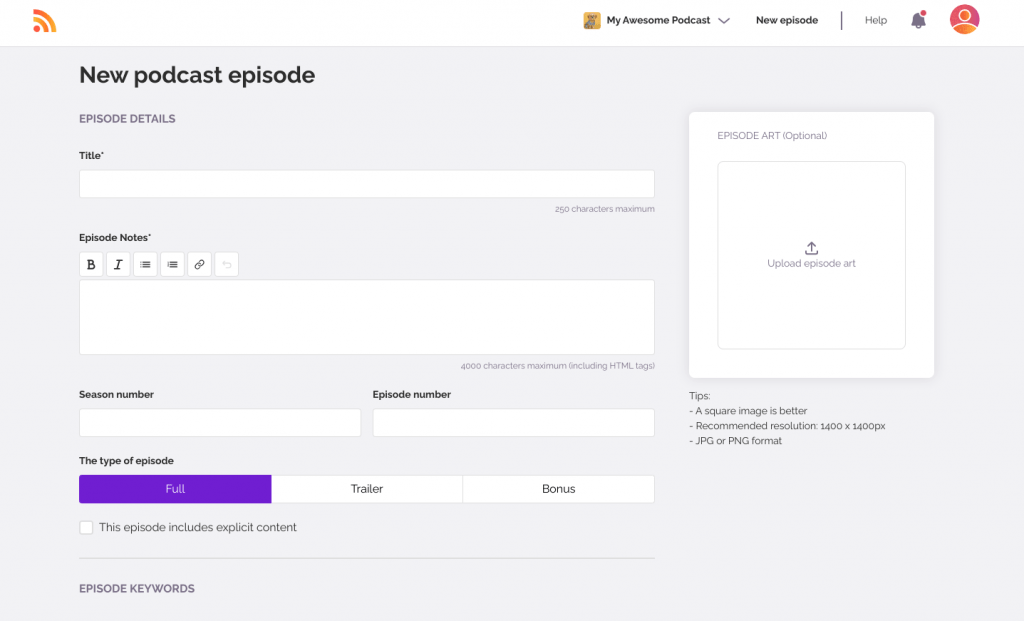
Once you click “New episode,” you’ll be taken to a new page where you can add:
- Episode title
- Episode notes
- Season and episode number
- Episode keywords
- Your episode artwork
- Your episode audio file(s)
If you’re planning to create unique artwork for each episode, make sure it also meets the same specs: square format, 1400 x 1400 pixels minimum, and in JPEG or PNG format.
Step 3: Enable automatic distribution to Spotify right from your RSS.com dashboard
One of the best parts about using RSS.com is that you only need to set up distribution once.
When you enable automatic distribution, your podcast will be sent to Spotify and other top directories like Apple Podcasts, Amazon Music, and more – no extra steps required.
It’s quick, easy, and ensures your episodes are available where your audience already listens.
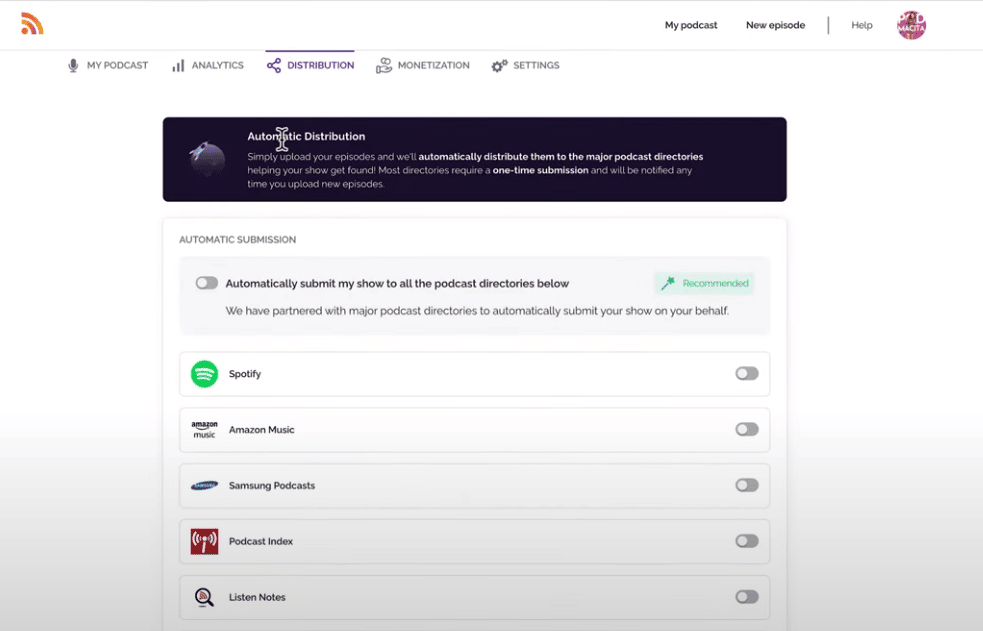
Once your podcast is synced, every time you upload a new episode, RSS.com will automatically distribute it to Spotify, Amazon Music, the Podcast Index, Listen Notes, the RSS.com Community, and more. You’ll never have to worry about manual submissions again.
In your RSS.com Dashboard, just click on the Distribution tab at the top. Then toggle on the option labeled “Automatically submit my show to all the podcast directories below.”
That’s it – your show will now begin syncing with Spotify.
Easy, right?
Why You Should Put Your Podcast on Spotify
Next, let’s look at all the benefits you just unlocked by submitting your podcast to Spotify.
Along with Apple Podcasts, Spotify is one of the largest podcast directories in the world, with hundreds of millions of listeners worldwide.
Spotify offers a user-friendly interface, strong recommendation algorithms, and a steady stream of new features designed to help listeners discover shows. One recent example: Spotify now lets users swipe vertically through auto-playing show recommendations, similar to TikTok or Instagram Reels.
What makes Spotify especially powerful for new podcasters is that recommendations aren’t limited to shows listeners already follow. Spotify also surfaces podcasts in the same genre, with similar content, or with overlapping audiences.
That means once your show is on Spotify, it has a real shot at being recommended to listeners who’ve never heard of you.
The other win is accessibility. Giving your listeners the option to tune in from the platform they already use, whether that’s Spotify, Apple Podcasts, Amazon Music, or another podcast listening app, removes friction and grows your audience faster than locking your show to a single app. 📈
⚠️ One Important Rule Before You Publish
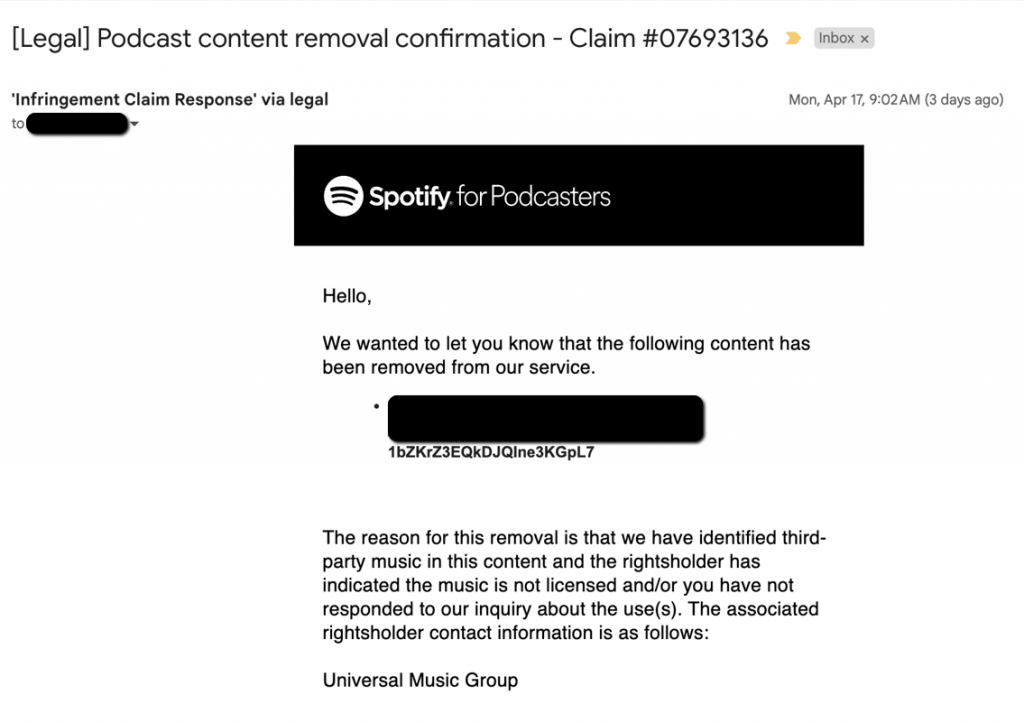
Before you distribute your podcast to Spotify, make sure you have the rights to every piece of music and every sound clip you use.
It’s tempting to drop in a few seconds of a famous song to set the mood or brand your intro.
Don’t.
Spotify is a music platform first, and they take copyright seriously. AI systems constantly crawl podcast directories hunting for unlicensed music, and they will find yours, even if it’s a short clip and even if your show isn’t making money yet.
The consequences range from a warning email to your episode being removed, your entire show being pulled from Spotify, and in worst cases, legal action and fines. Imagine losing your best-performing episode after thousands of downloads because of a five-second music cue.
The good news: there’s plenty of free and affordable royalty-free music out there. We’ll cover where to find it in the next section.
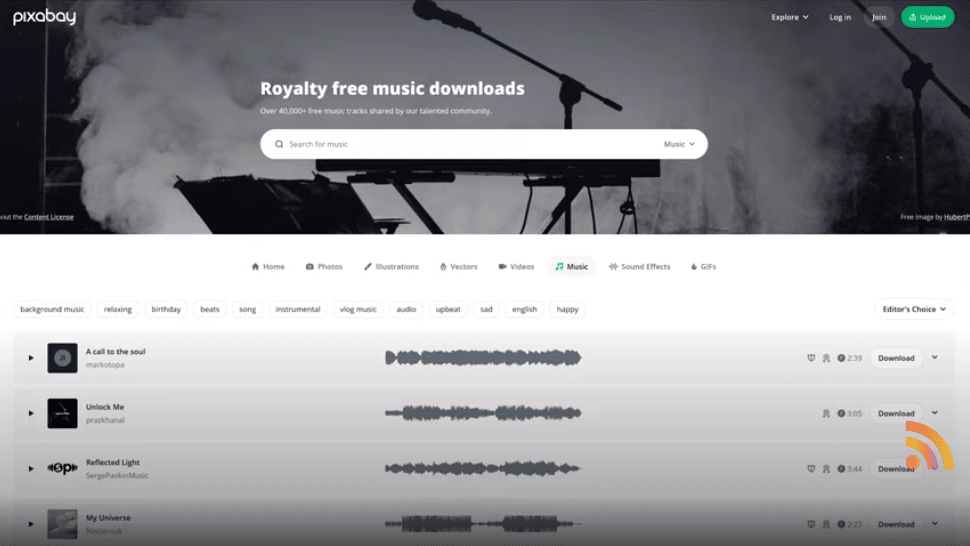
🎶 Where to Find Royalty-Free Music for Your Podcast
For free options, Pixabay and the Free Music Archive are two of the best. Both offer tracks you can use without worrying about copyright strikes.
If you’d rather invest in higher-quality or more unique music, paid libraries like AudioJungle, PremiumBeat, and Envato Elements are worth a look.
You can also commission custom music from independent artists on platforms like Fiverr, SoundBetter, or reaching out to them directly on social media.
Want more ideas? Check out our full guide: Best Places to Get Free Podcast Music.
Starting a Podcast on Spotify: FAQs
You can start a podcast on Spotify for free. RSS.com’s Free Local and Niche plan gives you unlimited episodes, unlimited audio, and automatic distribution to Spotify and Apple Podcasts at no cost.
The only other cost to think about is podcast equipment, and you don’t need much. A decent USB microphone and free recording software like Audacity will get you started. Plenty of successful podcasts launched with less than $100 in gear.
Yes, but the monetization thresholds are worth understanding before you start.
Spotify lowered the requirements for its Partner Program in January 2026, and they’re now much more achievable than they used to be. To qualify, your show needs at least 1,000 engaged listeners on Spotify in the last 30 days, at least 2,000 consumed hours on Spotify in the last 30 days, at least 3 published episodes, and a legal address in one of 14 eligible countries including the US, UK, Canada, and Australia.
Once you’re in, Spotify takes a 50% cut of your ad revenue, which is a significant chunk. You can also earn separately from Premium video revenue when Spotify Premium subscribers watch your video episodes.
Spotify also offers paid subscriber-only episodes through its Subscriptions program, but there’s a catch: you have to use Spotify for Creators for at least 60 days and publish two episodes to 100 listeners before you can enroll.
Here’s the thing: hitting 1,000 engaged listeners and 2,000 consumed hours in a single month is still a meaningful milestone. Most new podcasters don’t get there for months, sometimes years. And when they do, they’re handing Spotify half of their ad revenue.
That’s why a lot of creators start earning earlier and keep more of what they make by monetizing through their podcast host instead. RSS.com’s PAID program lets you turn on programmatic ads with as few as 10 downloads per episode. No engagement thresholds and no 50/50 split. You can also set up Apple Podcasts Subscriptions, accept listener donations, or join an affiliate program right from your RSS.com dashboard.
Most podcasters wait too long to turn on monetization. Start early, even if it’s small. The habits and the setup matter more than the first few dollars.
You need three things: something to record with, something to edit with, and somewhere to host your show.
For recording, a USB microphone like the Samson Q2U or Audio Technica ATR2100x is all most new podcasters need. For editing, free software like Audacity or GarageBand works great. For hosting, RSS.com handles storage, distribution, and your RSS feed in one place.
That’s it. You don’t need a studio, a soundproof booth, or a thousand dollar mixer to sound professional. A quiet room and a decent mic will get you further than most people expect.
Most shows appear on Spotify within a few hours of being submitted, though it can take up to 5 days in some cases.
If you’re using RSS.com’s automatic distribution, we handle the submission for you the moment you publish your first episode, so there’s nothing extra to do on your end.
Spotify doesn’t currently send an email when your show goes live, so you’ll want to check back the next day to confirm everything looks right.
Yes. Spotify doesn’t host your audio files directly. It pulls your episodes from an RSS feed that your podcast hosting platform generates for you. When you sign up for RSS.com and publish your first episode, we automatically create and maintain your RSS feed for you, so you never have to touch the technical side.
You can upload directly to Spotify for Creators, but it comes with a major tradeoff: your show will only live on Spotify. It won’t appear on Apple Podcasts, Amazon Music, Overcast, Pocket Casts, or any of the other major listening apps.
Using a hosting platform like RSS.com means your podcast gets distributed everywhere automatically, so listeners can find you wherever they already listen. For most podcasters, that reach is worth far more than the convenience of a single-platform upload.
They’re built for different things. Spotify for Creators is free but locks your show inside Spotify’s ecosystem. RSS.com is built to distribute your podcast to every major platform, so listeners can find you on Apple Podcasts, Amazon Music, Overcast, and 40+ others in addition to Spotify. You also get IAB-certified analytics, monetization tools, a free podcast website, and audio-to-video conversion for YouTube.
If you only want to be on Spotify, Spotify for Creators works. If you want your podcast to actually grow an audience, a hosting platform that distributes everywhere is the better call.