The Perimenopause Reset: Gut Health, Hormones & Metabolic Mastery for Women Over 40

The Perimenopause Reset: Gut Health, Hormones & Metabolic Mastery for Women Over 40

by Miriam Faggett
Season 3

Why You Crash at 4pm and Can't Sleep at 11pm

You're dragging by 4pm. Can barely function through dinner. Then 11pm hits and suddenly your brain won't shut off. You've tried magnesium. Cut the caffeine. Followed every sleep hygiene checklist. But no one's connected the pattern for you. In this episode, I'm breaking down the flipped cortisol curve behind the crash-to-wired cycle — what's driving it, what it reveals about your deeper hormonal cascade, and why this pattern has to be addressed before any protocol will land. → What's actually happening at 4pm — and why it's not an energy problem → The 11pm cortisol spike and why melatonin won't touch it → Where the Tri-Shift Method™ begins — and why it's not with food ⏰ TIMESTAMPS: [00:00] The symptom pattern no one's connecting for you [03:00] What's really happening at 4pm — it's not energy [08:00] The 11pm cortisol spike and why melatonin won't touch it [12:00] The cascade: cortisol → estrogen → insulin → T3 [16:00] The Tri-Shift Method™ — where to start Take the free Gut-Hormone Quiz to find your metabolic pattern: [https://link.feacreate.com/widget/quiz/tzfThIadPvjneTLZxG3q] Nourish & Flow Circle (free): [https://www.skool.com/nourish-flow-circle-7756/about] 📲 Instagram: @gut.hormonehealth.nutritionist This content is educational, not medical advice. Miriam is a functional nutritionist and gut-hormone specialist — not your doctor. Always work with your healthcare provider before making changes to your health protocols. What you learn here is designed to help you ask better questions and advocate for yourself in those conversations.

Perimenopause & Cortisol: The One Hidden Stress Signal Undoing Your Healthy Habits After 40

What if the healthiest thing you did today was the thing keeping you stuck? Most women in perimenopause don't have a discipline problem. They have a dominance problem — one stress signal so loud and so constant that it cancels out every other good thing they're doing for their body. The green smoothies. The supplements. The 10,000 steps. None of it can outrun the one input their nervous system can't ignore. The hardest part? It's usually the habit they're most proud of. In this episode of The Perimenopause Reset, functional nutritionist and gut-hormone specialist Miriam unpacks: • The "dominant input" — what it is, why every woman has one, and why you can't see yours • How your nervous system translates every daily action into a safety signal or a threat signal — and why effort doesn't count • The 4 metabolic archetypes that reveal how your body has adapted to chronic stress: Cortisol-Wired, Estrogen-Stuck, Insulin-Inflamed, and T3-Downregulated • Why the hormonal buffer that protected you in your 20s and 30s is thinning — and why your symptoms are invoices, not failures • A 48-hour input audit and one-swap method to start changing the signal your body receives If your labs are "normal" but you feel anything but — this episode is for you. Part of the Nervous System Shift series. Resources mentioned: → Free Gut-Hormone Pattern Quiz: [https://nourish-n-flow.com/gutquiz2026-556098] → Nourish & Flow Circle on Skool: [https://www.skool.com/nourish-flow-circle-7756/about] → Instagram: [@gut.hormonehealth.nutritionist] Topics covered: perimenopause, cortisol, nervous system regulation, hormonal weight gain, HPA axis dysfunction, metabolic health for women over 40, brain fog, perimenopause fatigue, gut-hormone connection, estrogen dominance, thyroid health, intermittent fasting and perimenopause, stress and metabolism

Estrogen Doesn't Decline Alone — The Autonomic Collapse | Perimenopause, Vagus Nerve & Vagal Tone

Your estrogen is not just dropping — your entire autonomic nervous system is shifting with it. That shift explains the anxiety in perimenopause/menopause, the 3am wake-ups, the gut dysfunction, the brain fog, and the stubborn weight gain that does not respond to calorie restriction or exercise. In this episode, functional nutritionist and gut-hormone specialist Miriam explains the clinical research linking estrogen decline to vagal tone suppression, sympathetic overdrive, and metabolic shutdown in women over 40. You will learn why your vagus nerve is central to estrogen metabolism, why your HRV (heart rate variability) reflects your symptom severity, and why addressing hormones without addressing the nervous system first keeps perimenopausal and menopausal women stuck. This is the mechanism behind why intelligent, high-performing women feel like their bodies turned on them after 40 — and why the standard advice to "eat less and move more" makes the problem worse. Take the free Gut-Hormone Pattern Quiz to identify your metabolic phenotype at [https://nourish-n-flow.com/gutquiz2026-556098]. Join the free Nourish & Flow Circle community for weekly clinical education and the Tri-Shift Method™ framework at [https://www.skool.com/nourish-flow-circle-7756/about]. #perimenopauseautonomicnervoussystem #estrogenvagaltoneperimenopause #perimenopauseanxietycausenervoussystem #vagusnervemenopausesymptoms #menopausesympatheticoverdrivecortisol

Why Cortisol Is Behind Your Belly Fat, Carb Cravings, and Mood Swings in Perimenopause

You've been told cortisol is a stress hormone. What you haven't been told is what it does to your body for the 16 hours after it spikes. In perimenopause/menopause, the 2am cortisol surge that wakes you up doesn't just disrupt your sleep. It sets off a biochemical cascade that rewires your hunger signals by afternoon, accelerates visceral fat storage by evening, and destabilizes the neurotransmitters that govern your mood and emotional regulation all day long. In this episode, functional nutritionist and gut-hormone specialist Miriam breaks down the full downstream cascade of nocturnal cortisol elevation — and why treating the symptoms (the cravings, the belly fat, the mood swings) without addressing the cortisol driver is a loop you cannot exit through willpower. → Why one 2am cortisol spike rewrites your hunger hormones for the entire next day → The ghrelin-leptin disruption that makes afternoon cravings feel like a survival response → How elevated cortisol directly drives visceral adiposity — and why cardio makes it worse → The cortisol-serotonin connection that explains perimenopause mood dysregulation → The Cortisol-Wired archetype profile and why this pattern is the most common in professional women → What your body actually needs — and why the answer isn't less food or more exercise If you've been white-knuckling cravings, blaming yourself for the belly that won't move, or wondering why you feel emotionally dysregulated on days when nothing particularly hard happened — this episode gives you the metabolic explanation. And a different direction. FREE RESOURCES: → Gut-Hormone Metabolic Archetype Quiz: [https://nourish-n-flow.com/gutquiz2026-556098] → Free Nourish & Flow Circle community on Skool: [https://www.skool.com/nourish-flow-circle-7756/about] → Instagram: @gut.hormonehealth.nutritionist DISCLAIMER: This content is for educational purposes only and is not a substitute for medical advice. Always consult with your healthcare provider before making changes to your health routine.
Why Intermittent Fasting Backfires in Perimenopause (And What to Do Instead)

The eating window gets positioned as a weight loss tool. It isn't. For women in perimenopause, the mechanism that makes meal timing powerful has nothing to do with calories or fat burning — and everything to do with your circadian clock, your liver's overnight hormone clearance, and your adrenal rhythm. In this episode, functional nutritionist Miriam breaks down why the eating window works — and why it backfires for so many women in perimenopause when it's positioned as a fasting protocol rather than a circadian tool. You'll learn what your liver, adrenal glands, and gut are actually doing during the overnight fasting window — and why eating late doesn't just disrupt sleep, it disrupts estrogen clearance, cortisol regulation, and gut repair at the cellular level. Plus: how the optimal eating window looks completely different across the four gut-hormone patterns — and why a 16-hour fast that helps one woman will actively worsen another. ───────────────────────── FREE GUT-HORMONE METABOLIC ARCHETYPE QUIZ Find your pattern in 5 minutes: [https://nourish-n-flow.com/gutquiz2026-556098] JOIN THE FREE NOURISH & FLOW CIRCLE Weekly education, Wind-Down Wednesday lives + replays, Monday Glow Drops: [https://www.skool.com/nourish-flow-circle-7756/about?ref=ee3af8a42b86483f9068fc9e00bafb83] ───────────────────────── IN THIS EPISODE: — The circadian and adrenal mechanism the eating window actually works through — What your liver does during the overnight fasting window (and why late eating disrupts it) — Why extending your fast to 16 hours often makes perimenopause symptoms worse — How the eating window looks different across all four gut-hormone patterns — The one question to ask instead of "how long should my fasting window be?" #perimenopause #intermittentfastingperimenopause #eatingwindow #mealtiminghormones #hormonalhealth #guthealth #midlifewellness #womenover40 #metabolichealth #perimenopausediet #cortisol #circadianrhythm #liverhealth #theperimenopausereset

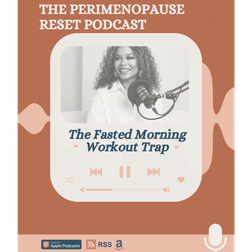
The Fasted Morning Workout Trap: Why Exercise Is Making Perimenopause Symptoms Worse

If you're exercising consistently and your perimenopause symptoms are getting worse — not better — this episode is for you. You're doing everything you were told to do. Fasted morning workouts. High-intensity training five days a week. Pushing through the fatigue because that's what discipline looks like. And your weight is going up. Your cortisol is elevated. Your body feels foreign to you. This is not a willpower problem. This is what happens when the approach that built your fitness in your 30s meets a biological context it was never designed for. In this episode of The Perimenopause Reset, functional nutritionist Miriam breaks down what she calls the Exercise Paradox — the clinical reason why fasted, high-intensity training actively worsens perimenopause weight gain, cortisol dysregulation, and metabolic dysfunction in women over 40. In this episode, you'll learn: → Why fasted morning exercise is a cortisol stacking event — and what that means for fat storage, thyroid suppression, and muscle loss in perimenopause → How the decline of estrogen, progesterone, and thyroid output removes the hormonal buffers that once let your body absorb intense training → Why your nervous system can't distinguish between a 6am HIIT class, a work deadline, and a night of disrupted sleep — and what it does to your metabolism when it can't → What your post-workout symptoms (fatigue, increased hunger, weight retention, inflammation) are actually communicating about your current hormonal pattern → How cortisol-dominant women specifically respond to fasted morning training — and what movement actually works with a dysregulated HPA axis → The difference between exercise as a metabolic stimulus versus exercise as a metabolic stressor — and how to know which one you're triggering This episode is especially relevant if you: Are working out regularly but gaining weight in perimenopause Experience afternoon crashes, disrupted sleep, or elevated hunger after morning training Have been told your bloodwork is "normal" while your symptoms say otherwise Are a Cortisol-Wired archetype — or suspect cortisol dominance is driving your pattern Take the Gut-Hormone Metabolic Archetype Quiz before you listen — it will tell you exactly which hormonal pattern is shaping how your body responds to exercise right now, and make this episode significantly more specific to you: nourish-n-flow.com/gutquiz2026-556098 About The Perimenopause Reset: Hosted by functional nutritionist and gut-hormone specialist Miriam, The Perimenopause Reset is a clinical podcast for professional women navigating perimenopause and menopause who are done being dismissed, undertreated, and handed generic advice that doesn't work for their body. Each episode translates the science of hormonal metabolism into a framework your body can actually use. New episodes drop weekly. Subscribe so you don't miss what's next.

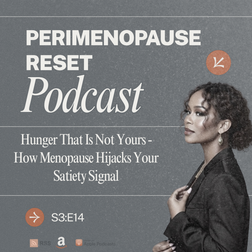
Hunger That Is Not Yours - How Menopause Hijacks Your Satiety Signal

You’re eating the same meals you always have. But something shifted. You finish dinner and thirty minutes later your body is scanning the kitchen. That low-grade hunger that sits behind your ribs and won’t resolve — it’s not emotional eating. It’s not discipline. It’s a disrupted satiety signal, and emerging research is identifying exactly where it breaks down. In this episode, functional nutritionist Miriam breaks down the connection between a specific gut bacterium called Akkermansia muciniphila, the satiety hormone GLP-1, and why the menopause transition undermines this signaling pathway. She explains what the research actually shows, why this isn’t about willpower, and why targeted gut repair is central to the Rhythm Shift — the second phase of the Tri-Shift Method™. If you’ve been told your hunger is stress eating, emotional eating, or “just menopause,” this episode replaces that dismissal with biology. Take the Gut-Hormone Pattern Quiz: nourish-n-flow.com/gutquiz2026-556098 Join the free Nourish & Flow Circle: https://www.skool.com/nourish-flow-circle-7756/about Follow on Instagram: @gut.hormonehealth.nutritionist Subscribe on YouTube: @Guttynutritionist Timestamps [0:00] Why hunger feels different now [2:30] Meet Akkermansia muciniphila — the satiety bacterium [6:00] The GLP-1 connection: how your gut amplifies the fullness signal [10:00] What the menopause transition does to this pathway [14:30] Why this is a Rhythm problem, not a discipline problem [18:00] What restoration looks like — and why context determines whether it helps or harms [21:00] The one question to ask yourself this week

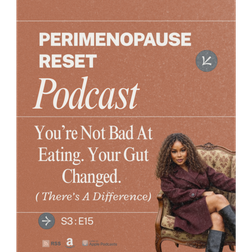
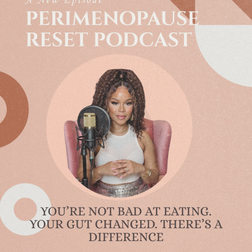
You're Not Eating Bad. Your Gut Changed. (There's A Difference)

If your gut has gotten harder to manage in perimenopause — the bloating, the constipation, the reflux that appeared from nowhere — this episode is the explanation you were never given. Most gut health content treats digestive symptoms as a food problem. This episode goes upstream. Miriam walks through four specific physiological shifts that happen during hormonal transition and directly affect how the gut functions — none of which have anything to do with what you're eating. What we cover: → Why stomach acid drops in perimenopause — and what that costs your digestion, your nutrient absorption, and the symptoms you've been blaming on your diet → How progesterone affects gut motility and why constipation in midlife is hormonal, not personal → What cortisol does to the gut-brain axis when the HPA axis is dysregulated by estrogen decline → What the estrobolome is and how your gut microbiome connects directly to your hormone metabolism → The one practice that works at the nervous system level — upstream of all four shifts — before you change a single food This is not a protocol episode. It is a reframe. And for a lot of women, it is the conversation that ends the self-blame and starts the right questions. Take the free Gut-Hormone Pattern Quiz to identify which hormonal pattern is driving your specific symptoms: nourish-n-flow.com/gutquiz2026-556098 TIMESTAMPS 00:00 One listener's story, named out loud 02:00 What she's been told vs. what's actually true 05:00 The central reframe + about Miriam 08:00 Shift 1: Why stomach acid drops in perimenopause 11:30 Shift 2: Progesterone, motility & why constipation is hormonal 14:30 Shift 3: Cortisol, the HPA axis & the gut-brain connection 18:30 Shift 4: The estrobolome & hormone-gut metabolism 22:00 The permission slip — putting down the self-blame 26:00 One practice: the state before the plate 30:00 What comes next & the quiz #Perimenopause #GutHealth #HormoneHealth #MenopauseSymptoms #GutHormoneConnection #WomensHealth #FunctionalNutrition

Your Gut Changed In Perimenopause

If your gut has gotten harder to manage in perimenopause — the bloating, the constipation, the reflux that appeared from nowhere — this episode is the explanation you were never given. Most gut health content treats digestive symptoms as a food problem. This episode goes upstream. Miriam walks through four specific physiological shifts that happen during hormonal transition and directly affect how the gut functions — none of which have anything to do with what you're eating. What we cover: → Why stomach acid drops in perimenopause and what it costs your digestion and nutrient absorption → How progesterone affects gut motility and why constipation in midlife is hormonal, not personal → What cortisol does to the gut-brain axis when the HPA axis is dysregulated by estrogen decline → What the estrobolome is and how your gut microbiome connects directly to your hormone metabolism → The one practice that supports all four shifts before you change a single food This is not a protocol episode. It is a reframe. And for a lot of women, it is the conversation that changes everything. 🔍 Take the free Gut-Hormone Pattern Quiz to identify which hormonal pattern is driving your specific symptoms: nourish-n-flow.com/gutquiz2026-556098 TIMESTAMPS 00:00 Her story, named out loud 02:00 What she's been told vs. what's actually true 05:00 The central reframe + about Miriam 08:00 Shift 1: Why stomach acid drops in perimenopause 11:30 Shift 2: Progesterone, motility & why constipation is hormonal 14:30 Shift 3: Cortisol, the HPA axis & the gut-brain connection 18:30 Shift 4: The estrobolome & hormone-gut metabolism 22:00 The permission slip — putting down the self-blame 26:00 One practice: the state before the plate 30:00 What comes next & the quiz #Perimenopause #GutHealth #HormoneHealth #MenopauseSymptoms #Bloating #WomensHealth #FunctionalNutrition

Perimenopause & Cortisol: Why Nothing Holds Anymore

If you’re in perimenopause and your stress management has stopped working — the breathwork, the magnesium, the sleep routines — this episode explains why. In perimenopause, declining estrogen and progesterone thin the hormonal buffer that once protected your cortisol response. The result is called the Cortisol Drift: a rise in your baseline cortisol that makes stress harder to buffer, slower to recover from, and more damaging to your gut-hormone balance. Standard stress management stalls because it was built for a different physiology. This episode gives you the clinical piece that’s missing. You’ll understand the biological mechanism behind the Drift, how it’s hitting your specific gut-hormone archetype differently across five distinct patterns, and the Tri-Shift — the three-axis clinical sequence that rebuilds cortisol resilience in the correct order, and why that order is non-negotiable. This episode is for women in perimenopause who have been doing everything right and hitting a ceiling they can’t explain. Know your gut-hormone archetype before you listen — your result is delivered to your inbox in four minutes. Free quiz in the show notes. What This Episode Is About In perimenopause, the hormonal buffer that once protected your cortisol response thins — and everything you’ve been doing for stress management stops holding the way it used to. This isn’t a failure of effort. It’s a shift in the underlying physiology. This episode walks you through the biological mechanism behind that shift, how it plays out differently across five gut-hormone archetypes, and the clinical sequence — the Tri-Shift — that rebuilds cortisol resilience in the correct order. What You’ll Learn The Cortisol Drift: why declining estrogen and progesterone thin the hormonal buffer — and what that changes about how your body responds to stress The three consequences of buffer thinning: larger cortisol amplitude, longer recovery time, and a rising baseline Why stress management stalls: the physiological reason the approaches that used to work have stopped holding The five gut-hormone archetypes under stress: how the Cortisol Drift hits each pattern differently — Cortisol-Wired, Insulin-Inflamed, T3-Downregulated, Estrogen-Stuck, Estrobolome-Disrupted The Tri-Shift: the three-axis clinical rebuild — Nervous System, Rhythm, Nourishment — and why each axis must come before the next The Sequence Principle: why the right interventions applied in the wrong order produce the same partial results as the wrong interventions Resources Mentioned Gut-hormone archetype quiz (result to inbox): https://nourish-n-flow.com/gutquiz2026-556098 Nourish & Flow Circle community: https://www.skool.com/nourish-flow-circle-7756/about YouTube: Gutty Nutritionist— Wind-Down Wednesday: https://www.youtube.com/@Guttynutritionist Cohort 2 — DWY Protocol Build — opens June 22: https://forms.gle/7JD2Jb8wa9j1yyJWA
4 of 5