
Episode notes
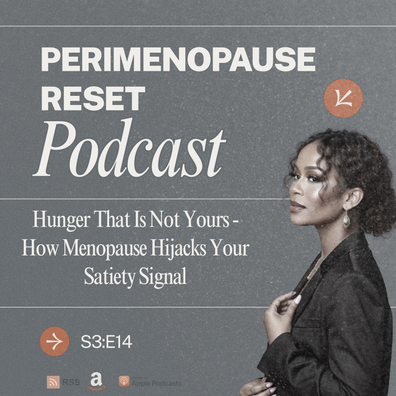
You’re eating the same meals you always have. But something shifted. You finish dinner and thirty minutes later your body is scanning the kitchen. That low-grade hunger that sits behind your ribs and won’t resolve — it’s not emotional eating. It’s not discipline. It’s a disrupted satiety signal, and emerging research is identifying exactly where it breaks down.
In this episode, functional nutritionist Miriam breaks down the connection between a specific gut bacterium called Akkermansia muciniphila, the satiety hormone GLP-1, and why the menopause transition undermines this signaling pathway. She explains what the research actually shows, why this isn’t about willpower, and why targeted gut repair is central to the Rhythm Shift — the second phase of the Tri-Shift Method™.
If you’ve been told your hunger is stress eating, emotional eating, or “just menopause,” this episode replaces that dismissal with biology.
Take the Gut-Hormone Pattern Quiz: nourish-n-flow.com/gutquiz2026-556098
Join the free Nourish & Flow Circle: https://www.skool.com/nourish-flow-circle-7756/about
Follow on Instagram: @gut.hormonehealth.nutritionist
Subscribe on YouTube: @Guttynutritionist
Timestamps
[0:00] Why hunger feels different now
[2:30] Meet Akkermansia muciniphila — the satiety bacterium
[6:00] The GLP-1 connection: how your gut amplifies the fullness signal
[10:00] What the menopause transition does to this pathway
[14:30] Why this is a Rhythm problem, not a discipline problem
[18:00] What restoration looks like — and why context determines whether it helps or harms
[21:00] The one question to ask yourself this week