Science of Cardio

Science of Cardio

di Ryan Fritz
EP 022 - Box Squat 101
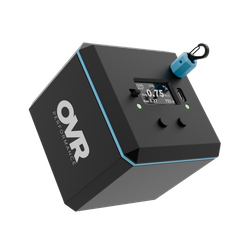
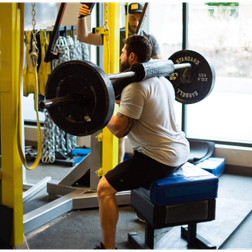
Box Squats are a Low ROM Bar Squat that emphasize Rate of Force Development (RFD), aka how fast can you move heavy loads or an explosive fast movement up from a low position. The key is pausing at the bottom of the squat ROM for 2-3 seconds on a fixed height box then driving up as fast as you can. This is a math and physics equation that will increase your maximum squat weight, influence your 40yd dash time as well as potentially increase your vertical jump height. Benefits/Pros: 1. Stronger - Better 1RM 2. Increase in RFD rate of force development 3. Break through plateaus with precision data/analysis - Static/Dynamic Method 4. Jump Higher better hip or triple extension 5. Faster sprinting speeds - physics (F=MxA) The science behind speed. 6. Knee Shear Reduced loaded on Glutes not knees (physics) ¼ squat creates more risk for ACL injuries Cons: 1. Lack of Mobility Lumbo/Pelvic rhythm - Back pain or Hip/Leg pain like sciatica Modify (adjust depth if you have pain). 2. Equipment needed for optimal outcomes. A VBT (velocity based training) sensor will help to know the speeds of the bar Tips or Meat and Potatoes: 1. 12" plyo Box with 4-6" soft Pad as a topper (soft like cushion harder to get going) Don't use a hard bench. You want it to be challenging to get going or start. A hard surface will allow you to cheat/compensate or assist/help to get you moving. 2. Pausing at low position or sitting on box/pad allowing Inertia to Zero or Taking elasticity out of the tendons/muscle (pre-tension). 3. Explode upward as fast as you can (hopefully using VBT device to track the speed of the bar) 4. Certain Speed for Strength/Power = 0.6-0.2 m/s range (too fast 1m/s no strength improvement, too slow 0.1m/s no power improvement 5. The 3 to 5 method (3-5 reps, 3-5 sets, 3-5min rest) ATP C/P restore (low volume) “Stimulate Not Annihilate" 6. Frequency - 3x per week optimal for maximum benefit. 1x per week is 4 sessions per month vs 3x per week for 12 sessions per month. If you have pains, tweaks, or aren’t rested enough you can have success with 2x per month. 7. New/inexperienced or young training age athletes should master basic squat mechanics and ROMs before trying box squats (depth/ROM) . 8. Getting the VBT data is a huge tool or game charger to optimize strength power/gains, it gives you live feedback of proper loads and you can see progress even if the bar weight isn't changing. Recommendations: 1. New or Starting out, adjust the load to start and figure out your loads, ROM, speeds. Example start with 50% effort and get the tempo, or pausing down and quick explosive movement up. Figure out your box height, you may have to try difference bars. 2. If you don't have a VBT or can't afford a VBT device to Pause Squat 2-3 sec then explode up fast. 3. If you can afford $250 get a OVR Velocity VBT Sensor 10% off or $25 discount code https://c05592-3.myshopify.com/RyanFritz OVR Performance https://c05592-3.myshopify.com/RyanFritz Momentus Supplements https://crrnt.app/MOME/KAnYVx4o Rogue Fitness http://www.roguefitness.com/?a_aid=utqqlhed26res
EP 021 - Velocity Based Training VBT 101
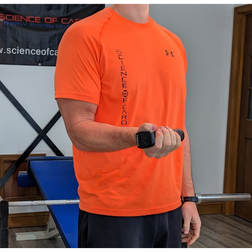
What is VBT Velocity Based Training? How fast you move heavy loads or weights, Sensors on a barbell measure your lifting speed in meters per second (m/s) - F=MxA weight/mass is 1/2 of equation or coin, Acceleration is 1/2 of equation/coin. The higher and faster you can move heavy loads the higher the maximum effort or weight on barbell Types: Booth tooth = Enode, Kinvent, Kpower or Tethered = OVR velocity or Vitruve Pros: Stronger, Increase Power output, Break PRs, Get out of Plateaus, VBT dials in proper loads - Rate of Force Development RFD (principle /method/sci. mechanism) Cons: Too fast or too light not improve Strength/power - Goal specificity (power clean 1-2m/s vs strength) Tips: Strength = 0.6-0.2m/s, VBT dials in Proper loads - Examples of too light/fast, too heavy/slow, optimal power (goldilocks zone) Recommendation: OVR Performamce $25 off coupon (Velocity) https://c05592-3.myshopify.com/RyanFritz Science of Cardio www.scienceofcardio.com https://www.scienceofcardio.com/podcast OVR Performamce https://c05592-3.myshopify.com/RyanFritz Momentus Supplements https://crrnt.app/MOME/KAnYVx4o Isophit https://www.isophit.com/Ryan_Fritz Rogue Fitness http://www.roguefitness.com/?a_aid=utqqlhed26res
EP 020 - Comparing Kinvent and Vald Force Plates and Dynamometers
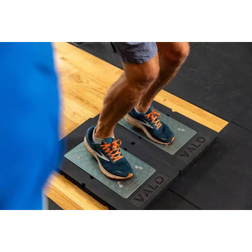
Comparing the Kinvent K-Deltas and VALD ForceDecks 1. Hardware and Specifications Kinvent K-Deltas: Kinvent offers a highly robust build. The standard Kinvent K-Deltas have an acquisition frequency of 2000 Hz and can withstand up to 2,000 kg (4,410 lbs) per plate. If you step up to the K-Deltas 3D, you gain the ability to measure multi-directional movement (lateral and horizontal force vectors), which is exceptional for sports biomechanics. VALD ForceDecks: The ForceDecks strictly uniaxial (measuring vertical force only). 2. Software Philosophy & Ecosystem Kinvent (Clinical & Gamified Approach): Kinvent started with a physical therapy and rehabilitation focus. The Kinvent Physio App stands out by providing real-time biofeedback and interactive training games. Patients can play target-matching or balance games using their center of pressure (CoP). It provides turnkey sports performance metrics (like the Dynamic Strength Index and Force-Velocity profiling), but it is uniquely engaging for rehab patients. VALD (Elite Performance & Deep Analytics): VALD began in elite sport and has a massive footprint in professional athletic leagues and military environments. The VALD Hub platform automatically detects and sections over 20 different movements (jumps, isometric mid-thigh pulls, shoulder tests) instantly. It is designed for rapid squad or team testing where you need to test 30 athletes in 30 minutes and push flawless, deep analytics into a centralized cloud database. Summary Recommendation Choose Kinvent K-Deltas if: You run a physical therapy clinic or private performance studio where patient engagement, balance training games, multi-axis 3D analytics, and asset ownership are your highest priorities. Choose VALD ForceDecks if: You manage teams or large rosters of athletes where rapid group testing workflows.
EP 019 - Objective Data to Results - Using Dynamometer Data for Real Client Outcomes
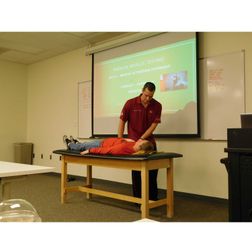
Be objective (no bias/opinion) Collect Quality Data (accurate testing - restraints) Use a Triage/Funnel or Priority System (Narrow focus) Experiment (Scientific Method) Be OK with being wrong and pivot Analyzing Results (Don't just test, Be a detective) - Find Drivers… Have a Strategy for Plateaus Individualize/Customize Keep it Simple Lab Time (Keep growing/learning & question things)
EP 018: Creating a Custom Strength and Conditioning Program
Setting goals Injury prevention Force, Speed, Endurance for optimization Periodization or game plan (Blueprint) Tips for workouts, splits, sets, principles and progression
EP 017: Home Gyms
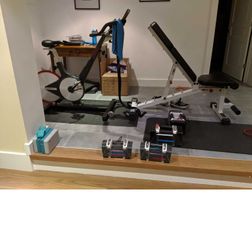
Pros: save time, no travel, no membership, no broken equipment, machines tied up and customize Cons: load, equipment, anchor points What I have: power blocks, isophit, squat rack, ab wheel, stability ball, hex bar, 400lbs, sliding track, trx Recommendations: power blocks, stationary bike, bands, stability, ball, isophit, barbell, trx, mat Tips: equipment dual purpose or offers alot of options/opportunity or multipurpose powersystems.com Roguefitness.com Powerblock.com keiser.com trxtraining.com isophit.com
EP 016: Periodization & Scientific Progressions for Strength and Conditioning
Pros: better strength gains, peak performance, supercompensation Cons: Plateau's, injury, decrease in performance, fatigue Types: Linear or undulating Recommendations: meso cycles, micro cycles, macro cycles, annual plan Tips: rest, recovery, progression, unload/deload/taper
EP 015: Hormones & Body Chemicals 101
Epinephrine Norepinephrine HGH human Growth IGF insulin Like growth factor Testosterone Cortisol Estrogen Progesterone Dopamine Serotonin Melatonin Nitric oxide Prolactin oxytocin Leptin
EP 014: Isophit & Isophit MSK
Pros: basic strength benefits, strong muscles, stronger ligaments, strong tendons, increase rom, more efficient mitochondria, absolute max strength TUT, restraints, decrease inflammation/BP, joint pain mitigation, safe challenges (safer than traditional lifting) Cons: hypertrophy, size, no eccentric contraction (less inflammation) Uniqueness: Combo joint actions, multiple planes, motor patterns, order of operation, exercises that can do on other machines/devices Recommendation: try 3-4x sessions, 10sec. cp, 20-45sec. glycolysis, 20s strength, 30-40s tendon/ligaments, 45s-2min. endurance Benefits: force matching - level/ability/strength adjusted (sub-consciousness), combos, restraints
EP 013: Inflammation (Nutrition & Diet)
Pros: repair, heal, growth, longevity, immunity, auto-immunity, gut health, digestion, joint health, Cons: Arthritis/calcification, aches, pains, communication from brain to body/cells, gut disease, joint disease, organ failure, death, food (potatoes, processed, box food, gluten, wheat, dairy) Anatomy: hormones, cortisol, testosterone, estrogen, HGH, IGF, serotonin, tranquilizers, epinephrine, norepinephrine Indicators: Blood pressure, Heart Rate, HRV, bloodwork, chronic pain Recommendations: detox, fasting/time restricted eating, prolong fasts seaweed, cut out alcohol/drugs food/supplements (turmeric, beets, ginger, CBD), balance, coffee/teas polyphenols https://www.healthline.com/nutrition/13-anti-inflammatory-foods#TOC_TITLE_HDR_2 https://www.health.harvard.edu/staying-healthy/foods-that-fight-inflammation https://keto-mojo.com/ https://www.scienceofcardio.com/
1 di 3