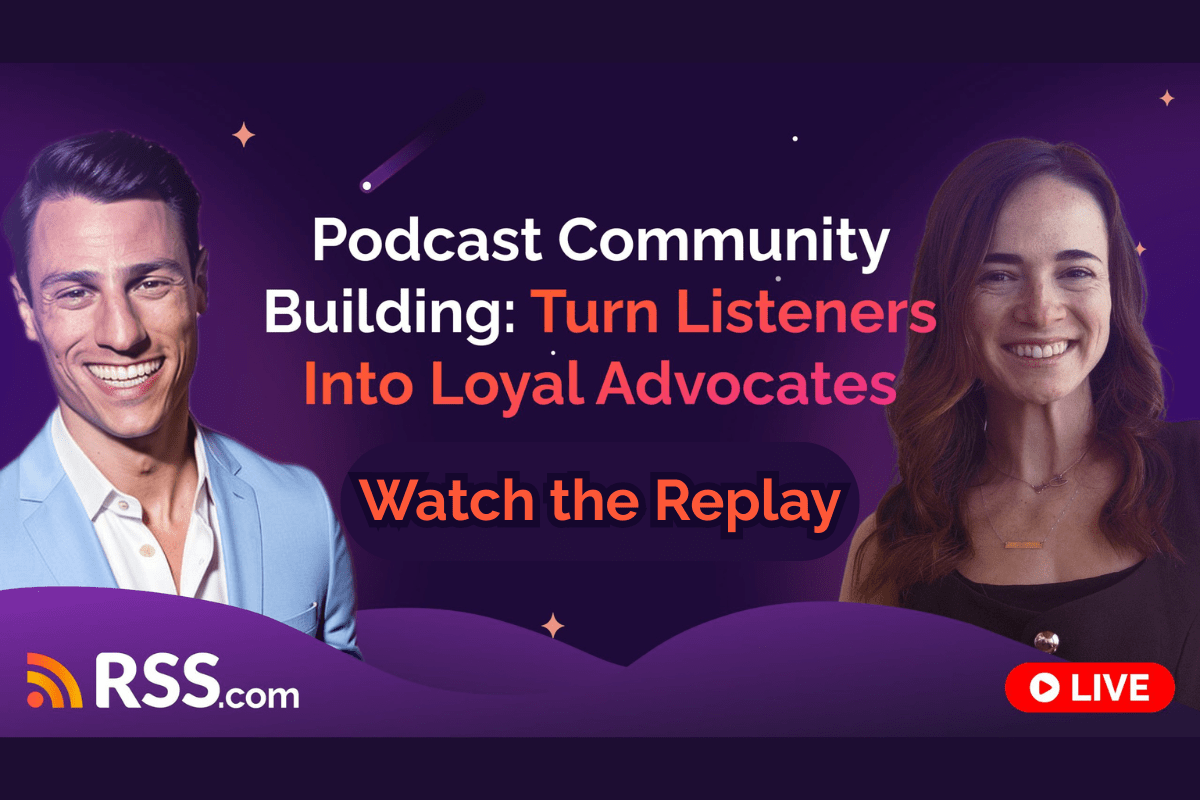
We held a free live workshop on July 21 about building real community around your podcast, and it delivered.
RSS.com Head of Relationships Greg Wasserman sat down with Becky Davidson, founder of Affinity Collective, to walk through how to turn casual listeners into people who actually show up for your show. Below is a recap with the biggest takeaways, plus the full replay if you want to watch it yourself.
Watch the Full Replay
📺 The complete session is live on YouTube now. Grab a coffee and watch the whole thing, or use the takeaways below to jump to what matters most to you.
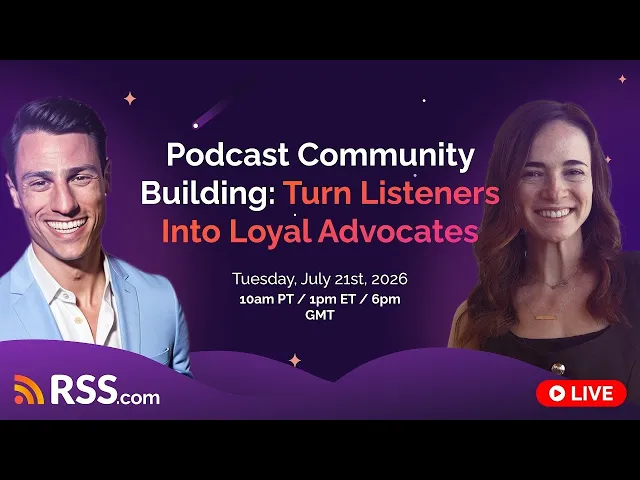
Watch Podcast Community Building: Turn Listeners Into Loyal Advocates on YouTube:
What This Event Was About
Downloads can help your podcast grow. But long-term success comes from creating stronger relationships with the people listening.
Becky opened with a simple point: an audience and a community aren’t the same thing. An audience is one-to-many. People listen, but they don’t know each other and they don’t know you. A community is different. It’s people who share values and interests, connecting with each other and with you.
Most podcasters have already done the hard part. If you’re publishing episodes, you’re already podcasting. Building community is just the next step.
The 4 Stages: Listener to Advocate
Becky broke the process into four stages, and this framework carried the whole session.
Listener to subscriber. This starts with your call to action. Are you telling people how to connect with you beyond hitting subscribe? A freebie tied to your show, a specific question you ask people to DM you about, an email opt-in in your show notes. Small, specific asks work better than a generic “follow me.”
Subscriber to community member. This is where the real work starts. You have to talk to people one-to-one. Ask questions, run polls, actually get to know who’s listening. Becky was clear that this step can’t be skipped. If you don’t do it, nothing else in the process works.
Community member to advocate. Advocates are your inner circle. You know their names. They message you, share your episodes, and talk about your show to other people. You get there by connecting people to each other, not just to you. Greg, whose actual title is Head of Relationships, put it simply: being of service to your listeners is what builds this kind of loyalty.
Building toward a paid offer. If you’re thinking about a subscription tier, community is now doing more of the selling than bonus content is.
Why More Content Isn’t the Answer
One of the most useful points of the day: people don’t leave communities because there’s too little content. They leave because they’re overwhelmed.
Becky’s team has seen podcasts shift away from stacking on more bonus episodes and toward building actual experiences instead. Three things drive people to join and stick around:
- A clear starting point or path to follow
- Programming that’s intentional, not just more content for content’s sake
- Real connection and belonging
The takeaway here is worth sitting with. You don’t need to publish more. You need to design something people actually want to be part of.
Real Examples From the Session
Becky walked through how established shows build this in. A few worth noting:
- Design Better Podcast uses a quiz that recommends episodes based on a listener’s goals, plus a weekly portfolio club and a Slack community for subscribers.
- My Favorite Murder offers early access to live events, exclusive merch, and a Discord where fans talk to each other directly.
- The Diary of a CEO lets members weigh in on which guests get booked.
- Huberman Lab and Crime Junkie tie some subscription revenue to causes connected to their show’s mission.
The common thread across all of them: they ask listeners what they want and build around the answer, instead of guessing.
Live Q&A Highlights
The Q&A got specific fast, and a few answers are worth pulling out on their own.
On email vs. DMs: Both matter. Email is where purchases happen, but DMs feel more personal and are often an easier first step for someone to take.
On where to start if you’re overwhelmed: Pick one thing. An AMA, a virtual event, a simple group chat. You don’t need Slack, Discord, and a paid tier on day one. Design Better has been around for ten years and only just added their Slack group.
On feedback: If someone tells you what they don’t like about your show, that’s valuable information, not something to brush off. Greg mentioned this is exactly why RSS.com built its own Slack community, so feedback has a direct channel to reach the team.
One quick tip from the session worth remembering if social isn’t your thing: a simple custom feedback form (a Google Form or Notion form works fine) can be an easy way for listeners to reach you without needing to be on social media at all.
The Big Takeaway
Your show is made up of unique listeners, so there’s no single formula that works for everyone. Get to know the people listening to your show, then build something that feels meaningful to them and manageable for you. Start small. You don’t need to build everything at once.
Want More Like This?
RSS.com runs free live trainings like this one every month. If today’s session got you thinking about your own show’s community, here’s where to go next:
👉 Start your podcast free on RSS.com
👉 Catch our next live training
👉 Follow along for the replay and future sessions on RSS.com Events.