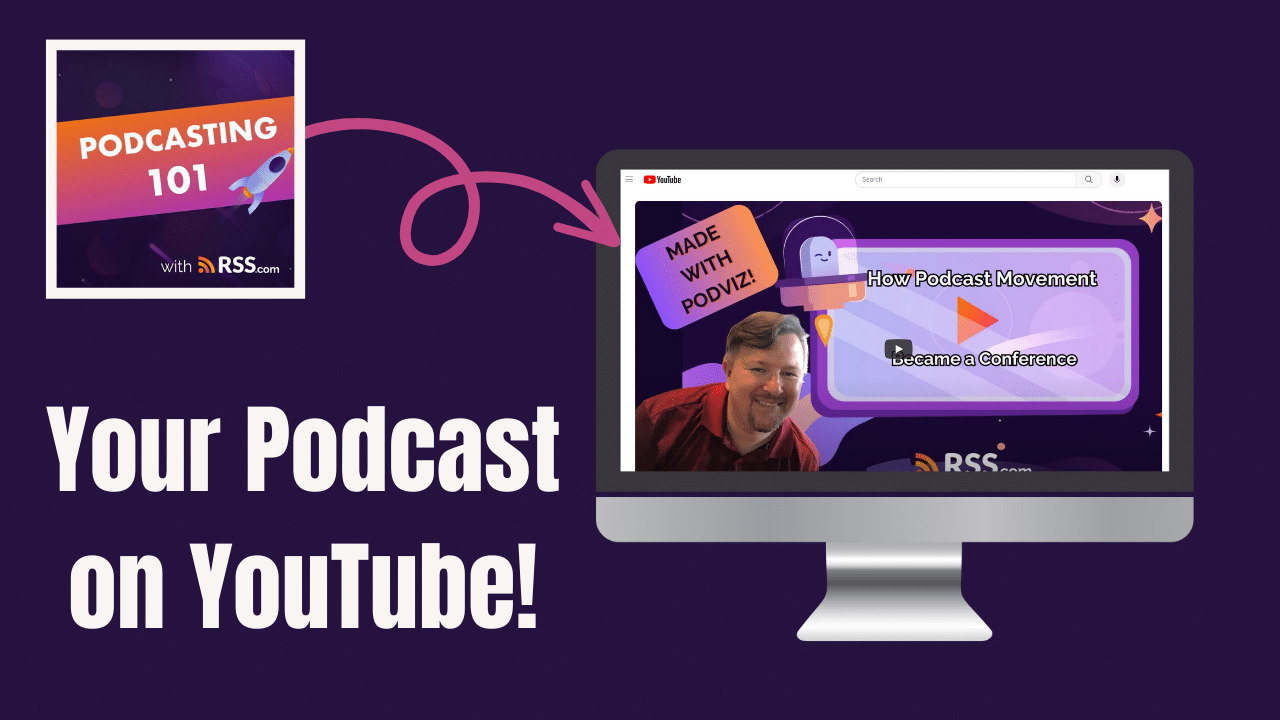
If your podcast isn’t on YouTube, you’re missing out on a HUGE opportunity to get your show in front of millions of potential new followers and fans.
Way back in 2023, YouTube released YouTube Podcasts that allows YouTubers to assign certain content and playlists as a podcast which then makes it eligible to receive special perks – to learn more those benefits click here.
In this post, I’m going to show you:
- How to set up your YouTube channel to have a podcast
- How to connect your RSS.com hosted podcast directly to YouTube
- How to convert your audio-focused episodes into videos
- How to automatically upload your new videos to your YouTube channel.
A YouTube Playlist Isn’t a Podcast
Before you connect anything, it helps to know what you’re actually building toward. Labeling a YouTube playlist as a podcast feels like a shortcut, but it leaves you locked into one platform. If YouTube goes down, gets glitchy, or changes its rules, that content is unreachable until it’s fixed. A real podcast lives everywhere your audience already is: Apple Podcasts, Spotify, Overcast, and yes, YouTube too.
Our evangelist Joe Cassabona breaks down exactly what separates a genuine podcast from a YouTube playlist wearing a podcast label, and why the RSS feed is the piece that actually makes distribution work in your favor. Check out his video Why Your YouTube Podcast Playlist Isn’t a Real Podcast here:
Set Up a New Podcast in YouTube
The first thing you’ll need to do is to log into your existing YouTube channel or set up a new one.
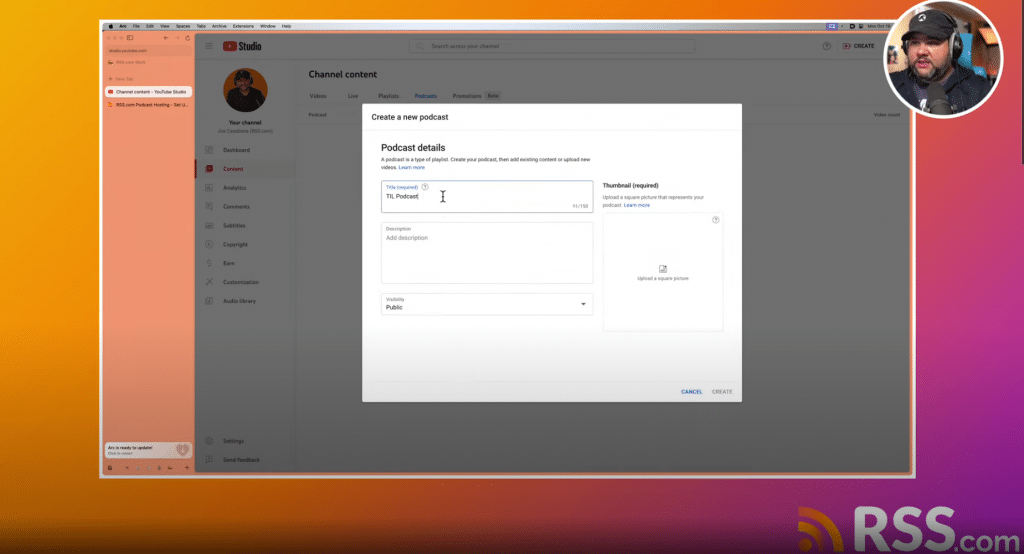
Once you are logged in, select “Content” from the left navigation, and then “Podcasts” from the top navigation.
You’ll add the title and description of your show and upload a custom thumbnail and then click “create.”
Once that’s finished, head over to your account at RSS.com
✨ Need a free RSS.com account? Click here to sign up.
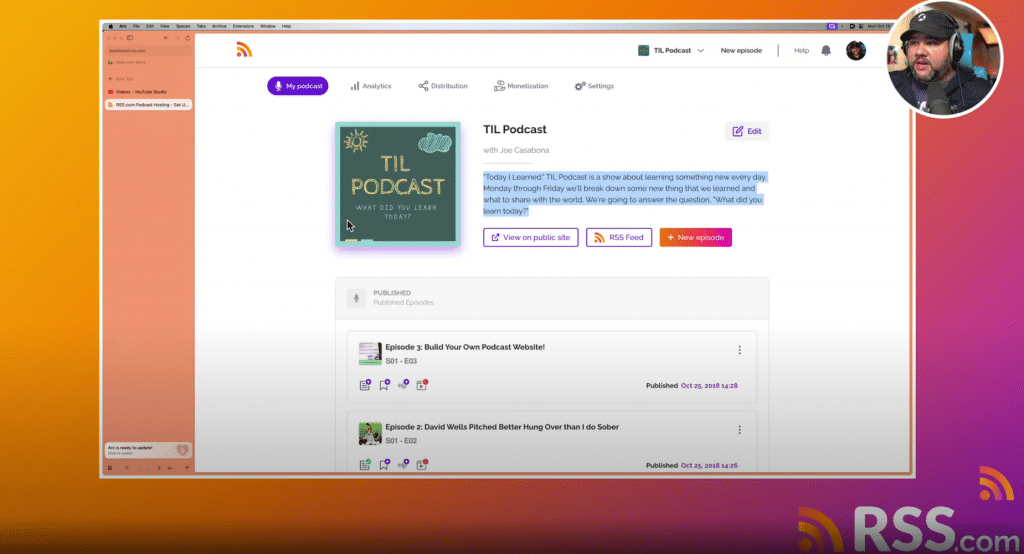
Publish to YouTube via RSS.com
Now that I’ve logged into my RSS.com account, I can see there’s a small video icon next to all of my published episodes. It will appear gray as opposed to purple indicating the feature is not yet active.
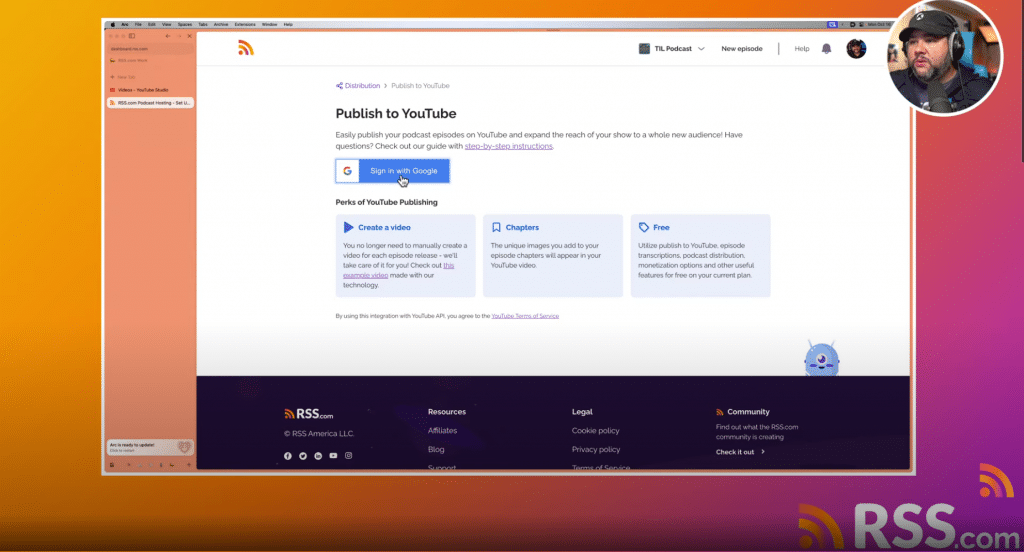
To activate RSS.com’s “Publish to YouTube” feature, we need to select the “Distribution” tab in the top navigation.
In the “Distribution” tab, scroll down until you see “Publish to YouTube” where we will link up our YouTube channel with our RSS.com account.
Once you’ve linked the two accounts, you can select a specific playlist (ideally the one you’ve designated as a podcast) and the visibility and audience status of all new episodes that we’ll convert to video and upload to YouTube.
💡 RSS.com uses its PodViz technology to convert audio-focused episodes into engaging videos.
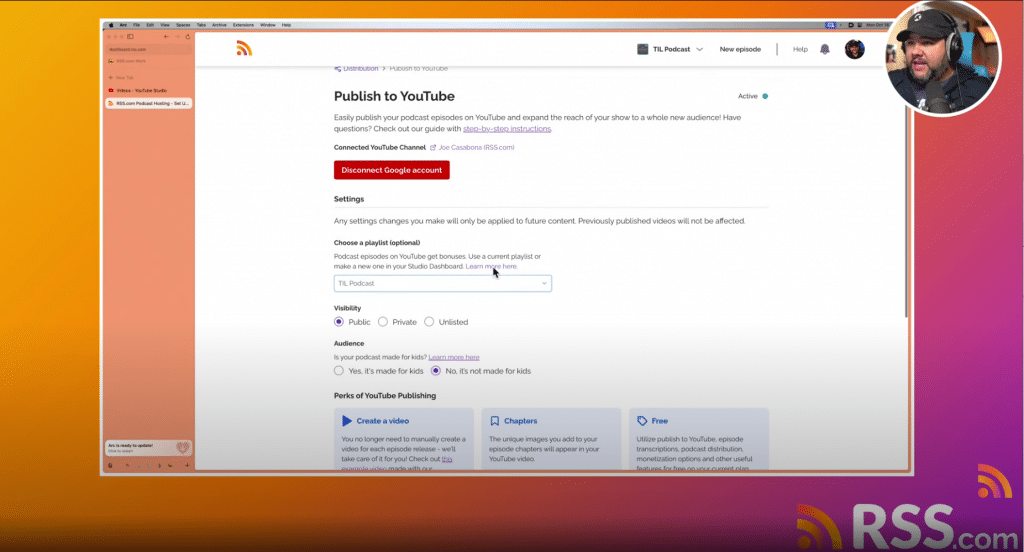
Is Your Podcast Made for Kids?
Is your podcast made for kids? How should you answer this question?
🚨 Your answer will significantly change who your videos are served to.
If you are not explicitly making content for kids, you should ALWAYS select no.
Made for kids this is not the same as kid friendly. Your podcast may be kid friendly, but unless it’s literally made for kids, you need to select “No, it’s not made for kids.”
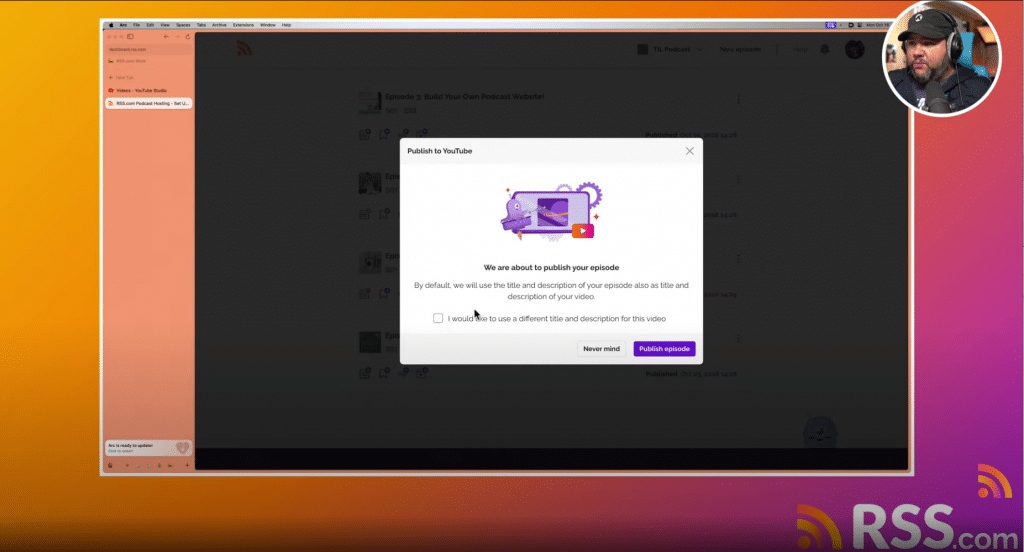
Let’s now go back to the RSS.com dashboard and the video icon that was gray previously should now be purple indicating the feature is active.
Click it, and a pop up will appear asking you if you’d like to use a different title and description for the video.
This is a useful feature you should utilize for YouTube SEO by optimizing your titles and descriptions to help your videos get more visibility and clicks in YouTube.
Next, select “Publish episode” and PodViz will start working it’s magic! 🪄
For more helpful tips on mastering YouTube SEO and performing keyword research for your titles, check out the video below!

Once your episode has been converted into a video, you can go back to your YouTube channel and you will see your new video(s).
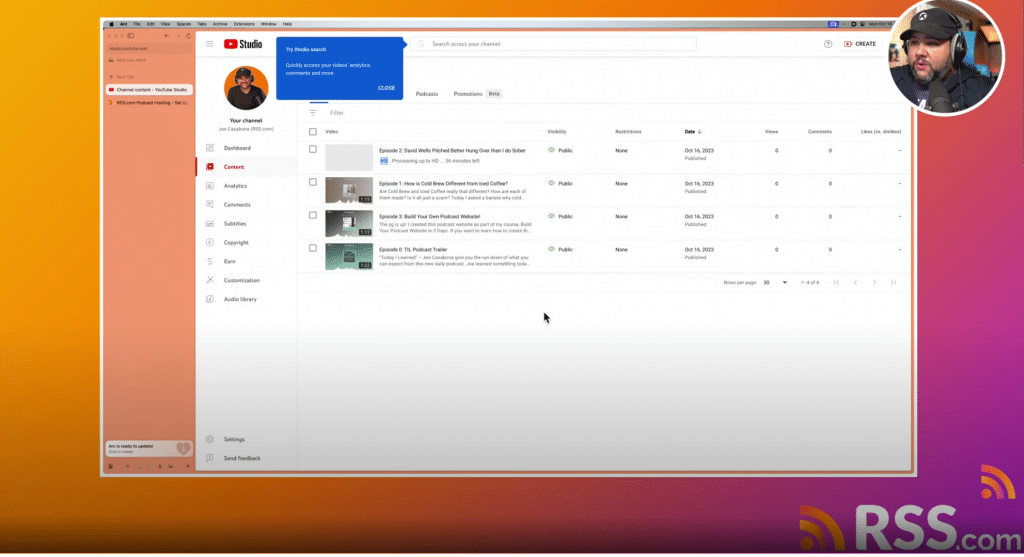
RSS.com’s PodViz will create your video using the episode art you added to your episode.
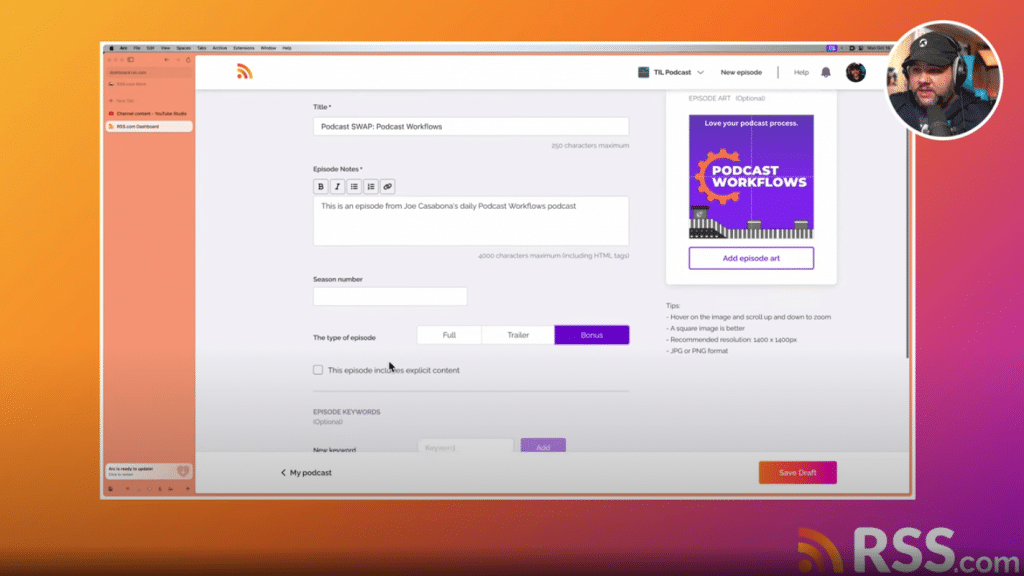
That’s it! Converting your episodes and having them automatically added to your YouTube channel is a breeze with RSS.com.
Started on YouTube First? Turn Those Videos Into a Podcast Too
Everything above assumes you’re hosting your podcast first and pushing it to YouTube. But plenty of creators go the other direction: they’ve been making YouTube videos for a while and want to give that content a second life as a podcast, without starting from scratch.
If that’s you, below Joe walks through exactly how to take existing YouTube videos, pull the audio, and get them distributed as a podcast using a free RSS.com account.
Check out his video How to Turn Your YouTube Videos Into a Podcast:

Either direction you’re coming from, the destination is the same: your content everywhere your audience listens. Start your free RSS.com account, and get your message everywhere today.