
You don’t need a huge audience to explore affiliate marketing for your podcast and start making money.
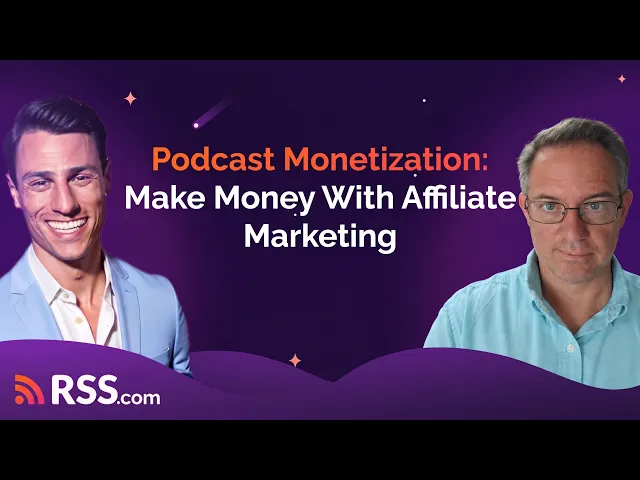
We recently hosted a free live training with Greg Wasserman, Head of Relationships at RSS.com, and Dan Morris, podcaster and President of Audience Industries. They showed how podcasters earn commissions by recommending products they trust. They also showed how to find affiliate programs and work links into a show without losing listener trust.
You can watch the full replay or read our full recap below.
Watch the Replay
The Short Version
- Affiliate marketing pays you a commission when a listener buys something you recommend.
- A small audience can still earn. Start with products your listeners already need.
- Read each program’s rules. Tell your listeners when a link is an affiliate link.
- Track your clicks. Good numbers help you win sponsors later.
Add Another Revenue Stream to Your Podcast
“How do I get sponsors?” It’s one of the first questions podcasters ask when they start thinking about monetization. However, finding sponsors can involve building an audience, pitching brands, negotiating rates, and reporting campaign results.
Affiliate marketing gives you another way to generate revenue, whether you have a few hundred listeners, thousands of listeners, existing sponsors, or no sponsors at all.
By recommending products, services, and resources that make sense for your audience, you can earn a commission on qualifying purchases or other eligible actions. Many programs let you get started without negotiating a sponsorship deal, although eligibility requirements and payment terms vary.
Crawl, Walk, Run: A Simple Order for Podcast Income
Greg shared a three-step plan for earning from your show.
- Crawl: Programmatic ads. These run on your show with little work from you. With RSS.com, you turn them on and start earning.
- Walk: Affiliate marketing. You recommend products and earn a commission.
- Run: Sponsorships. A brand pays you to promote its product.
Most podcasters want to jump straight to sponsors. Affiliate marketing is the step in the middle. It lets you test what your audience buys before you pitch a brand.
What Affiliate Marketing Looks Like
Dan described it as a joint venture. You have an audience. Another person has a product. You tell your audience about the product, and you earn a commission on each sale.
Your listeners want more than one thing from you. A running coach has more than one book on the shelf. You can’t make everything your audience needs. You can point them to the people who do.
“I only get one call to action”
Some podcasters worry that promoting someone else’s product will hurt sales of their own. Dan doesn’t agree. Most of your audience decides about your product within the first month. You can’t talk about the same thing all year.
Mix it up. Launch your product in June. In July, share a tool your audience also needs. Your listeners stay interested, and you keep earning.
Plan Your Income Calendar
Rent and mortgage payments come every month. Your podcast income should too.
Dan suggested you map out your year by income, not by episode.
Ask yourself:
- Which product or promotion pays the bills in June?
- What pays them in July, August, and September?
- Can you repeat the plan next year?
Here are a few ideas from the training:
- Promote a product launch in the month it opens.
- Become an affiliate for a podcasting conference to earn in a slow month.
- Plan holiday gift episodes in November and December. Dan said Amazon’s affiliate rate is low, but holiday shopping carts are big. A “best books to give” episode can send listeners to Amazon at the right time.
Small, repeat sources of income add up. They also take the worry out of planning to go full time.
Start With Your Listener’s Life Cycle
Just starting out? Dan uses an idea he calls the ladder of value.
Your listeners need you during one stage of their lives. Think about where your show fits.
Say you host a marathon podcast. Your listeners ran 5Ks and 10Ks first. Later, some of them will want to run 50-mile races. Someone helped them before you. Someone will help them after you.
Those people are your easiest affiliate partners. You could interview an ultramarathon coach and promote that coach’s book. Your listeners move on to the next step, and you get paid when they do.
Ask yourself:
- Where do my listeners come from?
- Where are they going next?
- What do they need that I don’t talk about?
Real Show Examples
Energized Living Today. The host interviews guests who sell a $200 product. Listeners get it for $100 during the show. The host and the guest split the sale, so each earns $50. Dan said about 20,000 people listen.
Faster Masters Rowing. This New Zealand rowing show covers training and also recommends gear that rowers need, like self-tightening shoelaces.
Not every show needs to sell something every week. But both hosts know what their audience needs, and they match products to it.
No Products to Sell? Try This
During the live stream of the training, a listener asked how this works for audio dramas. Dan hosts a history show and has the same question. Story shows don’t help people fix a problem.
His answers:
- Learn who your audience is. Ask them to join an email list. Run a short survey. Offer a webinar about a topic they love. Each sign-up tells you something about them.
- Find products that want your audience. Brands look for people who already pay attention to a certain group.
- Tie products to your story. A history show can talk about a company’s role in the story and mention its product.
- Help listeners who want to make their own show. Send them to a page about how to start a podcast. List the tools you use, like your hosting company, with affiliate links.
- Sell your story in another form. Turn an audio drama into a Kindle book. Send listeners to it through your Amazon affiliate link.
- Make a holiday episode. Greg suggested a November episode with toys or books tied to your show. It adds fresh content to your feed and brings listeners back.
Where to Find Affiliate Programs
You have a few good places to start.
- Google. Type “affiliate program” in quotes, then add your niche. For example: “affiliate program” supplements. Google shows only pages with those words.
- Brand websites. Search for any brand plus “affiliate program.” Many brands that sell direct to shoppers have one.
- Marketplaces. CodeADX is a free marketplace for creators. It lists retail brands and tracks how your promotions perform. ClickBank lists digital products.
- Your own tools. Do you use a product you love? Check whether the company has a program.
- The RSS.com affiliate program. Our own program pays you when your listeners start a podcast. Greg said many people start a show after they listen to one. They often ask the host where they publish.
Hosts also pick up ideas from guests. Greg asks every guest to name one podcast and one book they recommend. Then he adds those books to a list with affiliate links.
If a guest mentions a product, check if the company has an affiliate program. Then add your link to the show notes.
Make Recommendations Your Listeners Can Trust
The best place to start is with products and resources you believe in and can explain clearly to your audience.
Cover why you picked it, who it helps, and what it does for them. Don’t read it like an ad. Your reason for choosing it should come through in your voice. Dan’s point was simple: you want your listeners to stay for years, not for one sale.
You can also explore opportunities beyond promoting other companies’ products. Dan runs his own product with about 400 affiliates, and he sets the rules for them. If you sell something, you can offer an affiliate program of your own.
Follow the Rules and Tell Your Listeners
Neither Greg nor Dan is a lawyer, and both said so. Still, they did have a few words of advice.
Read each program’s rules
Almost every program has its own rules. Follow them. A small mistake could get you removed, and you’d lose that income.
Dan gave one example. He said Amazon wants links to look like Amazon links, and it requires you to state on your website that you’re an affiliate. RSS.com also has rules. For example, affiliates can’t bid on brand names or certain keywords.
If a company has no clear rules, ask. Can I do this? Can I do that?
Disclose your links
Greg said to always tell listeners when you earn from a link. Disclosure also builds connection. Your audience learns how to support you. Say something like: “If you like this show, buying through my links is one way to help.”
Dan added a simple step. Create a page on your website that lists your partners and says you earn from them.
Check the law
Dan said there are a few federal rules, and some places may have state rules. Look them up.
For legal questions, talk to a podcast lawyer. Greg pointed to the RSS.com training we did with Gordon Firemark. If you’re just getting started, Dan said, don’t let this stop you.
Take care of your listeners
What if a product doesn’t arrive or someone wants a refund? Dan decided early to help his listeners. In 13 years of affiliate work, this came up once. A buyer asked for a $17 refund, and the seller refused. Dan paid it himself. That listener became a customer for life.
Where to Put Your Links
Use more than one spot. Good places for affiliate links include, but aren’t limited to:
- Show notes
- Your podcast website
- A “recommended” page with books, tools, and products
- Your newsletter
- Social posts and comments
- The episode itself, in conversation
Make Links Easy to Hear
Many listeners are driving, running, or doing dishes. They won’t click anything.
Dan shared a fix. Buy a short, easy-to-say domain. Then create redirects that point to your affiliate links. Listeners only need to remember one thing, like yourname.com/book. You can change where the redirect goes each month.
Make it easy on the ear. Say the address slowly. Keep it short. Think of how old toll-free numbers were built to be easy to remember.
How Many Products Should You Mention?
Dan said there’s no “should.” Each episode has a goal. Some episodes cover one book, and one link is enough. Other episodes work better with a list, like “Top 10 gifts for Christmas.”
Add only what fits the episode. A random link won’t earn a click.
You can also keep one recurring link. Dan’s idea: end each episode with an offer to download a “how to start a podcast” guide through your affiliate link. Skip it if an episode is somber and an ad would feel wrong.
Where Should the Link Go in an Episode?
Check your listener stats to see when people stop listening. An early spot may get more sales, but it only works if it fits. Make the mention part of the show, not a break from it. Follow up later in the episode if it makes sense.
Affiliate programs also give you more freedom than sponsors. Sponsors may tell you what to say. Most affiliates set rules but don’t write your script.
Use Affiliate Results to Land Sponsors
Greg gave a good reason to start with affiliate links before you pitch a sponsor.
Say you promote a paint brand and your listeners buy. Now you have real numbers. You can email the brand’s partner team and say, “I’m already sending buyers. Let’s talk about a bigger partnership.” You can also pitch a different paint company and say you’ve proven you can sell paint.
Most sponsorship deals don’t give you much data. Affiliate links show you clicks and sales. If listeners click, you picked the right product.
Greg also recommended keeping all three in your mix: programmatic ads, affiliate links, and sponsors. If a sponsor drops out, an affiliate link can fill the gap.
Meet Your Hosts
Greg Wasserman
Head of Relationships at RSS.com
Dan Morris
Podcaster and President of Audience Industries
Start Your Podcast Today
Ready to try these ideas? Start your podcast with RSS.com, and turn on programmatic ads, then add your first affiliate link.
Check out our list of upcoming trainings. We plan to host new ones every month, so be sure to check it often to see what we have planned!