WorldSnap – History, Civilizations & Lessons from the Past

WorldSnap – History, Civilizations & Lessons from the Past

by World Snap

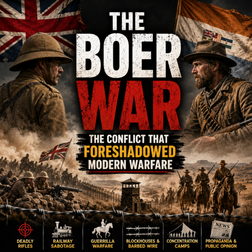
The Boer War: The Conflict That Foreshadowed Modern Warfare
AI
At the height of the British Empire, two small Boer republics in southern Africa challenged one of the most powerful military systems in the world. What began in 1899 as a conventional struggle over sovereignty, gold, and imperial influence soon evolved into something far more modern. In this episode, we explore how the Boer War introduced many features that would define twentieth-century conflict: accurate long-range rifles, trenches, guerrilla warfare, railway sabotage, blockhouse networks, scorched-earth campaigns, concentration camps, propaganda, and the growing importance of public opinion. This is the story of how Britain captured capitals but struggled to control the countryside, how mobile Boer commandos resisted a global empire, and how civilians paid the highest price. More than a colonial war, the Boer War became a warning of the conflicts that were still to come.

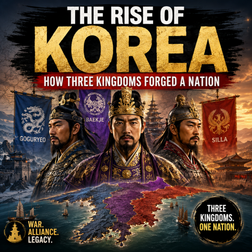
The Rise of Korea: How Three Kingdoms Forged a Nation
AI
Before Korea became one nation, the peninsula was divided among three powerful rivals: Goguryeo, Baekje, and Silla. Each kingdom developed its own path to survival. Goguryeo became a formidable northern military power, Baekje built maritime connections across East Asia, and Silla relied on political discipline, diplomacy, and carefully chosen alliances. In this episode, we explore how centuries of warfare, cultural exchange, Buddhism, foreign intervention, and shifting alliances transformed the Korean Peninsula. From the struggle for the Han River to the fall of Baekje and Goguryeo, discover how Silla emerged victorious—and why the legacy of all three kingdoms helped shape Korean civilization.

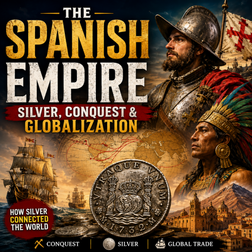
The Spanish Empire: How Silver, Conquest, and Trade Created the First Global Economy
AI
The Spanish Empire was built through conquest, sustained by silver, and connected by trade routes that stretched across the Atlantic and Pacific Oceans. In this episode, we explore how Spain’s victories over the Aztec and Inca empires opened access to enormous mineral wealth, especially the silver mines of Potosí and Mexico. We follow the journey of Spanish silver from dangerous colonial mines to European financial centers, across the Pacific through the Manila galleons, and into the markets of China. But this is also a story of contradiction. Spain controlled one of the greatest sources of wealth in history, yet repeatedly struggled with inflation, debt, costly wars, and economic dependence. The same silver that made Spain a global superpower also exposed the weaknesses of an empire built on extraction. Discover how conquest, forced labor, international finance, and global commerce helped create the first truly interconnected world economy—and why possessing immense wealth did not guarantee lasting prosperity.

The Partition of India: The Human Cost of Independence
AI
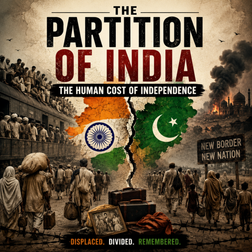
In August 1947, British rule in South Asia came to an end, creating the independent nations of India and Pakistan. But freedom arrived alongside one of the largest and most violent migrations in modern history. This episode explores why Partition happened, how hurried border-making and political distrust fueled mass displacement, and what ordinary families experienced as communities were divided almost overnight. From refugee trains and abandoned homes to the lasting rivalry between India and Pakistan, this is the deeply human story behind one of the twentieth century’s most consequential events.

Japan’s Meiji Restoration: How a Nation Reinvented Itself
AI
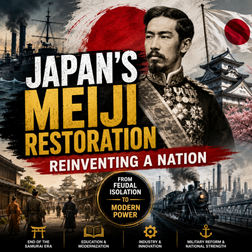
In the nineteenth century, Japan faced a dangerous choice: modernize rapidly or risk falling under foreign control. The Meiji Restoration transformed the country from a decentralized feudal society into a centralized industrial and military power within only a few decades. This episode explores the arrival of Commodore Perry’s black ships, the collapse of the Tokugawa shogunate, the restoration of imperial authority, the abolition of the samurai order, and the creation of a modern army, education system, economy, and constitutional government. It also examines the darker side of Japan’s transformation. The same reforms that protected Japanese independence eventually gave the country the strength to build an empire of its own. Discover how Japan borrowed ideas from around the world, adapted them to local conditions, and reinvented the nation before foreign powers could determine its future.

The Thirty Years’ War: How Europe Created the Modern State
AI
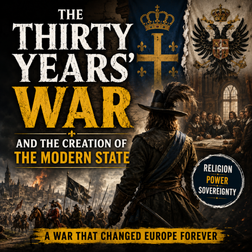
The Thirty Years’ War began in 1618 as a religious and political crisis inside the Holy Roman Empire, but it soon grew into one of the most destructive conflicts in European history. Catholic and Protestant rulers fought for survival, foreign powers intervened for strategic advantage, and ordinary people endured decades of famine, disease, displacement, and military violence. In this episode, we explore how the war moved beyond religion and became a struggle over territory, sovereignty, dynastic power, and the balance of power. We follow the Defenestration of Prague, the rise of commanders such as Wallenstein and Gustavus Adolphus, France’s surprising alliance with Protestant forces, and the long negotiations that produced the Peace of Westphalia in 1648. More than a story of battles, this is the story of how war forced rulers to build stronger governments, improve taxation, organize permanent armies, expand diplomacy, and recognize the authority of territorial states. The Thirty Years’ War did not create the modern state overnight, but it helped shape the political system that still influences international relations today.

The Haitian Revolution: The Revolt That Shook the World
AI
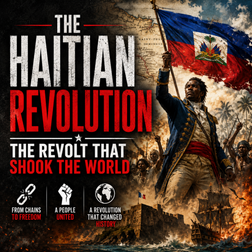
In 1791, enslaved people in the French colony of Saint-Domingue launched a revolution that transformed the Atlantic world. Over more than a decade of brutal conflict, they defeated colonial armies, resisted the restoration of slavery, shattered Napoleon’s ambitions in the Americas, and created the independent nation of Haiti. This episode explores the plantation system that made Saint-Domingue extraordinarily wealthy, the rise of Toussaint Louverture, Napoleon’s disastrous military expedition, the decisive Battle of Vertières, and the enormous political and economic price Haiti paid for its freedom. More than a story of rebellion, the Haitian Revolution was a global turning point. It challenged European empire, exposed the contradictions behind revolutionary declarations of liberty, inspired enslaved and colonized people, and proved that those treated as property could defeat a world power and establish a nation of their own.

The Dutch Empire and the Birth of Modern Capitalism
AI
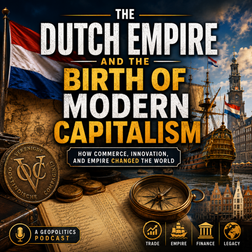
How did a small European republic become the center of the global economy? In this episode, we explore how the Dutch Empire helped shape the foundations of modern capitalism through joint-stock companies, tradable shares, global trade networks, public debt, commercial banking, and the rise of the Amsterdam financial market. At the center of the story is the Dutch East India Company, or VOC—an organization that operated as both a corporation and an imperial power. Its success showed how private investment, government support, military force, and international commerce could be combined into one powerful system. But this financial revolution also had a darker side. Dutch wealth was tied to colonial conquest, monopoly, forced labor, slavery, and violence across Asia and the Atlantic world. The episode examines both the innovations and the human costs behind the rise of global capitalism. From seventeenth-century Amsterdam to today’s stock exchanges and multinational corporations, this is the story of how money, power, empire, and investment became deeply connected.

The Congress of Vienna: How Europe Rebuilt the World After Napoleon
AI
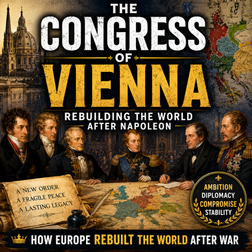
After Napoleon’s defeat, Europe’s rulers faced a challenge almost as difficult as winning the war: rebuilding a shattered continent without creating the conditions for another catastrophic conflict. In this episode, we explore the Congress of Vienna, where diplomats such as Klemens von Metternich, Lord Castlereagh, Tsar Alexander the First, and Charles-Maurice de Talleyrand struggled over territory, legitimacy, and the balance of power. Discover how Europe’s borders were redrawn, why defeated France was eventually reintegrated, how the Concert of Europe emerged, and why the Vienna settlement shaped international diplomacy for decades. This is the story of ambition, compromise, and the difficult art of building peace after war.

The Rise of China’s First Emperor: How Qin Shi Huang United a Divided World

AI
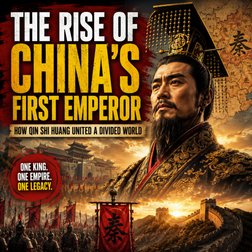
More than two thousand years ago, China was divided among rival kingdoms locked in constant war. From this violent age emerged Ying Zheng, the ruler who would become Qin Shi Huang, the First Emperor of China. This episode explores how the state of Qin used political reform, agricultural expansion, military discipline, and ruthless centralization to defeat its enemies and unify China in 221 BCE. It also examines the emperor’s major reforms, including standardized writing, currency, measurements, roads, and government administration. But Qin Shi Huang’s empire came at an enormous human cost. Harsh laws, forced labor, heavy taxation, and political repression created a system that was powerful but dangerously fragile. Although the Qin dynasty collapsed soon after his death, the imperial model he created shaped Chinese government for more than two thousand years.
2 of 4