
Episode notes
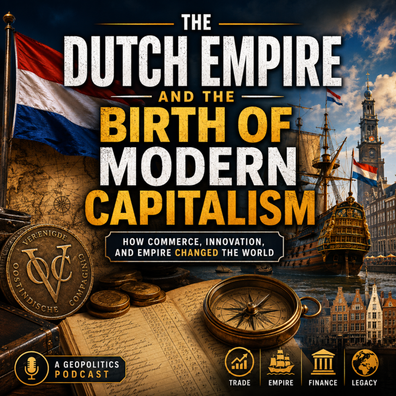
How did a small European republic become the center of the global economy? In this episode, we explore how the Dutch Empire helped shape the foundations of modern capitalism through joint-stock companies, tradable shares, global trade networks, public debt, commercial banking, and the rise of the Amsterdam financial market.
At the center of the story is the Dutch East India Company, or VOC—an organization that operated as both a corporation and an imperial power. Its success showed how private investment, government support, military force, and international commerce could be combined into one powerful system.
But this financial revolution also had a darker side. Dutch wealth was tied to colonial conquest, monopoly, forced labor, slavery, and violence across Asia and the Atlantic world. The episode examines both the innovations and the human costs behind the rise of global capitalism.
From seventeenth-century Amsterdam to today’s stock exchanges and multinational corporations, this is the story of how money, power, empire, and investment became deeply connected.