WorldSnap – History, Civilizations & Lessons from the Past

WorldSnap – History, Civilizations & Lessons from the Past

by World Snap

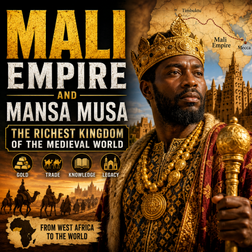
The Mali Empire and Mansa Musa: The Richest Kingdom of the Medieval World
AI
Discover the extraordinary story of the Mali Empire and Mansa Musa, the legendary ruler often described as the richest man in history. This episode explores how Mali rose to power through gold, salt, trans-Saharan trade, taxation, and control of some of medieval Africa’s most important commercial routes. Follow Mansa Musa’s famous pilgrimage to Mecca, his astonishing display of wealth in Cairo, the rise of Timbuktu as a center of trade and scholarship, and the wider connections that linked West Africa with North Africa, the Middle East, and Europe. More than a story about gold, this is the story of how one of the greatest empires of medieval Africa became a major economic and cultural power.

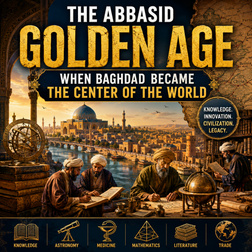
The Abbasid Golden Age: When Baghdad Became the Center of the World
AI
In the heart of the medieval world, Baghdad rose from a newly built capital into one of history’s greatest centers of knowledge, trade, science, medicine, philosophy, and culture. This episode explores how the Abbasid Caliphate transformed Baghdad into a global crossroads where Arab, Persian, Greek, Indian, Central Asian, Jewish, Christian, and Muslim traditions came together. From the House of Wisdom and the translation movement to algebra, astronomy, medicine, paper, and international commerce, discover the systems that made the Abbasid Golden Age possible. We also examine the political struggles, military pressures, and regional fragmentation that gradually weakened Abbasid power, as well as the Mongol conquest of Baghdad in 1258. More importantly, this is the story of how Baghdad’s ideas survived long after its political dominance faded—and continued shaping intellectual life across the Islamic world and beyond.

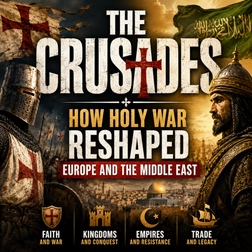
The Crusades: How Holy War Reshaped Europe and the Middle East
AI
The Crusades were more than a series of battles for Jerusalem. They were centuries of religious conflict, political ambition, trade, diplomacy, and cultural exchange that transformed both Europe and the Middle East. In this episode, we explore why thousands of Europeans answered the call to holy war, how the First Crusade captured Jerusalem, why the Crusader States survived for generations, and how Muslim leaders such as Saladin eventually united the region against them. We also examine the rise of the Knights Templar, the rivalry between Richard the Lionheart and Saladin, the shocking sack of Constantinople, and the long-term impact of the Crusades on commerce, state power, religious identity, and historical memory. This is the story of how faith and ambition collided—and how wars fought nearly one thousand years ago still influence the way Europe and the Middle East understand each other today.

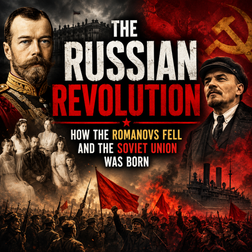
The Russian Revolution: How the Romanovs Fell and the Soviet Union Was Born
AI
In 1917, one of the world's largest empires collapsed with astonishing speed. The Romanov dynasty, which had ruled Russia for more than three centuries, was swept away by war, economic crisis, political unrest, and the breakdown of military loyalty. In this episode, we explore the deeper causes of the Russian Revolution, from inequality and peasant land hunger to the Revolution of 1905 and the devastating impact of World War I. We follow the fall of Tsar Nicholas II, the rise and failure of the Provisional Government, Lenin's return to Russia, the Bolshevik seizure of power, and the brutal civil war that followed. Finally, we examine how the revolutionary struggle transformed the former Russian Empire into the Soviet Union—and why the events of 1917 reshaped global politics for the rest of the twentieth century.

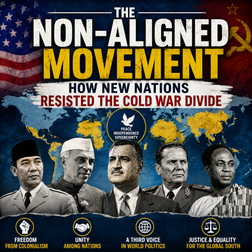
The Non-Aligned Movement: How New Nations Resisted the Cold War Divide
AI
During the Cold War, the world seemed divided between two superpowers: the United States and the Soviet Union. But across Asia, Africa, the Middle East, and beyond, newly independent nations refused to become pawns in someone else’s struggle. This episode explores the rise of the Non-Aligned Movement, from the Bandung Conference of 1955 to the Belgrade Summit of 1961. It follows leaders such as Jawaharlal Nehru, Gamal Abdel Nasser, Josip Broz Tito, Sukarno, and Kwame Nkrumah as they searched for a third path—one based on sovereignty, anti-colonialism, economic independence, and strategic freedom. Discover why non-alignment was more than simple neutrality, how developing nations used superpower rivalry to gain leverage, and why internal divisions, proxy wars, and economic dependency weakened the movement. The episode also examines the lasting legacy of non-alignment and its connection to today’s ideas of strategic autonomy and multi-alignment.

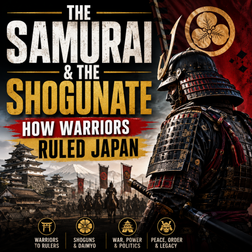
The Samurai and the Shogunate: How Warriors Ruled Japan
AI
For centuries, Japan was ruled not primarily by emperors, but by warriors. In this episode, we explore how the samurai rose from provincial fighters to become Japan’s ruling class, how the shogunate balanced military power with imperial legitimacy, and how leaders such as Minamoto no Yoritomo, Oda Nobunaga, Toyotomi Hideyoshi, and Tokugawa Ieyasu reshaped the country. We also examine the rise of bushidō, the transformation of samurai into bureaucrats, the political system that kept powerful daimyo under control, and the contradictions that eventually brought the shogunate to an end. This is the story of how the samurai conquered Japan, governed it for centuries, created a long peace, and ultimately built a modernizing society that no longer needed them.

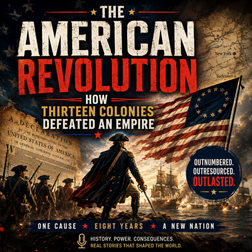
The American Revolution: How Thirteen Colonies Defeated an Empire
AI
How did thirteen divided colonies, with no powerful navy, professional national army, or reliable source of funding, defeat the British Empire? This episode explores the deeper story of the American Revolution—from taxation, colonial resistance, and the Declaration of Independence to the crucial victories at Saratoga and Yorktown. Discover how George Washington’s strategy of survival, French military support, difficult geography, political endurance, and Britain’s global overextension turned an unlikely rebellion into an independent nation. More than a story of famous battles, this is a story of diplomacy, sacrifice, war finance, foreign alliances, and the limits of imperial power.

The Unification of Germany: How Bismarck Changed the Balance of Power
AI
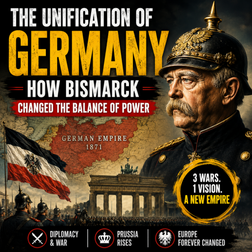
How did a divided collection of German states become the most powerful empire in continental Europe? In this episode, we explore how Otto von Bismarck used diplomacy, economic integration, military reform, nationalism, and three carefully calculated wars to unite Germany under Prussian leadership. From the Zollverein and the failed revolutions of 1848 to the wars against Denmark, Austria, and France, this is the story of how German unification transformed the political map of Europe. We also examine why Bismarck treated Austria with restraint, how the Ems Dispatch helped provoke the Franco-Prussian War, and why the creation of the German Empire in 1871 permanently changed the European balance of power.

Decolonization: How European Empires Lost Their Overseas Worlds
AI
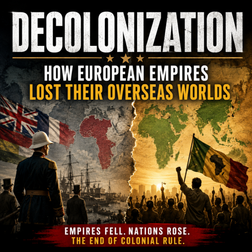
For centuries, European powers controlled vast territories across Asia, Africa, the Middle East, and the Caribbean. Then, within only a few decades, those empires began to collapse. This episode explores how two world wars, anti-colonial nationalism, economic exhaustion, armed resistance, and Cold War rivalry brought an end to formal European imperial rule. From India and Indonesia to Algeria, Ghana, Vietnam, and the Congo, we examine why some colonies gained independence through negotiation while others endured partition, revolution, and devastating war. But decolonization was not simply the lowering of European flags. Many newly independent states inherited colonial borders, fragile institutions, export-dependent economies, and political divisions that continued to shape their futures.

The Treaty of Versailles: How Peace Helped Create Another War

AI
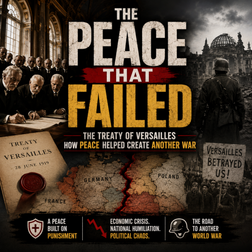
The Treaty of Versailles was designed to secure lasting peace after the First World War. Instead, it left Europe divided, economically fragile, and politically unstable. In this episode, we explore how reparations, territorial losses, military restrictions, national humiliation, and the weakness of the League of Nations shaped the years between the two world wars. We also examine how the Great Depression and Adolf Hitler transformed resentment against the treaty into a powerful political weapon. The Treaty of Versailles did not make another war inevitable, but it created many of the conditions that extremists later exploited.
1 of 4