FULL CIRCLE

FULL CIRCLE

by Circle Health
Season 1

Full Circle with Katharine Ross

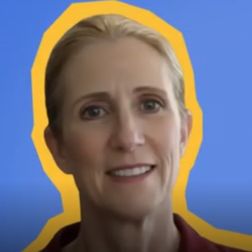
Join us on Full Circle for an insightful conversation with Katherine Ross — 25-year veteran of senior care media and CEO of seniors.com, a platform her father-in-law founded after struggling to find care for a WWII veteran father. Katherine came for one year and never left — and in this episode she explains why. She unpacks how the industry shifted from nursing homes to lifestyle communities, why placement can allow an adult child to simply be a daughter again, and how seniors and their adult children research care in completely different ways. She also shares how AI is changing content at scale — and why her team's rule is firm: nothing publishes without a human reviewing it first. 0:04 A WWII veteran and a resource guide — how seniors.com was born from a family's search for care 1:17 One year turned into 25 — and a grandfather with dementia who received poor care 2:23 More options, more complexity — why finding senior care is harder than it looks 3:00 From "nursing home" to lifestyle community — how the industry's image has transformed 4:04 Being a daughter again — the emotional shift that good placement makes possible 5:05 Hospitality over clinical — beautiful spaces, TikTok residents, and communities people want to be in 6:05 What seniors are actually searching for — connections, romance, and networks of love 6:42 Seniors prefer long-form — high video completion rates and content that starts with recipes 7:55 Adult children want fast answers — ratings, location, price, and care levels first 9:34 Day-in-the-life video — the content format that works best for senior decision-makers 10:16 White-glove profile building — serving both audiences without sharing data broadly 12:05 Writing from lived experience — helping families feel less alone in a hard decision 12:58 Clinical depth without clinical coldness — FAQs for search, resident stories for reassurance 13:50 AI gets you to third base faster — but nothing publishes without a human reviewing it first Guest: Katherine Ross | CEO, seniors.com Host: Prerna | Circle Health

Full Circle with Kathleen Dixon

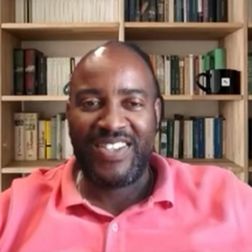
Join us on Full Circle for a warm, practical, and surprisingly personal conversation with Kathleen Dixon — senior living consultant, founder of Retain Consulting, and someone who arrived in elder care via The Body Shop, childcare, and Toys R Us, and never looked back. Kathleen's superpower isn't clinical — it's people. She helps senior living communities get to the real root causes of staff burnout through confidential surveys, targeted workshops, and follow-up implementation, and her case studies are the kind that stick. In this episode, she explains why a full memory care unit is actually easier to staff than a half-empty one, how a weekly scavenger hunt helped a community pass safety audits, and why the executive director is the single most important variable in any facility's care quality. She also shares where she sees senior living heading — toward intimate eight to ten resident micro-communities — and closes with a detail that might be the most relatable ending in the series: she and her 11 girlfriends have already started planning to buy a farm together. If you work in senior living, care about staffing and culture, or are simply thinking ahead about aging — this one is worth your time. 1:01 From The Body Shop to senior living — a career path through retail, childcare, and Toys R Us 2:28 The hardest part of the transition — medical terminology, not compassion 3:17 Retain Consulting — surveys, workshops, and follow-up to fix burnout from the inside out 4:40 Confidential staff surveys first — finding the real root causes before designing any intervention 5:10 Senior placement and Mom's House — helping families fund care transitions without waiting on real estate 6:25 10,000 people turning 65 every day — and most of them own homes with full equity 10:17 Burnout and CMS star ratings — why staff turnover is a revenue problem, not just a care quality one 10:35 The counterintuitive truth about memory care — full occupancy actually reduces caregiver workload 12:06 Helping staff see why full occupancy benefits them — and how simplified workflows ease the burden further 13:04 Socialization as the number one senior need — even introverts benefit from congregate living 14:44 A memory care case study — safety risks, a curated product list, lockable storage, and a staff scavenger hunt 18:18 The scavenger hunt was for staff, not residents — and family education was part of the fix too 21:20 Wearables, motion sensors, and room alerts — technology that reduces physical demands on caregivers 23:36 When agency staff is unavoidable — negotiate for the same individuals, not rotating strangers 26:46 Value-based care in senior living — occupancy still dominates, but care coordination expectations are rising 27:35 The micro-community prediction — eight to ten residents, two dedicated caregivers, growing fast 31:03 AI clinical documentation in senior living — tools that let caregivers be present instead of paperwork-focused 35:19 Top 3 for staffing — the executive director is everything, limit double shifts, and recognize everyone 38:50 The daily morning huddle — the single best indicator of a well-functioning community 41:08 Large operators vs. owner-operators — both can work, but small community models are the future 42:21 Micro-communities rising — eight residents, one RN, one operator, and the intimacy large facilities can't match 43:08 The farm plan — Kathleen and her 11 girlfriends are already making arrangements Guest: Kathleen Dixon | Founder, Retain Consulting | Senior Living Consultant & Placement Advisor Host: Prerna | Circle Health

Full Cirlce with Dr. Frank Okasun

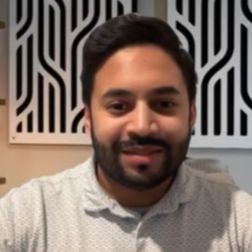
Join us on Full Circle for a candid conversation with Dr. Frank Okosun — internal medicine physician and 11-year private practice owner who built his patient base by doing the opposite of what the system rewards: real time, root causes, and no volume pressure. In this episode, he calls out the conflicts of interest in insurance consolidation, explains why the RVU system is quietly destroying primary care, and walks through the prevention model he's building — a 300-600 patient panel, same-day visits, and an 18-test physical that catches what standard labs miss. 0:51 From Meharry residency to 4,000 patients — building a practice from scratch 3:01 Why he left employed medicine — volume, referrals, and procedures over patient time 4:51 Physician costs are under 10% of healthcare spend — so why do doctors get blamed? 6:17 "Pawns in a bigger chess game" — the middlemen patients never see 8:20 Doctors on computers — documentation and prior auth crowding out patient care 11:06 UnitedHealthcare employs 10% of US physicians and owns their pharmacy and insurer 15:40 Root causes over symptoms — a $500 drug for an unemployed patient isn't treatment 19:44 For-profit insurance — prior auth as a payout reduction tool, not a care tool 22:43 Fix 1: Increase primary care reimbursement — the RVU system is the core problem 27:42 Fix 2: A flat monthly per-patient fee aligned with outcomes 33:33 The prevention model — a comprehensive executive physical, not concierge care 36:08 50% of cardiac events have normal cholesterol — standard labs miss the real risk 39:26 Dangerous silos — two doctors prescribing duplicate beta blockers to the same patient 43:19 300–600 patients, same-day access, 30–60 minute visits 46:00 Advice for new physicians — choose by passion and stay independent 51:16 The business of medicine — what 11 years in practice teaches that school never does Guest: Dr. Frank Okosun | Internal Medicine Physician & Private Practice Owner Host: Prerna | Circle Health

Full Circle with Dr. Keeshan

Join us on Full Circle for a fascinating inside look at skilled nursing done differently — with Keeshan, Executive Director of a skilled nursing facility in Indiana and a 10-year veteran of healthcare operations. Indiana has quietly built one of the most innovative SNF ecosystems in the country, and Keeshan is living it from the inside. In this episode, he breaks down how Indiana's Medicaid incentive model ties reimbursement directly to quality outcomes, what an iSNP actually is and why competing SNF operators chose to build one together, and how wall-mounted telehealth and dual nurse practitioner oversight are keeping residents out of hospitals. He also unpacks the billing mechanics, the grassroots power of aligned Executive Directors, and where AI is already showing up on the admissions floor. If you work in post-acute care, value-based care, or health tech — this is the model worth paying attention to. 0:45 From volunteer to licensed Executive Director — Keeshan's 10-year healthcare journey 2:17 Running a skilled nursing facility — and how Indiana ties Medicaid to quality measures 4:09 The key metrics — rehospitalization, pressure ulcers, falls, and the shift to proactive coverage 5:39 Measurable results — lower readmission rates and why treating in place enables better care 6:38 Wall-mounted telehealth, virtual provider oversight, and the iSNP early alert system 7:33 Two nurse practitioners, one resident — how iSNP layers clinical oversight 8:25 What is an iSNP? The Institutional Special Needs Plan explained 9:17 Competing SNF operators building a shared iSNP — Indiana's unlikely collaboration 9:37 iSNP vs. regular Medicare — what actually changes for the resident 10:32 Shared risk as an incentive — why iSNP pushes facilities toward proactive care 11:24 Who qualifies for iSNP — long-term residents, meal cards, and personal care allowances 12:55 The iSNP visit schedule — NP two to three times weekly, RN once or twice on top 14:24 Is the redundancy worth it? Why more clinical eyes reduces hospitalization risk 15:30 Same standard of care for all — consistent chart reviews regardless of insurance status 17:47 Billing without overlap — how iSNP and medical director groups coordinate visit scheduling 19:00 Value-based billing codes in practice — CCM, behavioral health, and time-based billing 19:55 Replicating the model — what it takes to build an iSNP in another state 20:49 Competitors sharing clinical staff across buildings — the Indiana model in practice 21:33 How much can an ED actually change? Decision-making authority in skilled nursing 23:09 Grassroots change in action — when aligned EDs successfully pushed for a medical director switch 23:55 AI in SNFs today — admissions paperwork parsing and EMAR monitoring alerts 25:38 Indiana's model goes national — presenting at state and national SNF conferences Guest: Keeshan | Executive Director, Skilled Nursing Facility, Indiana Host: Prerna | Circle Health
Full Circle with Neena Philip

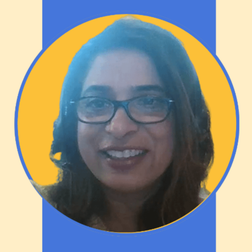
Join us on Full Circle for an expansive, candid conversation with Neena Philip — critical care nurse turned CNO, accidental coffee shop owner, Harvard AI course alumna, and one of the most compelling voices on where healthcare has been and where it must go. Neena has spent decades navigating the full arc of US healthcare: from paper charts and open heart units to EMRs, the Affordable Care Act, COVID-19, and now the age of AI. In this episode, she breaks down why a system built to reward illness can't easily pivot to prevention, what AI is already doing in radiology and pharmacology, and where human judgment and empathy remain irreplaceable. She also speaks with rare honesty about navigating glass ceilings as a woman of color — including the moment she was directed to a scribing seat at her own CNO conference. This is a masterclass in healthcare leadership, policy, and resilience. 0:59 From nursing school to the open heart unit — Neena's early career in critical care 3:20 The accidental entrepreneur — becoming sole owner of a coffee business overnight 4:40 Closing the business, starting a doctorate — and carrying resilience into healthcare leadership 5:34 Climbing back up — from hospital management to CNO at two health systems 6:28 The CEO goal — driven by impact, not title 8:00 Why the system rewards illness — DRGs, procedures, and the financial logic of reactive care 8:56 Social determinants, equity gaps, and why the US spends the most but ranks the lowest 9:51 A fragmented system — the coordination gap between providers, payers, and patients 11:00 Maternal mortality, chronic disease, and the persistent failures no one wants to talk about 12:08 COVID-19 exposed the truth — the US had no real public health infrastructure 13:28 Signs of progress — population health, medical homes, and retail care at CVS and Walmart 16:04 Studying AI at Harvard Medical School — why Neena went back to school again 16:50 AI's history since the 1950s — and its explosion in radiology, ophthalmology, and dermatology 17:40 mRNA vaccines, new antibiotics, and AI's role in accelerating pharmacology research 18:14 The administrative opportunity — billing, claims, and clinical documentation ripe for AI 20:42 AI-assisted clinical scribing — powerful, but human oversight is non-negotiable 21:49 The danger of over-reliance — unregulated AI replacing clinical judgment without safeguards 22:43 What AI will never replace — empathy and human connection in care 23:37 2025's policy storm — navigating Medicaid cuts and regulatory uncertainty 24:05 Downstream damage — more ER visits, worse outcomes, and who gets hit hardest 24:53 Vaccine misinformation — the media environment making public health harder 25:31 Rural hospitals and inner-city systems — the providers most exposed to Medicaid defunding 27:24 Cautious optimism — healthcare has survived before, and AI efficiency may help bridge the gap 29:32 The glass ceiling — navigating healthcare leadership as a woman of color 30:00 Directed to the scribing seat — a defining moment of imposter syndrome and self-advocacy 32:37 The credential trap — why minority women must prove twice as much to be taken seriously 33:00 Potential over performance — how less-qualified candidates get picked for the top jobs 34:26 The responsibility of representation — advocating for those coming up behind you 35:20 Her parents' immigrant sacrifice — the fuel behind her drive 37:13 Why diverse leadership isn't just fair — it produces better decisions and better outcomes Guest: Neena Philip | CNO, Healthcare Executive & AI in Healthcare Advocate Host: Chaitanya Shravanth | Founder & CEO, Circle Health

Full Circle with Rachel Keller

Join us on Full Circle for a wide-ranging conversation with Rachel Keller — VP of Sales & Marketing at Powervox, AI thought leader, and host of the Female Fridays podcast. Rachel's path from aspiring national talk show host to the cutting edge of senior care technology is anything but conventional, and her perspective sits at a rare intersection: storytelling, human connection, and the transformative potential of AI. In this episode, she introduces Abby, an AI receptionist already handling senior care calls with an 81% engagement rate, unpacks the concept of "health span," and shares a deeply personal story about her grandmother's fall that reframes why fall-detection technology isn't just convenient — it's urgent. She also looks ahead to a bold future where personal AI assistants negotiate care placements on behalf of seniors. Whether you're in senior care, fascinated by AI, or passionate about amplifying women's voices — this one will stay with you. 0:10 Introduction — Meet Rachel Keller, VP of Sales & Marketing at Powervox and AI thought leader 0:39 The dream — growing up wanting to be a national talk show host 1:10 Broadcast journalism at Mizzou — and the crisis of faith at graduation 1:38 From video storytelling to senior living marketing — the career pivot that stuck 3:02 Where senior care, value-based care, and AI converge 3:30 "Health span" explained — how AI predicts falls and other health events before they happen 4:53 Where technology helps — and where only human connection will do 6:33 Meet Abby — the AI receptionist handling overflow and after-hours senior care calls 8:07 Are families comfortable talking to an AI? The answer may surprise you 9:02 The data — 81% of callers keep talking to Abby after learning she's AI 10:32 A personal story — Rachel's grandmother, a fall, and the technology that wasn't there 14:31 Dr. Peter Attia's longevity research — and why hip fractures are more devastating than most realize 14:42 Introducing Female Fridays — Rachel's podcast elevating women's voices 16:28 A standout guest — Katie Grant's traumatic brain injury and what it means to grieve a former self 17:52 How Rachel finds and chooses guests for Female Fridays 20:18 A global solution — matching aging populations with caregiver-rich countries like India 23:59 Rachel's bold prediction — AI assistants negotiating senior care placements with each other 25:44 Closing remarks and wrap-up Guest: Rachel Keller | VP Sales & Marketing, Powervox | Host, Female Fridays Podcast Host: Prerna Follow Rachel: Female Fridays Podcast

Full Circle with Pamela D Wilson

Join us on Full Circle for a powerful, no-holds-barred conversation with Pamela D. Wilson — entrepreneur, court-appointed guardian, expert witness, and one of the most seasoned voices in elder care advocacy. With 25 years and three companies behind her, Pamela has seen every corner of a system that too often fails the people it's supposed to protect. In this episode, she exposes the financial scams targeting older adults, the invisible signs of elder abuse hiding inside families, and the systemic failures of Medicare, Medicaid, and Adult Protective Services. She also challenges the healthcare industry's incentive to treat illness rather than prevent it — and offers hard-won guidance on powers of attorney, caregiver burnout, and what families can do right now before a crisis hits. This is the conversation every family needs to have before it's too late. 0:04 Introduction — Meet Pamela D. Wilson, 25-year elder care entrepreneur and advocate 0:42 A lifelong calling — growing up surrounded by grandparents, aunts, and uncles 1:03 The corporate detour — and why she returned to elder care after 15 years 1:26 Guardian and conservator — why families hire professionals for the hardest decisions 2:30 Expert witness work — standards of care, family disputes, and elder abuse cases 3:38 The biggest financial threats — phone scams, email fraud, and exploitation by family 4:55 Living alone with undiagnosed dementia — the silent medical risk hiding in plain sight 5:29 Estate planning essentials — financial and medical powers of attorney, done early 5:45 Non-visible elder abuse — power, control, and intentional isolation within families 6:49 Transparency in care — why doctors should always interview seniors privately 7:20 Early family conversations — care planning before burnout sets in 8:20 Cultural pressure on family caregivers — and how to break the generational cycle 9:28 Building empathy between exhausted caregivers and parents facing daily physical loss 10:11 Medicare and Medicaid's limits — the brutal reality of applying for government support 11:27 A broken incentive — why the insurance industry profits more from sick people than healthy ones 11:47 Siloed policymakers — duplicate research spending and the cost of government fragmentation 12:54 Adult Protective Services and the justice system — when well-meaning families become suspects 13:48 Free resources on Pamela's website — chronic care, power of attorney, and guardianship 14:11 What to do without an attorney — reporting self-neglect and pursuing guardianship through APS Guest: Pamela D. Wilson | Elder Care Expert, Guardian & Advocate Learn more: pameladwilson.com

Full Circle with Jason Post

Join us on Full Circle for a warm, practical, and deeply human conversation with Jason Post — senior living consultant, former VP of Operations at Sienna, and someone who moved out at 17, opened a luxury inn in New Hampshire, and somehow ended up spending over a decade helping families navigate one of life's most difficult transitions. Jason brings a hospitality mindset to elder care, and it shows. In this episode, he shares his three-part framework for cutting through the staged tours and glossy brochures to evaluate a retirement community for what it actually is. He explains why a change in behavior — not age — is the real signal that a family needs to act, how to have those impossible conversations without triggering defensiveness, and why the greatest gift a retirement community offers isn't clinical care at all — it's connection. Whether you're years away from this decision or in the middle of it right now, Jason's advice is the kind you'll wish you'd heard sooner. 0:38 From hospitality to senior living — Jason's career journey starting at 17 2:00 11 years at Amica, VP at Sienna, and now consulting families independently 3:52 Why he stayed — the intrinsic reward of helping others as a second paycheck 5:08 The emotional toll on PSWs and nursing aides — and why they keep showing up 5:47 How to see past the staged tour — Jason's three-part evaluation framework 8:50 Tip 1: Talk one-on-one with the general manager — they set the entire culture 10:18 The exact questions to ask the GM and what the right answers look like 11:00 Tip 2: Ask how residents and valuables are protected overnight — and if a nurse is on site 12:30 Tip 3: Come back for Sunday dinner — the most honest picture of everyday life 13:53 Does the framework travel? Applying the same yardstick in Canada vs. the US 16:30 Canada's strength in cost-free care — and the wait time trade-off 18:22 The US system — faster access, but at a significant financial cost 20:15 Helping families recognize when a loved one actually needs care 21:09 The cognitive dissonance of aging — most people feel a decade younger than they are 22:33 The real signal — a change in behavior means a change in condition 23:15 The coffee shop example — early cognitive decline hiding in plain sight 25:57 Why seniors resist these conversations — independence, dignity, and denial 26:40 Falls are the number one killer of seniors — practical prevention tips that don't feel clinical 28:49 Framing safety as convenience — how to introduce changes without triggering resistance 29:52 Focus on solutions, not decline — medication reminders and other soft entry points 32:20 Chaitanya's father's 600-mile solo drive — why independence matters so much to aging parents 33:35 Reframe safety conversations around quality time — not risk 34:04 Trial stays — the low-commitment way to introduce seniors to community living 35:27 How new friendships formed during a trial stay can change everything 37:17 Loneliness in North America vs. India — why geography shapes the isolation crisis 40:19 The emotional well — why human connection isn't a nice-to-have, it's a clinical need 42:02 What retirement communities need to do better — showing the life, not just the building Guest: Jason Post | Senior Living Consultant, Former VP of Operations at Sienna Host: Chaitanya Shravanth | Founder & CEO, Circle Health

Full Circle with Dr. Larry Gelman

Join us on Full Circle for one of the most profound conversations in the series — with Dr. Larry Gelman, psychologist, martial artist, chronic pain survivor, and 50-year practitioner whose thinking draws equally from Erikson, Freud, the Blue Zones, Buddhism, and a Roman Catholic priest's two-word sermon. Dr. Gelman has spent half a century learning what it actually takes to reach a patient — and his answer is both simpler and harder than most clinicians expect. In this episode, he challenges the assumption that depression is the primary concern for aging adults (it's anxiety), reframes the entire purpose of clinical assessment around a single principle — "the diagnosis of all diagnoses is the person" — and shares the questions that have unlocked secrets patients carried for decades.If you've ever wondered what it looks like to practice medicine as a healer rather than a technician, this conversation is it. 0:57 Don't treat seniors as a monolith — the resilience and tenacity that defines the population 2:00 The full risk picture — comorbidities, polypharmacy, social determinants, and system navigation 3:20 The "psychobio-social geopolitico-economic" framework — seeing every person in their full context 4:17 Erikson's lifespan theory — ego integrity vs. despair, and what it means to evaluate a life 5:00 Accumulating losses — how grief and isolation can spiral into deep alienation 6:16 20 years of martial arts — life as the dynamic balancing of imbalances 7:45 Blue Zone research — the nine principles correlated with living past 100 9:01 The biggest surprise of his career — anxiety, not depression, dominates in elderly patients 10:21 The wisdom of age — why practitioners consistently underestimate their elderly patients 11:07 "The diagnosis of all diagnoses is the person" — the principle behind 50 years of practice 12:30 Siddhartha's path — a retelling of the Buddha story as a metaphor for love and service 14:02 400 articles and a spinal fusion — how chronic pain became the engine of his writing life 16:14 Psychology, martial arts, and pain — integrating suffering rather than fighting it 17:21 Reinterpreting Sanskrit — it's not life that causes suffering, it's untoward expectations 20:01 Two protocols developed — the NECA Opioid Use Disorder and Psychobiosocial Risk Assessment interviews 22:22 DSM-5-TR in real time — five years of negotiation with the APA to build a live diagnostic tool 23:45 The psychobiosocial deep dive — an hour-long assessment designed to open authentic dialogue 25:17 The quality of questions determines the quality of answers — and signals genuine care 26:14 Patients who cried — what happens when a question finally reaches someone 28:37 50 years of practice — mastery begins at 40, but at 50 you discover what you don't know you don't know 29:31 The golden rule for clinicians — earn respect, win cooperation, evolve trust, effect influence by consent 30:17 "I don't require you to trust me — I trust myself" — where the locus of trust must live 33:14 The questions that unlock secrets — the worst thing that happened, the worst thing ever done 35:16 Guilt, moral breach, and sin — risk factors that clinical inquiry almost always skips 35:43 The opening question he trusts most — who are you, and how did you come to be? 37:00 Polypharmacy and the iceberg — what patients aren't telling you about what they're taking 55:35 The starfish flinger — why each individual act of care matters regardless of the scale of the problem 57:10 India, caste, and class — finding the universal in one of the world's most diverse cultures 58:56 Closing call — resist labeling, honor mystery, and respect the uniqueness of every person Guest: Dr. Larry Gelman | Psychologist, Clinical Protocol Developer & 50-Year Practitioner Host: Prerna |Circle Health

Full Circle with Dr John Hsu

Join us on Full Circle for an urgent, unflinching conversation with Dr. John Hsu — 32-year anesthesiologist, chronic pain and addiction medicine specialist, and inventor whose near-fatal heart attack three years ago became the catalyst for some of the most practical innovations in the opioid crisis today. Dr. John doesn't traffic in abstractions: 75% of people don't take medications as prescribed, 125,000 die unnecessarily every year as a result, and the opioid epidemic now kills more than 100,000 Americans annually — almost entirely from illicit fentanyl, not prescription drugs. In this episode, he traces exactly how the crisis was created by government policy, not just pharmaceutical greed, explains why abstinence-only approaches fail 93% of the time, and introduces the iPill dispenser — an ATM-inspired device that ensures the right person takes the right pill at the right time. He also shares a coming threat that makes fentanyl look manageable, and closes with a message that every family member of someone struggling needs to hear: recovery is possible, and treatment works. 0:57 32 years in anesthesia and pain medicine — and the heart attack that changed everything 1:45 The scale of the problem — 75% non-adherence, $290B annual cost, 125,000 preventable deaths 3:12 How the opioid crisis was made — pain as the fifth vital sign, the prescribing wave, and the whipsaw back 4:10 The next wave — Nitazine, five times more potent than fentanyl 4:30 Pain and addiction don't discriminate by age — the opioid crisis in elderly patients 5:21 Shared responsibility — pharma, government policy, and physicians all played a role 6:20 Opioid prescriptions for cancer patients down 40% — the pendulum swung too far 7:04 Why abstinence fails — 6-7% success vs. 50%+ overdose reduction with medication-assisted treatment 8:44 Only 11% with opioid use disorder receive treatment — contributing to over a million deaths 9:55 The ATM moment — how watching patients manipulate pill counts inspired the iPill dispenser 11:40 Inside the iPill dispenser — reminders, missed-dose alerts, video verification, and tamper prevention 12:23 Innovation 2: an opioid with a built-in respiratory stimulant to prevent fatal overdose 13:40 Innovation 3: a combined Narcan and respiratory stimulant auto-injector for high-potency overdoses 14:48 The Chechnya theater crisis — hundreds dead because Narcan couldn't reach victims in time 15:58 Fentanyl as a weapon of mass destruction — the national security dimension of the crisis 17:39 AI dispensers and ingestible transmitters — verifying each medication in elderly patients with cognitive impairment 20:21 The real policy fix — stop targeting prescription opioids and start targeting illicit fentanyl 21:43 The economic case — a 10% reduction in opioid costs saves $270B and 10,000 lives annually 22:43 Funding the solution — opioid litigation settlement funds sitting unused in every US state 23:15 85% of jail detainees have untreated OUD — and 129x higher overdose risk on release day 25:18 480,000 veterans with OUD, 209 VA clinics, 44 deaths per day — the crisis inside the crisis 27:30 50 million pills as reparations — a pharmacy chain's commitment to the dispenser program 28:05 Telehealth plus dispenser — bringing CBT and whole-body care to rural patients without transport 29:02 A message to every family caregiver — seek treatment, it's okay, and don't give up Guest: Dr. John Hsu | Anesthesiologist, Addiction Medicine Specialist & Inventor, iPill Dispenser Host: Chaitanya Shravanth | Founder & CEO, Circle Health
2 of 3