Christian History Without the Noise

Christian History Without the Noise

by Nicole
Season 3

Why Did Romans Distrust Christians?

What did ordinary Romans actually think about Christians? It's easy to imagine the Roman Empire simply deciding that Christianity was dangerous. But the historical picture is much more complicated. In this episode, we'll look at how Christians were perceived by the people around them. Why were Christians sometimes accused of atheism even though they believed passionately in God? Why did rumors develop around Christian worship? And how did misunderstandings about Christian beliefs contribute to suspicion and hostility? We'll also consider what Roman writers tell us about the growing Christian movement—and what their testimony can reveal about Christianity from the outside. Sometimes, one of the best ways to understand a movement is to ask what its critics noticed about it.

What Made the First Christians So Different?

AI
Why did Christians stand out so much in the ancient world? In the first centuries of Christianity, believers lived within a Roman society filled with religious traditions, temples, festivals, and competing gods. Yet Christians worshipped differently, lived differently, and understood their relationship with God in a radically different way. In this episode of Nicole's Bytes, we'll step into the world of the early Christians and explore what made them distinctive. Why did they refuse to worship the Roman gods? Why did their beliefs about marriage, family, morality, and human dignity sometimes challenge the surrounding culture? And why did these differences sometimes make Christians appear strange—or even dangerous—to their neighbors? Understanding what made Christians different helps us understand the world in which the early Church began to grow.

Season 3 Trailer

Trailer
When you say RSS for the trailer, do you mean the episode description/show notes that will appear in your podcast's RSS feed? If so, here's a polished version: Season 3 Trailer The story of early Christianity did not end with the apostles. In Season 3 of Christian History Without the Noise, we'll explore the world of the early Christians as they faced suspicion, criticism, persecution, and extraordinary challenges throughout the Roman Empire. Why were Christians different from everyone around them? Why were they persecuted? How did they defend their faith against critics? And how did Christianity continue to grow despite opposition? This season examines the lives of ordinary believers, the courage of the martyrs, the Great Persecution, and the rise of Constantine, the emperor whose influence would forever change the course of church history. Join me as we separate history from legend, examine the evidence, and discover what the experiences of the early church can teach us today. Coming this season: • What Made the First Christians So Different? • Why Did Romans Distrust Christians? • Why Were Christians Persecuted? • Why Were Early Christians Willing to Die for Their Faith? • How Did the First Christians Actually Live? • How Did Early Christians Answer Their Critics? • Why Did Christianity Grow So Quickly? • What Was the Great Persecution? • Did Constantine Change Christianity Forever? Subscribe now and join the journey through Christian history, without the noise. I actually think this description sounds much more professional and focused than the old "Nicole's Bytes: The Mini Series" branding and reinforces your new identity as a Christian history podcast.
Season 2

The First Christians and Their First Crisis

The First Christians and Their First Crisis What happened when the earliest Christians began facing serious disagreements about teaching, authority, Scripture, and the future of the Church? In the final episode of Season 2 of Nicole's Bytes: A Journey into Christian History, we step back and look at the bigger picture. Throughout this season, we've explored the Apostolic Fathers, early Christian leadership, the Eucharist, the Didache, competing teachings, Marcion, and the development of Christian Scripture. Now we bring those threads together and ask what these early controversies actually tell us about the development of Christianity. Was there one moment when the original Christian faith disappeared? Or does the historical evidence show something more complicated—a Christian movement experiencing real disagreement while also maintaining important connections to its apostolic past? Rather than beginning with a conclusion, we'll return to the earliest sources and ask what they actually show. This is the season finale—and an invitation to keep asking questions, examining evidence, and exploring the fascinating world of early Christianity.

Did Heresy Really Enter Christianity Gradually?

A Creeping Heresy Not every major change in Christianity begins with a dramatic break. Sometimes a new idea appears gradually. A different interpretation takes hold, spreads through a community, and eventually raises a difficult question: Is this simply another way of understanding the Christian faith—or has something fundamental changed? In this episode of Nicole’s Bytes: A Journey into Christian History, we explore how early Christians recognized, challenged, and responded to teachings they believed were inconsistent with the faith they had received. Rather than assuming that every disagreement was automatically “heresy,” we'll look at how early Christian writers used Scripture, apostolic teaching, shared beliefs, and the testimony of Christian communities when evaluating competing ideas. As Christianity continued to grow, disagreements became increasingly important—and the responses to those disagreements would help shape Christian identity for centuries to come. Join me as we continue our journey into the earliest centuries of Christianity and ask a simple but important question: How did early Christians decide when a new idea had gone too far?

Before There Was a New Testament: Who Decided What Belonged?

Who Gave Us the Bible? How did Christians come to recognize the writings that make up the Bible? In this episode of Nicole's Bytes: A Journey into Christian History, we explore the fascinating historical development of Christian Scripture. Long before there was a single, universally recognized New Testament collection, Christians were already reading the Jewish Scriptures, sharing apostolic writings, and using Gospels and letters in their communities. We'll look at the role of the Septuagint, the development of Christian Scripture, the challenge posed by Marcion, the gradual recognition of authoritative writings, and the later witness of figures such as Athanasius. We'll also consider an important question: Did one person or one meeting simply decide what books belonged in the Bible? The historical story is more gradual—and far more interesting. Join me as we continue exploring how Christians understood Scripture, authority, and the faith they believed they had received from the apostles.

Did One Man Try to Change the Bible? | The Marcion Question

AI
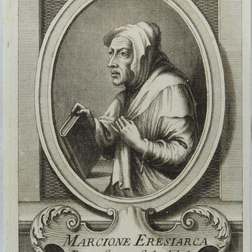
Marcion: Did One Man Try to Rewrite Christianity? In the second century, a Christian teacher named Marcion proposed a radical interpretation of Christianity. He believed the God revealed in the Jewish Scriptures was different from the God revealed by Jesus, and he developed his own collection of Christian writings. Why did Marcion's ideas attract followers? Why did other Christian leaders strongly oppose him? And what does his story reveal about the development of Christian Scripture? In this episode of Nicole’s Bytes: A Journey into Christian History, we explore Marcion's teachings, his relationship to the Jewish Scriptures, his collection of Christian writings, and the response of early Christian writers such as Irenaeus of Lyons. Rather than simply labeling Marcion as "wrong," we'll ask a historical question: How did early Christians decide whether a teaching was consistent with the faith they believed they had received from the apostles? Marcion's story takes us one step closer to another important question: How did the books of the New Testament become recognized as Scripture?

When Did Christian Beliefs Begin to Change?

As Christianity spread throughout the Roman world, early Christians encountered new questions — and new interpretations of the Christian message. In this episode, we explore some of the earliest challenges faced by Christian communities, including debates about the humanity of Jesus, teachings associated with Docetism, the diverse movements often described as Gnostic, and the influential challenge posed by Marcion. We'll also meet Irenaeus of Lyons, one of the most important second-century Christian writers, and examine how he responded to competing teachings by appealing to Scripture, apostolic tradition, and the churches connected with the apostles. Rather than presenting early Christianity as either perfectly uniform or completely chaotic, we'll look at what the historical evidence actually shows: a growing movement wrestling with difficult questions about Jesus, Scripture, God, creation, salvation, and authority. And those debates lead to an even bigger question: How did early Christians decide which teachings belonged to the apostolic faith? That is where our journey continues.

What Did the First Christians Actually Teach? | The Didache

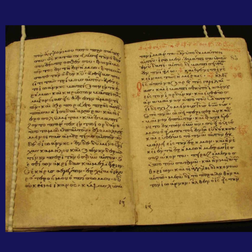
What if we could open a Christian handbook written nearly two thousand years ago and see how some of the earliest believers were taught to live, worship, pray, and practice their faith? In this episode of Nicole’s Bytes: Journey into Christian History, we explore the Didache, one of the earliest surviving Christian writings outside the New Testament. Often described as an early Christian teaching manual, the Didache gives us a fascinating glimpse into baptism, fasting, prayer, Christian ethics, worship, and community life. What makes this little document so important? It helps us move beyond later assumptions and listen to an early Christian voice for ourselves. We’ll explore what the Didache actually says, what it can—and cannot—tell us about the earliest Christians, and why this ancient text still matters when we ask an important historical question: What did Christians believe and practice in the generations immediately after the apostles? Come with me as we open one of Christianity’s earliest surviving handbooks—and listen to the past, one byte at a time.

The Man Who Knew the Apostle John

Who was Polycarp of Smyrna? In this episode of Nicole's Bytes Mini-Series, we meet one of the most important leaders of the early Church—a bishop remembered for his connection to the Apostle John, his faithful ministry, and his courageous martyrdom. Discover why Polycarp remains one of history's most significant witnesses to the apostolic age.
1 of 3