Growth Digger

Growth Digger

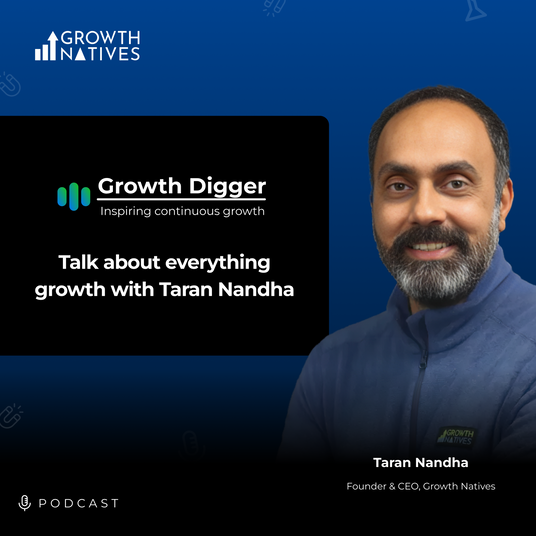
by Taran Nandha
Season 3

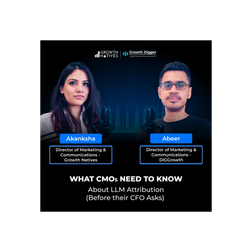
What CMOs Need to Know About LLM Attribution (Before their CFO Asks)

What happens when buyers start researching through AI before ever visiting your website? In this episode of Growth Digger, Akanksha Dass (Director of Marketing & Communications, Growth Natives) sits down with Abeer Aulakh (Director of Marketing & Communications, DiGGrowth) to explore one of the most important emerging topics in modern marketing: LLM Attribution. As AI-powered tools increasingly influence buyer decisions, traditional attribution models based on clicks, form fills, and website visits are becoming incomplete. The conversation explores how CMOs can measure marketing impact when AI becomes part of the buyer journey—and how to answer the tough questions leadership teams and CFOs are starting to ask. In this episode, you'll learn: ✓ Why traditional attribution models are becoming less effective in an AI-driven world ✓ How LLMs influence buyer decisions before prospects ever reach your website ✓ What CMOs should track and communicate to prove marketing impact Whether you're a CMO, marketing leader, RevOps professional, or growth strategist, this episode will help you understand how attribution is evolving and what it means for the future of marketing measurement.

When Should You Hire A RevOps Agency vs Build In-House? 
Scaling fast but struggling with revenue operations? One of the biggest decisions growing companies face is whether to hire a RevOps agency or build an in-house team. Join Rahul Sindwani, VP – Operations at Growth Natives, and Akhil Yadav, Associate Director – Product, as they break down the pros, cons, and ideal use cases for each approach. 🔹 When a RevOps agency makes the most sense 🔹 The benefits of building an in-house RevOps team 🔹 How AI is transforming modern revenue operations Whether you're a startup, scale-up, or enterprise organization, this episode will help you determine the right RevOps model for your business. 💡 Key takeaway: The best RevOps strategy depends on your growth stage, business goals, and operational maturity—not industry trends.

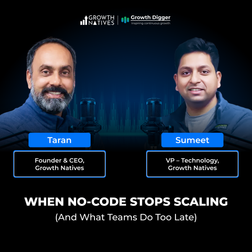
When No-Code Stops Scaling (And What Teams Do Too Late)

No-code platforms help startups launch faster, validate ideas, and build momentum without heavy development resources. But what happens when growth outpaces the systems that got you started? In this episode of Growth Digger, host Sumeet Rana, VP – Technology at Growth Natives, sits down with Taran Nandha, Founder & CEO of Growth Natives, to discuss the hidden challenges of scaling no-code products. From performance bottlenecks and technical debt to migration planning and custom development, they explore why many teams wait too long to address scalability—and how proactive planning can prevent costly setbacks. Key insights from this episode: • The early advantages and strategic value of no-code platforms • Warning signs that your no-code stack is reaching its limits • How to plan a smooth transition from no-code to scalable architecture Whether you're a startup founder, product leader, or technology decision-maker, this conversation offers practical guidance on balancing speed, scalability, and long-term growth.

Why AI-Generated Content Still Needs an Editor

AI can write blogs, social posts, emails, and even entire campaigns in minutes. So why do marketers still need editors? In this episode of Growth Digger, host Arishbha Sahni sits down with Sneha Kumari, Senior Copywriter & Editor at Growth Natives, to explore why human judgment remains the real competitive advantage in the age of AI-generated content. From the difference between content creation and content differentiation to the role of editing in shaping brand voice, perspective, and audience relevance, this conversation unpacks what AI can do—and what it still can't. Whether you're a marketer, content creator, copywriter, or business leader using AI in your workflow, this episode offers practical insights on creating content that stands out instead of blending in. Key Takeaways: ✓Why "good enough" AI content often fails to create impact ✓The difference between generating content and creating differentiation ✓A simple 3-step framework to review AI-generated content before publishing

What Conversion-Focused Design Actually Means in Practice? 
Most brands think they have a traffic problem — when in reality, they have a conversion problem. In this episode of Growth Digger, Akanksha Dass sits down with Rukman Singh to unpack what conversion-focused design actually means in practice, and why modern UX is no longer just about aesthetics — it’s about performance. From reducing friction and improving user journeys to using data-driven design decisions, this conversation breaks down how brands can turn attention into action and improve conversions without constantly redesigning everything. Key takeaways: ✓Why good-looking design doesn’t always convert ✓How UX impacts revenue and customer behavior ✓The role of data, testing, and clarity in high-converting experiences Tune in for more insightful episodes on Growth Digger. Don’t forget to follow and stay connected for upcoming conversations.

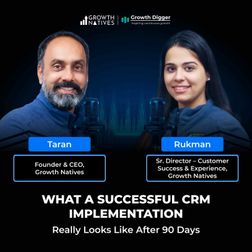
What a Successful CRM Implementation Really Looks Like After 90 Days 
In this episode, Taran Nandha sits down with Rukman Singh to break down what really happens in the first 90 days of a CRM implementation — the phase where adoption, workflows, data quality, and team behavior decide whether the system succeeds or fails. From building the right foundation to driving user adoption and optimizing workflows, this conversation shares practical insights every business leader should know before rolling out a CRM platform. ✔Why the first 90 days determine CRM success ✔The biggest mistakes teams make after CRM go-live ✔How adoption, data quality, and workflows drive long-term value Watch till the end for a simple framework to assess whether your CRM is actually delivering results.

Why RevOps Initiatives Fail (Even with the Right Tools)
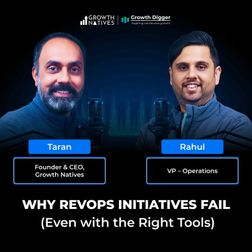
Why do RevOps initiatives fail even after companies invest in the best CRMs, automation platforms, and analytics tools? In this episode, Taran Nandha and Rahul Sindwani discuss the real reasons revenue operations strategies break down inside organizations. The conversation explores how data silos, team misalignment, unclear ownership, and weak operational processes can limit RevOps success — even when the right technology is in place. They also share what successful RevOps teams do differently to create scalable and predictable growth. Key Topics Covered: ✓Why tools alone cannot fix broken RevOps systems ✓The impact of team alignment, workflows, and ownership ✓What successful RevOps initiatives do differently If you enjoyed this conversation, don’t forget to like, comment, and share this episode with your team and network. Follow for more insights on RevOps, growth strategy, and operational excellence from industry leaders.

Why B2B Teams Are Overbuilt and Underperforming

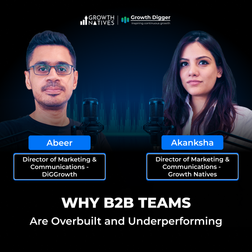
Why do B2B teams today have more tools, more people, more dashboards… and still miss pipeline targets? In this episode of Growth Digger, Akanksha Dass (Director of Marketing & Communications at Growth Natives) sits down with Abeer Aulakh (Director of Marketing at DiGGrowth) to unpack a growing problem in modern B2B organizations: Teams are overbuilt… but underperforming. From bloated martech stacks to misaligned incentives and fragmented ownership, this conversation breaks down why complexity is hurting performance—and what high-performing teams are doing differently. 💡What you’ll learn in this episode: ✓Why “overbuilt ≠ optimized” in B2B teams ✓How tool overload and over-specialization reduce efficiency ✓What high-performing teams do differently to drive revenue 💡 Key takeaway: ✓You don’t win by adding more tools, more roles, or more dashboards. ✓You win by aligning better, simplifying systems, and focusing on revenue.

Prompt Fatigue And Brand Drift: The Hidden Risks Of Over-Automating Content Creation
What happens when content creation becomes too easy? In this episode, Abeer Aulakh sits down with Akanksha Dass to unpack a growing but often overlooked challenge in modern marketing — prompt fatigue and brand drift. As AI makes it easier to generate content at scale, teams are facing new problems around clarity, consistency, and creative ownership. This conversation explores how over-automation can quietly weaken brand identity, why “more content” doesn’t always mean better performance, and how teams can build systems that balance AI efficiency with human direction. If your content engine feels fast but slightly off, this episode will help you understand why — and what to do about it. Key takeaways: ✓Why prompt fatigue leads to decision exhaustion and reduced clarity ✓How brand drift happens gradually (and why it’s hard to detect early) ✓The right balance between AI, human creativity, and structured systems If this added value, do like, share, and subscribe—and we’ll see you in the next episode.

From Insights to Foresight: How Salesforce Analytics is Changing the Game

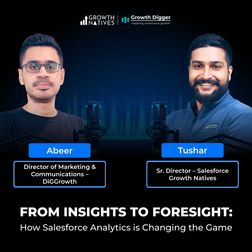
In today’s data-driven world, businesses aren’t struggling to collect data — they’re struggling to use it effectively. So how do you move from simply understanding past performance to actually predicting what comes next? In this episode, we explore the shift from insights to foresight and how Salesforce analytics is enabling businesses to make smarter, faster, and more proactive decisions. 🎙️ Host: Abeer Aulakh, Director of Marketing & Communications – DiGGrowth 🎙️ Guest: Tushar Misri, Sr. Director – Salesforce 💡 Key Takeaways: ✔ Turn data into actionable insights ✔ Predict future trends and customer behavior ✔ Make faster, smarter business decisions ✔ Shift from reactive to proactive strategy Analytics is no longer just about looking back — it’s about shaping the future. If you’re not yet leveraging advanced analytics, this conversation will show you why now is the time to start.
2 of 9