
Social media can feel loud, fake, and exhausting, especially when everyone’s yelling for attention. But if you’re a podcaster who’s not showing up online with intention, you’re missing out on one of the most effective ways to grow your audience and build real connections with listeners.
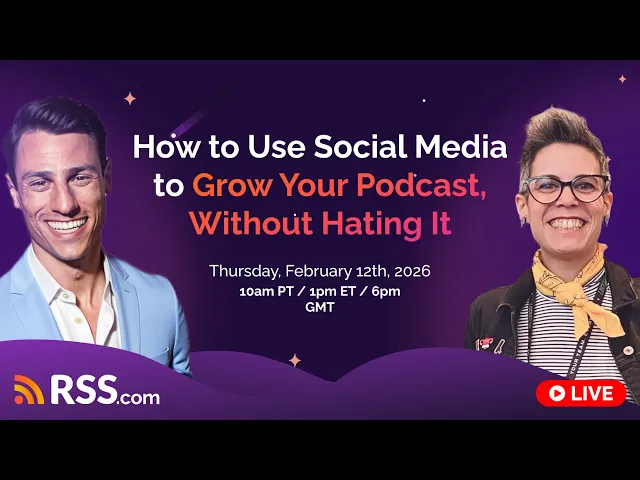
On February 12, 2026, RSS.com’s Head of Relationships Greg Wasserman sat down with podcast marketer and content strategist Ana Xavier for a live training on how to use social media to actually grow your podcast, without burning out in the process.
Here’s what they covered in the masterclass How to Use Social Media to Grow Your Podcast, Without Hating It:
Social Media Has Changed. Your Strategy Needs to Change Too.
If you’re still thinking about social media as a place to hang out with your existing followers, it’s time for a reset. Most major platforms, including Instagram, LinkedIn, TikTok, Threads, and X, have shifted from relationship-based feeds to discoverability-based feeds. That means your content is now being shown to people who have never heard of you.
This is actually good news for podcasters. But it means you need to stop creating content only your current audience would understand and start thinking about what would resonate with someone seeing your name for the first time. Think of it like meeting someone new.
- What are you about?
- What do you value?
- What can you offer them?
Stop Blaming the Algorithm
When a post flops, the instinct is to blame the algorithm. Ana pushed back on that mindset during the training. Algorithms are driven by user behavior.
If your content isn’t getting engagement, it’s worth asking:
- Did this resonate with the people who saw it?
- Was the timing off?
- Did it need a different format?
Sometimes a post doesn’t land because of a busy news cycle or because it simply needs to be restructured. That doesn’t make it bad content. It might just mean you should resurface it a few weeks later with a fresh angle, or even post it again as-is. Most people won’t remember seeing it the first time, and new followers definitely won’t have seen it at all.
AI Isn’t Replacing You. Use That to Your Advantage.
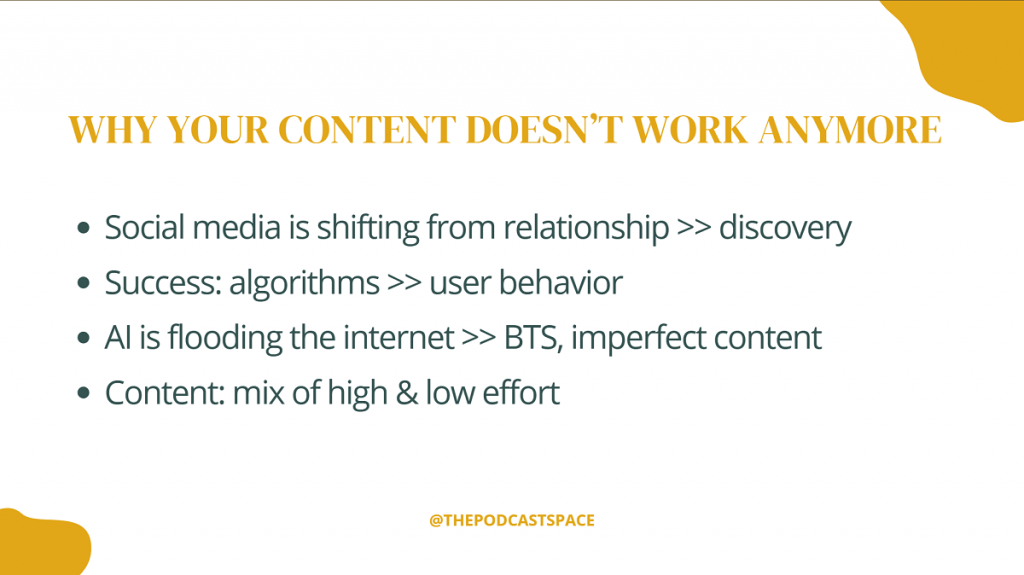
With AI-generated content flooding every platform, a lot of podcasters are asking: what’s the point of showing up? Ana’s answer was simple. AI can’t replicate you. Your behind-the-scenes moments, your imperfect selfies, your genuine reactions to landing a dream guest or hitting a milestone: that’s the stuff audiences connect with.
People are craving authenticity more than ever. Showing up as yourself, even without makeup, even with a messy recording setup in the background, builds the kind of trust that polished AI content simply can’t.
High Effort Isn’t Always Better
One of the biggest traps podcasters fall into is thinking every social media post needs to be a production. Ana encouraged the audience to rethink this. If a single quote can change someone’s day, why do you need a 10-slide carousel to make an impact?
The key is sustainability. Not every post needs to be high effort. Some days, your best move is to reshare an old post, throw up a quick story, or post a simple quote card. That’s not lazy. It’s smart. Low effort doesn’t mean low quality. It means you’re showing up consistently without burning out.
Greg echoed this point: you can get dozens of pieces of content from a single episode recording. Quotes, clips, behind-the-scenes shots, hot takes you didn’t get to say on air. The content is already there. You just have to slice it up.
Your Social Media Audience is Not One Group
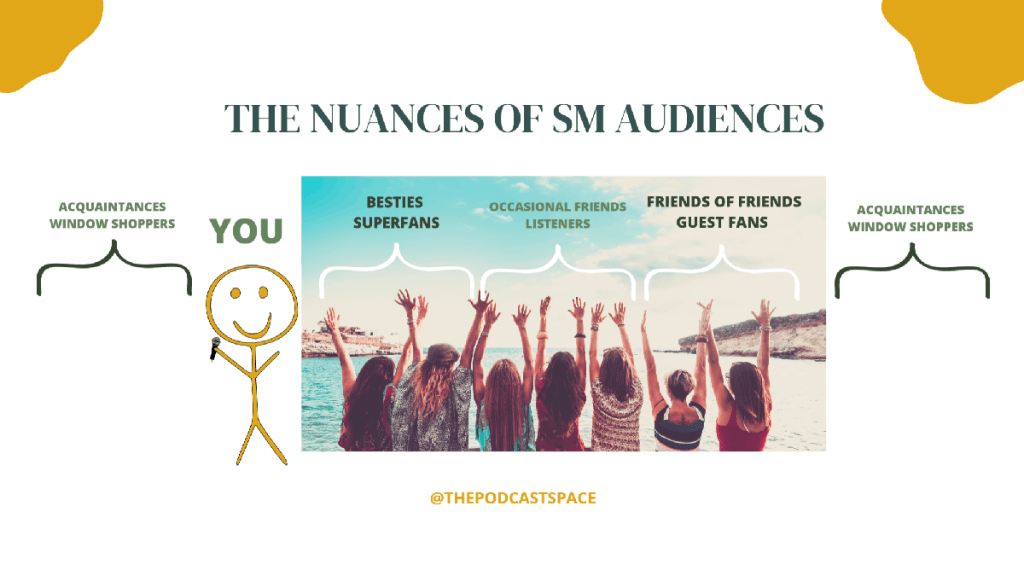
Ana broke down podcast social media audiences into four categories that mirror real-life friendships.
Your Besties (Super Fans): These are the people who like, comment, and share everything. They’re your ride-or-dies. You don’t have many, but they show up every time.
Occasional Friends: They engage with specific topics. Maybe they love your conference recaps but skip your solo episodes. That’s normal. Think of them like the friend you only see at yoga.
Friends of Friends: These people found you because a guest shared your content or you appeared on another show. They don’t have a deep relationship with you yet, and they engage mostly when there’s overlap between your content and how they discovered you.
Window Shoppers (Lurkers): They follow your journey quietly. They never like or comment, but they know exactly what you’re up to. And one day they’ll mention your podcast at a party and you’ll have no idea they were even paying attention.
Understanding these groups helps take the pressure off. Not every post will resonate with everyone, and that’s by design.
Public Engagement vs. Private Engagement
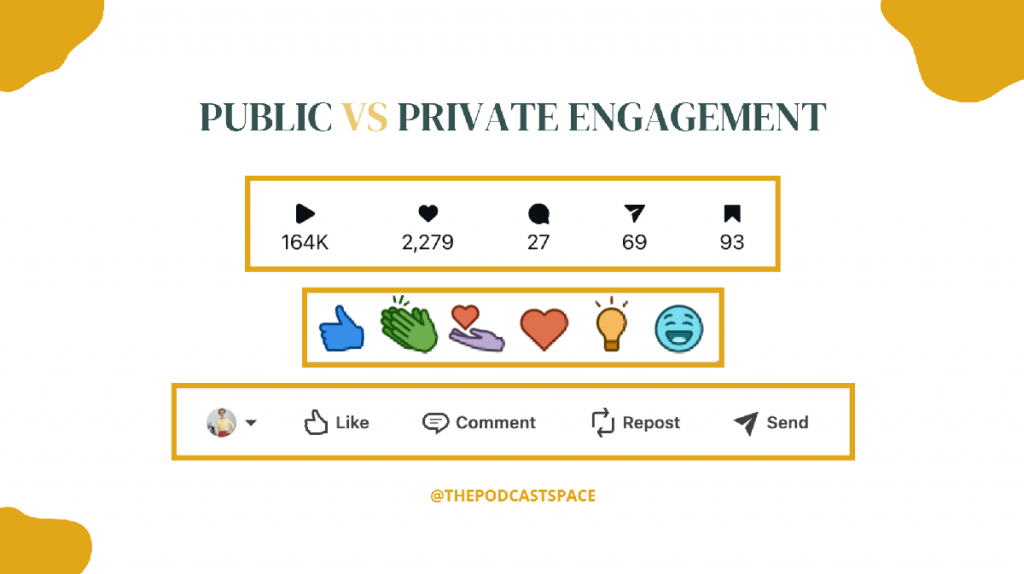
Likes and comments are just the tip of the iceberg. Ana pointed out that saves, shares, and DMs often matter more, and they’re harder to see. Someone might send your post to a friend who’s going through a tough time. Someone else might save your tip for later. These are real signals that your content is working, even if the public metrics look quiet.
This is especially true for sensitive topics. If your podcast covers something personal like addiction, career struggles, or mental health, many listeners won’t feel comfortable engaging publicly. But they’re still there, and they’re still listening.
The “New Episode” Post is Not a Strategy
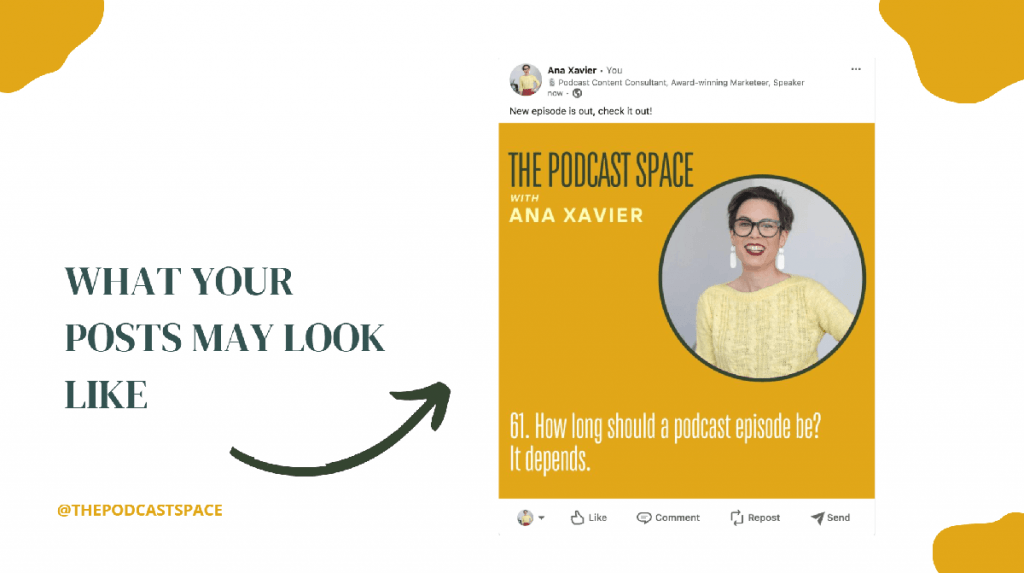
Ana called this one out directly: posting your episode cover art with a caption that says “New episode out now! Link in bio!” is the social media equivalent of tapping a coworker on the shoulder and saying, “Hey, don’t forget about that meeting.”
It’s a reminder, not content. It doesn’t educate, entertain, or inspire anyone. There’s no emotional hook. There’s no reason for someone to stop scrolling.
On top of that, social platforms actively suppress posts that try to send users off-platform. They want people to stay on Instagram, LinkedIn, or wherever they are. A link-out post is working against you on two fronts.
What to Post Instead
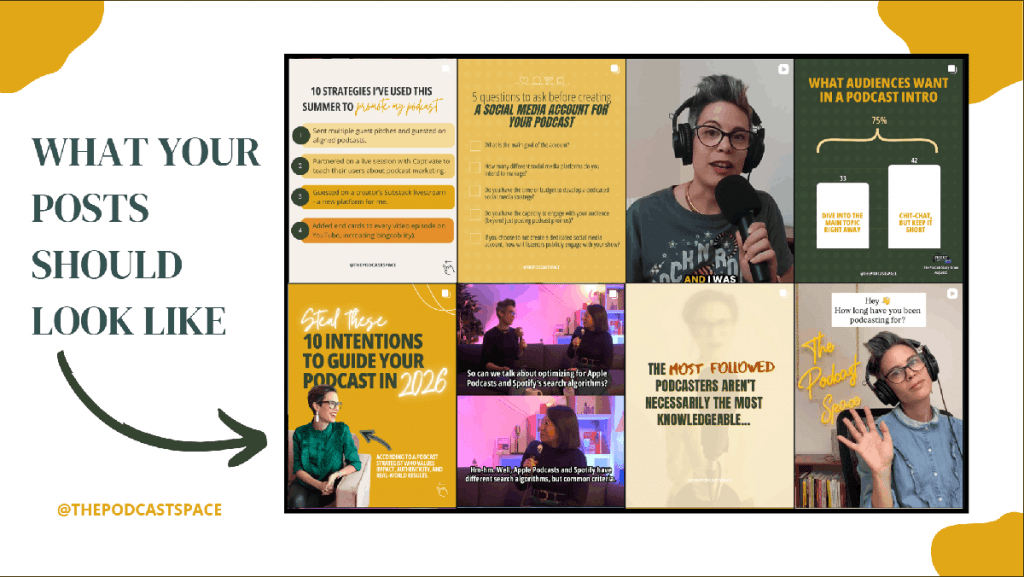
Ana shared a framework of content types that actually work. The idea is to go beyond episode promos and create standalone value on each platform.
Here’s what she recommended:
Educational posts that teach something from the episode (or that you forgot to mention in the episode).
Lists, tips, and how-tos perform well here because people’s brains respond to structure and numbers.
Video clips from your recording that show your personality. These get pushed to new audiences on most platforms and help build that parasocial connection listeners crave.
Data and infographics that position you as an expert in your niche. These are highly shareable and often get reposted by other creators, expanding your reach organically.
Quote cards that highlight a compelling thought or takeaway from an episode. Quick to make, easy to consume.
Behind-the-scenes content that shows your recording space, your process, or your reaction to a milestone. This is where authenticity lives.
Conversation starters that invite your audience to share something about themselves. Simple questions like “How long have you been podcasting?” can spark real engagement.
Captioned screenshots from your video podcast that pair a still image with a cleaned-up quote. Great for creating a vibe without needing heavy production.
Expert opinion posts where you share your own take on industry trends, even if they aren’t tied to a specific episode. This keeps your feed active between seasons or during breaks.
The common thread across all of these: they serve the audience first. They offer value where the audience already is, rather than demanding the audience go somewhere else.
One Platform. One Ask. One Consistent Presence.
Both Ana and Greg were clear on this: do not try to be everywhere at once.
Pick the platform where your audience actually hangs out, and build your muscle there first. Greg lives on LinkedIn. Ana thrives on Instagram.
Neither of them tries to dominate every platform, and neither should you.
If you spread yourself across five platforms, you’ll end up half-present on all of them. And that leads to one of the biggest mistakes Ana sees with her clients: unanswered comments. If someone takes the time to comment on your post and you don’t reply because you were too busy managing three other accounts, you’ve just signaled to everyone watching that nobody’s home. That kills future engagement fast.
Pick one platform. Show up there. Reply to people. Build the habit.
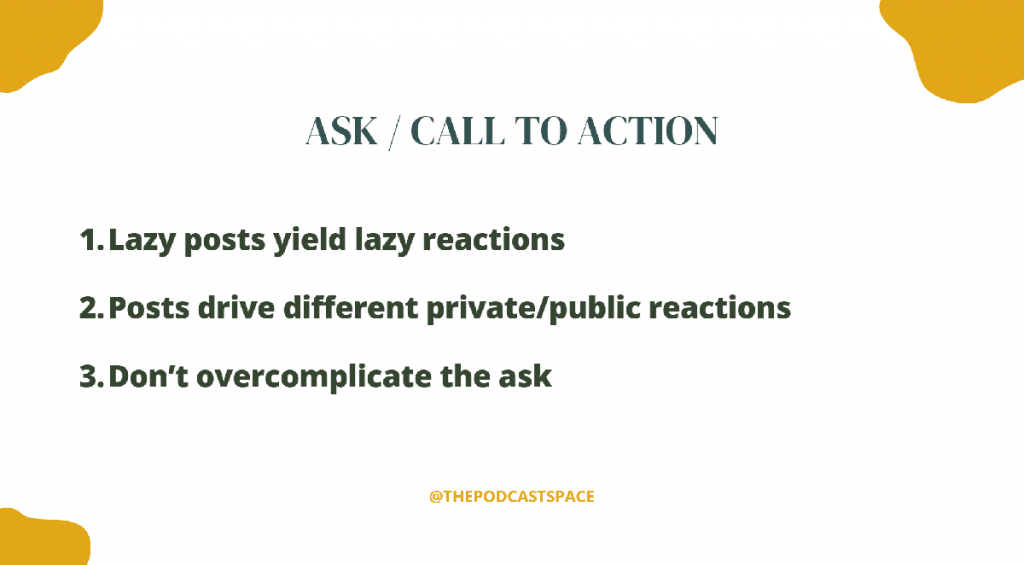
And when it comes to calls to action, keep it to one ask per post. Don’t ask people to listen, subscribe, share, and leave a review all in the same caption. One post, one clear next step.
Celebrate More, Promote Less
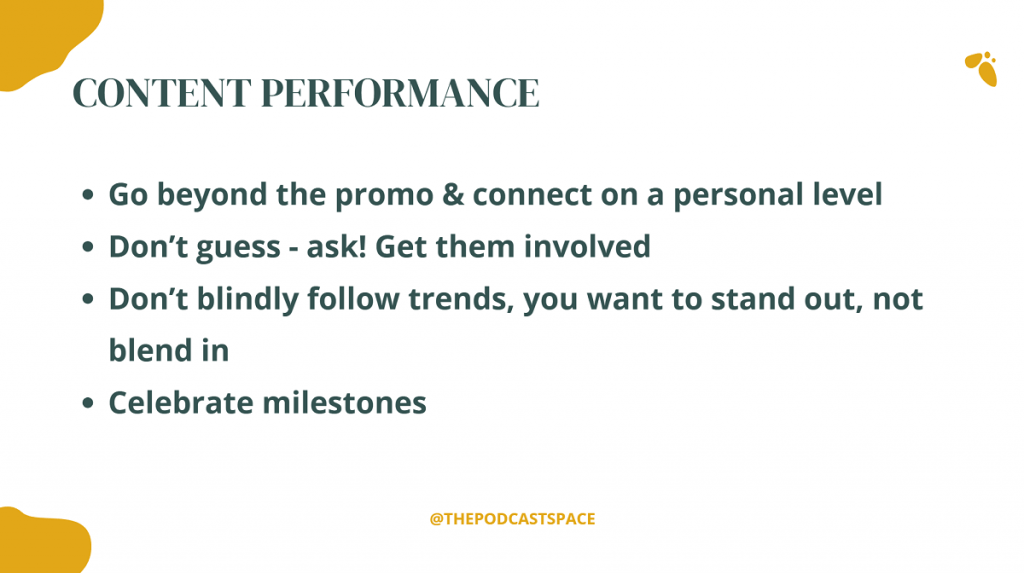
One of the most underused content strategies Ana discussed was celebrating milestones publicly. When she finally booked a dream guest after pitching three times, she shared the story on social media. People who had never engaged with her content before came out of the woodwork because they had a personal connection to that guest.
Milestones, wins, and even personal moments create emotional spikes that drive engagement far more than another episode drop post. New jobs, awards, show anniversaries, hitting a download goal: these are all worth sharing because your audience wants to celebrate with you.
Use Your Analytics, Not Someone Else’s Playbook
Trends come and go, but your own data tells you what actually works for your audience. Ana recommended going back at least 90 days in your platform analytics (not just 30) and looking at what performed well.
- Was it the format?
- The topic?
- The time of day?
- The fact that you showed your face?
Every audience is different. What works for a true crime podcast won’t work for a business coaching show. Your analytics are the only playbook that matters.
Don’t Forget About Newsletters
While the training focused on social media, both Ana and Greg touched on the power of email newsletters as a complement to your social strategy. Social media posts reach roughly 1 to 10% of your followers. Email newsletters typically see open rates around 50% or higher. You own your email list, and no algorithm can suppress it.
A newsletter is also a great place to expand on topics you introduced on social media, link directly to episodes (with much less friction than social platforms), and stay connected with your audience even if you take a break from posting.
If You’re Not Having Fun, Your Audience Can Tell
Ana closed the training with a point that tied everything together: if you’re not enjoying the process, it shows. Following every trending format or copying what everyone else is doing will make your content blend in, not stand out.
The podcasters who win on social media are the ones who experiment, talk to their listeners directly, and challenge themselves creatively. Your audience thinks of you as someone worth following. Sometimes they just need you to make the first move and start the conversation.
Social Media Can Help You Build an Audience
Social media isn’t going to replace your RSS feed, and it may never drive massive numbers directly to your episodes. But it will help you build the know, like, and trust that turns casual scrollers into loyal listeners over time. The formula is simpler than most people make it: pick one platform, create content that serves your audience where they already are, show up as yourself, and stop overcomplicating it.
If you want to watch the full training, hit play on the video above. And if you’re looking for a podcast hosting platform that makes publishing easy so you can spend more time on the fun stuff like connecting with your audience, get started free with RSS.com or click here to switch your existing show and get 6 months free.