Our Head of Relationships, Greg Wasserman represented RSS.com at Podcast Movement Evolutions during SXSW this year, and came back with a lot on his mind. Below is his recap of all that he experienced at the conference.
Reflecting on Podcast Movement Evolutions 2026
Trying to distill four days, hundreds of conversations, presentations, and experiences into a written piece is hard, especially when you’re a talker more than a writer like me.
However, there were so many observations that stood out to me, that putting it all into a recap post just made sense.
Podcasting has grown from a niche creative outlet into an ecosystem that includes creators, platforms, brands, agencies, technology providers, and investors. Being in the middle of that ecosystem for a few days reveals patterns that are easy to miss when you’re focused only on your own corner of the industry.
The Podcast Ecosystem
The Value of Being “Clueless” in the Room
One of the most valuable types of people at conferences are the ones who show up knowing they don’t know everything. The creator who is just trying to learn, but chooses to attend an event that is heavily industry-focused and business-focused, not necessarily creator-focused like the Fall Podcast Movement event. I see this as a sign of hunger.
The best creators aren’t just trying to learn how to create content. They’re trying to understand the entire ecosystem around their content. By showing up to an event like this, where the tracks aren’t only creator education, you get thrown into the full industry mix: creators, producers, editors, agencies, ad buyers, hosting platforms, brands, technology providers, and more. Being in the room with all of these players accelerates learning in ways no YouTube tutorial ever could. You drink from the firehose.
In a conversation I had with someone, they said it best: “If you’re willing to be a little clueless, ask questions, seek help, and grind through the learning curve, you’ll come out ahead. You almost have no choice.” Curiosity is a competitive advantage.
Podcasting Is Being Shaped by Two Generations of Media
One of the more interesting dynamics in podcasting right now is that the industry includes people from two different media eras. On one side are people who built careers in traditional media such as radio, television, publishing, and advertising. On the other side are people who grew up inside the digital creator economy like YouTube, social platforms, and independent content.
Both groups bring different instincts.
Traditional media professionals often bring structure, monetization frameworks, and decades of audience experience. Creator-native talent brings speed, experimentation, and a deep understanding of internet culture.
The interaction between those two groups is shaping what podcasting becomes next. We saw something similar during the early days of YouTube with multi-channel networks (MCNs). Many of those early models evolved, disappeared, or transformed entirely. Podcast networks will likely go through similar cycles of experimentation. That’s a natural stage of industry growth.
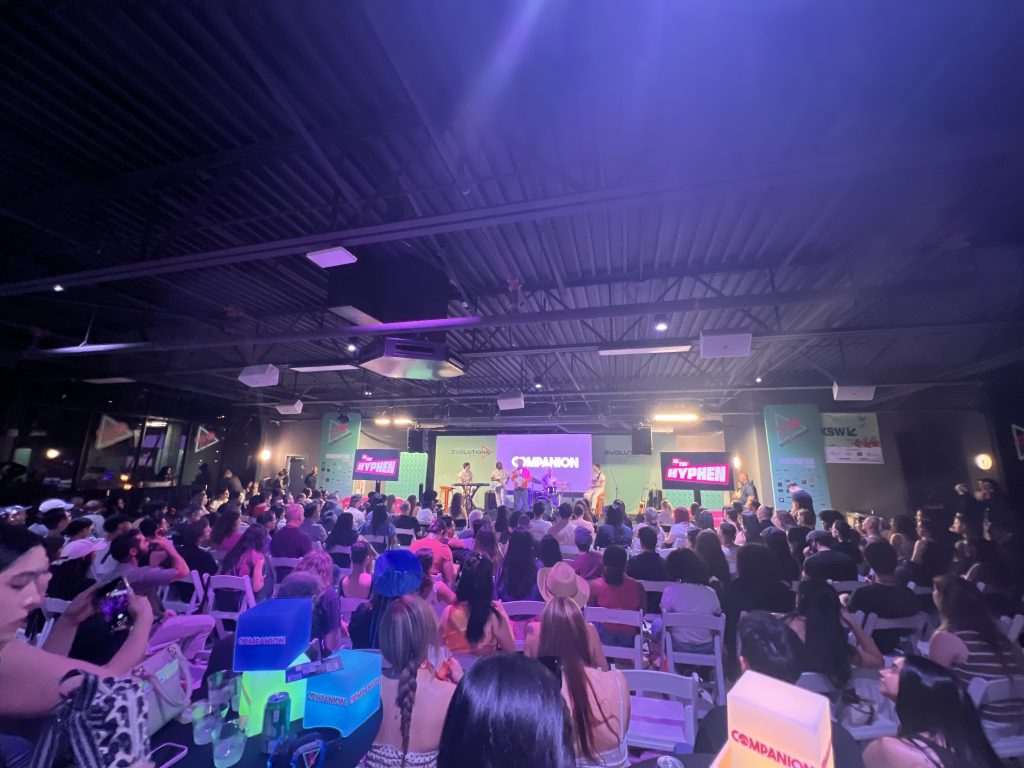
There’s Still Massive Demand for Podcast Inventory
One consistent message throughout the conference was simple: Buyers want more inventory. Whether it’s programmatic inventory, high-quality host-read placements, niche audience shows, or premium creator integrations, there is clear demand from advertisers.
The opportunity for creators is still significant and the challenge isn’t necessarily demand. It’s matching the right shows with the right audiences using the right measurement frameworks. As the industry matures, solving that matching problem will unlock even more growth.
Business Realities of Podcast Monetization
Getting Brand Dollars Isn’t the Finish Line
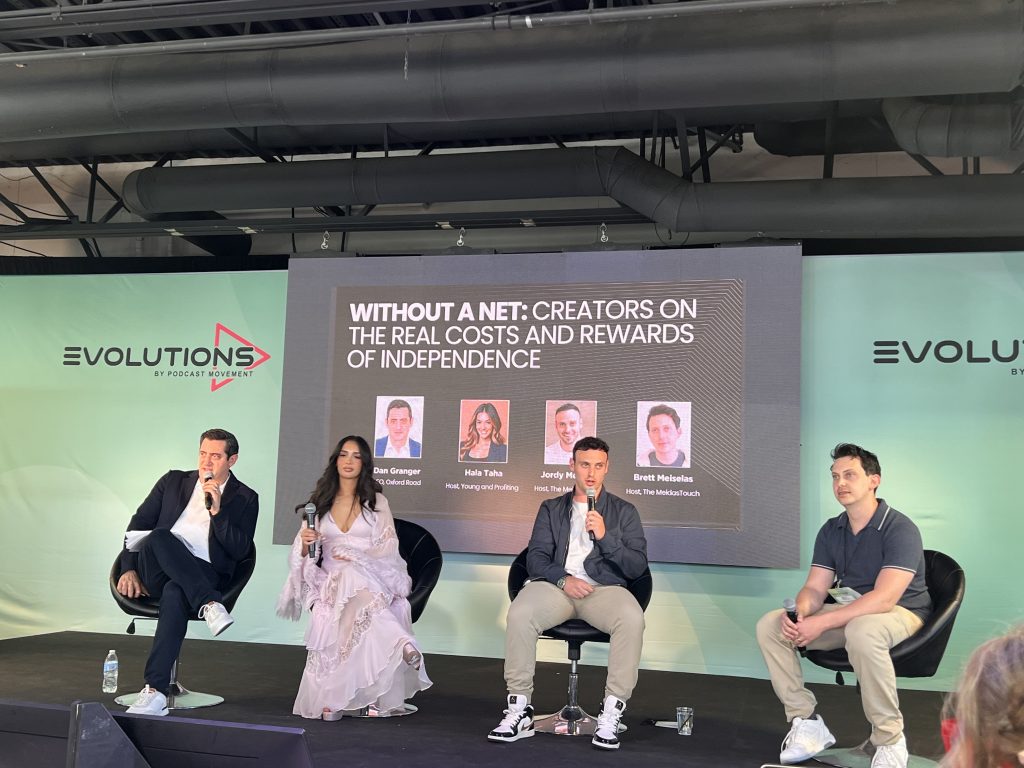
There’s a certain badge of honor that comes with landing brand deals. It feels like validation. It feels like you’ve “made it.” But as both Hala Taha and Jordy Meiselas discussed from the stage, getting the brand deal isn’t when the work ends. It’s when the real work begins.
Advertisers need more than placements. They need performance, trust, consistency, and authentic integration with the creator’s voice and audience. Creators also need to understand the advertiser’s goals, their KPIs, their business model, and what success actually looks like for them.
The creators who succeed long-term either become students of the entire ecosystem or surround themselves with people who understand it. Sustainable success isn’t about landing the deal, it’s about earning the next one.
Media Sellers Should Be More Curious
Having spent years in media sales, I recognize a familiar behavior pattern at industry events. Some sellers walk into a conference with one objective: get brand dollars. You can almost see it in their body language. If the person they’re speaking to isn’t a buyer, the conversation quickly loses momentum. The interaction becomes transactional instead of exploratory. For someone who believes deeply that life is about time and relationships, this can be a difficult mindset to watch.
Ironically, many brands in the room are doing the exact opposite. Brands are often more curious about the ecosystem than the people selling into it. They want to understand creator economics, audience behavior, platform dynamics, cultural trends, and measurement challenges.
Adam McNeil made an important point during one discussion. He mentioned that sometimes he has to remind himself to understand the creator’s full business, because advertising is often just one revenue stream among many. Creators might also monetize through subscriptions, live events, memberships, products, licensing, courses, consulting, or community platforms. When sellers understand that broader context, they become far better partners. Curiosity doesn’t just make you smarter, it makes you more valuable to everyone in the ecosystem.
Podcast Ad Load: A Delicate Balance
Podcasting has historically had lower ad loads than most traditional media. A common benchmark mentioned during discussions was roughly 10% ad load in podcasting. Compare that with television, where a 30-minute program often includes about six minutes of ads or roughly 20% of the runtime.
The difference matters.
Traditional media knows the ad aired, but they don’t know if the viewer was still in the room watching. Podcasting operates differently. Podcast advertising works because of the relationship between the host and the audience, the trust, intimacy, and attention that listeners give to the voice in their headphones. But increasing ad load risks damaging that relationship. More ads may increase short-term revenue, but too many ads can weaken listener trust and engagement. Podcasting’s value has always come from attention and authenticity, not just impressions.
When More Ads Actually Hurt Growth
Taking that idea a step further, there is also a performance dynamic that creators sometimes overlook. Host-read ads often outperform generic ads because they feel authentic. But when ad load becomes too high, performance begins to drop as listeners tune out, engagement declines, and advertisers see weaker results. At that point, creators often enter a cycle: advertisers leave due to weak performance, new advertisers must replace them, and the creator ends up on a hamster wheel chasing the next deal.
Sometimes the better strategy is fewer ads today in order to grow the show tomorrow. Growth creates more impressions, larger audiences, and stronger advertiser performance, which ultimately leads to more revenue over time. Stability can feel safe, but in media, growth is usually the healthier long-term strategy.
Technology & Platform Shifts
RSS.com Named as an Early Apple HLS Video Partner
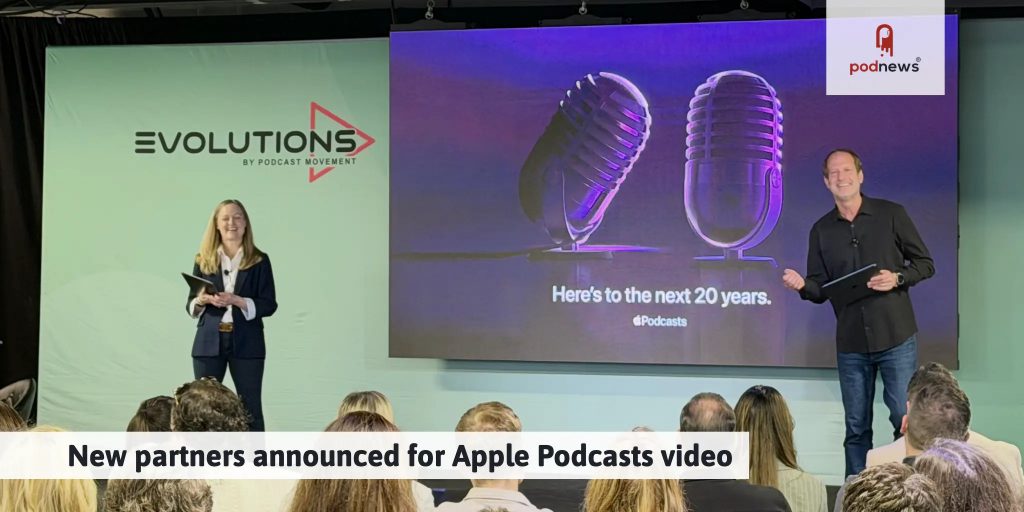
One of the biggest announcements of the weekend came directly from the Apple Podcasts stage. Stacey Goers and Jake Shapiro announced a new wave of hosting partners for Apple Podcasts’ upcoming HLS video feature. We’re proud to share that RSS.com was named among them. Alongside platforms like Transistor, PodBean, Captivate, and Podigee, RSS.com will be supporting HLS video delivery on Apple Podcasts, joining early partners Acast, Omny Studio, ART19, and Simplecast.
For us, this was a meaningful moment. Being recognized as an early partner in what is clearly a major platform shift validated the work our team has been putting in behind the scenes. It also underscores our commitment to making sure RSS.com creators have access to the tools and distribution they need as the medium evolves. More details on how this will roll out for RSS.com podcasters are coming soon.
The Reality of Video Podcasting
Video was one of the dominant themes of the weekend. Between the Apple HLS announcement and shifts in creator strategies across platforms, the industry is clearly moving toward a multi-format future.
But one of the most interesting behaviors described to me was about the listener.
Someone explained their listening habits:
They start their podcast consumption in audio, out and about, be it driving, running, shopping. Later, when they get home, they open the same episode on YouTube. They actually have to go through the long process and multiple clicks, to get to the episode, fast forward to where they were previously, and continue consuming.
Most of the time, they’re still listening. but occasionally they want to peek to see moments that were described during their previous audio-only experience. It’s almost like adding visual confirmation to imagination.
The question that comes to mind for me becomes philosophical: Does everything need to be seen? Or is there something valuable about letting the mind create its own visuals through audio? Regardless of the answer, podcasting now has the ability to serve both preferences.
Measurement Still Needs to Catch Up
With the expansion into video, the measurement conversation becomes more complicated. Audio, video, and social media all operate with different metrics and reporting models. Brands care about attribution, performance, and ROI. But cross-platform podcast campaigns don’t always provide clear answers yet.
As Matt Drengler discussed, video podcasting is stretching the existing measurement frameworks. Creators therefore need to be proactive in explaining what they can measure, what they cannot measure, and where the real value of their audience lies. Transparency builds trust.
Creative Lessons for Creators
The Danger of “Beige” Content
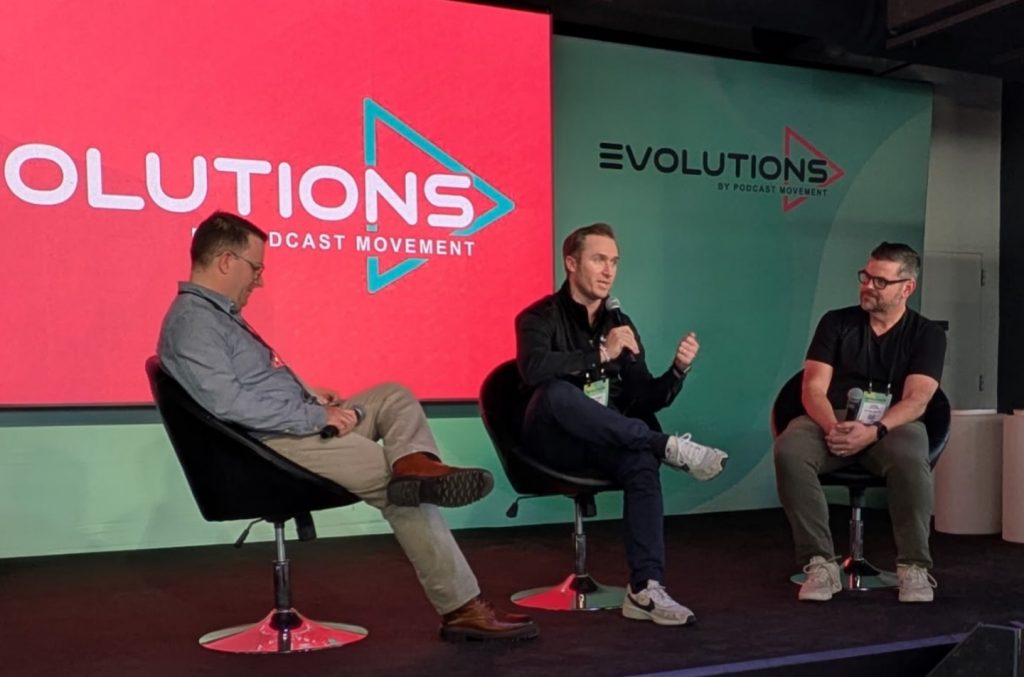
One of the most thought-provoking creative warnings came from Mary Williams, who described a growing problem in the creator economy: beige content. Content that is safe, brand-friendly, and broadly appealing, but ultimately forgettable. As attention becomes scarce, creators are often tempted to soften their edges and appeal to everyone. But when everyone tries to appeal to everyone, everything starts to look the same.
The opposite strategy is conviction. Being specific. Being recognizable. Being unmistakably yourself. As she framed it, a small and deeply loyal audience can be more powerful than a massive disengaged one. Trust creates influence. Conviction creates trust.
Your Podcast Must Match Its Promise
Listeners bring expectations to every show and those expectations come from signals like the title, description, intro, branding, and past episodes. If the experience doesn’t match the promise, listeners become confused.
After seeing Andy Grammer perform at the event, I decided to listen to his podcast, The Good Parts with Andy Grammer, on my flight home. Hearing him and Sam Harris from X Ambassadors start their conversation talking casually about coffee and how they know each other made perfect sense. The show description promises an intimate conversation between artists trading stories and exploring who they are. The opening matched the expectation.
But if a marketing podcast opened with several minutes of unrelated small talk without context, listeners might wonder why they’re there. Your show’s vibe and promise must align with the listener experience. Expectation management is part of good storytelling.
Remember What Made You Love Podcasting
Many people in the industry started as fans. They loved discovering shows. They loved the intimacy of hearing someone speak directly into their headphones. But as podcasting becomes more commercialized, something subtle can happen. Creators begin chasing algorithms, trends, and monetization strategies instead of the thing that originally made them excited about podcasting.
A useful question might be: If I discovered podcasting today, would I want to listen to the show I’m making? Algorithms reward patterns and audiences reward originality. Great shows come from creators who remember why they started.
The Human Side of the Industry
Tell People When They Inspire You
Industry events are filled with people whose work has shaped the space. Maybe it’s someone like Tom Webster, whose research has guided the industry for decades. Maybe it’s someone like Dan Granger, who helped build Oxford Road into a major force in podcast advertising.
Often, those people have no idea the impact they’ve had. Expressing appreciation can be powerful. Not just because it means something to the person hearing it, but because those moments often lead to meaningful conversations and new relationships. You never know where a simple acknowledgment might lead.
The Connector’s Advantage
One of the easiest traps in any industry is believing you need to be the smartest person in the room. But sometimes the most valuable role isn’t being the expert. It’s being the connector.
Spending time speaking with people like Owen Grover and Ami Thakkar reminded me how much expertise exists in this industry. In those moments, the smartest move is to listen and learn.
But ecosystems also need people who connect ideas, companies, creators, and opportunities. Progress rarely happens because of one brilliant individual. It happens because people of different types collaborate. Podcasting, at its core, is a collaborative medium.
Why Podcast Networks Start
As I’ve recently launched my own podcast, Podcast Network Insights, where I interview the heads of podcast networks, I naturally had networks on my mind throughout the event.
Many people assume podcast networks are created purely as business opportunities. But in reality, many of them start for the same reason podcasts do: passion. Passion for a topic. Passion for a community. Passion for storytelling.
Several founders shared stories of launching their companies with very little capital. One person described starting with just $17,000. Not every venture succeeds. But the willingness to act, to combine knowledge, belief, and action, is what creates innovation. I’m reminded by what Ryan Berman often says: Courage = Knowledge + Faith + Action. Don’t lose sight of that.
Culture & Responsibility
Creators Now Shape Culture
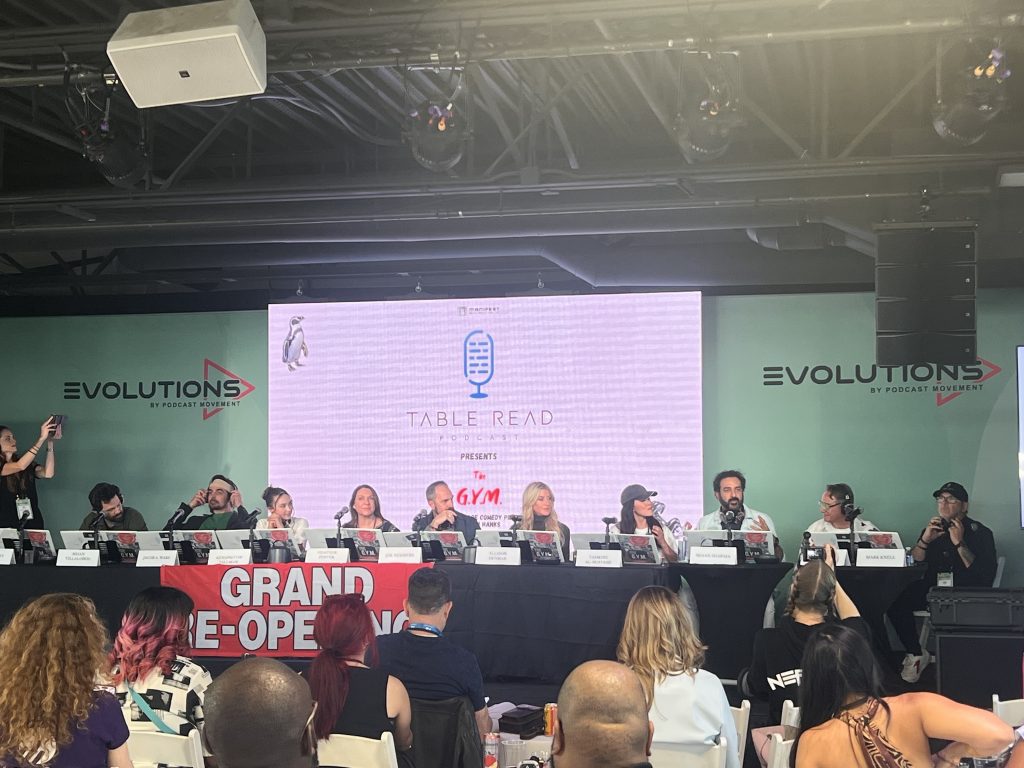
Younger audiences are forming their worldviews inside the podcast ecosystem. That means creators are no longer just entertainers, they are educators, influencers, and trusted voices. As A.J. Feliciano discussed that influence comes with responsibility. Not just for creators, but also for brands, platforms, and media companies. Everyone participating in the ecosystem contributes to what gets amplified in culture. Responsibility can’t simply be pushed upward or downward. It’s shared.
The Industry Opportunity
The Podcast Awards Discovery Problem
Podcasting now has many different award programs. The Podcast Academy has The Ambies. Oxford Road and Libsyn recently launched the Independent Podcast and Creator Awards. Dan Kendall has created the Health Podcast Awards, focused specifically on that category. Each serves an important purpose.
But discovering them can be surprisingly difficult. There is no single destination that aggregates all podcast awards, nominees, winners, categories, and historical results. A centralized Podcast Awards Database could become a valuable resource for creators, journalists, brands, and researchers. It could also create a historical record of how the medium evolves.
Diversity Debate
I’ve commented on the diversity of people that were in attendance, spanning the whole ecosystem. Diversity of content, backgrounds, and voices was in the room. I couldn’t help but notice the lack of racial diversity, more than gender.
Final Thoughts
If there was one overarching theme from the weekend, it might be that podcasting is no longer just a medium, it’s an ecosystem of creators, technology, culture, and commerce. The people who thrive in it are the ones who stay curious about all those pieces.
And credit to the teams at Sounds Profitable and Event Movement for creating an event that continues to bring that ecosystem together.