
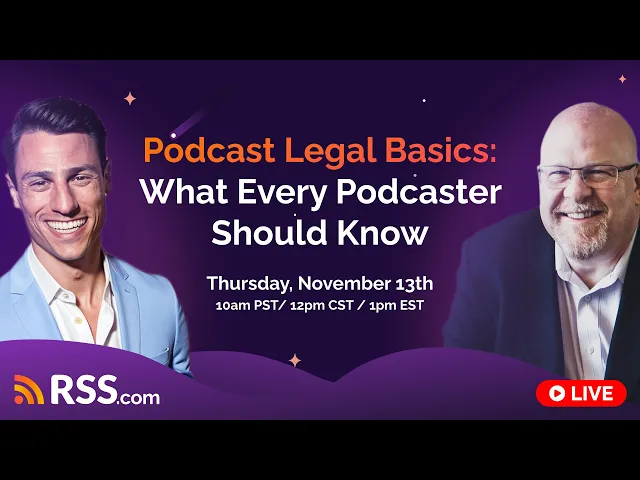
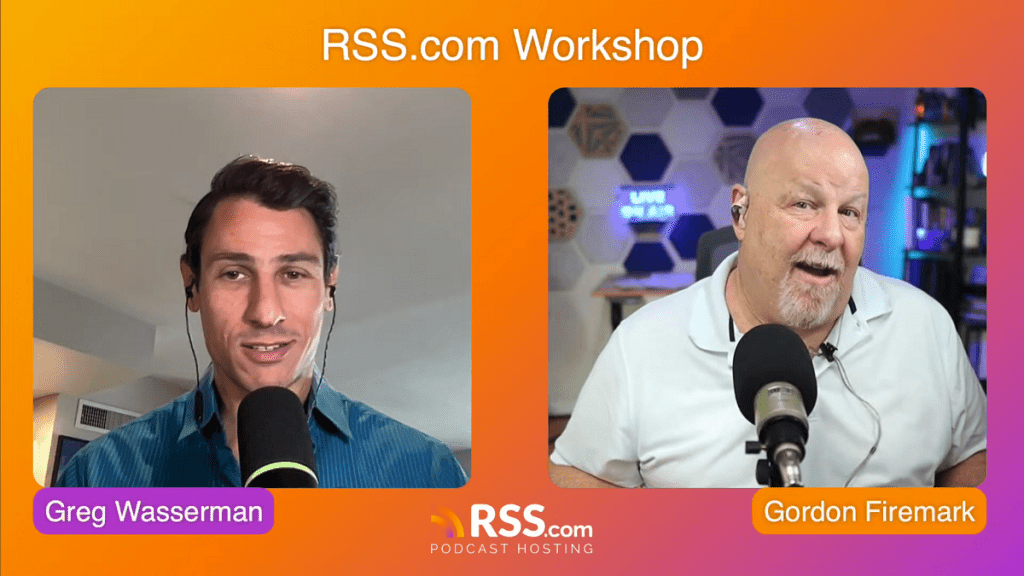
On November 13, 2025, RSS.com hosted entertainment attorney Gordon Firemark for a comprehensive live training on the RSS.com YouTube channel covering the legal essentials every podcaster needs to know. Known as “the Podcast Lawyer,” Gordon brought over 30 years of legal experience to help podcasters navigate contracts, intellectual property, monetization disclosures, music licensing, and liability concerns. Whether you’re just starting your show or looking to protect an established podcast, this session provides practical guidance on building a professional, legally sound podcasting business. Below you’ll find key takeaways from the training, followed by the full video and transcript so you can dive deeper into the topics that matter most to your show.
Key Takeaways
- Get guest releases signed! Every guest should sign a release agreement before appearing on your show to protect your rights to publish, edit, and repurpose content
- Contracts are essential. Have written agreements with anyone who touches your podcast (co-hosts, editors, producers, guests)
- Trademark early if possible. If your podcast name is valuable to your brand, consider trademarking it before someone else does
- Disclose paid relationships. FTC requires clear, conspicuous disclosure of any compensation, sponsorships, or affiliate relationships
- Music requires licensing. Use royalty-free music or subscription services like Epidemic Sound or Storyblocks to avoid copyright issues
- Fair use is a defense, not permission. Don’t rely on fair use for music or clips without understanding it could require legal defense
- Monitor what guests say. As the publisher, you’re liable for defamatory statements made by guests on your show
- LLCs aren’t always necessary. Weigh the costs and benefits based on your revenue and location before forming a business entity
Watch Podcast Legal Basics with Gordon Firemark: What Every Podcaster Should Know to Protect Their Shows:
Guest Releases: Why They Matter
When someone agrees to be on your podcast, they’re giving implied consent to be recorded. But what can you actually do with that recording? Can you edit it, repurpose it for social media, or include it in a future book? Without a written release, these questions become legal gray areas.
A guest release form protects you by clearly defining what you can do with the content. It ensures you have the rights to publish, edit, use AI tools for audio cleanup, and repurpose the episode across different platforms. The release Gordon provides at podcastrelease.com covers all these bases.
Pro tip: Integrate your release form into your booking system (like Calendly or Acuity) so guests sign it as they schedule their appearance. Make it friction-free so people actually complete it.
Other Essential Contracts
Beyond guest releases, you need written agreements with anyone who contributes to your podcast. This includes co-hosts, editors, producers, and freelancers. These contracts clarify who owns what, how revenue is split, and what happens if the partnership ends.
One critical point to keep in mind is when you hire an independent contractor (like an editor), they own the copyright to their work unless you have a written agreement stating it’s a “work made for hire” that belongs to you. Don’t assume that paying someone means you automatically own what they create.
Find contract templates for co-hosts, editors, and more at podcastlawforms.com.
Should You Trademark Your Podcast Name?
The answer depends on how distinctive your podcast name is and whether it would hurt if someone else used a similar name. If your podcast name is important to your brand and you’re building an audience around it, a trademark protects you from others using confusingly similar titles.
Trademark registration costs a couple thousand dollars, but it’s an investment in your brand. Gordon shared a cautionary tale about a podcaster who waited years to trademark his show name, only to find someone else had already filed for it. The result? Nearly four years of legal limbo and expense before the situation was resolved.
If you’re serious about your podcast as a business, consider trademarking early before someone else beats you to it.
Monetization and Disclosure Requirements
When you’re making money from your podcast through sponsorships, affiliate links, or product reviews, the FTC requires clear and conspicuous disclosure. Your audience has the right to know when you’re being compensated for what you say.
The disclosure must be adjacent to the promotional content and easy to understand. For affiliate links, a simple statement like “We may earn a commission if you purchase through our links” is sufficient. For sponsored content, make it clear that you’re being paid.
Important: If you claim to use a product, you must actually use it. Truthfulness matters. If you haven’t tried something but think it’s good, say so.
Disclosures should be verbal in audio podcasts and visible (in show notes or on screen) for video content. Don’t bury them where people won’t see them.
Music Licensing: Avoid Copyright Issues
Using popular music in your podcast requires permission from both the songwriter/publisher and the record label. This is complex and expensive, which is why most podcasters should use royalty-free music instead.
Gordon recommends subscription services like Epidemic Sound or Storyblocks. With these services, anything you create while subscribed is covered forever, even if you cancel later. This gives you access to professional music without the legal headaches.
What about fair use? Fair use is a legal defense, not a free pass. If you’re reviewing music and using short clips for commentary, you might have a fair use argument. But be prepared to defend it in court if challenged. For most podcasters, it’s safer to stick with licensed music.
Platforms like YouTube and Spotify have automated systems that detect copyrighted music and can remove your content without warning. Using properly licensed music prevents these takedowns.
Defamation and Liability
As a podcast host and publisher, you’re responsible for what goes out on your show, including what your guests say. If a guest makes a false statement that harms someone’s reputation, you could be liable for defamation.
Defamation (libel in published form) is a false statement that causes harm to someone’s reputation. To protect yourself, fact-check controversial claims and challenge guests when they make strong accusations. Give them a chance to clarify whether they’re stating facts or opinions.
Opinion is protected speech. You can say you think someone is making poor decisions, but you can’t falsely claim they committed a crime unless you have evidence.
When discussing public figures, the bar is higher. They must prove “actual malice” (that you knew the statement was false or showed reckless disregard for the truth). But private individuals have more protection, so be especially careful when discussing non-public people.
Do You Need an LLC?
An LLC can protect you from personal liability and provide tax benefits, but it’s not necessary for everyone. The decision depends on your podcast’s revenue, your location (some states have expensive LLC fees), and your risk tolerance.
An LLC makes sense when the cost is justified by the protection and tax savings it provides. If you’re just starting out and not making significant income, you might wait. But if you’re monetizing and treating your podcast like a business, it’s worth exploring.
Talk to a lawyer and accountant who can analyze your specific situation. They can help you weigh the costs and benefits based on your circumstances.
Final Thoughts
Legal protection isn’t about creating barriers. It’s about professionalism and sustainability. By handling these issues proactively, you’re building a foundation that allows you to grow your podcast with confidence.
Start with the basics: get guest releases, use licensed music, disclose your monetization relationships, and be truthful in what you say. These steps protect both you and your audience.
For more resources, visit Gordon’s websites at gordonfiremark.com, podcastrelease.com, and podcastlawforms.com.
About the Hosts

Gordon Firemark is a Los Angeles-based entertainment lawyer, producer, and educator known as “The Podcast Lawyer™” for his expertise in podcasting and digital media law. He advises creatives in film, theater, and new media, and is the author of The Podcast, Blog, & New Media Producers’ Legal Survival Guide. Firemark also hosts the “Entertainment Law Update” podcast.

Greg Wasserman has worked across the podcasting ecosystem, leading three listening platforms, helping shape an AI-powered content repurposing tool, and now serving as Head of Relationships at RSS.com, one of the world’s top podcast hosting providers. But his impact doesn’t stop there. Greg is a connector across industries, known for creating conversations that spark unexpected opportunities.