
Episode notes
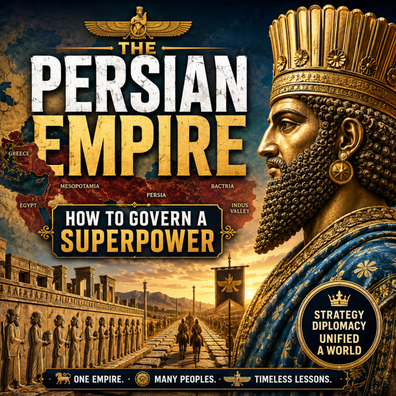
How do you govern an empire stretching from Egypt and the Mediterranean to Central Asia and the Indus Valley?
The Achaemenid Persian Empire ruled millions of people who spoke different languages, worshipped different gods, and followed different laws and traditions. Its survival depended on far more than military conquest.
In this episode, we explore how Persian rulers used satrapies, royal roads, taxation, local autonomy, intelligence networks, bureaucracy, and political symbolism to manage one of the ancient world’s largest superpowers. We also examine the constant tension between central authority and powerful provincial governors, the dangers of disputed succession, and the weaknesses that eventually helped the empire unravel.
This is the story of an empire that understood a timeless lesson of statecraft: ruling a vast and diverse world does not require controlling everything. It requires knowing what must be controlled, what can remain local, and how to keep distant peoples invested in the system.