WorldSnap – Geopolitics , Global Power Plays and International

WorldSnap – Geopolitics , Global Power Plays and International

by World Snap

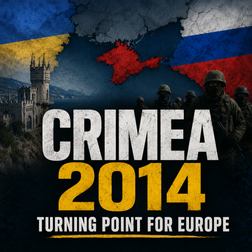
Crimea 2014: The Annexation That Reopened Great Power Conflict in Europe
AI
In 2014, Crimea became the flashpoint that changed Europe’s security order. What looked like a regional crisis between Russia and Ukraine quickly became a turning point in modern geopolitics — raising hard questions about borders, sovereignty, naval power, NATO, and the return of great-power rivalry. This episode explores why Crimea matters far beyond its size: its strategic position in the Black Sea, its deep historical meaning for Russia and Ukraine, the role of Sevastopol and the Black Sea Fleet, and how the annexation reshaped Europe’s view of security after the Cold War. From the Maidan protests to Russia’s rapid military move, from Ukraine’s sovereignty crisis to the wider confrontation between Moscow and the West, Crimea 2014 remains one of the most important geopolitical moments of the 21st century.

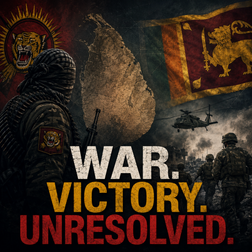
Sri Lanka’s Civil War: The Insurgency That Rewrote Counterterrorism Lessons
AI
Sri Lanka’s civil war was one of the most complex and consequential insurgencies of the modern era. For nearly three decades, the Sri Lankan state fought the LTTE, or Tamil Tigers, a militant movement that built its own army, navy, intelligence network, and shadow administration. This episode explores how ethnic grievances, political exclusion, terrorism, counterinsurgency, and state power collided on one island — and why the war’s ending in 2009 still raises difficult questions about victory, justice, and reconciliation. This is not only a story about how an insurgency was defeated. It is a deeper look at what Sri Lanka taught the world about counterterrorism, civilian cost, and the danger of winning a war without fully healing the wounds that created it.

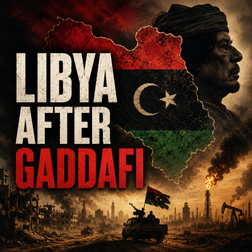
Libya After Gaddafi: The War That Turned a State Into a Battleground
AI
After Muammar Gaddafi fell in 2011, Libya was expected to enter a new era of freedom and reconstruction. Instead, the country became divided between rival governments, militias, oil interests, foreign powers, and competing visions of authority. This episode explores how Libya’s revolution turned into a long struggle for power, why oil became both a lifeline and a prize, and how outside intervention transformed a national crisis into a regional proxy battleground. More than a story of one fallen dictator, Libya after Gaddafi is a warning about what happens when a regime collapses before a strong state is ready to replace it.

Syria’s Endless War: How a Civil War Became a Global Proxy Battlefield
AI
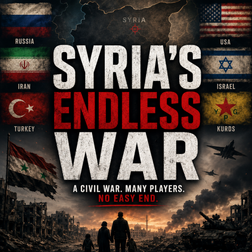
What began in Syria as a call for reform and dignity became one of the most complex wars of the modern era. This episode explores how a domestic uprising turned into a civil war, then into a global proxy battlefield involving regional powers, superpowers, militias, extremist groups, and millions of civilians caught in between. From the Assad regime and the Arab Spring, to Russia, Iran, Turkey, the United States, ISIS, Israel, Kurdish forces, and the refugee crisis, we unpack why Syria’s war became so difficult to end — and what it teaches us about modern conflict, foreign intervention, and the human cost of geopolitics.

The Gulf War: The Day the World Saw Modern Warfare
AI
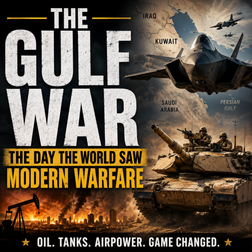
In 1991, the Gulf War showed the world a new face of conflict: airpower, precision strikes, satellite intelligence, live television, and fast-moving armored warfare. But behind the images of smart bombs and desert tanks was a deeper story about oil, global power, Saddam Hussein’s miscalculation, and America’s post-Cold War moment. This episode explores how the Gulf War redefined modern warfare, why Kuwait mattered to the global energy system, how coalition airpower overwhelmed Iraq, and why a fast military victory did not create lasting stability in the Middle East.

The Iraq War. The Invasion That Broke the Middle East
AI
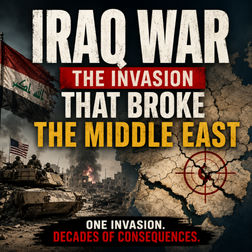
In 2003, the United States invaded Iraq to remove Saddam Hussein and reshape the Middle East. The military victory came quickly, but the aftermath changed the region for decades. This episode explores how one invasion weakened Iraq, expanded Iran’s influence, intensified sectarian conflict, empowered militias, damaged U.S. credibility, and opened the door to ISIS. A thoughtful look at how winning a war can sometimes break the peace.

The Eight-Year War With No Winner How Iran and Iraq Reshaped the Middle East
AI
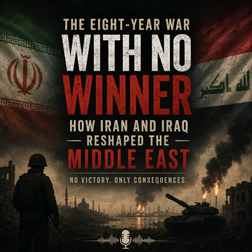
The Iran–Iraq War was one of the most devastating conflicts of the modern Middle East — yet it is often overshadowed by later wars in the Gulf. This episode explores how Saddam Hussein’s invasion of Iran in 1980 became an eight-year struggle of revolution, nationalism, oil, fear, chemical weapons, and survival. Neither Iran nor Iraq truly won. But the war reshaped the region: it hardened Iran’s security mindset, pushed Iraq toward the invasion of Kuwait, militarized the Persian Gulf, and left a legacy that still echoes through Middle Eastern politics today.

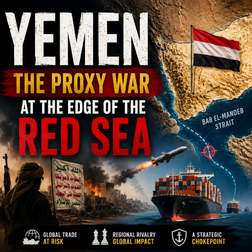
Yemen: The Proxy War at the Edge of the Red Sea
AI
Yemen is more than a civil war. It is a conflict shaped by geography, regional rivalry, maritime security, and global trade. This episode explores how Yemen’s internal collapse became a proxy battlefield involving the Houthis, Saudi Arabia, Iran, and wider international powers — and why the Red Sea has become one of the world’s most vulnerable strategic chokepoints.

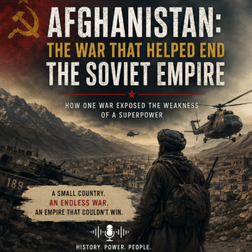
Afghanistan: The War That Helped End the Soviet Empire
AI
In 1979, the Soviet Union entered Afghanistan expecting a limited intervention to protect a friendly government on its southern border. Instead, it found itself trapped in a long and exhausting war that drained money, morale, military confidence, and political legitimacy. This episode explores how Afghanistan became more than a battlefield. It became a mirror reflecting the hidden weakness of the Soviet system: an aging economy, rigid leadership, fading belief, and a public increasingly suspicious of official truth. The war did not destroy the Soviet Union by itself. But it helped reveal that the empire was already fragile — powerful enough to invade, yet too exhausted to transform what it invaded. A story of Cold War ambition, insurgency, imperial overreach, and the slow collapse of belief inside a superpower.

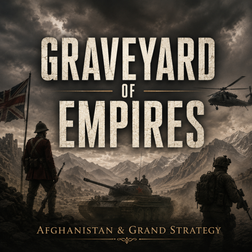
Afghanistan: The Graveyard of Bad Grand Strategy

AI
Afghanistan is often called the “graveyard of empires” — a place where powerful foreign armies enter with confidence, only to leave with frustration and unfinished missions. But is Afghanistan truly unbeatable, or does its history reveal something deeper about the failure of grand strategy? In this episode, we explore why Britain, the Soviet Union, and the United States all struggled in Afghanistan despite their military power. From mountains and tribal networks to legitimacy, corruption, insurgency, regional politics, and the problem of time, Afghanistan exposes a hard truth: winning battles is not the same as building political success. This is not just a story about Afghanistan. It is a lesson about empire, intervention, state-building, and the limits of power.
4 of 9