WorldSnap – Geopolitics , Global Power Plays and International

WorldSnap – Geopolitics , Global Power Plays and International

by World Snap

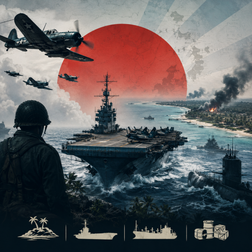
The Pacific War: How Islands, Carriers, and Logistics Defeated an Empire
AI
The Pacific War was fought across the largest battlefield in history, where tiny islands became stepping stones, aircraft carriers replaced battleships as the center of naval power, and logistics decided the fate of an empire. This episode explores how Japan’s early victories created a vast maritime empire that was difficult to defend, supply, and sustain. From Pearl Harbor and Midway to Guadalcanal, island hopping, submarines, and the slow collapse of Japan’s sea routes, we look at how geography, industry, fuel, carriers, and supply chains shaped the outcome of World War II in the Indo-Pacific.

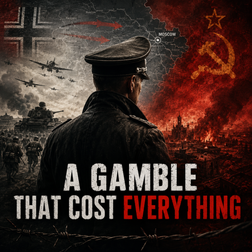
Operation Barbarossa: The Gamble That Broke Nazi Germany
AI
Operation Barbarossa was the largest invasion in modern history — and one of Nazi Germany’s most disastrous gambles. In June 1941, Hitler sent millions of Axis soldiers into the Soviet Union, expecting a quick collapse. Instead, Germany found itself trapped in a vast war of distance, logistics, ideology, manpower, and survival. This episode explores how early German victories hid deeper weaknesses, why the Soviet Union did not break, and how the Eastern Front slowly consumed the military strength of Nazi Germany. From the road to Moscow to the failures of planning, supply, and strategy, Barbarossa became more than an invasion — it became the turning point that exposed the limits of Hitler’s empire.

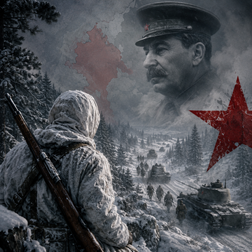
The Winter War: How Finland Humiliated Stalin’s Red Army
AI
In 1939, Stalin’s Soviet Union invaded Finland expecting a quick and easy victory. Instead, the Red Army found itself trapped in a frozen nightmare of forests, snow, ambushes, and fierce national resistance. This episode explores how Finland, vastly outnumbered and outgunned, used terrain, morale, ski troops, defensive strategy, and the brutal northern winter to humiliate one of the largest armies in the world. From the Mannerheim Line to the famous motti tactics, from Stalin’s military purges to Finland’s fight for survival, this is the story of how a small nation forced an empire to pay a shocking price.

Nagorno-Karabakh: How Drones, Mountains, and Nationalism Changed the Caucasus
AI
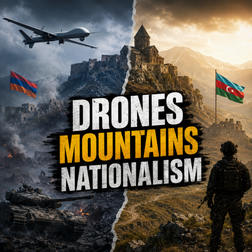
Nagorno-Karabakh is a small mountain region with a history far larger than its size. In this episode, we explore how decades of nationalism, unresolved borders, and shifting power in the South Caucasus turned a frozen conflict into one of the clearest examples of modern warfare. From Soviet-era borders and the first Nagorno-Karabakh war, to Azerbaijan’s use of drones in 2020 and the dramatic collapse of Armenian control in 2023, this story reveals how technology, geography, and national identity reshaped the Caucasus. It is not only a regional conflict — it is a warning about how modern wars are fought, how alliances can weaken, and how old historical wounds can return with new weapons.

The Suez Crisis: When Britain and France Lost the Old World Order.
AI
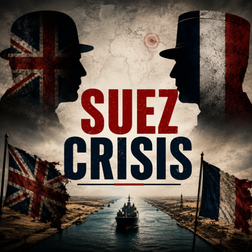
The 1956 Suez Crisis was more than a short war over a canal. It was the moment Britain and France tried to defend their old imperial power, only to discover that the world had changed. As Egypt’s Gamal Abdel Nasser nationalized the Suez Canal, the crisis exposed the rise of anti-colonial nationalism, the growing dominance of the United States, Cold War pressure, and the end of Europe’s old world order.

Georgia 2008: The War That Warned the World About Russia’s Next Move
AI
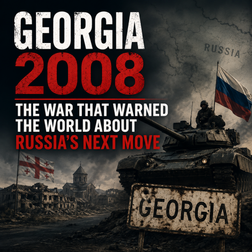
A powerful geopolitical podcast episode about the 2008 Russo-Georgian War, exploring how a five-day conflict in the South Caucasus became an early warning of Russia’s future strategy. The episode explains Georgia’s struggle for sovereignty, the role of South Ossetia and Abkhazia, NATO’s gray-zone dilemma, and why the world failed to fully understand the message of 2008.

The Thirty Years’ War: The Religious Conflict That Created Modern Geopolitics
AI
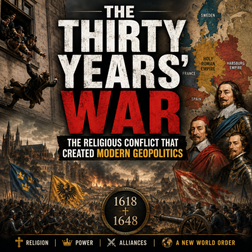
The Thirty Years’ War began in 1618 as a religious and political revolt inside the Holy Roman Empire. What followed was one of the most destructive conflicts in European history—a war involving Catholic and Protestant rulers, powerful dynasties, ambitious generals, and rival kingdoms fighting for survival. In this episode, we explore how the Defenestration of Prague triggered a continental crisis, why Sweden and Denmark intervened, how Catholic France ended up supporting Protestant armies, and why the struggle gradually transformed from a religious war into a geopolitical contest between Europe’s major powers. We also examine the devastation suffered by civilians, the rise of large professional armies, the political strategy of Cardinal Richelieu, and the long negotiations that produced the Peace of Westphalia in 1648. The Thirty Years’ War did not create the modern international system overnight. But it helped establish enduring ideas about sovereignty, diplomacy, alliances, the balance of power, and the right of states to pursue their own strategic interests. This is the story of how a religious conflict taught Europe the cold logic of modern

The Falklands War: Why Two Nations Fought Over Remote Islands
AI
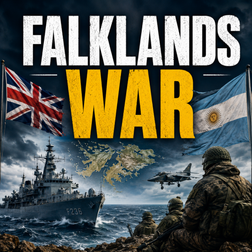
In 1982, Britain and Argentina went to war over a remote group of islands in the South Atlantic: the Falklands, or Malvinas. But this was never just a conflict over distant land. It was a war shaped by sovereignty, nationalism, political survival, naval power, and the dangerous weight of national pride. This episode explores why two nations fought over islands so far from the world’s major centers of power, how Argentina’s military junta miscalculated Britain’s response, why Britain sent a task force across the ocean, and how a short war changed both countries forever.

The Balkan Wars: How Yugoslavia’s Collapse Reopened Europe’s Old Wounds
AI
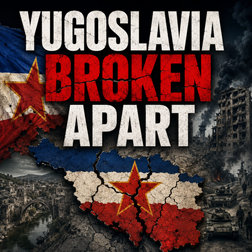
The collapse of Yugoslavia reopened Europe’s old wounds and turned neighbors into enemies. This episode explores how nationalism, economic crisis, historical trauma, and political ambition tore apart a multiethnic state, leading to war in Slovenia, Croatia, Bosnia, and Kosovo. A powerful story about identity, fear, borders, and the fragile trust that holds societies together.

The Arab–Israeli Wars: How 1948, 1967, and 1973 Still Shape the Middle East

AI
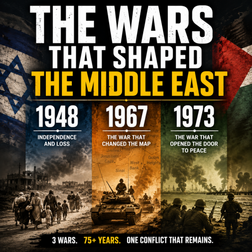
The Arab–Israeli wars of 1948, 1967, and 1973 were more than military conflicts. They created borders, memories, refugee crises, security doctrines, and diplomatic patterns that still influence the Middle East today. In this episode, we explore how 1948 created the core conflict, how 1967 changed the map, and how 1973 changed the psychology of the region — from war and occupation to diplomacy, oil politics, and the long search for peace.
3 of 9