Workplace Intelligence

Workplace Intelligence

by Sheryl Butchin
Season 1

Internal Governance: The Hidden System Behind Elite Leadership Performance

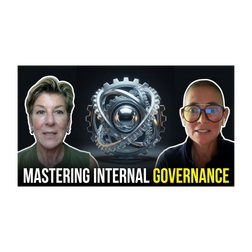
What happens when high-performing leaders scale faster than their internal systems can handle? In this episode, Sheryl sits down with business growth advisor and author Mar Morabito to discuss why most leadership breakdowns are not caused by poor strategy, but by weak internal governance. Mar explains how decision fatigue, emotional volatility, inconsistent communication, burnout, and operational instability often stem from one overlooked issue: leaders have scaled their businesses without scaling themselves. The conversation explores how internal governance shapes leadership clarity, emotional regulation, execution under pressure, and organizational stability. Mar also shares insights from her book, Survival to Sip: The Seven Rhythms to Heal Your Body, Rewire Your Mind, and Live in Alignment, including the seven foundational rhythms she uses to help executives strengthen performance and sustainability. This episode is a powerful discussion on leadership, wellness, discipline, decision-making, and the systems required to sustain success at scale. Key Takeaways Why instinct becomes unreliable as leadership complexity increases How weak internal governance quietly damages organizations over time The connection between emotional regulation and decision quality Why burnout is often a systems problem, not a motivation problem How sleep, nutrition, movement, and recovery directly impact leadership execution The importance of creating stability before optimization Why AI and technology amplify leadership weaknesses if internal systems are unstable How self-awareness improves communication, consistency, and leadership presence Why elite leadership starts with governing yourself first About the Guest Mar Morabito works with business owners and executives to build internal governance systems that support sustainable growth, operational clarity, and leadership stability. Her work focuses on helping leaders strengthen the internal systems that shape decision-making, execution, emotional regulation, and long-term performance. She is also the author of Survival to Sip: The Seven Rhythms to Heal Your Body, Rewire Your Mind, and Live in Alignment and advises organizations globally on leadership performance and operational sustainability. Connect with Mar Morabito LinkedIn: https://www.linkedin.com/in/marisamorabito/ Final Thoughts Leadership performance is not built on strategy alone. It is built on the internal systems that allow leaders to think clearly, regulate pressure, communicate consistently, and execute with stability over time. This episode offers a refreshing perspective on why sustainable business growth starts with strengthening the operator behind the organization. If you enjoyed this episode, subscribe, share with your network, and connect with Sheryl for more conversations on leadership, business performance, organizational strategy, and executive growth.

Credibility in B2B Marketing - Part 1

AI
Stephanie Stocker is Vice President of Marketing and Head of Client Services at Conveyor Marketing Group, where she leads strategy for major client engagements and helps organizations rethink how credibility, visibility, and buyer trust are built in an increasingly AI-driven market. With more than 20 years in B2B marketing, Stephanie is known for her insights on buyer behavior, thought leadership, and what it takes for companies to stand out when buyers often make decisions long before the first sales conversation. Episode Summary In this episode, Stephanie Stocker shares how AI, changing buyer behavior, and digital discovery are transforming the way businesses earn trust and win attention. Buyers are no longer starting with company websites. They are researching through AI search, social media, online communities, and peer-driven conversations before ever speaking with sales. Stephanie explains why credibility now comes from real people with real expertise, why businesses must have something worth saying, and why a company’s website has shifted from being the starting point to becoming the place where buyers validate trust, review proof points, and decide whether to take the next step. Key discussion points include: • Buyers are building shortlists before companies know they are being evaluated • AI is changing how brands are discovered and surfaced online • Thought leadership from real practitioners builds stronger trust than corporate messaging • Websites must prove credibility, showcase proof points, and create a frictionless path to connect • Small businesses can start building visibility today through authentic public conversations and platforms like LinkedIn Timestamp Highlights 00:01 Introduction to Stephanie Stocker and her background in B2B marketing 01:08 How buyer behavior has evolved and why buyers delay sales conversations 02:05 The impact of AI search, LLMs, social media, and third-party discovery channels 03:24 Where credibility comes from today and why people trust practitioners 05:54 What it means to be “worth finding” in today’s market 06:06 Why traditional volume-based marketing is fading 07:30 The new role of websites in building trust and validating expertise 08:15 Practical advice for small business owners with limited budgets 09:00 Why proof points, case studies, and frictionless contact paths matter 10:00 Affordable ways to build reach using thought leadership and platforms like LinkedIn 11:00 Stephanie’s one message every business owner should remember 12:15 Final thoughts on visibility, courage, consistency, and showing up Final Thoughts As Stephanie Stocker shares in this conversation, your website may still be your front door... but the world outside that door has become much bigger. Buyers are researching, learning, comparing, and forming opinions long before they ever reach out. In today’s market, credibility is no longer built through volume or polished messaging alone. It is built through real people, real expertise, consistent visibility, and having something worth saying. If your buyers are already searching, learning, and deciding... the real question is not whether you have a marketing strategy.

Resilience Under Pressure: How Dre Nuzum Built Strength Through Adversity

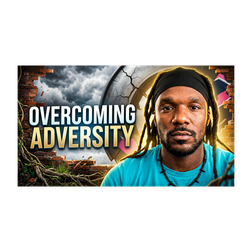
Some people talk about resilience. Dre Nuzum has lived it. In this powerful episode, I sit down with speaker, life coach, and endurance athlete Dre Nuzum to explore what resilience really looks like when life pushes back. From physical endurance to mental toughness, from setbacks to breakthroughs, Dre shares how adversity became the training ground for purpose, discipline, and personal transformation. This conversation is not just about surviving difficult seasons. It is about learning how to grow stronger because of them. Based on the uploaded transcript, the episode opens with Dre being introduced as a speaker, life coach, endurance athlete, and the central theme of resilience. In This Episode We Discuss ✔ What resilience actually means beyond motivational quotes ✔ How adversity can become a training ground for leadership ✔ The mindset required to keep moving when results are not immediate ✔ Why physical endurance often reveals emotional and mental patterns ✔ How discipline creates confidence ✔ What separates people who quit from people who adapt ✔ Coaching others through fear, setbacks, and uncertainty ✔ Building a life rooted in purpose instead of comfort Memorable Takeaway “Resilience is not built when life is easy. It is built in the moments when quitting feels reasonable.” About My Guest Dre Nuzum is a speaker, coach, and endurance athlete dedicated to helping others unlock their potential, build mental toughness, and navigate life’s challenges with purpose, discipline, and clarity. Connect with Dre Nuzum https://www.linkedin.com/in/dre-nuzum/ Connect with Me I am Sheryl Butchin, helping leaders connect workforce strategy, leadership, and business performance. Follow for conversations with executives, founders, coaches, and thought leaders shaping the future of leadership. 🎙 Subscribe, share, and join us for more conversations that turn experience into wisdom.

John Cuellar and Sheryl - AI in HR

AI
AI, Workforce Design, and the Future of HR Leadership with John Cuellar That title carries executive gravity without sounding like clickbait. Sharp as a freshly honed strategy blade. ⚙️ Episode Show Notes What happens when artificial intelligence stops being just a tool... and starts becoming a workforce participant? In this episode, I sit down with technology innovator, enterprise architect, and SyncHR co-founder John Cuellar to explore one of the biggest leadership shifts happening right now: managing both human and non-human contributors inside modern organizations. John shares how AI is moving beyond productivity hacks and into operational decision-making, workforce design, governance, global HR systems, and enterprise architecture. From HRIS and payroll complexity to localization, organizational drift, and real-time workforce intelligence, this conversation challenges leaders to rethink how work gets designed, governed, and executed at scale. If you lead people, systems, or strategy... this conversation matters. 7 Key Takeaways ✅ AI is becoming a non-human actor inside organizations, not just a productivity tool. ✅ The same leadership disciplines used for people... performance, accountability, scope, and governance... now apply to AI agents. ✅ Most organizations are still using AI reactively instead of strategically embedding it into workflows. ✅ Poor organizational data creates "organizational drift," making AI governance nearly impossible. ✅ HR and IT alignment will become essential for maintaining workforce accuracy, identity management, and system trust. ✅ Global organizations need centralized workforce intelligence with localized execution to scale effectively. ✅ Natural language interfaces may finally replace many of the manual forms, tickets, and workflow bottlenecks slowing organizations today. About My Guest John Cuellar brings decades of experience in enterprise technology, workforce systems, AI strategy, and operational leadership. He co-founded SyncHR and served as Chief Technology Officer for more than a decade, helping shape one of the industry's most innovative HR platforms. His background includes leadership in systems integration for Fortune 500 organizations, international consulting, financial engineering, and operational leadership with the U.S. Navy. Today, John is focused on helping senior leaders redesign work for the AI era through advanced workforce systems, organizational intelligence, and enterprise AI applications. Connect with John LinkedIn: https://www.linkedin.com/in/cuellar/ Connect with Me Hosted by Sheryl Butchin, https://www.linkedin.com/in/sheryl-butchin/

From Data to Decisions: How Marcello Sasso Is Redefining Competitive Advantage with AI and Integrated Intelligence

AI
Episode Show Notes What happens when organizations stop looking at customer behavior, sales data, and market trends as separate stories... and start connecting them into one intelligent system? In this episode, Sheryl sits down with global strategic insights expert Marcello Sasso, a market intelligence leader with 25+ years of experience across 25 countries, to explore how integrated intelligence is changing the way organizations make decisions, launch products, identify opportunities, and stay ahead of disruption. From pharmaceutical market breakthroughs to fashion concept validation, Marcello shares how AI is helping companies spot weak signals earlier, reduce costly mistakes, and move from instinct-driven decisions to smarter, faster, data-driven execution. If you are an executive, founder, HR leader, marketing strategist, or business operator navigating AI, market uncertainty, and competitive pressure... this conversation delivers practical insight you can use immediately. In This Episode, You Will Learn ✅ What Integrated Intelligence really means in practice ✅ How behavioral, transactional, and contextual data create better decisions ✅ Why AI should augment expertise... not replace it ✅ How companies can identify weak signals before competitors do ✅ Why concept validation can save months of time and thousands in research costs ✅ The leadership mindset shift required to succeed in the AI era ✅ Why asking better questions may become the most valuable skill in business Timestamp Highlights 00:01 – Introduction to Marcello Sasso and his global expertise across industries 01:42 – What integrated intelligence looks like in the real world 04:17 – Breaking down organizational silos to create one customer truth 06:02 – Identifying weak signals versus market noise using AI 08:57 – Balancing speed, confidence, and human judgment in AI-driven insights 10:43 – How concept validation helps companies prioritize winning ideas 13:57 – A pharmaceutical case study that uncovered hidden cultural buying behavior 16:26 – When concept validation becomes true competitive advantage 18:47 – What leaders must unlearn to trust AI and integrated intelligence 20:33 – Why prompt engineering and better questions are becoming essential leadership skills 22:23 – “AI is a helper, not a replacement.” Key Quote from Marcello “We are no longer paid simply for having the answers. We are paid for asking the right questions.” About Our Guest Marcello Sasso is a strategic insights leader with over 25 years of experience transforming human behavior, market intelligence, and AI-enhanced analytics into measurable business growth. His work spans CPG, healthcare, pharmaceuticals, fashion, technology, finance, and global consumer markets across 25 countries. Marcello specializes in helping organizations connect consumer behavior, transactional intelligence, and market context into actionable strategies that accelerate innovation and competitive advantage. Connect Connect with Sheryl for more conversations on leadership, workforce strategy, AI, and business transformation.

Outsourcing Isn’t a Dirty Word: Turning Workforce Strategy Into a Business Advantage

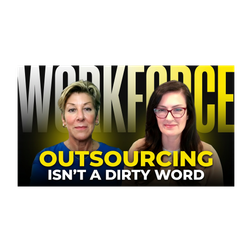
Most organizations still treat staffing like a transaction. This conversation challenges that mindset and reframes workforce management as a core business discipline. In this episode, Sheryl Butchin sits down with Jeri Korb, Vice President of Workforce Solutions at Workforce Delivered, to unpack what happens when labor decisions move beyond “filling roles” and start driving margins, operational stability, and long-term growth. From fragmented vendor strategies to the hidden cost of reactive hiring, this discussion brings clarity to one central idea: workforce strategy is not HR support—it is business infrastructure. 🔑 Key Insights Workforce management becomes strategic when it aligns directly with business outcomes such as margin protection and capability readiness Treating full-time, contingent, and contract labor separately leads to inefficiency and missed optimization opportunities Fragmented vendor management creates hidden cost leakage through inconsistent rates and poor forecasting Reactive hiring decisions are often the most expensive due to lack of data and planning Centralized workforce data enables leaders to compare labor channels and make financially sound decisions Speed in hiring should come from standardized processes—not shortcuts in compliance Integrated workforce strategy requires alignment across finance, operations, HR, and leadership ⏱️ Timestamped Highlights 02:12 – When workforce management shifts from transactional to strategic 03:37 – Why separating labor types creates operational blind spots 05:56 – Where companies are losing money without realizing it 07:59 – Balancing speed, compliance, and control in hiring 10:51 – What centralized workforce data unlocks for leadership decisions 13:19 – Jeri’s career path and the evolution of Workforce Delivered 15:41 – Building a workforce model that works across industries, not just healthcare 16:56 – The future of workforce strategy and multi-sector growth 👤 Guest Overview Jeri Korb is the Vice President of Workforce Solutions at Workforce Delivered, bringing over 22 years of experience across healthcare, wellness, and workforce strategy. She has led initiatives across staffing agencies, hospital systems, and managed service providers, with deep expertise in workforce planning, vendor optimization, and strategic labor alignment. Jeri is recognized for her ability to translate complex workforce challenges into scalable, business-driven solutions that improve both operational performance and financial outcomes. 💬 Notable Quotes “Workforce planning has to become an operating discipline, not just a recruiting activity.” “The work doesn’t arrive in neat buckets, so your workforce strategy cannot be built that way.” “Reactive hiring is almost always the most expensive decision.”

Protecting Talent Before It Walks: A Smarter Approach to Retention

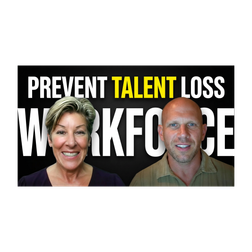
In this episode, Sheryl Butchin sits down with PoachPrevent founder Steve Jorgensen to explore a shift in how organizations think about retention. Instead of reacting to turnover after it happens, Steve shares how companies can identify early risk signals and intervene before top talent walks out the door. The conversation dives into the intersection of workforce analytics, employee behavior, and leadership decision-making—unpacking what actually drives attrition beneath the surface. From hidden disengagement patterns to the cost of delayed action, this discussion reframes retention as a proactive, data-informed strategy rather than a reactive HR function. If you are leading teams, scaling an organization, or trying to protect your highest performers, this episode offers a practical lens on how to stay ahead of talent loss—before it becomes visible. Key Topics: Why traditional retention strategies fail Early warning signs of employee flight risk The role of data in predicting turnover How leaders can intervene before disengagement escalates Building a workforce strategy that protects top talent

Credibility in B2B Marketing - part 2

AI
Stephanie Stocker is Vice President of Marketing and Head of Client Services at Conveyor Marketing Group, where she leads strategy for major client engagements and helps organizations rethink how credibility, visibility, and buyer trust are built in an increasingly AI-driven market. With more than 20 years in B2B marketing, Stephanie is known for her insights on buyer behavior, thought leadership, and what it takes for companies to stand out when buyers often make decisions long before the first sales conversation. Episode Summary In this episode, Stephanie Stocker shares how AI, changing buyer behavior, and digital discovery are transforming the way businesses earn trust and win attention. Buyers are no longer starting with company websites. They are researching through AI search, social media, online communities, and peer-driven conversations before ever speaking with sales. Stephanie explains why credibility now comes from real people with real expertise, why businesses must have something worth saying, and why a company’s website has shifted from being the starting point to becoming the place where buyers validate trust, review proof points, and decide whether to take the next step. Key discussion points include: • Buyers are building shortlists before companies know they are being evaluated • AI is changing how brands are discovered and surfaced online • Thought leadership from real practitioners builds stronger trust than corporate messaging • Websites must prove credibility, showcase proof points, and create a frictionless path to connect • Small businesses can start building visibility today through authentic public conversations and platforms like LinkedIn Timestamp Highlights 00:01 Introduction to Stephanie Stocker and her background in B2B marketing 01:08 How buyer behavior has evolved and why buyers delay sales conversations 02:05 The impact of AI search, LLMs, social media, and third-party discovery channels 03:24 Where credibility comes from today and why people trust practitioners 05:54 What it means to be “worth finding” in today’s market 06:06 Why traditional volume-based marketing is fading 07:30 The new role of websites in building trust and validating expertise 08:15 Practical advice for small business owners with limited budgets 09:00 Why proof points, case studies, and frictionless contact paths matter 10:00 Affordable ways to build reach using thought leadership and platforms like LinkedIn 11:00 Stephanie’s one message every business owner should remember 12:15 Final thoughts on visibility, courage, consistency, and showing up Final Thoughts As Stephanie Stocker shares in this conversation, your website may still be your front door... but the world outside that door has become much bigger. Buyers are researching, learning, comparing, and forming opinions long before they ever reach out. In today’s market, credibility is no longer built through volume or polished messaging alone. It is built through real people, real expertise, consistent visibility, and having something worth saying. If your buyers are already searching, learning, and deciding... the real question is not whether you have a marketing strategy.
2 of 2