Unsung Podcast

Unsung Podcast

by Unsung Podcast

Episode 73 - Carboniferous by Zu

If, like the people on this podcast who are not Chris (i.e, most people), you fuck with Google and Search Engine Optimisation, you would know that Google likes it when you type a blog post that’s over 250 words. So now you know why that sentence above exists.. Seriously though, this week we’re discussing Italian jazz rock maestros Zu. Zu are an incredibly talented band. Since their first album 1999 they’ve gone onto create some of the most avant-garde jazz/rock music that you could imagine. It's a journey which has led them to the door of Mr. Mike Patton, the singer of Faith No More/Fantomas/Tomahawk/Mr. Bungle and, more to the point, the owner of the exceedingly weird Ipecac Records. Carboniferous is their debut release for Ipecac. It’s a challenging, doomy, metallic, jazzy, mathematical exercise in esoteric rock music. It explores as much territory as it possible for a band that contains a drummer, bassist and saxophonist, and from the word go it’s an exhilarating listen. On this episode we dive a little into their extensive back catalogue, talk about the collaborative nature of their music and even, EVEN, discuss jazz a little bit. The results are…interesting, to say the least. Is this their definitive album? As ever, you decide. Vote below and let us know.

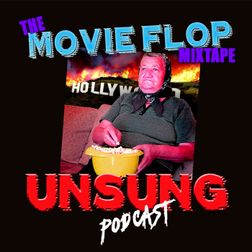
Episode 72 - The Movie Flop Mixtape

We haven’t done a mixtape in a wee while so we thought fuck it, let’s do something completely different. This week we’re talking about the soundtracks from films that were commercial failures. There’s some surprisingly fertile ground in this genre, with some great films being considered box office flops, and some terrible films having great soundtracks or scores. The three of us take very different routes on this episode which one could definitely describe as good, bad and ugly. Chris chose the 1993 film Judgement Night, an average film which was an Emilo Estevez vehicle that strove to bust his Brat Pack image and cement him as a serious actor capable of taking on more gritty, adult material. The results are mixed. The soundtrack, however, is surprisingly good, with Immortal Records owner Happy Walters commanding some of the biggest rock and hip hop acts of the day to collaborate on a song. It’s a very interesting experiment. Mark chose the 1986 Prince car crash Under the Cherry Moon. An absolute disaster of a film - which Price plays a gigolo who attempts to swindle a rich heiress in the French Rivera - it received a commercial and critical drubbing. The soundtrack album though, Parade, is one of his best records and contains mega hit ‘Kiss’. And Weaver picked Under the Skin, the 2014 sci-fi art-house adored, Scarlett Johansson film which is perhaps best know as the one where she lures Glaswegian men into the back of a Transit van. It received a lot of critical acclaim but didn’t fare so well at the box office. The soundtrack was composed by London based singer/songwriter/composer/producer Mica Levi, and stands as the only proper score on our list. Which is the best? Well, you decide. We all thought the ones we picked were the best. Vote below.

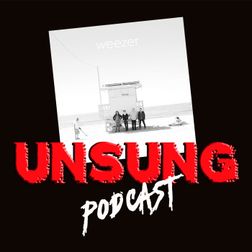
Episode 71 - Weezer (White Album) by Weezer

Explicit
Weezer are a hard band to like. We need to get this out of the way immediately: The Blue Album and Pinkerton are near flawless records, but there is no chance they will get nominated for inclusion in our discography. As Weaver states in this episode, if it were ten years ago then perhaps Pinkerton could be considered Unsung, but it’s now universally recognised that it’s equal to, if not better than, The Blue Album, so that’s a no go for us. It’s been a while since we did a big/popular artist, and Mark chose Weezer in order to discuss just how wildly their career swings from glorious to dreadful. But as it turns out, even people who like Chris and Dave who like Weezer had no idea that they were on album number 13. You might also be surprised to hear that, given that their fifth record Make Believe was so bad that even some die-hard fans deserted the band. Times have changed. Since that much maligned fifth album they have soldiered on, releasing a couple of good records and a few bad ones. The White Album is one of the good, seeing the band lean heavily on the Beach Boys in order to augment their signature pop-rock jams, whilst returning to the sunny sounds they so gloriously roared onto the scene with on their debut album. That’s not to say that this record stands tall alongside The Blue Album; it doesn’t, but what it does prove is that when Rivers and co really put their minds to it, they’re still capable of delivering wonderful, straight forward pop rock songs. As a band they’re also pretty fascinating. In true Unsung fashion we dig deep into their career and discover some wheat among the chaff. There’s also a particularly high brown nexus too, if you stick around to hear it. Is The White Album Weezer’s Unsung classic? Cast your vote and let us know.

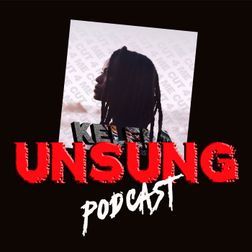
Episode 70 - Cut 4 Me by Kelela

Whilst D’Angelo’s R&B stylings weren’t exactly traditional, or even reflected the popular sounds of the time, Kelela makes him sound positively contemporary in comparison. Indeed, on her debut release she takes the Contemporary R&B rule book and throws it right out of the window. In fact, one could argue that she barely gave the damn thing a passing glance before she hurled into the street. Kelela’s music occupies far more esoteric, darker territory. Yes, there might be hints of 90s R&B in her vocals but it’s merely a nod to the past because what she does on Cut 4 Me is something altogether different. Assembling 9 producers for this record must have been no mean feat, but it sounds pretty well strung together. The dark, creepy, empty (in a good way) beats place her firmly in more experimental territory, producing a feel which is more akin to Frank Ocean than Alicia Keys. On this record she’s bringing in influences of bass, electro, grime and techno, completely shredding the blueprint for what R&B can or should be in the process. Many reviews called it “future R&B” and if you’re even remotely aware of the genre and its trapping, you’d be hard pressed to argue otherwise. Some of the people on this podcast are not at all remotely aware of the trappings of this genre, so when Weaver brings it to the table it has somewhat of a mixed reception. A die hard Kelela fan, he presents it for inclusion in the discography not just because he loves or because of the way it stands out and makes you think, but also because this record seems to have influenced, and continues influence, other alternative R&B artists, many of whom are mentioned in this episode. Along the way we discuss how more black artists are gaining prominence in alternative music circles, Chris devices a music game for you fans, and we unveil a new nexus. What do you think - should it be added into our discography? Vote below.

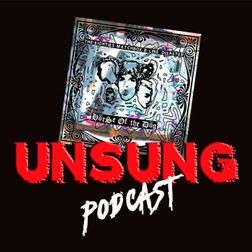
Episode 69 - Horse of the Dog by The Eighties Matchbox B-Line Disaster

If you’re of a certain age, like your three esteemed hosts, there’s a fair chance you’ve heard the name The Eighties Matchbox B-Live Disaster. The smashed their way into the music press with this, their debut album, and a reputation for chaotic, enthralling on stage antics that captured the attention of music lovers and press alike. They also happened to pop onto the scene at the same time as a bunch of scuzzy garage rock bands, of which they sound absolutely nothing like. They arrived with the plaudits and credibility that some of those bands, like The Datsuns or The D4, hadn’t really shown. What’s more, their sound was just weird compared to what was going on at the time. They turned up, kicked the shit out of everyone, and stuck around to watch the scene pick up the pieces and vanish into the distance. And their reputation certainly wasn’t harmed by their strange look, either. ‘Horse of the Dog’ heralded the arrival of a truly strange, unique band who would later go on to release a further two albums which saw them showcase the whole gamut of their weirdness, moving away from bluesy, gothic psychobilly, to punk n roll, scuzzy desert rock and eclectic psyche. On this episode Chris lays bare his adoration for the band, and we cover the band’s back cat, talk about some of the weird support slots they picked up over their career, do a potted history of psychobilly and much more. Is ‘Horse of the Dog’ the best 80s Matchbox album? Vote on our Facebook page.
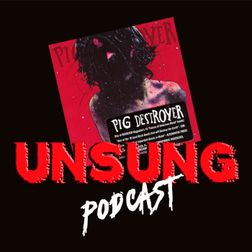
Episode 68 - Terrifyer by Pig Destroyer

Grindcore is what happens when hardcore punks start listening to thrash and decide to slam both together and go faster. It’s extreme, uncompromising and sometimes overwhelming. Pig Destroyer are all of these things and more. Their third album ‘Terrifyer’ is often heralded as a landmark metal album. Many say it’s one of the most important grindcore albums ever written, whilst OG grindcore fans think it’s just not dirty enough. Spoiler alert: we agree with the former. We discuss the genre’s origins, touch on subgenres, dive into the various projects of Scott Hull and give Pig Destroyer’s discography a once over. We also touch upon J.R Hayes’ brilliant lyrics and Scott Hull’s exceptional playing. Is this their best album? Vote below.

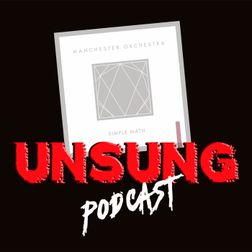
Episode 67 - Simple Math by Manchester Orchestra

Manchester Orchestra have been a band since high school. Which means Andy Hull has been making music, touring and selling actual goddamn records for around half his life. He’s the same age as a couple of us (not Chris) and it really does make you think about what could have been if us three music lovers hadn’t dicked about for so long and just sold out years ago. But alas, that was never in the cards. This week we’re talking about Manchester Orchestra’s third album, and major label debut, Simple Math. Along the way we go deep into their discography, with both Chris and Weaver displaying a large degree of ambivalence to just about everything. In fact, Weaver even crowdsources his opinion, such is his unfamiliarity with this band’s take on earnest emo music. You could say that such attitudes are becoming a feature of many of the episode that feature records picked my Mark… We also talk about how they managed to rise so quickly despite any apparent lack of major label involvement, and a bit more besides. Is this their best album? You decide. Vote on our Facebook page.

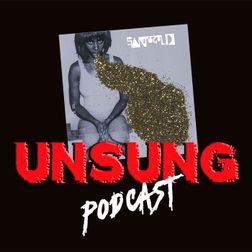
Episode 66 - Santogold by Santigold

Indie darling and savvy industry operator Santi White has been involved in music than you might think. Formerly and A&R rep for Epic Records, she’d been producing and writing songs for other artists for years (as well as kicking around in a punk band for much of the early 00s) before her debut album dropped in 2008. The result of all that time working behind the scenes meant that Santi emerged with a polished, considered and eclectic record that belies its debut album status. Is it perhaps too carefully engineered? That’s one of the many things we discuss on today’s episode as we take a tour of her career thus far, whilst Chris and Weaver get into it a couple of different topics. It’s a pretty interesting discussion all round. As ever, it boils down to whether or not you think this album is worthy of inclusion in our discography. Vote below. Then do us a solid and tell all yr friends.

Episode 65 - Grit by Martyn Bennett

At some point, some journalist somewhere decided that “celtic fusion” was a genre, and subsequently placed the music of Martyn Bennett in it. What does it mean? Well, your guess is as good as ours. We can safely say though that Bennett’s fifth and final album ‘Grit’ is definitely a genre fusion of sorts. We’ve dedicated a fair amount of time to discussing Scottish artists and albums on this podcast, but we’ve yet to touch on traditional Scottish music. Martyn Bennett is very much from a folk/trad background, but his approach is way more modern and genre bending than most artists. ‘Grit’ is a fascinating album by a fascinating man. Musically, it perhaps sounds a little dated today, but it still has some massive tunes on it. This week Weaver and Chris get into the artist, the album, the context around it and even go on some interesting excursions about the Scottish traditional/folk scene as a whole. As ever, you decide if it makes it into our discography. Vote via Facebook.

Episode 64 - Career Suicide by A Wilhelm Scream

We return to our regularly scheduled programming this week as we tackle a punk album which is difficult to categorise. A Wilhelm Scream originally started off as a skate punk band in the mid-90s, first under the name Koen before releasing two albums as Smackin’ Isaiah. As members rotated in and out the band’s sound started to change, and come the early 00s the band eschewed it’s old name and started to move away from skate punk entirely. If we were to take a stab at it, you could probably call them tech punk. Indeed, many have deemed them this over the years, and as such they’ve went onto influence a number of other bands who combine the technical skill and speed of metal with a hearty dose of skate punk. Imagine Bad Religion playing Iron Maiden riffs and you might come a little close to the band’s sound. This week we discuss the band’s third album (or fifth if you take into account the two records released under another name) ‘Career Suicide’. This 2007 release marked something of a departure for the band, where they decided to dump any post-hardcore and emo elements from previous outings and simply focus on riffs, speed and more riffs. We cover the band’s history and ponder whether the difficulty in categorising them may have had ramifications in terms of career “success” (whatever that means). Is this their best album? That is, as ever, up to you to decide.
35 of 46