Unsung Podcast

Unsung Podcast

by Unsung Podcast

Episode 90 - Shaking the Habitual by The Knife

The Knife are perhaps one of the most political bands we’ve yet covered on this show. Fiercely independent into the bargain, they’re probably one of the most punk bands we’ve had on this show too. Except they’re not a punk band. They’re anything but. As an electro-pop band, their early stuff was a cool juxtaposition between breezy dancable pop tunes and a strange, subtle darkness. Sometimes both could be felt in the same song, but mostly their albums swung between both. It was only on Shaking the Habitual, their final, and longest album, that things finally came together. Their sound truly evolved, taking in techno, EDM, industrial, drone and noise, all of which culminated in this epic double album. In Chris’ view, it’s as grand an artistic statement as any band have made. It’s challenging, dense, political, beautiful, brutal and absolutely uncompromising. It takes a little effort to get into, but we feel it’s an ultimately rewarding listen. Is this their magnum opus as well as their Unsung classic? You know what to do.

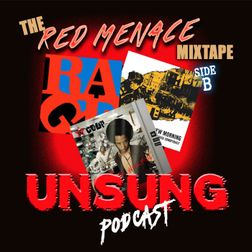
Episode 89 - The Red Menace Mixtape (Side B)

This is it. Time to talk about what records we actually picked and why we picked them. Chris decides to tackle his youthful enjoyment of far left cliches by choosing a record he adores, by a band whose politics he has grown to have serious questions about, in The (International) Noise Conspiracy’s second album ‘A New Morning, Changing Weather’. Whilst Weaver goes for Rage Against the Machines final album ‘Renegades’, because what’s better than a left wing band who paints in broad-strokes to really set the teenage sociopolitical heart ablaze? Mark opts for ‘Pick a Bigger Weapon’ by The Coup, whose sole remaining original member is well known for his activism, outspoken socialism, incisive wit and general love for all things funky. Which is the best? You decide.

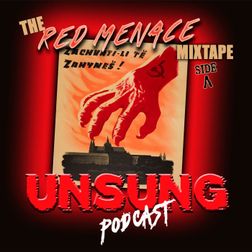
Episode 88 - The Red Menace Mixtape (Side A)

Despite our Liberal leanings, we are not a communist podcast. But we do hold some of the same fundamental views on society, politics and people. Which means, surprisingly, that we rarely disagree on politics. So why a Red Meance podcast? Well, due to our leftness, we thought it'd be fun to explore some of the artists who espouse or influence our views. Thus, a mixtape was born. This, and next, week, we are discussing bands that are very left wing. The kind of communist and socialist bands many of us love, as it happens. But also bands we may have grown to find a little problematic. On this episode we talk about some the bands and genres we think fall into this category. As well as those that don't. It's a fun ride. Promise. So enjoy, if you will, a very brief primer on left wing bands.

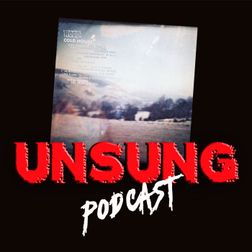
Episode 87 - Cold House by Hood

One listen to Hood’s intriguing fifth album ‘Cold House’ would have you think that they were just another bunch of perennially morose Northern Englishmen. Not so. This week Weaver aims to tell you otherwise. Despite critical acclaim, some tasty tours and lovely festival slots, Hood never did seem to catch the right wave. By the time record came around, they’d been ploughing their trade for ten years, and had recorded and released a ton of songs, exploring many different musical avenues. With this record though, it seems to come together. The second release on Domino, and the backing some indie press, was enough to see them continue for another few years. Then the promptly vanished altogether. One of the brothers who made up the core unit of the band, Richard Adams, moved onto The Declining Winter, whilst Chris now creates music under the name A Remote Viewer, Bracken and runs a label called Home Assembly. Nevertheless, Weaver argues that this is a true unsung classic, and the band’s melancholic magnum opus. A strange mixture of electronica, post-rock, indie and trip hop is what you can expect to find on this album. The trip hop elements bolstered with guest spots by Anticon co-founders Why? and Doseone. In this episode we chat about the album, try to define what it is about some English bands that just screams “dull” and a whole bunch more. Is Cold House worthy of inclusion in our discography? You know what to do.

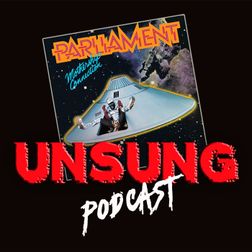
Episode 86 - Mothership Connection by Parliament

Before we delve into the funk let’s start by saying that we’re a little out of our depth here because funk, and specifically P-funk, is a mad, mad sci-fi psychedelic world of slap bass, 70s keyboard freak outs, horny horns, gospel-esque backing vocals, R&B melodies, the occasional Hendrix-style guitar freak out and more funk than James Brown could shake a stick at. The mythology behind Parliament’s 10 (!) concept albums is deep, freaky, hilarious and acts as a critique on 70s Black America. It’s also neigh on impenetrable, yet remains a cornerstone of Afrofutrism. It is, in many ways, absolutely fascinating. Your mileage may very. Chris finds funk hard to connect with, whilst Mark and Dave are keen to extol the influence and legacy of Parliament-Funkadelic’s mental freaky funk outs. Along the way we run down Parliament’s discography, talk about the enduring legacy of George Clinton, Bootsy Collins and Bernie Worrell’s contribution to popular music. We’re more than aware that Mothership Connection is Parliament’s biggest, most well known album. One could make the argument that is anything but unsung. Yet in a discography that is overwhelmingly white, we think it’s time we let our audience know about something a bit different. Should we add it to our discography? As ever, you decide.

Episode 85 - The Vertigo of Bliss by Biffy Clyro (Part 2), With BEST FRIEND OF THE POD Crag Carrick

Surprise! Part two of our Biffy episode is available a few days early, as we look to go ahead with ‘Mothership Connection’ by Parliament this Friday. The gloves are off in this episode as Chris finally gets to the root of his deep seated disdain for the band, we talk about this album, where it sits in the context of their discography, and the weirdness of their fame. We also get a bit philosophical as we ponder how they could have been a big important rock band but instead have become the British version of the Foo Fighters. It’s up to you to decided whether or not that’s a good thing. Most importantly though, it’s time for you guys to finally do the thing you do so well: vote on whether or this album should be included in our discography. Have we managed to make the case for this being or not being added to it? As ever, you decide.
Episode 84 - The Vertigo of Bliss by Biffy Clyro (Part 1), With BEST FRIEND OF THE POD Crag Carrick

Alongside Fritz, Crag is one of the podcast’s biggest donors. We planned to have him on the show sooner but it proved somewhat difficult to organise on account of him living on the other side of the world. But a recent trip home meant we were able to tie him to a chair for a couple of hourswhile Chris gave it both barrels on Biffy. Sadly, due to a bereavement Weaver wasn’t able to join us, but Crag was in fine fettle and what followed was a two part exploration on the band, their back catalogue, their raise to fame and everything in between. In part one Crag tells us why he chose this record, we run down the band’s history and their discography and wonder how a band as weird as this managed to get as big as they are. Part two on Tuesday!

Episode 83 - www.pitchshifter.com by Pitchshifter

In many ways, Pitchshifter are an anomaly. Initially staggering onto the scene in a maelstrom of pseudo-Minestry inspired industry metal, although somehow heavier, they were every bit the equal of their early 90 metal peers in terms of sheer ferocity and ambition. But as they progressed, changing vocalist and embracing a multitude of influences from drum and bass, dance music and more, they begun to shed their one-dimensional skin in favour of something more dynamic, interesting and, perhaps above all, much, much more innovative. Which brings us to www.pitchshifter.com. Their fourth album, the title seems somewhat quaint in the modern era, but in a way, it underlines just how forward thinking they were. With addition of Jim Davies, the erstwhile guitarist for The Prodigy, and a major label deal in the offing, they went full on industrial rock. They combined a bunch of disparate influences from across rock, metal and dance to create a record which has ideas that are still, even now 20 years later, ahead of their time. Chris has been a fan since the 90s, whilst Mark and Weaver had never really spent time with the band until this record was thrust upon them. What transpired was, we think, an interesting dissection of a band who may very well have peaked with this album, reaching that critical point where their ambition met the tunefulness that would carry them, at least somewhat, into the mainstream. On the back of this record they became critical darlings in the music press, both for their recorded output and their live shows. At this point, it seems that perhaps their legacy is not as regarded as it should be, and Chris makes the case as to why this album is a proper Unsung Classic. Agree? Disagree? You know what to do.

Episode 82 - King Night by Salem

“Flash in the pan” style genres are a distinctly modern creation. Once born from message boards and chatrooms, they’re chucked into existence on social media and furiously lapped up by the music press. Every magazine, website, blog, podcast and channel is keen to shape the tastes of thousands, and embracing such fanciful “microgenres” can reap immense short term benefits for any outlet that appears to be on the zeitgeist. And sometimes, just occasionally, these things crossover into the mainstream. That was the case with Salem, a “witch house” band from Chicago and Traverse City. Despite having existed before the short lived, two year mini-boom that was witch house, they ended up being at the forefront of it. After this album was released the promptly vanished, and have yet to do a single thing since their final 2011 EP I Am Still the Night. After our discussion of “cool” in the Sonic Youth episode, Weaver was keen to see if albums which come from "cool” genres stand the test of time, and as a result he ended up chosing King Night, the debut album from Salem. A mixture of southern hip hop, sparse electronica and drum and bass, the band were lumped in with a bunch of other improbably named acts all of whom were beholden to a occutly, 80s horror film, gothic aesthetic. Chris was surprised by this album, as was Weaver. Micro genres very much capture a place and time, but does this place and time deserve a place in our discography? Vote below.

Episode 81 - Witness by Modern Life is War

Like every genre, hardcore has evolved over the years. From its snotty beginnings in the 80s to the present day, it’s been welded to just about every genre and subgenre of punk rock you can imagine. In this episode, we dedicate a little bit of time to talking about melodic hardcore, the bastard offshoot of hardcore, punk and emo. Oh and we talk about Witness by Modern Life is War. A “foundational text”, as Mark puts it, for this kind of music. It’s an album which has influenced a crazy number of artists. What’s more, it comes out of a tiny town in rural Iowa, a town that lead singer Jeremy Eaton has described as a place completely devoid of art of any kind. A marked change from their debut, My Love, My Way, it seen the band fuse Bane-esque hardcore with 90s emo to create the kind of melancholic, sincere, heart on sleeve style of music which straddles many genres. Critically lauded at the time, if you’ve been within feet of a hardcore show at any point in the last decade you’ll have heard a band attempting to imitate this kind of music. So much so in fact that if you’re unfamiliar with the genre, you might even find this a bit generic. But make no mistake about it, these guys were the progenitors. Along with the likes of Have Heart, Verse and Sinking Ships, Modern Life is War were band who were ahead of their time. Mark brings this to the table on the basis that they’re an unsung band. They ceased being a full time band almost a decade ago, a result of endless touring that seemed to be bearing little fruit, but their legacy echoes through the ages. Is it worthy of a place in our discography though? Well, that’s up to you to decide.
33 of 46