Unsung Podcast

Unsung Podcast

by Unsung Podcast

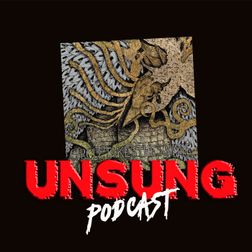
Episode 184 - As the Roots Undo by Circle Takes the Square

Screamo is still a dirty word to those of a certain generation. It conjures up images of The Used and Hawthorne Heights and Silverstein. Well we’re here to tell you that before those bands became a thing, screamo was something entirely different. The best example of this is, of course, As the Roots Undo by Circle Takes the Square. Won’t harp on about screamo too long in this post (you’ll need to listen to get the full rundown) but the OG version of it (or “skramz” as it is often called, partly as a way to differentiate it from the aforementioned early 00s, mainstream bothering second wave of it) has more in common with grindcore and post-hardcore, than it does metalcore and pop punk. CTTS released this album in the midst of the mainstream screamo boom, but like their peers in Orchid and pg.99 (to name a few), couldn’t have been further from the mainstream. On this episode we’ll cover the history of the genre - from its beginnings in the early 90s to it’s mid to late 10s post-hardcore tinged renaissance. We’ll also give you some history on the band too. Before asking the key question - is this unsung? Vote below.

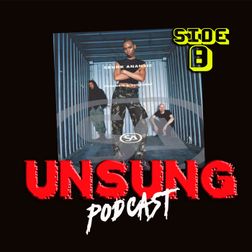
Episode 183 - Paranoid and Sunburnt by Skunk Anansie (Side B)

And so we’re back to talk some more about Skunk Anansie and this time, THIS TIME, to actually chat about the album we said we would talk about, Paranoid and Sunburnt. But before we get there of course, we also chat about Skin because her influence and mere presence in the music both back in the 90s and now, are huge. She’s a very interesting character in her own right, so it would be remiss of us not to talk about her. After that, we then dig into the album proper. This weird hard rock/funk rock hybrid which sounds more American than British, and produced the huge (yet strangely not their most popular on streaming services) single Weak. Is it an album which has stood the test of time? Are the band unsung and underappreciated? As ever, you decide. Vote below.

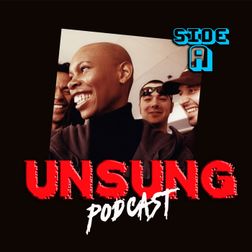
Episode 182 - Paranoid and Sunburnt by Skunk Anansie (Side A)

Skunk Anansie have sold millions of albums. Paranoid and Sunburnt, their debut, was released to wide acclaim and arrived in the post-grunge period where the UK was in the thrall of Britpop, but what is the band’s legacy? Many of the bands that came out around about this time that didn’t fall into the Britpop category were loosely termed Britrock, and Skunk Anansie were one of the biggest, and most interesting of the lot. Sonically, they had more in common with bands like RATM and Faith No More than anything this side of the Atlantic, but they were a breath of fresh air when they arrived, bringing the politics of race, class and sexuality to the forefront of their music and their message. They released 3 albums in the 90s before vanishing, resurfacing in the late 00s. Their output since then hasn’t quite reached the heights of this interesting (if now dated) debut, but there’s still a few songs to love throughout their more recent 3 albums. On this episode we talk about the band’s history and what they mean in the wider lexicon of British rock music. We also talk a little about how, despite being huge at the time, they seem to be a little “forgotten” by many people. As ever, we talk about the band’s back a catalogue too. Next week, we’ll talk more about Skin and the album itself.

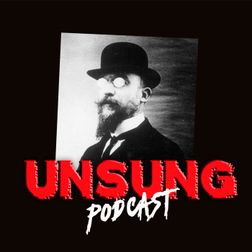
Episode 181 - Gnossienne no. 1 - 6 by Erik Satie

Whilst any meaningful distinction between what is “high” and what is “low” are is surely a conversation born out of complete nonsense (who gets to decide this things? Why do such individuals fall into these categories? etc), what we can say is that we are very much out of our wheelhouse on this episode. That’s right. We’re going classical. We’re going Erik Satie. Look, classical musical analysis is really not our forte but we give it a damn good go on this episode (with proper credit applied where necessary). As some of Christopher’s favourite pieces of music Gnossienne is something he’d been itching to do for a wee while. There’s a good chance you’ve heard at least some of numbers 1 to 3 in a film at some point over the years. Indeed, just like at Satie’s IMDb entry to see how many films his music has appeared in. It’s a lot. Anyway, Erik Satie was a bit mad. We won’t spoil it for you by talking about it here - really, you need to listen to get the full measure of his strangeness - but what is often agreed upon is that he’s the father of ambient music. We talk about that, and so much more, in this week’s show. Is he unsung though? You decide.

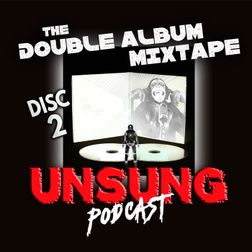
Episode 180 - The Double Album Mixtape (Disc 2)

In case you missed it, last week we discussed the history of the double album. We spoke about how the double album was born, how it paved the way for more conceptual records, some of the big hitters, some of the worst ones, triple albums, quadruple albums…just any and all things related to the very concept of the double album. We also created three loose categories that we think all double albums fall into. If you missed it, you can find the episode here. This week, we’ve each picked what we think are excellent examples of the double album and decided to chat about why they’re not just great records, but whey they’re great double albums. As is usual for the format of our mixtape episodes, we’ve relaxed the rules a little on what constitutes as “unsung”. Chris went for perhaps one of the most well known, and well loved, double albums ever, in the form of The Smashing Pumpkins Mellon Collie and the Infinite Sadness. Weaver plumped for Don Juan’s Reckless Daughter by Joni Mitchell, because we don’t really think there’s a way we can do Joni Mitchell on a regular show given how massive she is. And Mark went for the influential alt rock/emo classic Zen Arcade by Husker Du. Both three very different examples of the double album, we think. Some are conceptual. Some are just long ass albums. Whatever the case, we stand by our choices. But which do you think should be the first ever double album to go into our discography? Use the Twitter poll below to decide.

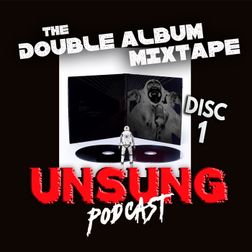
Episode 179 - The Unsung History of the Double Album (Disc 1)

The dreaded double album. In the eyes of some, it’s an aberration. A sure sign of a band with too much ego/money/time and not enough tunes to make it really work. Well, join us this week as we talk all things double album. The double album dates back to the last 50s, with Ella Fitzgerald first releasing a double LP set with her 1956 album Ella Fitzgerald Sings the Cole Porter Songbook. Yet many will claim that Blonde on Blonde by Bob Dylan is the first true example of a double album in popular culture because it was the first double LP set that contained original songs. Whatever the case, the double album truly began to blossom into the 70s, when many bands started to take advantage of the double LP format to create sprawling works that no single LP could contain. Different variations on the format followed - the triple album, the Sesquialbum, the quadruple album, the box set to name them - but as time went by, and the physical format gave way to streaming, it seems that double albums are no longer the statement they once were. On this episode we’ll cover the history of the double album, talk about some highlights, discuss some of our favourites as well as some good (and bad) examples of the genre. Next week, we talk about the three albums we’ve picked as the best examples of the format.

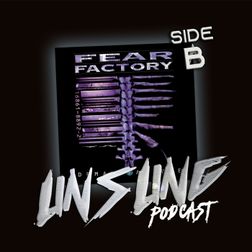
Episode 178 - Demanufacture by Fear Factory (Side B)

Before we dive into Demanufacture properly, this week we take some time talking about Fear Factor’s albums from Archetype until this year’s Aggression Continuum up and friends, to say it’s a mixed bag would be an understatement. If you missed last week’s episode, listen here. Largely this is down to interpersonal issues between the band, with Digimortal being the last time the “classic” lineup of Fear Factory would ever spend time in the studio together. There’s some good stuff lying around these later day albums, and we do call out some of the interesting tracks, but your mileage may indeed vary with some of this. Then to wrap things up, we talk about Demanufacture itself. It’s an interesting chat, and it goes in a couple of surprising directions too, as we discuss the larger concept at play on the record, Dave explains why he has so much love for the album and all three of the lads give us their final thoughts on the album and the band. Also, the nexus is a doozy as we have to link Baby Hitler to the band. Which is a lot easier than you might imagine (but not because the band are racist or anything). Is Demanufacture an unsung classic? Is it more influential than Obsolete? Is it the band’s finest moment? You decide. Vote now.

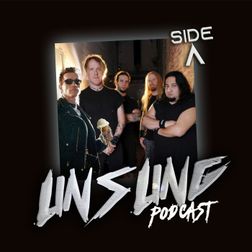
Episode 177 - Demanufacture by Fear Factory (Side A)

A mainstay of 90s and early 00s metal, Fear Factory are a band whose influence has been felt keenly on both nu metal and industrial metal alike. Their second album, Demanufacture is, Weaver argues, a hugely important record on metal music in general, so this week we take a tour of the band’s history and more. Despite having been a band for over 30 years at this point, Fear Factory have only released ten albums. In fact, their latest one came out only a week ago (at the time of writing). We didn’t plan that - truthfully, Dave was completely unaware that they had a new record coming until he decided we were doing this album - but it’s turned out quite well for us. 30 odd years is a long time for a band to exist, which is probably why they’ve long portions of that time either not being Fear Factory, or being at each other’s throats. Indeed, whilst the latest release features co-founder Burton C. Bell, he’s no longer actually in the band. It might feel like a strange thing to mention, but the interpersonal relationships between band members but it’s actually one of the defining features of this band. It’s something we talk about at length in this episode. We also discuss cyber metal, industrial metal and Mark also gives his thoughts on why he more closely associates the band with groove metal, despite (and including) the industrial elements. We also talk about their first four albums, and indeed mention the thematic trilogy that links Demanufacture, Obsolote and Digimortal. All in all, it’s a jam packed episode. We hope you enjoy. Vote next week!

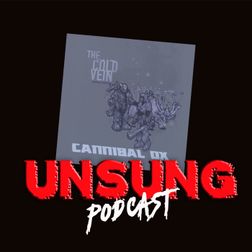
Episode 176 - The Cold Vein by Cannibal Ox

If you’ve any interest in underground hip hop then this album is probably familiar to you. Widely hailed as one of the most important hip hop albums of all time, The Cold Vein by Cannibal Ox a real lightening in a bottle moment for Vast Aire and Vordul Mega. And now, having just celebrated its 20th anniversary, it seems a good a time as any to explore why. Having formed simply by dint of knowing each other through the New York battle rap scene and hanging out at El-P’s flat/studio, Cannibal Ox came together somewhat at the behest of El-P. What transpired was two years of hard graft on their first (of only two) album together, created as they sat around thinking about rhymes and creating music with producer El-P. The skills of Vast and Vordul really shouldn’t be underestimated. Having clearly honed their craft through years of spitting rhymes in ciphers on the streets, their lyrical dexterity and outrageous vocal partnership is clearly a highlight of this album. That’s alongside El-P’s production. This was the first thing he’d ever worked on outside of the work he’d done with his old group Company Flow, and it’s a tour de force. Together with Can Ox, they paint a paranoid, dystopian, Philip K Dick inspired vision of Harlem, Brooklyn and New York City as a whole. Despite being hailed a classic, to date it has only sold just over 100,000 copies. Which is clearly fucking insane. That alone means it fulfils our criteria as an unsung classic, but like so many other artists we’ve covered on this podcast, Can Ox are real artist’s artists. So we ask you, is it worth of a place in our discography? You decide, as ever.

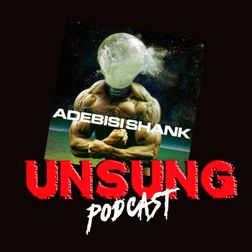
Episode 175 - This is the Third Album of a Band Called Adebisi Shank by Adebisi Shank

One of the ultimate aims of this podcast is to introduce lesser known bands to a new audience, which is why we’re all pretty chuffed to be doing This is the Third Album of a Band Called Adebisi Shank by Adebisi Shank. Hailing from Wexford in Ireland, Adebisi Shank were a band for about 8 years, and in that time released three albums and one EP. Throughout their life, they were able to release music on some cool labels (Big Scary Monsters, Richter Collective, Sargent House) and tour a whole bunch with great bands. Their music is often classed as “math rock” and whilst they occasionally took issue with that, it’s probably the closest genre to place these guys in. For a three piece, they made a tremendous racket, and made, we think, some of the craziest, catchiest pseudo-instrumental math rock that you can possibly imagine. Indeed, this, their final album, is their true zenith. It combines all the math rock time signature instrumental madness with a real sense of joyful abandon, coupled with ridiculous guitar and bass tones, awesome drum sounds and some appropriate robotic vocals. Most of all though, this album is just pure fun. Like, really really fun. It’s quite over the top in places but it all works. It’s carefree. Exuberant, even. In this episode we talk about that at length. We also talk about the rest of the band’s catalogue and why they never once fall into the self serious overplayed nonsense that a lot of math rock falls into. More folk need to listen to this band and we think it absolutely is an unsung classic. Agree? Disagree? Vote below.
23 of 46