The Original Self Podcast

The Original Self Podcast

by Evet DeCota
Season 1
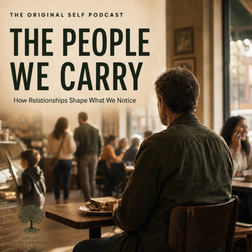
The People We Carry: How Relationships Shape What We Notice
Some people leave us with memories. Others quietly change the way we see our own lives. After cutting Loren's hair every six weeks for sixteen years, Evet came to recognize his unusual gift: he knew how to live inside an ordinary moment. Whether he was eating a sandwich in a crowded deli, sharing music, debating an opinion, or lingering in conversation after a haircut, Loren paid attention long enough for the experience to matter. In this episode, Evet pairs Loren's story with research on mind wandering and positive psychology's concept of savoring. She explores the difference between simply having a positive experience and allowing ourselves to fully receive it. She also looks at dampening, the habit of minimizing or stepping away from something good because caring deeply can make us feel vulnerable. Through friendship, music, loss, and remembrance, Loren left Evet with a gentler reframe. The goal is not to appreciate every second perfectly. It is to ask: Can I stay for one more beat? Can I let something good reach me before I explain it away? Episode 26 is a reflection on attention, the people who shape us, and the ordinary moments that are not interruptions to life. They are life. In This Episode · Why our minds can be somewhere else even when our bodies are present · How savoring differs from mindfulness · The ways we amplify or dampen positive experiences · Why fully receiving joy can make us feel vulnerable · How reminiscence allows past experiences to create meaning in the present · The relationships that quietly change how we notice our own lives A Question to Carry With You Who taught you how to notice your own life, and what part of the way they lived has quietly become part of the way you live? About Evet DeCota Evet DeCota is the founder of DeCota Life Coaching and host of The Original Self Podcast. She is an International Coaching Federation Associate Certified Coach (ICF ACC) and holds a B.A. in Psychology. Her work is informed by positive psychology, behavior change, emotional regulation, and the belief that growth begins by reconnecting with who we truly are. For almost forty years, Evet has also worked behind a salon chair as a hairstylist and salon owner. That experience shaped her understanding of identity, resilience, relationships, and the stories people carry. She was voted Best Life Coach 2026 by Pacific Sun. Connect With Evet Website: https://www.decotalifecoaching.com Email: decotalifecoaching@gmail.com Podcast: Listen to The Original Self Podcast wherever you listen to podcasts, or watch on YouTube. Coaching: Visit the website to learn more about coaching with Evet and to schedule a discovery call.
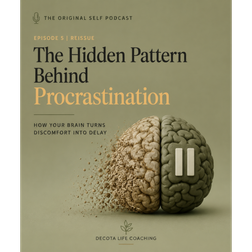
RE-RELEASE: The Hidden Pattern Behind Procrastination
Episode 5 of The Original Self Podcast offers an honest, research-backed look at why we avoid the things that matter most to us. The episode begins by distinguishing procrastination from other forms of delay, arguing that not everything we label procrastination actually is procrastination, and that this distinction carries real consequences for how harshly we judge ourselves. At the heart of the episode is the argument, grounded in the work of Dr. Timothy Pychyl, that procrastination is not a time management problem but an emotional one. We are not avoiding the task. We are avoiding the feeling attached to it. The episode explores the neuroscience behind that pattern, why avoidance is so effective in the short term, and why that effectiveness is precisely what makes it so hard to break. From there, the conversation moves into what actually gets us unstuck, drawing on the work of David Allen, James Clear, and the framework of Newton's First Law to make the case that clarity and motion matter far more than motivation. Self-Determination Theory and Dr. Kristin Neff's research on self-compassion reveal why self-judgment deepens avoidance rather than correcting it, and why treating yourself with the same kindness you would offer someone you love is not a soft response but a strategic one. The episode also includes a personal story about an eighteen-month recovery from a serious accident, the shame and procrastination that followed, and the moment that changed everything. It closes with the psychology of identity, the Pygmalion and Golem Effects illustrated through Steph Curry and the pressure of the away team free-throw line, and the question of whose expectations you have quietly made your own.
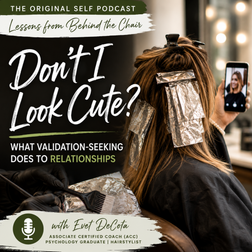
Why We Seek Validation: The Psychology of Feeling Seen | The Original Self Podcast
In this episode of Lessons from Behind the Chair, Evet shares stories from nearly forty years behind the salon chair to explore validation, attention, reassurance, and the quiet ways we seek to feel seen. From repeated selfies to interrupted conversations, she examines how external reassurance, phone distractions, and indirect communication shape our relationships—and asks whether lasting confidence can ever come from someone else. • Why repeated reassurance often points to something deeper. • How phone distractions change conversations. • What 'phubbing' is and why it matters. • The difference between being seen and feeling seen. • Why curiosity is often more helpful than judgment. Research & Psychology Mentioned • External validation • Self-objectification • Phubbing • Conversational reciprocity • Conflict avoidance Reflection Questions • Where do you most often look for reassurance? • When do you feel most present with another person? • What helps reassurance become self-trust? About the Host Evet DeCota is an Associate Certified Coach (ACC), psychology graduate, longtime hairstylist, and founder of DeCota Life Coaching. After nearly four decades listening to people's stories from behind the chair, she now combines psychology, coaching, and lived experience to explore resilience, identity, behavior change, and authentic human connection through The Original Self Podcast. Connect with Evet Website: decotalifecoaching.com Email: decotalifecoaching@gmail.com
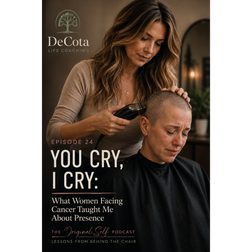
You Cry, I Cry: What Women Facing Cancer Taught me About Presence
Hair can be one of the first visible losses during cancer treatment, but the deeper experience is often one of identity, grief, and learning to recognize yourself through profound change. In this deeply personal episode of The Original Self Podcast: Lessons from Behind the Chair, Evet shares two unforgettable stories from nearly forty years as a hairstylist. One begins with shaving her sister-in-law's head before chemotherapy. The other follows a woman whose hair grew back—but no longer felt like her own. Through these experiences, Evet explores the psychology of identity, transition, and human connection, revealing why the most meaningful thing we can offer another person isn't always advice or answers—it's our presence. Topics include: • Anticipatory grief • Rites of passage and transitions • Disenfranchised grief • Identity continuity • The power of presence over fixing • Coaching through uncertainty Psychology & Research Referenced: • Pauline Boss — Ambiguous Loss • Arnold van Gennep — The Rites of Passage • Nancy Schlossberg — Transition Theory • Kenneth Doka — Disenfranchised Grief • Erik Erikson — Identity development and continuity Website: decotalifecoaching.com Email: decotalifecoaching@gmail.com Listen wherever you enjoy your favorite podcasts.
The Version of Us Stress Reveals
This episode begins a new chapter of The Original Self Podcast. Topics include: • Stress responses • Expectation violations • Attachment and belonging • Identity threat • Nervous system regulation • Reacting vs. responding • Curiosity over judgment The real question isn't, 'What's wrong with this person?' It's, 'What might this person be trying to protect?' Website: decotalifecoaching.com Email: decotalifecoaching@gmail.com Listen wherever you enjoy podcasts. Research Referenced Lazarus & Folkman – Stress Appraisal Theory Daniel Kahneman – Fast and Slow Thinking Carl Rogers – Curiosity Dan Siegel – Window of Tolerance Stephen Porges – Polyvagal Theory Identity Threat Theory Social Identity Theory Attachment Theory
Coming Home: Learning to Trust Yourself Again
Evet DeCota is the owner of DeCota Life Coaching and a psychology-informed life coach exploring resilience, mindset, and the courage to become your authentic self. Between the salon chair and the coaching session, she's spent years watching people move through life in patterns they rarely notice. This is it, the final episode of A Psychology of Food. Eight episodes ago, this series opened with a question: what happened to us around food? Episode 22 turns that question around and asks it the other way. Who were you before you were taught how to be around food? This episode is about the practice of finding out, and about learning to trust the answer. In this episode, you'll learn: ● The practical difference between physical hunger and emotional hunger, and where each one tends to register in the body ● Why undereating during the day can produce something that feels exactly like emotional hunger by evening, and why that isn't a willpower problem ● What interoceptive awareness is, and why researchers Evelyn Tribole and Elyse Resch describe it as something close to a superpower ● Kristin Neff's three components of self-compassion, and why self-compassion is the actual condition that makes listening to your body possible ● Why comfort eating was never the enemy this series was describing, and where the real concern actually lies ● Evet's own closing reflection, including her experience with a GLP-1 medication, what it did and didn't do, and what coming home to herself has looked like This episode marks the final chapter of A Psychology of Food, an eight-episode series exploring the systems, biology, and psychology that shape our relationship with food. Thank you for listening to the whole arc. Contact Evet / DeCota Life Coaching Website: decotalifecoaching.com Email: decotalifecoaching@gmail.com Phone: 415-548-1964
Episode 21-Food Addiction and The Science Behind Diet Culture Guilt
Is it addiction, or is it something else wearing the same symptoms? Episode 21 opens the final section of A Psychology of Food, The Self, by taking on the food addiction debate directly, then following the thread into the binge-restrict cycle and the cheat day culture that keeps it spinning. What you'll learn in this episode: ● The 2025 research proposing "Ultra-Processed Food Use Disorder" as a diagnosis, what the Yale Food Addiction Scale actually measures, and why researchers are still divided on the question ● Why food doesn't fit the abstinence model every other addiction framework is built on, and what that means for anyone who has felt like they don't fit the label ● The four stages of the binge-restrict cycle: restriction, craving, bingeing, and guilt, and why each stage sets up the next ● The forbidden fruit effect, including a story from Geneen Roth's Kindness and Calories about a mother, a pillowcase, and a bag of M&Ms ● Why cheat days often function as restriction with a due date, and what the research says about the alternative ● Evet's own history with sugar and hyper-palatable food, including thirteen years as a smoker who quit for good, and years of nutritionists, food therapy, and food retreats ● The shift from blame to curiosity that carries through the rest of the series, and a preview of the final episode This episode closes with a preview of Episode 22, Coming Home: Learning to Trust Yourself Again, the final episode of the series. If you'd like to learn more about working with Evet, you can find her at decotalifecoaching.com, email decotalifecoaching@gmail.com, or call 415-548-1964.
Episode 20- Menopause, Metabolism, & the 8 PM Problem
Episode 20 turns to one of the most misunderstood stages of a woman's life: menopause and the very real metabolic and neurological shifts that come with it. Evet DeCota walks through why the strategies that worked in your twenties and thirties stop working the same way at midlife, and why that has nothing to do with discipline or effort. Key takeaways: ● Estrogen decline during perimenopause and menopause weakens a natural appetite brake, shifting the balance between leptin (fullness) and ghrelin (hunger) toward increased cravings. ● Visceral fat redistribution toward the abdomen after menopause is a documented, estrogen-linked shift, not a reflection of effort. ● Appetite hormone changes continue for 18 to 30 months after the menopause transition itself, meaning the body keeps recalibrating well past menopause. ● The 8 PM problem is driven by evening cortisol that fails to decline on schedule, compounded by hot flashes and disrupted sleep that independently raise next-day hunger. ● PCOS, recently renamed PMOS (polyendocrine metabolic ovarian syndrome), does not resolve at menopause. Reproductive symptoms often ease, but insulin resistance, the metabolic core of the condition, typically persists or worsens. ● Evet shares her own PMOS story, including a hysterectomy recommendation at seventeen, decades on birth control, and later conversations with her doctors about HRT and GLP-1 medication. ● Research from neuroscientist Lisa Mosconi shows the brain's glucose metabolism drops measurably during perimenopause, offering a possible explanation for menopausal brain fog and for why nearly two-thirds of Alzheimer's patients are women. ● Mediterranean and MIND-style eating patterns have the strongest evidence base for supporting cognition through midlife, while ultra-processed foods and refined sugar are linked to worse brain fog. This episode is part of A Psychology of Food, a nine-episode series exploring the systems, biology, and stories that shape our relationship with food. Episode 21, Food Addiction, Food Shame, and the Cheat Day Lie, continues the series next. Contact Evet / DeCota Life Coaching Website: decotalifecoaching.com Email: decotalifecoaching@gmail.com Phone: 415-548-1964
Episode 19- Born into It: Where Your Relationship with Food Really Began
When most people think about their relationship with food, they point to their first diet, a painful comment about their body, or years of struggling with emotional eating. But what if the story began much earlier? In this episode of The Original Self Podcast, we explore the science behind how our relationship with food begins long before conscious choice. From prenatal flavor exposure and epigenetics to the infant microbiome and childhood food rituals, we examine how biology, environment, and family traditions quietly shape the way we eat. You'll learn how the body adapts before birth, why the gut and brain begin communicating in infancy, how Saturday morning cereal became more than breakfast, and why many of our lifelong eating patterns developed long before we understood nutrition. Most importantly, this episode isn't about blame. It's about replacing shame with understanding. The body is remarkably adaptive, and the same biology that helped shape our early experiences remains capable of change throughout life. In this episode, you'll discover: • How food preferences begin before birth • What epigenetics teaches us about inheritance and environment • Why the infant microbiome matters for lifelong health • How childhood rituals and family traditions become emotional maps • The psychology behind classical conditioning and food memories • Why understanding your beginning doesn't determine your future • How neuroplasticity, the microbiome, and lifestyle continue to support change throughout adulthood Contact: decotalifecoaching@gmail.com www.decotalifecoaching.com Listen wherever you enjoy podcasts. Research & References Featured in This Episode: • Dr. Julie Mennella (Monell Chemical Senses Center) • The Dutch Hunger Winter Studies (1944–1945) • Dr. Rachel Yehuda (Icahn School of Medicine at Mount Sinai) • Dr. Martin Blaser (Rutgers University) • Dr. Jack Gilbert (University of California San Diego) • Cornell University Food and Brand Lab • Human milk biology research Further Reading: • The Omnivore's Dilemma – Michael Pollan • The Hungry Brain – Stephan Guyenet • Metabolical – Dr. Robert Lustig • The Psychobiotic Revolution – Scott Anderson, John Cryan & Ted Dinan • Why Zebras Don't Get Ulcers – Dr. Robert Sapolsky Educational Disclaimer: The information presented in this episode is intended for educational purposes only and should not replace medical advice from your physician or another qualified healthcare professional.
Episode 18- The Neuroscience of Why You Eat: Stress, Dopamine & Why Willpower Is Often the Wrong Explanation
Have you ever reached for food and only realized what you were doing after the fact — as if the decision had already been made without you? You're not imagining it. In this episode of The Original Self Podcast, psychology-informed life coach Evet DeCota explains why that experience is neurologically real, and why willpower is often the wrong explanation for what's happening. Drawing on her graduate research on stress, impulsivity, and hyper-palatable food consumption, Evet breaks down the brain systems that drive eating behavior — and why they so often override our best intentions. In this episode, you'll learn: • Why the decision to eat often happens before conscious awareness catches up — and what that tells us about how the brain actually works • The difference between the Wanting System and the Liking System (and why you can keep eating long after the enjoyment is gone) • How stress and cortisol specifically direct appetite toward calorie-dense foods — and why this is a survival mechanism, not a character flaw • Why some people lose their appetite under stress while others reach for food — and the neurological reason behind both responses • How the gut-brain axis shapes cravings through the microbiome, serotonin, and hunger hormones like ghrelin and leptin • What happens to the prefrontal cortex under stress — and why the brain simultaneously hits the accelerator and weakens the brakes • A simple awareness practice, backed by UCLA research, that interrupts automatic eating patterns without requiring willpower or restriction This episode is part of the ongoing series A Psychology of Food — a multi-episode arc exploring the systems, biology, and history that shaped your relationship with food, long before you had the language to question any of it. If you've ever asked yourself, 'What is wrong with me?' around food, this episode offers a different question — and a more honest answer. To learn more about working with Evet, visit decotalifecoaching.com
1 of 3