The Me I’m Becoming

The Me I’m Becoming

by Linh Lee
Season 1
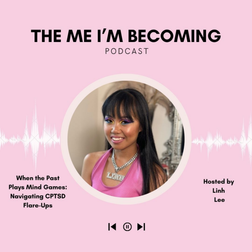
When the Past Plays Mind Games: Navigating CPTSD Flare-Ups
In this incredibly personal episode, we are getting vulnerable and talking about something that’s been coming up a lot for me lately: Complex PTSD (CPTSD) flare-ups. Have you ever noticed that experiencing healthy love or a genuine friendship can suddenly make you feel terrified? Today, we explore how healthy connections hold a mirror up to our unhealed wounds. I’m opening up about my own experiences with a toxic childhood, a deeply dysfunctional friendship that made me question my self-worth, and how being in a healthy, platonic friendship today sometimes triggers vivid flashbacks. We’ll talk about the "hidden gremlin" of CPTSD, the fear of being "too much," and most importantly, the practical tools you can use to ground yourself when the past tries to hijack your present. If you’ve ever felt like your trauma is playing mind games with you, this episode is your reminder that you are not broken, you are safe, and you are definitely not alone. In This Episode, We Cover: What is CPTSD? A quick breakdown of Complex Post-Traumatic Stress Disorder and how it differs from standard PTSD. The Mirror of Love: Why finding healthy, safe relationships (both romantic and platonic) can unexpectedly trigger our deepest fears and past traumas. Unlearning Toxic Cycles: My personal story of navigating the lasting impact of an emotionally abusive upbringing and past toxic friendships. The "Hidden Gremlin": What a CPTSD flare-up actually feels like in the body and mind. 4 Practical Grounding Tools: My go-to strategies for pulling myself out of a spiral, including journaling, somatic grounding in nature, the 5-4-3-2-1 sensory method, and fact-checking fear vs. reality. You are not alone: Why having a trauma flare-up isn't a setback, but actually a sign that your body finally feels safe enough to process the past. Resources & Grounding Techniques Mentioned: Journaling: Externalize your thoughts to physically separate the past from the present. Grounding in Nature: Spend 20 minutes outside to help regulate your nervous system. The 5-4-3-2-1 Method: Name 5 things you can see, 4 you can touch, 3 you can hear, 2 you can smell, and 1 you can taste to bring your brain out of survival mode. Join the Conversation: If this episode resonated with you, I’d love to hear your thoughts. How do you ground yourself during tough moments? Reach out on @linhofficial333 on Instagram and Tiktok and let's keep the conversation going. Don't forget to subscribe, rate, and review if you enjoyed today's episode! Disclaimer: I am sharing my personal experiences with CPTSD and trauma. I am not a licensed mental health professional. If you are struggling with your mental health, please reach out to a therapist, counsellor, or a local mental health support hotline.
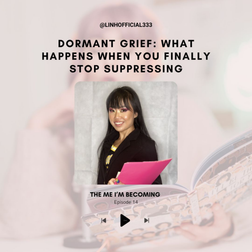
Dormant Grief: What Happens When You Finally Stop Suppressing
What happens when grief waits a decade to show up? In this episode, I share a deeply personal realization about an event from when I was 14 years old - a boundary-crossing dynamic with a teacher, the resulting jealousy and emotional abuse from my mother, and the sheer weight of having to navigate it all completely alone. For years, I thought I was over it. But unprocessed emotions don't disappear - they just go dormant until you're finally safe enough to feel them. In this episode, we talk about: · Why childhood and high school trauma can hit you heavy years later · The reality of "dormant grief" and how emotional suppression affects the body · Breaking free from generational cycles of unhealed trauma · Practical, gentle ways to allow yourself to release buried pain without guilt Emotions are energy in motion. If you've been carrying something heavy from your past, this episode is your reminder that you're not alone, and it's okay to finally let it out.
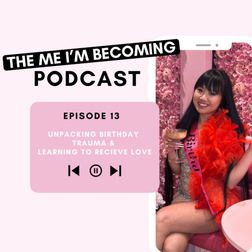
Unpacking Birthday Trauma & Learning to Receive Love
Have you ever told people, "Please don’t make a fuss about my birthday," or felt an overwhelming wave of discomfort, guilt, or anxiety when someone tried to celebrate you? In this deeply personal and vulnerable episode, we talk about the unspoken reality of birthday trauma. After navigating some resurfacing childhood grief following a recent birthday, I share my journey of growing up with a mother who made me feel like an inconvenience for wanting to be acknowledged - and how that shaped my belief that I was unworthy of celebration. We unpack the emotional weight of transitioning from toxic, neglectful dynamic patterns to finding a "soul family" who chooses to spotlight you simply because they love you. We also dive into the psychological reasons why so many of us learn to downplay our special moments, expect disappointment before it happens, and check everyone else’s mood before our own. If you’ve ever felt embarrassed by celebration, afraid to ask for what you want, or like love always comes with a hidden cost - this episode is a gentle reminder that wanting to feel special doesn't make you demanding. It makes you human. Key Topics Covered The Roots of Birthday Trauma: How childhood emotional neglect and being made to feel like a burden creates adult discomfort around celebrations. Grieving What Could Have Been: Processing the bittersweet realization that receiving care from friends can resurface the pain of not getting it from a parent. The "Don't Make a Fuss" Defense: Why expecting nothing and downplaying your needs feels safer than risking disappointment. The Psychology of Emotional Debt: How growing up with conditional love trains your brain to look for hidden costs whenever affection or gifts are given. Chosen Family & Healing: Learning to step out of survival mode, break free from toxic relationship patterns, and allow yourself to receive unconditional love. Memorable Quotes from the Episode "Expecting nothing can feel so much safer than hoping for something and being hurt again." "Realizing it could have felt this easy all along can hurt - but it can also heal you at the exact same time." "Wanting to feel special doesn’t make you demand. It makes you human. And pretending something doesn’t matter doesn’t mean it never mattered." "Healing is learning that sometimes people celebrate you simply because they love you. And you are allowed to receive that." Content Warning This episode touches on themes of childhood emotional abuse, parental neglect, and family trauma. Please take care of yourself while listening. In Australia, you can contact 1800RESPECT on 1800 737 732 for 24/7 support.
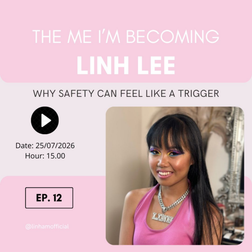
Why Safety Can Feel Like a Trigger
In This Episode: This week, a major trigger surfaced in one of my new friendships—and it immediately brought me back to a belief I learned in childhood: that I am responsible for other people’s emotions and reactions. Growing up in a narcissistic and dysfunctional home taught me to constantly monitor the moods, outbursts and behaviours of the people around me. Even years after escaping, that conditioning can still resurface during conflict, misunderstandings or moments of emotional discomfort. In this deeply personal episode, I reflect on how my body responded by becoming numb, why kindness and healthy communication can feel unfamiliar after abuse, and how the brain often returns to old patterns simply because they are familiar—not because they are healthy or true. If you have ever blamed yourself for someone else’s reaction, feared that one difficult moment meant a relationship was unsafe, or felt confused when old trauma responses returned, this episode is for you. Being triggered does not mean you have failed or undone your healing. What We Cover: · The childhood conditioning that teaches survivors to manage other people’s emotions. · Why conflict and emotional reactions can awaken memories of past abuse. · Experiencing numbness, anxiety and panic as trauma responses. · Why kindness and healthy friendships can initially feel unfamiliar or overwhelming. · How the brain returns to familiar thought patterns, even after the original danger has passed. · Learning that disagreement does not always lead to punishment, abandonment or abuse. · Creating new neural pathways through awareness, compassion and repeated safe experiences. · A reminder that you are not responsible for managing everyone else’s emotions. Support Resources: If you or someone you know is experiencing domestic or family violence, help is available. In Australia, you can contact 1800RESPECT on 1800 737 732 for 24/7 support. Content Note: This episode discusses emotional abuse, threats, trauma responses and dysfunctional relationships.
Success Fears Born from Abuse
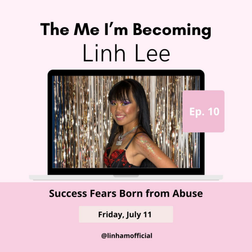
Welcome back! After taking a short break last week to prioritize my health, I’m back and ready to dive into a topic that is deeply uncomfortable, raw, but absolutely necessary for healing. In this episode, I am opening up about a hidden roadblock that has been making me freeze up and self-sabotage my biggest goals: the fear of success. But this isn't just standard imposter syndrome. I’m unpacking how these fears were directly born from my childhood, growing up with an abusive mother who actively worked to cripple my independence and intentionally stunted my growth to keep me entirely dependent on her. We discuss the painful reality of infantilization, the psychology behind a narcissistic parent’s need for control, and how 20 years of conditioning wires our nervous systems to view "success" and "visibility" as dangerous threats. I also touch on how recent experiences with online hate and troublesome creators triggered these deep-seated fears, and exactly what I am doing to build an unshakeable fortress around my peace. If you’ve ever felt like you are subconsciously sabotaging your own dreams because taking up space feels fundamentally unsafe, this episode is for you. Success shouldn't mean sacrificing your safety, and it is time we take our power back. In this episode, we cover: The Mother Wound: Unpacking how intentional childhood sabotage and infantilization impact our adult goals. The Psychology of Control: Why a parent with malignant Narcissistic Personality Disorder views their child's independence as a threat, rather than a point of pride. Visibility & Online Hate: How real-world triggers (like targeted harassment) validate childhood fears of being seen. Breaking the Cycle: Why processing the grief and physically letting the anger leave your body is the first step to getting unstuck. Actionable Safety Protocols: Using gradual exposure to get comfortable with success, setting strict digital boundaries, and reminding your nervous system that you are finally free. A quick reminder: Processing this kind of trauma is exhausting. Please be gentle with yourself after listening, and remember that you have the power to protect yourself while building the beautiful, successful life you are capable of living.
Rewiring the Alarm: Why I Normalised Danger
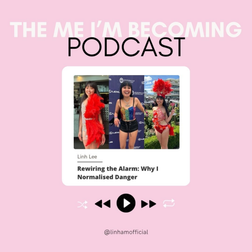
Have you ever found yourself in a genuinely dangerous situation, only for your first thought to be: “Am I just overreacting?” In today’s episode, I share a terrifying incident that happened to me just yesterday at a local laundromat. A situation that should have been an immediate call to 000, but instead left me hesitating, doubting my own instincts, and calling a non-emergency line because I was too ashamed to "make a scene." After spending the last 24 hours processing the intense guilt and shame of that moment, I hit a massive realisation: I didn’t trust my internal alarm system because I was conditioned from childhood to disable it. Today, we’re diving deep into the reality of maternal gaslighting, how growing up around abusive dynamics rewires our brains to mistake red flags for green ones, and the moment of relief that comes when you realise the shame was never yours to carry. If you’ve ever been told your emotions were "too dramatic" or an "inconvenience," this episode is for you. You are not crazy. You are just healing. ✨Key Takeaways: The reality of the incident that led to calling 000. How childhood emotional abuse teaches us to mistake red flags for green flags. Why the brain craves what is "familiar," and how we can consciously choose to rewire our neural pathways. What it truly means to be a cycle breaker. 📱 Let’s Hang Out: Behind-the-scenes updates, community chats, and daily reminders that your feelings are valid happen over on my socials. Come say hi! Follow me on Instagram: [@linhamofficial] Follow me on TikTok: [@linhamofficial] If you or someone you know is experiencing domestic violence or family abuse, please know support is available. In Australia, you can contact 1800RESPECT (1800 737 732) for free, confidential support. If you are in immediate danger, always call 000
To Everyone Saying "I Totally Relate" To My No-Contact Story...
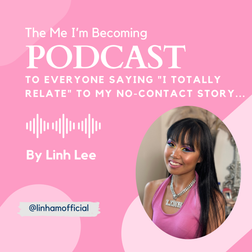
This past week marks exactly 3 years and 11 months since I escaped my abusive mother. To honor that milestone, I wanted to talk about a raw reality that so many cycle breakers live through, but rarely see talked about openly: what it actually means to have literally no one. There is a massive difference between having a distant or complicated family and having zero safety net. In this episode, I’m unpacking the frustrating reality of people who say "I totally relate" when they actually still have a fallback plan. I talk about the daily anxiety of the "emergency contact" box at the doctor's office, carrying the full weight of life on your own shoulders, and how I finally started breaking through years of hyper-independence to let a chosen, healthy community in. If you’ve ever felt entirely alone in this world, this episode is a reminder that your feelings are valid—and that you are capable of building your own foundation. Inside the Episode: The 4-Year Milestone: Reflecting on the physical and mental toll of escaping survival mode. True Isolation vs. "Distant" Families: Why true loneliness hits differently when you have zero fallback plan. The Everyday Triggers: Navigating next-of-kin forms, medical appointments, and ambiguous grief. Choosing Your Community: How healthy friendships helped me heal the toxic echoes of my past. Connect With Me & Resources Mentioned: See the Night & Day Transformation: Check out the pinned photo at the top of my Instagram page showing the physical difference of leaving trauma behind (2022 vs. 2024). Follow me here: [@linhamofficial] on all platforms. Listen to Episode 2: “Missing the Mother I Never Had” (Deep dive into ambiguous grief). Listen to Episode 4: “The Loneliness Trauma Creates” (Understanding hyper-independence). If this episode resonated with you, please consider leaving a review or sharing it with a fellow cycle breaker who needs to hear that they aren't alone today.
The First Glimpse of Freedom
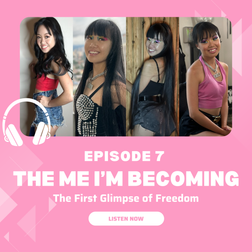
What finally awakens someone to leave an abusive situation? In this episode, I share the moments that changed everything for me. I talk about a trip to Darwin that gave me my first real glimpse of what a healthy parent-child relationship looked like, why returning home left me feeling unexpectedly heartbroken, and the moment I realised I could no longer stay where I was. I also open up about the chilling threat that ultimately solidified my decision to escape, the psychological trap that kept me stuck for so many years, and why leaving abusive relationships is often far more complicated than people realise. If you've ever wondered why survivors struggle to leave, why we sometimes go back, or why freedom can feel so terrifying, this episode is for you. Whether you're currently in a difficult situation, supporting someone who is, or simply trying to understand the realities of abuse and recovery, I hope this conversation reminds you that a better life is possible. You deserve peace. You deserve safety. And you deserve the freedom to become who you were always meant to be.
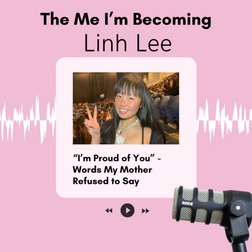
“I’m Proud of You” - Words My Mother Refused to Say
In this episode, I open up about something I spent my entire childhood longing to hear: “I’m proud of you.” I talk about growing up with an abusive mother who refused to give me words of affirmation, how that impacted my self-esteem well into adulthood, and the ways trauma can quietly shape the way we see ourselves long after we leave toxic environments. This episode is about healing, rewiring negative thought patterns, grieving the love we deserved, and learning to give ourselves the kindness we were never shown. And if nobody has told you lately: I am proud of you.
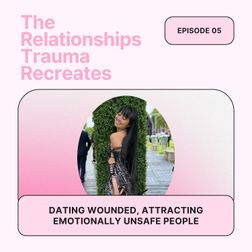
The Relationships Trauma Recreates
Explicit
In this deeply personal episode, I open up about what dating looked like after escaping decades of domestic violence and narcissistic abuse - and how trauma can unconsciously draw us toward relationships that feel familiar, even when they hurt us. I share the story of a relationship that mirrored many of the painful dynamics I experienced growing up, the psychological reasons survivors often confuse chaos with love, and why healthy love can initially feel unfamiliar… even “boring.” This episode was inspired by a conversation I recently had with a dear friend who has quickly become a driving force in my life and healing journey. If you’ve ever struggled with trauma bonds, repeating painful patterns, or learning to choose peace over survival mode, this episode is for you.
1 of 2