The Long Game Project
by svein tuftSeason 1
Reuniting with Steve and Cold talk with Listeners question
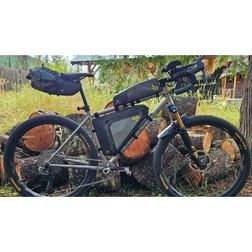
Svein and Steve Neal reunite to talk cold-weather endurance, bikepacking prep, and training for time-crunched athletes. With the Big Beautiful Badger — a 665K, 11,000-meter climbing route through the Canadian Rockies — just days away, Svein shares a harrowing story of going fully hypothermic on a previous expedition: freezing rain, four degrees, pushing through alders at 2 AM, body completely shut down. The experience raises a fascinating question: how much extra energy does your body burn when it's trying to both perform and stay warm? And why don't standard training metrics like TSS account for that cold stress? Steve recalls the Rasputitsa gravel race in Vermont, where he showed up in improvised scuba gear — neoprene gloves and homemade booties — and rode comfortably past riders suffering full-body hypothermic shakes. Svein follows with a story from the 2014 Giro d'Italia, where he stopped to fully kit up in heavy gear while competitors descended with their bikes literally vibrating from cold, their eyes sunken, some barely able to steer. The lesson: aero gains and weight savings mean nothing when your body stops functioning. They dig into wet cold versus dry cold — the difference between a cold tub and a moving river at the same temperature — and how cold-induced dexterity loss makes eating and drinking nearly impossible, creating a vicious spiral. Steve's advice for the Badger: pack more than you think you need, prioritize warmth over nutrition optimization, and adopt a backpacker's mindset — stop, eat, then keep moving. Svein contrasts this with his Jumbo Wild experience in extreme heat, where he learned that one-minute river submersions prevented cardiac drift and kept him from catastrophic blow-ups. The theme is the same in both extremes: you can't rewind the clock in a remote event. Skipping a stop to "keep moving" creates a deficit you can't recover from. In the second half, the pair tackles a listener question from Maury Lum, a 51-year-old Vancouver cyclist training 6–10 hours per week. Does structured training advice only apply at 12–15 hours? Steve maintains that threshold for real cycling gains but shares a personal experiment: riding just once a week and doing four short circuit-style strength sessions — and racing competitively. He felt the best he ever had. Both agree that for time-crunched athletes focused on longevity, a mixed approach — strength, mobility, some cycling — beats squeezing in low-volume, high-intensity bike sessions that lead to burnout. They close with reflections on aging and movement — Steve adapting exercises post-surgery, Svein championing floor living over couches — and why building structural resilience now pays off when you finally have time to ride more.
Alex Stieda Life before and after the yellow jersey. Still given er
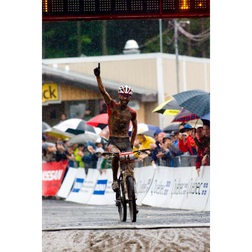
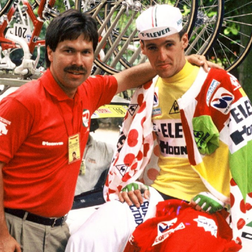
In 1986, Alex Stieda became the first North American to ever wear the yellow jersey at the Tour de France. He raced professionally through an era when being a Canadian trying to make it in European cycling was a strange and lonely path — and he helped open a door that a generation of riders would eventually follow through. But that's not really what this conversation is about. Svein has known Alex for years, and what interests him more is what happens after the jersey. After retiring from professional cycling. After raising a family, going through cancer, and navigating all the chapters life throws at you — the guy still loves riding his bike. He still trains. He still sets goals. He still wants to see what he's capable of. This episode goes back further than the Tour to understand what made Alex that way. They cover growing up in Coquitlam, BC, and the outsized influence of Alex's father — a German construction foreman who built his own house on a broken foot, led scout trips that would be illegal today, and once turned a piece of plywood into a toboggan to get his family off a snow-covered mountain in August. They talk about how a 16-year-old hockey player bought a road bike for $20, strapped a rat trap to it, and rode solo to Salt Spring Island — and how that feeling of freedom and adventure turned into something more serious. How a neighbor two houses down happened to be the president of Cycling BC. How a coach named Baz Barry Lycett turned a group of Vancouver juniors into national track champions. And how, at 20 years old, Alex found himself alone in Belgium with a $500 grant, a military flight, and no cell phone, sleeping in a cold-water flat with an outhouse, taking "Belgian showers" with rubbing alcohol and cologne, and winning kermesse races while the local mafia collected his winnings. Alex shares the full story of the day he snuck into the yellow jersey — showing up to a Tour de France road stage in a skin suit, faking a bathroom break to slip off the front, and riding flat-out until Phil Anderson rolled up beside him and said, "Mate, you're in the jersey." He talks about the chaos of that first Tour: no recon, no radios, staying on army cots in a school gym, and barely making the time cut after winning five jerseys in a single day. They also get into the harder parts — the transition out of racing, the identity crisis that comes with no longer being "the guy," and how Alex rebuilt himself through the bike industry, IT sales, and eventually a move to Edmonton with no job lined up. And finally, the part Svein was most interested in: why, at 65, with a new indoor velodrome in Edmonton and nothing left to prove, Alex is back in training, coaching juniors, chasing provincial track championships, and thinking about his old coach Baz — who at 87 was still the oldest rider in the Tour of Victoria. This one is about what keeps us moving. What competition gives us. How our relationship with sport changes as we get older. And maybe what we're actually training for when the results don't really matter anymore. As long as I can still pedal my bike in a healthy way, that's gonna be a win. That's the long game.
Greg Taylor Winning Ultra Bikepacking races at 54 and all things Jumbo Wild
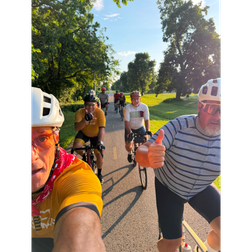
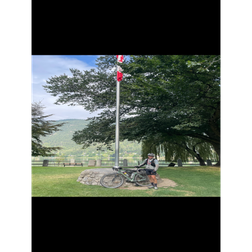
This is a crossover episode originally recorded for the FKT Challenges Podcast (all about bikepack racing, ultra-racing, and people creating their own loops to post the fastest time). The host shares it on the Long Game Project Podcast because the guest, Greg Taylor, embodies everything the Long Game Project is about. Key details from the intro: Greg Taylor is 54 years old, from Coldstream, British Columbia He got into bikepack racing relatively late (around 2019-2020) His first big race was the Buckshot, where he placed third against a solid field He won the Grand Depart of the Jumbo Wild (a 700km bikepacking race through high passes and mountain riding in Nelson, BC, on July 25th) His official finishing time was 2 days, 1 hour, 52 minutes The conversation covers all aspects of the Jumbo Wild race, backcountry experiences, and Greg's perspective as a 54-year-old who is still getting stronger and pushing boundaries The episode also includes sponsor mentions at the end: Shimano, Landyachtz Bikes, Apidura, Reform saddles, GripGrab clothing, and Sea 2 Sky Nutrition.
Brad Huff from Pro cyclist to Project Dudeman, and mens mental health
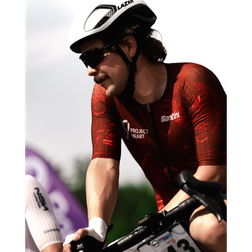
Brad Huff is remembered as one of the great American criterium racers of the 2000s — a two-time US Pro Criterium Champion, a bronze medalist at the 2007 Track World Championships, and a fixture on the North American racing scene for two decades. But as Brad would be the first to tell you, the race results were never really the whole story. In this conversation, Brad takes us back to a farm in rural Missouri, where the work ethic was absorbed by osmosis and the bicycle became his first and most reliable escape. We trace his path from high school multi-sport athlete to junior mountain bike state champ, through his early national team experiences, an eating disorder that nearly derailed everything, and an eventual comeback that would sustain a professional career all the way to age 39. Brad opens up about what it was actually like to be part of the early TIA CREF and Slipstream era — the brotherhood those teams created, the idealism of trying to race clean while the sport was still reckoning with the Lance years, and the heartbreak of watching that development program pivot away from the riders who'd built it. He reflects on what it meant to race in Europe for the first time, winning at the Tour of Normandy, and the particular challenge of learning to compete in a culture that was utterly unlike anything North American cycling had prepared him for. But more than the racing stories, this episode is a real conversation about the patterns men carry — from how they were raised, through how they competed, and into what comes after. Brad is candid about perfectionism, fear of failure, the inability to savor achievements, and the very specific kind of identity crisis that hits when the thing you've spent your life becoming suddenly ends. He talks about what it felt like to unclip for the last time, to find himself without a team or a structure or a sprint finish to focus on, and to slowly figure out who Brad Huff is when he isn't being a bike racer. That search eventually led him to Tulsa and to Project Dude Man — a men's community built around cycling, connection, and what Brad calls mental fitness. The premise is beautifully simple: you don't have to show up saying you need help. You can just show up and ride your bike. And through that shared experience, something real tends to happen. Guys start talking. Friendships form. People look out for each other. The work gets done — just at a pace and in a way that's actually sustainable. There's a full circle to Brad's story that's hard to miss. This is a man who spent his career in a sport where the entire point is to drop people and not get dropped — and who now runs a community organized around the opposite idea. No dude left behind. This one covers a lot of ground, from great bike racing stories to much bigger conversations about masculinity, identity, mental health, and what a life in sport actually leaves you with. We hope you enjoy it. Connect with Brad @projectdudeman or @huffyusa on intagram My Friends and supporters @landyachtzbikes @reformsaddle @rideshimano @gripgrab @apidura @seatoskynutrition TUFT for 10% discount
Cody McKay of Project Heart
Cody McKay was racing his bike at an elite level at 29 years old when a routine chest X-ray — ordered for something as mundane as winter congestion — revealed an ascending aortic aneurysm. What followed was a journey through diagnosis, open heart surgery, and an unlikely return to competitive racing. In this episode, host Svein Tuft sits down with Cody to unpack what it's like to discover a life-threatening heart condition when you feel completely healthy, the mental weight of being an athlete whose identity is suddenly on hold, and what recovery looks like when your sternum has been cracked open and wired back together. Cody also shares the story behind Project Heart, his not-for-profit using his racing comeback to spark conversations about cardiovascular health in the cycling community. Svein opens up too — sharing his own experience with AFib during the Tour Divide — and together they make the case that fitness and heart health aren't always the same thing, and that the endurance athlete's sense of invincibility can be its own blind spot. A conversation about performance, vulnerability, and why looking after your heart is part of the long game.
Geoff Kabush Legendary Canadian Mountain biker
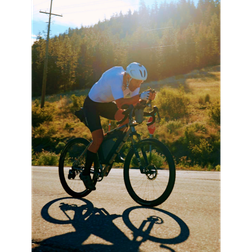
Geoff Kabush on Racing Longevity, Skill, Doping Era Survival, and Still Finding New Adventures Svein Tuft talks with mountain bike legend Geoff Kabush about building a decades-long career, from growing up in the Comox Valley and discovering cycling in his teens to racing internationally as a junior in 1995. Kabush describes the mid-’90s “glory days” of XC racing, his formative years in Victoria, and the long-term development approach shaped by coach Jürg Feldmann’s physiology-driven mentorship. He explains why he still races at 49—variety, adventure, and staying fit—while noting age-related changes in recovery and repeat intensity. They discuss modern athlete pressures, social media, development mistakes like rushing to Europe, and the importance of balance. Kabush reflects on equipment evolution, experimenting with 1x drivetrains and 32-inch gravel wheels, and speaks candidly about doping’s impact, why he spoke out, and his pride in winning the 2009 Bromont World Cup. 00:00 Welcome To Long Game 00:42 GripGrab Sponsor Shoutout 01:34 Meet Geoff Kabush 02:18 Home Base In Squamish 03:46 Early Sports And First Bikes 05:19 Solo Trip To Worlds 1995 08:01 Nineties MTB Glory Days 09:40 Victoria Years And Breakthrough 12:26 Coach Jurg Long View 15:11 Why Keep Racing 19:06 Aging And Recovery Changes 23:46 Experience Skills And Tactics 26:02 Training Week Now 27:27 Next Gen Pressures 31:07 Advice For Young Riders 38:49 Staying Motivated With Goals 43:13 Trainer Or Racer Mindset 44:05 Offseason Training Love 45:14 Racing Beyond World Cups 47:38 32 Inch Gravel Experiment 49:41 Bike Tech Evolution 52:51 Early Gear and Setup 55:10 One By and Wide Bars 57:48 BC Skills Advantage 01:00:15 Speaking Out on Doping 01:04:58 Exposure and Career Fallout 01:10:20 Truth Reconciliation Debate 01:19:17 Proudest Win at Home 01:25:10 Advice and Long Game 01:27:36 Semi Retired Adventures 01:29:34 Thanks and Sponsors
Metabolic cart testing and Respiratory training
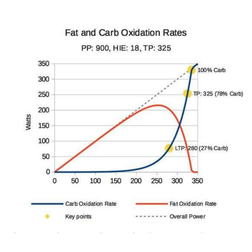
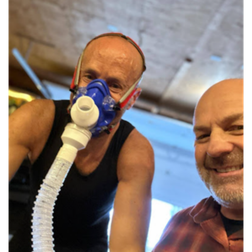
What does your body actually do during a long ride — and how do you find out? In this episode, Svein sits down with performance physiologist Steve Neal, who traveled to Nelson, BC with his full metabolic cart setup to put the Svein through a comprehensive testing session ahead of the BC Epic 1000 — a 1,040 km ultra-endurance race. This isn't a standard VO2 max test. Steve's protocol goes far deeper, measuring fat oxidation, carbohydrate crossover, ventilatory thresholds, muscle oxygen (via Moxy sensors), spirometry, and recovery response — all in a single session. The result? More actionable data than most world tour riders ever receive. In this episode, we cover: Why shorter ramp tests miss most of what matters — and why longer protocols reveal the full picture Fat max vs. metabolic efficiency: what they are, how to improve them, and why the difference matters for multi-day events VT1 and VT2: the ventilatory thresholds most coaches ignore, and what it means when they collapse together (hint: you're probably more tired than you think) The Moxy muscle oxygen sensor — what it shows on a working muscle vs. a non-working one, and why the bicep reading can be more revealing than the quad The recovery test: why your heart rate recovering doesn't mean your respiratory system has Spirometry and FEV1: how lung function testing on the bike reveals a limiter almost no one is training Breathing mechanics — nasal vs. mouth, diaphragmatic vs. chest, and how slowing your respiratory rate at a fixed wattage can change your metabolism in real time Respiratory training devices: SpiroTiger, Breathe Way Better, AeroFit, and the Go2 mouthpiece — what each does and when to use them The zone 2 problem: why training at your fat max wattage might actually make you worse if that number is too low The freediving connection: what elite breath-hold athletes know about thoracic mobility that cyclists are completely missing The headline result from today's test: fat max improved from 280 to 320 watts compared to the previous test — while the athlete is two years older. That's the kind of data that changes how you train. Whether you're preparing for a 1,000 km bikepacking race or just trying to understand why long rides feel harder than they should, this episode gives you a framework for thinking about endurance performance that goes well beyond watts and heart rate. Guest: Steve Neal, performance physiologist and metabolic testing specialist based in British Columbia. steve@stevenealperformance.com Svein Tuft tuftcamps.com tuftcamps@gmail.com @svein.tuft on instagram
All about Fatmax with Steve
Steve Neal joins the Svein to answer a listener question from Chris O'Leary (New Zealand) on FatMax: what it actually means, why it matters, and how to improve it. What You'll Learn FatMax defined: The highest fat oxidation rate with the least carbohydrate contribution — not just peak fat burning. On a metabolic cart, fat oxidation can stay flat across multiple power steps while carbs double underneath it. The precise crossover point is what matters. Fat-carb crossover point: Two athletes can share the same FatMax wattage but have crossover points 100+ watts apart. This — not FatMax alone — determines how long and comfortably you can ride. Target numbers for masters cyclists: FatMax at 175–200W is solid; 225W is exceptional. A healthy FatMax-to-FTP ratio is 70–75%. The crossover point should sit above FatMax. High FTP, low FatMax? Yes. From four recent tests, FatMax ranged from 53–82% of FTP among athletes with similar thresholds. FTP alone doesn't tell the metabolic efficiency story. What moves the needle: Nutrition likely drives the majority of FatMax improvement — roughly 90% of bodyweight (lbs) in daily protein, 1:1–2:1 carb-to-protein ratio, fat to satiety. On the training side, riding consistently 5–10W below FatMax is the key lever. One athlete's crossover point shifted from 110W to 210W in four months. Recovery data: After a 500K ultra, FatMax held steady post-race but the crossover point dropped sharply — and took 10–14 days of rest to fully recover. Most athletes restart too soon. Guest Steve Neal — Exercise physiologist, metabolic testing specialist, endurance coach. Listener Question "Everyone talks about FatMax but no one puts it into a useful context. How do we actually use it?" — Chris O'Leary, New Zealand The Long Game Project — performance for the long haul.
Steve Neal of Steve Neal performance
This is the first guest episode of the Long Game Project, and it felt important to start with someone who really sets the tone for what this is all about. Steve Neal is a coach with over 30 years of experience working with endurance athletes, from development level all the way through to high performance. He’s known for his deep understanding of physiology, testing, and how to actually apply that information in the real world. But more than that, he’s someone who has spent a long time figuring out what truly works—and what doesn’t. In this conversation, we get into a few key ideas that come up again and again when it comes to training, especially as athletes get older. We talk about what actually changes as we age—and what doesn’t. Why so many people end up training too hard, and how that can quietly hold them back. How to think about testing in a way that actually helps, rather than just collecting numbers. And what really moves the needle when you’re balancing training with work, family, and everything else that comes with life. A big part of this conversation is around consistency—figuring out what you can repeat over time, rather than chasing short-term gains. We also get into the idea that you can’t train everything at once. There are trade-offs, and understanding what you’re actually trying to improve is key. Steve shares a lot of practical insight from years of coaching, including how to avoid overtraining, why leaving something in the tank matters, and how to build fitness in a way that lasts. This one isn’t about shortcuts or perfect answers. It’s about building a better understanding of the process, and finding a way to keep improving over the long term. Topics Covered What actually changes as we get older—and what doesn’t Why most people train too hard (and how it backfires) The “5% undertrained vs 1% overtrained” idea How to use testing to understand your own physiology FatMax, VO2, and why you can’t train everything at once What really moves the needle for busy athletes Consistency and repeatability in training Strength, mobility, and staying in the sport long term Connect with Steve Instagram: https://www.instagram.com/stevenealperformance/� Email: steve@stevenealperformance.com Connect with Me Email: tuftcamps@gmail.com If you have questions or topics you’d like covered in future episodes, send them through—I’ll do my best to get to them. If You Enjoyed This Episode Follow the podcast on your platform of choice, leave a review if you can, and share it with someone who might get something out of it. That’s the whole idea—build something useful and pass it along.Intro Staying in motion
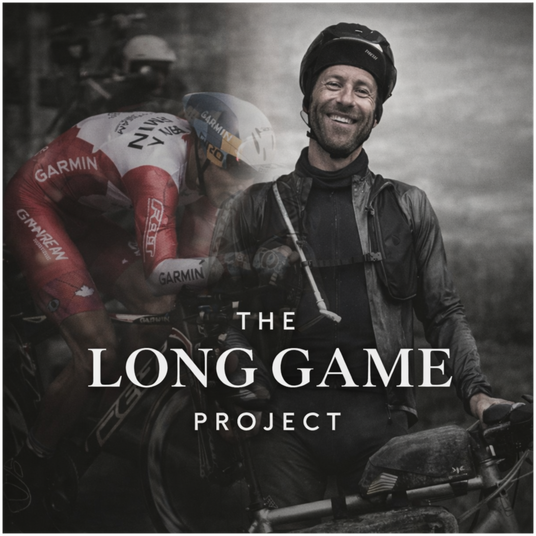
In this opening episode of The Long Game Project, Svein Tuft lays out the intention behind the podcast. After nearly two decades racing at the highest level—including the Olympic Games, World Championships, and Grand Tours like the and —this episode focuses on what actually lasts: the process. This is a conversation for anyone trying to stay consistent, capable, and engaged while balancing real life. It cuts through the noise, questions the idea that we should slow down with age, and focuses on what actually works—showing up, keeping a thread alive, and continuing to do hard things in a sustainable way.