The Deep Dive

The Deep Dive

by FlyingFree

Organic vs GMO

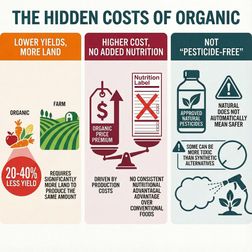
Analyzing the scientific realities of organic and genetically modified (GM) foods, challenging popular myths about their safety, nutrition, and environmental impact. While organic farming restricts synthetic inputs, evidence suggests it is not inherently more nutritious or safer than conventional methods and often suffers from lower yields. Conversely, GM crops are found to be as safe as traditionally bred varieties, offering significant potential to combat malnutrition through biofortification and improved pest resistance. However, global hunger is a complex issue of poverty and distribution rather than a simple production shortage, making it impossible to precisely quantify lives saved by biotechnology. Ultimately, both systems involve complex trade-offs in land use, cost, and ecological sustainability that defy simple categorization.

The Cost of False Beliefs and Misinformation

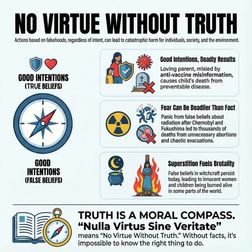
Exploring the devastating consequences of misinformation and false beliefs across health, social, and environmental sectors. Illustrating how pseudoscientific claims and unfounded myths lead to lethal outcomes, ranging from the resurgence of preventable diseases like measles to the extinction of wildlife driven by superstitious demands. Beyond physical harm, the financial burden placed on public institutions, such as the NHS, when funding unproven treatments like homeopathy. Ethical concerns are also raised, suggesting that moral integrity is impossible without a foundation of objective truth, as evidenced by historical atrocities and modern-day tragedies. Ultimately, radiophobia and conspiracy theories stall vital progress in areas like nuclear energy, further exacerbating global crises.

Mirror Life

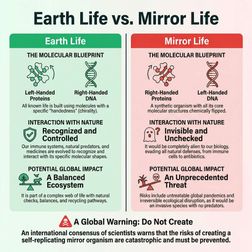
Examining the scientific frontier of mirror life, a hypothetical form of biology constructed from molecules with reversed structural orientation, such as right-handed proteins and left-handed DNA. While terrestrial life has followed a single "handedness" for billions of years, synthetic biologists are now capable of creating mirrored biomolecules for therapeutic drug development and stable data storage. However, a landmark 2024 report by an interdisciplinary group of scientists warns that creating a self-replicating mirror organism poses catastrophic risks to the biosphere. Such organisms could function as invisible pathogens, evading all natural immune responses and antibiotics while potentially outcompeting native species for resources. Because these synthetic microbes lack natural predators and could trigger irreversible ecological collapse, many experts are calling for strict international governance to halt the creation of entire mirror cells. Ultimately, a tension between the innovation of chiral chemistry and the existential threat of a biological "second genesis."

Statins: Controversy, Efficacy, Safety & Cost

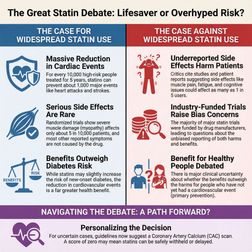
Research indicates that while statins and PCSK9 inhibitors effectively lower cholesterol, their medical and economic value remains a subject of intense debate. Statins are proven to reduce cardiovascular mortality in high-risk patients, yet evidence suggests they are associated with an increased risk of new-onset diabetes, particularly at higher intensities. Despite this metabolic risk, clinical guidelines generally maintain that the cardiovascular benefits of statin therapy outweigh the potential for glycemic disruption. Regarding newer treatments, an economic evaluation found that PCSK9 inhibitors are currently not cost-effective for the U.S. health system due to their high annual price. For these drugs to provide a positive return on investment for private payers and the broader society, significant price reductions of over 70% would be required. Overall, the complex balance between clinical efficacy, patient safety, and the financial sustainability of long-term cardiovascular interventions.
Gut Bacteria: Your Second Brain

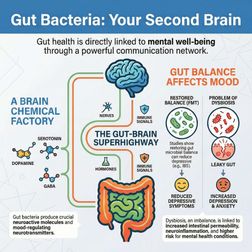
Investigating the microbiota-gut-brain axis, a complex communication network linking the digestive tract to the central nervous system. Research indicates that gut dysbiosis, or an imbalance of intestinal microorganisms, plays a critical role in the development of major depressive disorder and other mental health conditions. Communication occurs through neural signaling via the vagus nerve, hormonal modulation of the stress response, and immune regulation involving systemic inflammation. Probiotics, prebiotics, and fecal microbiota transplantation are emerging as promising therapeutic interventions to restore microbial balance. By targeting the gut environment, medical professionals may eventually offer more personalized treatments for neuropsychiatric disorders. Ultimately maintaining a healthy gut is foundational to achieving optimal mental well-being.

Vaccines: A Victim of Their Own Success

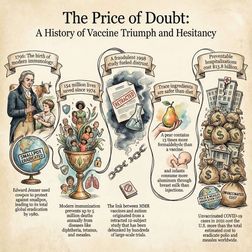
Exploring the evolution and biological mechanisms of vaccines, tracing their history from ancient inoculation practices to modern immunological breakthroughs. Highlighting Edward Jenner’s pivotal 18th-century discovery of the smallpox vaccine, which utilized cowpox to safely induce immunity and laid the foundation for preventive medicine. Further advancements are credited to Louis Pasteur, who developed attenuated vaccines for rabies and anthrax, and Maurice Hilleman, who created dozens of modern immunizations against childhood diseases. Explaining the complex science behind conjugate vaccines, which link bacterial sugars to proteins to trigger stronger immune responses in children. How scientific innovation and rigorous research have successfully eradicated or controlled many of the world’s most dangerous pathogens. This comprehensive overview emphasizes the enduring impact on public health and the ongoing development of life-saving medical technologies.

Sex Versus Gender: The Essential Difference

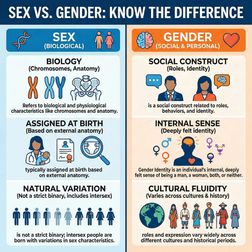
Exploring the evolving scientific, legal, and social distinctions between biological sex and gender identity. While biology typically classifies sex as a binary based on gametes and reproductive functions, academic and medical discourses increasingly recognize phenotypic sex characteristics as existing along a spectrum. This complexity is highlighted by the existence of intersex variations and the lived experiences of transgender individuals, whose internal sense of self may differ from their sex assigned at birth. Legal scholars argue that shifting from a strictly biological definition of sex to a social class model could better protect equality and accommodate gender diversity in public spaces. Furthermore, federal and international organizations emphasize the need for precise data collection, such as the "two-step" method, to distinguish between these constructs and address systemic health and social disparities. Ultimately, the data illustrates a profound shift from viewing sex and gender as interchangeable to understanding them as interrelated but distinct dimensions of human identity.

Epigenetics: Your Lifestyle is your Genetic Software

AI
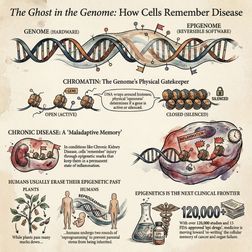
Exploreing epigenetics, the study of how the environment and lifestyle choices influence the behavior of our genetic code. Unlike the fixed sequence of DNA, the epigenome functions as a dynamic control system that switches genes on or off through processes like DNA methylation and histone modification. These biological mechanisms allow cells to adapt to external factors such as diet, stress, and exercise, effectively bringing the static genetic code to life. Even tiny molecules and noncoding DNA play critical roles in maintaining cellular health or contributing to diseases like cancer. Ultimately, while genetic traits are inherited, individuals possess significant biological power to alter their health outcomes through reversible epigenetic changes.

Autism is a Different Operating System

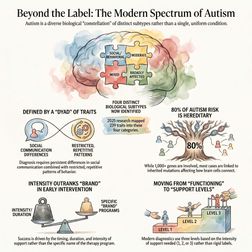
A comprehensive overview of Autism Spectrum Disorder (ASD), detailing its nature as a lifelong neurodevelopmental disability characterized by unique social communication patterns and repetitive behaviors. Explaining current diagnostic frameworks, such as the DSM-5-TR and ICD-11, which utilize a three-tiered system to categorize the levels of support an individual may require. Various contributors discuss the importance of early intervention, the diverse ways symptoms manifest across genders, and the frequent presence of co-occurring conditions like ADHD or anxiety. Information from the CDC and advocacy groups highlights the shift from viewing autism as a disorder to recognizing it as a form of neurodiversity with distinct strengths. Furthermore, the documents offer practical guidance on screening tools, medical evaluations, and the legal processes for securing educational eligibility and support services. Ultimately, autism is a broad spectrum where every individual possesses a different set of challenges and capabilities.

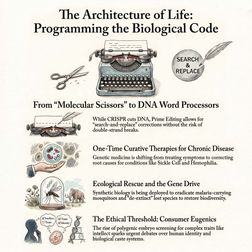
Genetic Engineering

A comprehensive history and future outlook of genetic engineering, tracing its evolution from Mendel’s early heredity studies to modern CRISPR-Cas9 precision editing. How biology has shifted from a field of observation to a programmable engineering discipline that reshapes medicine, agriculture, and environmental conservation. Key milestones discussed include the discovery of the DNA double helix, the advent of recombinant DNA technology, and the landmark Human Genome Project. Beyond scientific achievements, we examine the socio-ethical dilemmas surrounding gene therapy, "designer babies," and corporate control over the global food supply. Looking toward 2026, the convergence of biotechnology with artificial intelligence while noting the challenges posed by high treatment costs and shifting federal research funding. Ultimately, a pivotal technological era where humanity possesses the tools to actively redesign the fundamental code of life.
3 of 6