The Deep Dive

The Deep Dive

by FlyingFree
Is Radiation Actually Healthy? The Hormesis Theory
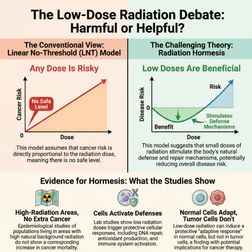
Discussing the scientific controversy surrounding the Linear No-Threshold (LNT) model of radiation protection, which posits that any amount of radiation exposure, no matter how small, increases cancer risk. Critically, several articles present evidence supporting the radiation hormesis hypothesis, a contrasting model suggesting that low doses of radiation, often comparable to or slightly exceeding natural background levels, can actually be beneficial or protective, demonstrating a biphasic dose-response relationship. This evidence is drawn from epidemiological studies in high natural background radiation areas (e.g., Ramsar, Iran, and Kerala, India), which frequently show no significant increase in cancer or mortality, and sometimes suggest a decrease. Furthermore, experimental data from both cell lines and murine studies show that low-dose radiation can protect normal cells from oxidative stress via ATM signaling and stimulate immune function, leading to reduced tumor growth and increased survival in animal models. The refusal of regulatory bodies to abandon the LNT model, despite this biological evidence favoring hormesis, is characterized as a policy and economic issue driven by the precautionary principle, leading to what some sources describe as an irrational fear of low-dose radiation.
Keto Diets: The Double-Edged Sword
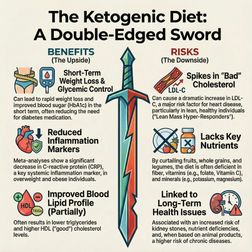
Discussing the health effects of low-carbohydrate and ketogenic diets (CRD/KD), focusing heavily on lipid metabolism and cardiovascular risk. Several articles, including one from the American College of Cardiology, indicate that a "keto-like" diet may be associated with significantly higher LDL cholesterol ("bad" cholesterol) and a doubled risk of major cardiovascular events in some individuals. Other research introduces the "Lean Mass Hyper-Responder" (LMHR) phenotype, which describes leaner individuals with otherwise healthy metabolic markers who experience extreme elevations in LDL cholesterol on a CRD, a response explained by the Lipid Energy Model (LEM). Additionally, the texts explore the use of KD in managing Type 2 diabetes, where it can improve glycemic control and reduce the need for certain medications, although the quality of the fat and protein sources (plant-based vs. animal-based) within a low-carb diet appears to influence diabetes risk. Finally, one source notes that low-carbohydrate diets prior to conception may increase the risk of neural tube defects in infants, highlighting a specific risk for pregnant women.
Alzheimer's: New Causes & Fraud
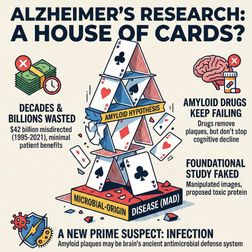
A complex view of Alzheimer's disease (AD) etiology and treatment, contrasting the traditional "amyloid cascade hypothesis" with alternative theories. Several sources criticize the amyloid hypothesis, citing failed anti-amyloid clinical trials, methodological flaws, and even allegations of major scientific fraud that undermined decades of research focus. Alternative perspectives explored include the Microbial Alzheimer's Disease (MAD) hypothesis, which suggests chronic infection by pathogens like Porphyromonas gingivalis (periodontitis-causing bacteria) and Herpes Simplex Virus 1 (HSV-1) drives AD pathology, viewing amyloid-beta and Tau as part of a disrupted antimicrobial response. Additionally, other sources investigate the role of brain insulin resistance in AD, noting its exacerbation by conditions like Type 2 Diabetes, and propose the potential of antidiabetic treatments, such as GLP-1 analogs, for therapeutic intervention. Finally, discussions around anti-amyloid drugs like aducanumab and lecanemab detail their controversial FDA approval, high costs, and restrictions on Medicare coverage, despite their limited efficacy in later disease stages.
The Unresolved War Over Diabetes
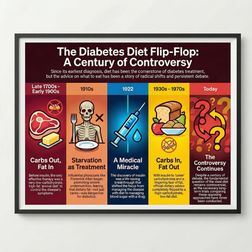
Offering a historical and critical examination of diabetes research and treatment, particularly focusing on the role of diet and the management of insulin. This documents the dramatic increase in diabetes prevalence since the mid-twentieth century and critiques the long-standing medical consensus that often prioritized high-carbohydrate, low-fat diets and insulin therapy, even for Type 2 diabetes patients who exhibit high insulin levels. Historical accounts detail early dietary approaches, such as the animal-based diets for diabetes management, and the controversies surrounding the discovery and use of insulin after the 1920s. Furthermore, this explores alternative therapeutic approaches, including carbohydrate-restricted diets, citing studies that show their effectiveness in controlling blood sugar and reducing medication needs, suggesting that deeply entrenched medical beliefs about nutrition and obesity may be flawed.
Depression: The Serotonin Myth
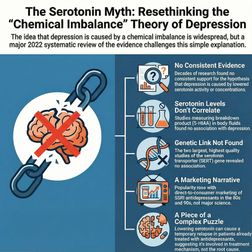
Discussing the "chemical imbalance" theory of major depressive disorder (MDD), particularly focusing on the serotonin hypothesis, and explore alternative mechanisms and treatments. A key theme is the strong challenge to the long-standing idea that depression is caused simply by low serotonin levels, citing a major 2022 systematic review which found no convincing evidence for this etiology. Sources detail the history and development of monoamine-based antidepressant drugs, such as SSRIs and SNRIs, and note that these drugs affect neurotransmitters like serotonin and norepinephrine, though their mechanism is likely related to modulating emotional processing and promoting synaptic plasticity rather than directly fixing a simple deficit. Finally, we introduce the emerging focus on the glutamatergic system (involving compounds like ketamine) as a rapid-acting therapeutic target for MDD, especially for treatment-resistant patients, and note that healthcare providers are the most influential source in perpetuating the oversimplified "chemical imbalance" narrative among the public.
Parasites Are Our Friends? Helminth Therapy
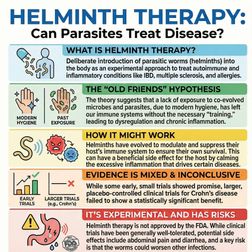
Discussing the "Old Friends Hypothesis" and the therapeutic potential of helminths (parasitic worms) in treating chronic inflammatory disorders, particularly Inflammatory Bowel Disease (IBD), which includes Crohn's disease and ulcerative colitis, and allergies. The hygiene hypothesis, a precursor to the "Old Friends Hypothesis," suggests that reduced exposure to microbes and infections in modern societies has led to a failure in immunoregulation, resulting in increased autoimmune and allergic conditions. Several studies, including a systematic review, investigate helminth therapy, such as using Trichuris suis ova (TSO) or Necator americanus, as a novel treatment due to the worms' ability to induce an anti-inflammatory tolerance in the host by increasing regulatory T cells and anti-inflammatory cytokines like IL-10 and TGF-β. While most clinical trials found the therapy to be safe and tolerable, the evidence regarding its efficacy for IBD is mixed and inconclusive, although research continues into using specific helminth products as potential drug candidates.
The Lyme Disease Civil War
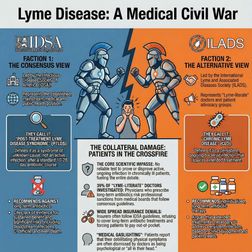
Discussion on the persistent symptoms following Lyme disease, a contentious medical area marked by a severe disagreement over etiology and treatment. The consensus, represented by the Infectious Diseases Society of America (IDSA), labels the chronic condition Post-Treatment Lyme Disease Syndrome (PTLDS), arguing it is a post-infectious syndrome with unclear cause, while the opposing view advocates for Chronic Lyme Disease (CLD), which posits ongoing, active infection. Research shows that while two U.S. trials indicated intravenous ceftriaxone efficacy for fatigue, this treatment is generally not recommended due to high adverse event rates and IV access risks, which other analyses confirm lead to increased patient morbidity. This polarization has led to a "Medical Civil War" where practitioners who treat CLD with prolonged antibiotics often face regulatory investigation and sanctions, despite legislative attempts in some states to override restrictive guidelines; consequently, experts recommend a shift toward objective, mechanism-based biomarkers to resolve the diagnostic and therapeutic impasse.
Seed Oils: Heathy or Hazard?
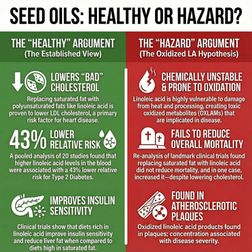
Discussing the complex and sometimes conflicting relationships between omega-6 polyunsaturated fatty acids (PUFAs), particularly linoleic acid (LA), and cardiometabolic health outcomes such as Type 2 Diabetes (T2D) and Cardiovascular Disease (CVD). One study, utilizing bidirectional Mendelian randomization (MR), suggests that high LA levels may reduce the risk of T2D and improve glycemic traits, while T2D itself appears to reduce LA levels. Conversely, several systematic reviews and meta-analyses of randomized controlled trials (RCTs) highlight that replacing saturated fat with LA-rich oils lowers LDL cholesterol but often fails to translate into a significant reduction in major coronary heart disease events or overall mortality, which critics call the "Linoleic Acid Paradox." Historical data from the 20th century further contextualizes these issues, showing a massive increase in LA consumption, largely from soybean oil, which may have negatively impacted protective omega-3 tissue concentrations. Concerns are also raised about the molecular toxicology of LA, particularly when sourced from refined and thermally abused oils, suggesting that oxidative products may negate LA's metabolic benefits.
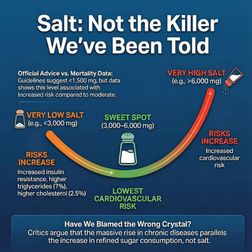
Salt: Not The Killer We've Been Told
A major controversy surrounding dietary sodium intake and its impact on cardiovascular health, blood pressure, and metabolic outcomes. Public health organizations like the World Health Organization (WHO) and the American Heart Association (AHA) strongly advocate for universal sodium reduction to low levels (e.g., less than 2,300 mg/day, ideally 1,500 mg/day for the AHA) to combat high blood pressure and associated mortality. However, several scientific sources, including articles from the American Journal of Hypertension and European Heart Journal, and clinical trial reviews, challenge this universal reduction, suggesting that evidence is inconclusive or methodologically flawed, and that a moderate intake (2.5–6.0 g/day) may be optimal. Furthermore, some studies indicate that severe low-salt diets can cause adverse metabolic changes, such as increased insulin resistance, activation of the renin-angiotensin-aldosterone system (RAAS), and elevated heart rate and cholesterol, suggesting a J-shaped relationship where both very low and very high sodium intake increase risk. Despite the debate, the overall evidence confirms that high sodium intake is linked to increased cardiovascular risks, while the debate centers on the safety and necessity of pursuing extremely low intake levels.
Cold Fusion's Comeback: LENR
Exploring the controversial subject of Low-Energy Nuclear Reactions (LENR), historically known as "cold fusion," focusing on its scientific status and institutional re-evaluation. Sources argue that the original dismissal of cold fusion as "pathological science" was sociologically driven by reputational risk and that the failure to replicate was only provisional. Critically, the sources detail the recent strategic investment by government bodies like ARPA-E (Advanced Research Projects Agency-Energy) with a multimillion-dollar program aimed at achieving a widely accepted, repeatable LENR experiment with conclusive nuclear diagnostic evidence. Furthermore, information highlights the efforts of private companies like Brillouin Energy, whose LENR technology has undergone independent validation for excess heat, and the need for interdisciplinary collaboration between LENR researchers and mainstream nuclear physicists to bridge theoretical gaps, particularly concerning the suppression of the Coulomb barrier.
1 of 4