The Quantum Feedback Loop

The Quantum Feedback Loop

by James Myers
Season 1

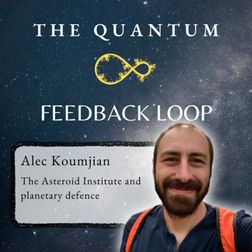
Alec Koumjian and the Asteroid Institute's mission to defend Earth
Alec Koumjian, Head of Software Engineering for the Asteroid Institute, talks about the pioneering efforts underway to defend Earth from asteroids and other space objects. The Institute’s innovative use of multiple data sources and software to predict and analyze trajectories includes inputs from the public and partnerships with other organizations. Alec relates the challenges of tracking objects in the solar system over long periods of time, the Asteroid Institute’s many achievements, and plans to map and track practically all space objects that could threaten life on our planet.

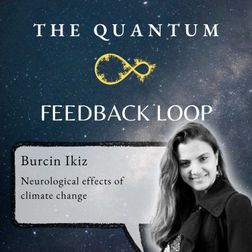
Dr. Burcin Ikiz on brain health and the effects of climate change
The Quantum Feedback Loop welcomes neuroscientist Dr. Burcin Ikiz, who describes her new initiative, EcoNeuro, to study the effects of climate change on the brain in different areas and environmental conditions around the globe. Burcin is a pioneer in investigating the effects on brain health from pollution, extreme heat, and other environmental stresses. As both a scientist and a mother, Burcin’s goal is to raise awareness of the issues so that action can be taken both locally and globally to reduce the risk of damage to brain health, and treatments can be developed to mitigate the damages already taking place. In the discussion, Burcin mentions the Pulitzer Center’s Local Letters for Global Change contest for children of all grades to express their concerns and solutions for climate change, the link for which is here.

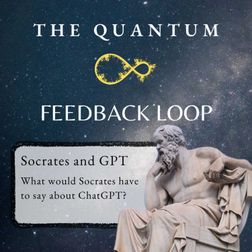
What Would Socrates Say About ChatGPT?
In a joint production with the Plato’s Pod podcast, we explore the relevance of ancient philosophy to modern technology with the question, “What Would Socrates Say About ChatGPT?” We take Socrates to the offices of OpenAI to meet the company’s CEO, Sam Altman, and imagine the questions that Socrates would have after the technology is explained to him. In the course of the imagined meeting, we address some crucial errors that ChatGPT makes in its outputs on Socrates, as an example of the technology’s potential to undermine language and introduce feedback loops that distort the meaning of words over time. What do you think - are there some timeless and fundamentally questions about our relationship with technology?

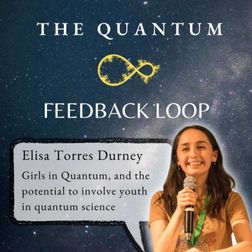
Elisa Torres Durney's Girls in Quantum Prepares Youth for Tomorrow's Technology
Elisa Torres Durney is a high school student in Chile whose organization Girls in Quantum has attracted young participants around the planet. Hear how Elisa and her group are educating youth on quantum computing and quantum mechanics, and connecting with scientists in the field. Their ambitious plans for the future are helping to prepare for the technology and work of tomorrow.

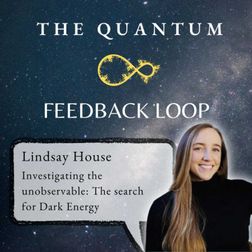
Lindsay House and Looking Back Over 9 Billion Years for Dark Energy
Lindsay House is a PhD candidate and astronomer whose citizen science project uses light that took 9-11 billion years to reach Earth to search for signs of dark energy. Lindsay explains what we know so far about this force, which can't be directly observed but appears to be responsible for the accelerating expansion of the universe. Learn how you too can become a Dark Energy Explorer.

Dr. Aaron Meisner and the search for brown dwarfs in our solar system

NOIRLab astronomer Dr. Aaron Meisner discusses a new citizen science project, "Backyard Worlds: Cool Neighbors," searching for brown dwarfs in our solar system. As volunteers hunt for signs of elusive brown dwarfs in data from NASA's NEOWISE space telescope, what more will we learn about these astronomical objects as well as the process of star formation?
3 of 3