Dangelo68⚔️🔥

Dangelo68⚔️🔥

by JDangelo
Season 312

Friendship Through Reverence

Friendship Through Reverence It may sound surprising, but Scripture connects the fear of the Lord with friendship with God. Many people assume reverence creates distance, but biblical reverence actually leads us into deeper intimacy. When we see God rightly, we stop approaching Him casually, pridefully, or on our own terms. Instead, we come with humility, honesty, and dependence. Jesus once told a parable about two men who went to the temple to pray. One man was outwardly religious and confident in his own goodness. He thanked God that he was not like other sinners. The other man, a tax collector, stood far off and cried out for mercy. Jesus said the second man went home justified before God. Why? Because friendship with God does not begin with pretending we are impressive. It begins when we recognize our need for grace. The fear of the Lord helps us see both God’s greatness and our need. It reveals that we cannot save ourselves, excuse our sin, or earn righteousness through religious activity. Our only hope is Jesus… His life, His death, His resurrection, and His mercy. God is not looking for people who casually add Him to their lives. He invites us to surrender. He welcomes the humble. He draws near to those who come honestly, confessing, “I need You.” Reverence does not push us away from God. It teaches us how to come close. Reflection Questions: 1. Are there ways you have tried to approach God through your own goodness? 2. What is the difference between casual religion and humble surrender? 3. How does the fear of the Lord deepen, rather than diminish, friendship with God? Prayer: Lord, I come to You humbly. I confess that I need Your mercy and grace. Thank You that through Jesus, I can be forgiven and brought near. Teach me to walk in friendship with You through reverence, surrender, and trust. In Jesus’ name, amen.
Season 310

Four Study “Finally Free” Colossians Series:

Four Study “Finally Free” Colossians Series: While imprisoned by the Roman government due to the uproar he caused by spreading the Good News of Jesus Christ, Paul the apostle wrote four letters that are now famously called the “Prison Epistles” (Ephesians, Philemon, Philippians and Colossians). While in prison, Epaphras (the man who founded the church in Colossae) visited Paul to update him on both the faithfulness of the community of believers and the various pressures and opposition they faced. In response to this conversation, Paul wrote the letter we now know today as the book of Colossians, which was read aloud to the church by a man named Tychicus, who was joined by a man named Onesimus. While these may seem like small details, it is interesting to note that Onesimus was, in fact, an escaped slave who had been owned by a man named Philemon. In other words: Paul, a prisoner, wrote a letter to a church battling unbiblical belief systems popularized in Colossae, and the man he chose to stand present at its reading was a runaway slave. Despite these obstacles, one of the primary messages God communicates through Paul in the four chapters of Colossians is the fact that, because of Jesus, we are finally free. Today, it can be tempting to brush this letter aside. After all, the Roman Empire fell in 476 AD, we rarely write physical letters anymore, Colossae is no longer a recognized city (it’s now a mostly forgotten piece of land in Turkey), and (thankfully) the ownership of slaves is no longer as widespread. Despite all of these changes over the passage of time, this incredible letter contains timeless truth for our world today. Similar to Paul’s audience when it was originally written, those who believe in Jesus today still face immense pressure and opposition, and sometimes it can feel as though there is no hope for our situation. Over the next four bible studies, our intention is to dust off this ancient letter and discover that, as a result of Jesus’ life, death and resurrection, those who believe in Him are Finally Free... Study #1) In Christ(Colossians 1) Study #2) From Lies(Colossians 2) Study #3) For Purpose(Colossians 3) Study #4) In Community(Colossians 4) Where We’re Going Satan, the enemy of our souls, always disguises his traps with lies. Avoiding these traps requires both a well-rounded understanding of truth and an awareness of the deceitful tactics he often uses. After detailing the freedom found only in Christ in Colossians 1, Paul shifts his focus in chapter 2 to address the specific lies being told to the church in Colossae. In “Finally Free: From Lies”, we’re going to take a closer look at five lies Jesus has set us free from: Lie #1) The Path Has Changed(Colossians 2:1-7) Lie #2) Humans Always Know Best (Colossians 2:8) Lie #3) You Still Need More (Colossians 2:9-12) Lie #4) Our Debt Is Unpaid(Colossians 2:13-15) Lie #5) Religion Should Trump Relationship(Colossians 2:16-23) Prayerfully, as we study this chapter together, God will open our eyes to the truth and enable us to stand firm in it! See more on text information
Season 309

The Heart of Servanthood

The Heart of Servanthood Jesus didn’t come to be served but to serve—and that should shape how we approach every relationship. Paul challenges us to adopt the same mindset as Christ: one of humility, not entitlement. Servanthood isn’t just about doing chores or helping in church—it’s a posture of the heart that seeks the good of others above personal preference. True servanthood flows from security in God. When we know who we are in Christ, we can freely lay down our rights and pick up a towel, just as Jesus did. He washed His disciples’ feet, including the one who would betray Him. What kind of love and strength does that take? The world tells us to seek status; Jesus shows us a better way—downward mobility for the sake of love. Who in your life can you serve today? Your greatest impact might come not from a platform, but from quiet acts of love. Applications: Choose one way to serve someone in your home, workplace, or community this week without expecting anything in return. Pray each morning this week: “Lord, give me the heart of a servant today.”
Season 307

Seeing God Rightly

Seeing God Rightly What comes into your mind when you think about God? That question matters deeply because the way we see God shapes the way we live. If we imagine God as distant, angry, and impossible to please, we may live in fear, shame, or avoidance. If we imagine Him as merely nice, tame, and uninvolved, we may treat sin casually and assume His main desire is simply for us to be comfortable. But Scripture gives us a fuller and better picture. God is loving, gracious, merciful, and near. He is also holy, just, powerful, and worthy of reverence. The Bible calls this posture “the fear of the Lord.” It does not mean we relate to God as if He is unsafe, cruel, or abusive. It means we approach Him with awe, humility, surrender, and trust. The fear of the Lord begins when we remember who God is and who we are. He is the Creator; we are His creation. He defines truth; we receive it. He is holy; we need mercy. He is Father; we are invited to come close through Jesus. Wisdom begins here. Not with self-confidence. Not with cultural opinion. Not with personal preference. Wisdom begins when God is rightly placed at the center of our lives. When we see God rightly, we begin to live rightly. Reflection Questions: 1. What comes into your mind when you think about God? 2. Do you tend to view God more as harsh and distant or casual and tame? 3. What would change in your life if you saw God as both holy and loving? Prayer: Father, help me see You as You truly are. Remove every distorted view I have believed about You. Teach me to walk in reverence, humility, and love. Let the fear of the Lord become the foundation of wisdom in my life. In Jesus’ name, amen.
Season 305

Hebrews (11) 1-20

Introduction Hebrews 11:1–20: Today’s reading provides us with a listing of people of great faith and the actions and risks they took in response to their faith. The account begins with Abel and continues to Jacob and Esau. We learn that faith is the way to please God. Today’s Key Verse: Hebrews 11:1 GNT To have faith is to be sure of the things we hope for, to be certain of the things we cannot see. Reflect In what ways does faith provide you with a sure hope? Of those people mentioned in today’s reading, are there any who are unfamiliar to you? Perhaps today’s reading will encourage you to find and read their stories in the Bible. (They can be found in the book of Genesis.) Are there any who are models of faith for you? Pray Holy God, thank you for all your faithful servants. Thank you for mentors and teachers you have placed in my life. May I continue to grow in faith, trusting in your promises. Amen. Tomorrow’s Reading Hebrews 11:21–40: The listing of people of faith continues.
Season 303

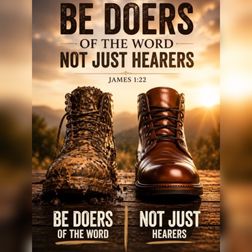
Be a Doer, Not Just a Hearer

Be a Doer, Not Just a Hearer The Bible was never meant to be just read—it was meant to be lived. James makes this bold declaration: if we only hear the Word but don’t apply it, we deceive ourselves. Real transformation doesn’t come through knowledge alone, but through obedience. It’s easy to nod along to a sermon or devotional and then walk away unchanged. But the power of God’s Word is activated in our lives when we put it into action. Jesus said the wise builder is the one who hears His words and does them. It’s in the doing that our faith gains depth and our lives gain stability. Obedience might look like forgiving someone, sharing your faith, being generous, or standing for truth. Whatever God is prompting you to do—don’t delay. Respond with action. You’ll find joy, growth, and impact in the step of obedience. Applications: Reflect on something God has been asking you to do, and commit to take one action step today. Write out James 1:22 and place it somewhere visible as a daily reminder to live what you read.

Season 301

YOUR CHALLENGE

YOUR CHALLENGE Discover a blessing from God each day, and express gratitude to Him and to someone else for it. As yourgratitude increases, watch your gladness grow by leaps and bounds! DEVOTIONAL The theme of Psalm 107 is giving audible thanks to God for His goodness. The psalm gives four “personal testimonies”—illustrations of those who have been redeemed by the Lord and have reason to give Him thanks. Each testimony includes a similar progression: distress over the straits people found themselves in, a desperate cry to the Lord for help, and divine deliverance. The passage is punctuated by a response—a “thanksgiving chorus” that is repeated at the end of each testimony: Let them give thanks to the Lord for His faithful love and His wondrous works for all humanity. (vv. 8, 15, 21, 31) How does this progressive pattern show up in your life? Have you developed your own thanksgiving chorus in response to all the ways God has seen your distresses, heard your desperate cries, and provided divine deliverance? Father God, I am so grateful You see my distresses, hear my desperate cries, and willingly provide divine deliverance. Thanks for bringing me out of darkness and breaking the chains of sin that ensnared me. Thank You for Your goodness, for Your steadfast love that endures, for me, forever. GRATITUDE IN ACTION Write out your own personal testimony of God’s saving grace, following the progression found in Psalm 107. What was your life like before He redeemed you? (If you need help getting started, take a look at Ephesians 2:1-3.) How did God bring you to the end of yourself, to the place where you cried out to Him for mercy? What has changed in your life since He delivered you from your slavery to sin? Now reread the first two verses of Psalm 107 and the “chorus” that recurs throughout. Take time to thank the Lord for His steadfast love and His redeeming work in your life.
Season 299

Bright Morning Star

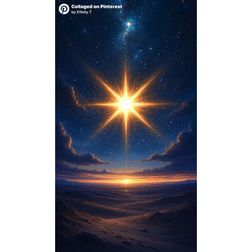
Bright Morning Star Lord Jesus, you are exalted to the highest place. Your name is above every other name – every ruler and principality and power, in heaven and on earth and under the earth. So today we pray in the name of Jesus—that every knee would bow and every tongue confess that you are Lord. Not because we have the strength to make it happen, but because you do. Not because our plans are sufficient, but because your power is limitless. Read: Psalm 59:16–17 Pause and pray Today I am reflecting on some words from the book of Revelation, the very last book of the Bible. Having painted a beautiful picture of what the world will be like after Jesus returns – where everything will be set right, where there will be no more death or pain or suffering – the passage calls me to live a hope-filled life in the messy reality of the here and now… Read: Revelation 22:12–17 Amid the closing words of Scripture, Jesus takes on one final title, one loaded with the imagery of hope. “The bright Morning Star” is a reference to the planet Venus, which appears in the sky as the night comes to an end. It is a symbol of new beginnings, of light in the darkness, of a dawn that’s about to break. It’s also a beacon for navigation – a celestial signpost, leading people in the way they should go. As I seek to follow God in a confused and confusing world, living between Jesus’ first and second coming, he offers himself as my guiding light, leading me through the troubles I face to the life-giving water of his presence. Regardless of my current circumstances, the bright Morning Star instils in me a defiant hope that the new dawn of his kingdom is coming and that his ultimate victory is assured. Lord Jesus, bright Morning Star, I look to you. In every situation I face today, let your light guide and reassure me. Instill in me your hope that you are in the process of “making everything new!” (Revelation 21:5). Pause and pray This passage says that those who follow the light of the bright Morning Star won’t keep the good news about him to themselves. Lord Jesus, give me opportunities today to invite others to “come, taste the water of life”. Help me to share your hope so that you become their bright Morning Star too, lighting up their lives with hope, joy and clarity. Pause and pray✨ As I return to the passage, I look out for a particular word or phrase that the Holy Spirit seems to be highlighting for me today… Read again: Revelation 22:12–17 I take a moment to reflect on any word or phrase that the Holy Spirit is highlighting for me. Pause and pray✨ There’s a saying we use in 24-7 Prayer: “the vision is Jesus – obsessively, dangerously, undeniably Jesus”.* By accepting Jesus as my Morning Star, I have chosen to make him the primary influence on my life, guiding the way I think and act to the exclusion of all other things. The list of harmful behaviours in these verses isn’t exhaustive – they could encompass any and all things that distract or lead me away from God’s abundant life. And so I ask myself: is there any area of my life – any want, desire or behaviour – I need to yield to him again? Lord Jesus, bright Morning Star, I choose again today to make you and you alone the vision for my life. When I am tempted to look to another way, captivate me again with the overflowing freedom and hope that comes from following you. Amen.
Season 297

Fighting Hurry to Make Space for God

Fighting Hurry to Make Space for God “Be still and know that I am God.” That short verse holds powerful truth, especially in our fast-paced, distracted world. Stillness isn’t inactivity; it’s intentional rest and awareness. When we pause, we make space to remember who God is—and who we are in Him. So much of our anxiety, burnout, and stress stems from trying to carry what only God can handle. But we only experience His peace when we stop long enough to receive it. Stillness doesn’t come naturally. It must be fought for. Phones buzz, schedules demand, and minds race. But when we slow down and make room for God, we’re reminded that He is in control, not us. The world keeps spinning even when we rest. God invites us into peace not through performance, but through presence. And it’s in stillness that we’re most likely to hear His whisper. Applications: Take five uninterrupted minutes today to sit in silence, breathing deeply and focusing on God's presence. Cancel or reschedule one unnecessary task this week and use that time to rest with God.
Season 295

Devotional

DEVOTIONAL The central theme of Colossians is Christ. He is exalted and worshiped for: His divine nature (1:19; 2:9). Being the Creator and Sustainer of all things (1:16-17). His preeminence over all creation and over all cosmic rulers and powers (1:16-19). His redemptive, reconciling work on the cross (1:20). Defeating the powers of darkness (2:15). Being the Head of the Church, which is His Body (1:18). Being the fulfillment and substance of Old Testament types and figures (2:17). Being the believer’s life and hope of glory (1:27). And so much more! As those who have “died” with Christ, “been buried with Him in baptism,” and “raised with Him through faith,” our joy and hope do not emanate from any earthly source or from our religious practices, but from Him. For all that Jesus is, He calls us to a life of faithful obedience and heartfelt gratitude. Within the four chapters of this short epistle, Paul exhorts us to be sexually pure, compassionate, kind, humble, meek, patient, forgiving, loving, peaceful, obedient, just, wise, gracious, and thankful! God, You are the source of light and life and all joy—show me who You are and open my eyes to see You rightly. Overwhelm my heart with Your power, goodness, love, and glory, that my heart would default to praising You in every moment. Thank You! GRATITUDE IN ACTION Read through the following passages from Colossians, underlining or circling the words “thank(s),” “thanksgiving,” and “thankful(ness).” Meditate on these passages, praying them back to God and using them as a basis for giving thanks to Him: 1:3 1:12-14 1:15-22 2:9-15 3:1-11 3:15-17 4:2
2 of 30