
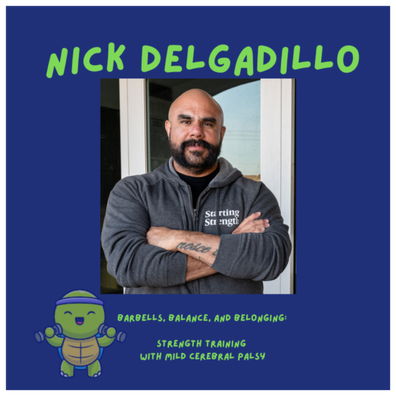
Nick Delgadillo: Barbells, Balance, and Belonging: Strength Training with Mild Cerebral Palsy
Episode notes
Find a Starting Strength Gym near you
Connect with our guest here
Strength training is often presented as something reserved for athletes, bodybuilders, or people with “normal” bodies — but what about those of us who live in the gray middle?
In this episode, I talk with Nick Delgadillo, CEO of Starting Strength Gyms, about why barbell training is uniquely suited for people with mild cerebral palsy and other neuromuscular conditions.
Nick shares:
- How a simple, physics-based method allows strength training to be applied universally
- Why balance improves as a byproduct of getting stronger
- How Starting Strength coaches work with people who have never been “allowed to try”
- Why fear, intimidation, and identity are often bigger barriers than physical limitations
We also discuss online coaching, real-world success stories, and what it means to test your limits safely — especially when your body has disappointed you before.
This episode is an invitation to stop sitting out, stop self-limiting, and start asking: “What if I’m stronger than I think?”
Topics We Cover
- Why mild CP often falls into a “no man’s land” of fitness support
- Strength vs. balance: why you don’t need balance training
- How barbell training adapts to your body — not the other way around
- The Starting Strength method explained simply
- Coaching confidence vs. fear and liability
- Identity, disability, and being allowed to try
- Online coaching as a viable option
- Real transformation stories from the Starting Strength community
Key Takeaways
- Strength is universal. The same principles apply whether you’re 25 or 95, disabled or able-bodied.
- Simple doesn’t mean easy. But simple does mean repeatable and adaptable.
- Balance improves through strength, not isolated balance drills.
- You don’t need permission to try. You need a method that makes sense.
- Progress is neurological, structural, and metabolic — even when change feels slow.