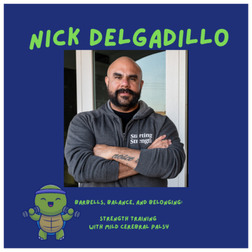
Nick Delgadillo: Barbells, Balance, and Belonging: Strength Training with Mild Cerebral Palsy
Find a Starting Strength Gym near you Connect with our guest here Strength training is often presented as something reserved for athletes, bodybuilders, or people with “normal” bodies — but what about those of us who live in the gray middle? In this episode, I talk with Nick Delgadillo, CEO of Starting Strength Gyms, about why barbell training is uniquely suited for people with mild cerebral palsy and other neuromuscular conditions. Nick shares: How a simple, physics-based method allows strength training to be applied universally Why balance improves as a byproduct of getting stronger How Starting Strength coaches work with people who have never been “allowed to try” Why fear, intimidation, and identity are often bigger barriers than physical limitations We also discuss online coaching, real-world success stories, and what it means to test your limits safely — especially when your body has disappointed you before. This episode is an invitation to stop sitting out, stop self-limiting, and start asking: “What if I’m stronger than I think?” Topics We Cover Why mild CP often falls into a “no man’s land” of fitness support Strength vs. balance: why you don’t need balance training How barbell training adapts to your body — not the other way around The Starting Strength method explained simply Coaching confidence vs. fear and liability Identity, disability, and being allowed to try Online coaching as a viable option Real transformation stories from the Starting Strength community Key Takeaways Strength is universal. The same principles apply whether you’re 25 or 95, disabled or able-bodied. Simple doesn’t mean easy. But simple does mean repeatable and adaptable. Balance improves through strength, not isolated balance drills. You don’t need permission to try. You need a method that makes sense. Progress is neurological, structural, and metabolic — even when change feels slow.