
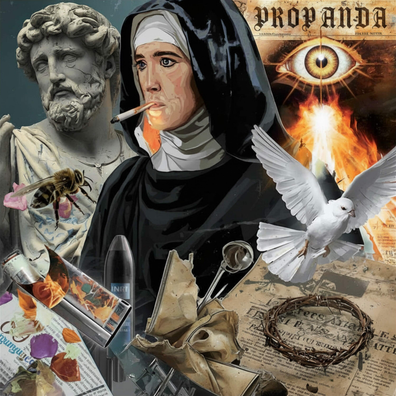
Deconstructing: The Externalised Altar
Episode notes
In this mind bending episode, we shift from the courtroom to the sanctuary. We examine the architecture of the altar: an ancient epistemological technology designed to convince human beings that truth, authority, and creative value exist outside themselves. Tracing the trajectory from Feuerbach's theory of religious projection to ancient hero cults, Euhemerism, and the political consolidation of scriptural canons, we dismantle the economics of perpetual mediation. Finally, we explore how this template persists today in corporate founder worship, political personality cults, and bureaucratized secular institutions, ultimately reclaiming the internal origin of human moral and creative authority.
Key Conceptual Frameworks
- The Architecture of the Altar: Spatial and liturgical design that positions a single figure or symbol at the center of devotion, forcing individuals into perpetual reception rather than internal authority.
- Feuerbachian Projection: Ludwig Feuerbach's diagnosis showing how humans project their highest internal attributes outward onto an external deity, impoverishing themselves to create an all powerful cosmic authority.
- Hero Cults and Euhemerism: The historical mechanism of mythologizing real, flawed human figures into untouchable, immortal authorities whose legacies can be weaponized by governing institutions.
- Canonization as Institutional Control: The politically driven closing of scriptural texts, as seen at Nicaea and Carthage, designed to suppress unmediated spiritual authority and consolidate centralized control.
- The Political Economy of Mediation: Priesthoods and institutions maintaining an economic cartel by creating artificial barriers, enforcing credentialing, and monetizing access to localized grace, historical relics, or ideological authority.
- Secular Altars: The translation of religious mediation into modern structures, including corporate founder worship, authoritarian personality cults, and dogmatized academic systems.
- Neurobiology of Flow and Subconscious Synthesis: How Csikszentmihalyi's flow state and peak human focus explain divine inspiration as natural, subconscious processing rather than an external intrusion.
- Internal Locus of Evaluation: Drawing on Carl Rogers, Abraham Maslow, and oral traditions like West African griots to shift authority back into the human consciousness.
Episode Outline and Act Breakdown
- Act I: The Empty Chair at the Head of the Table: Moving from the courtroom to the sanctuary to examine who possesses the intrinsic right to speak for truth.
- Act II: The Manufacture of the Untouchable Figure: Ancient hero cults, Euhemerism, imperial apotheosis, and the deliberate political closure of scriptural canons.
- Act III: The Economics of Perpetual Mediation: The business model of institutional priesthoods, medieval relic trades, corporate founder worship, and modern political personality cults.
- Act IV: The Spark That Was Never Borrowed: Deconstructing divine inspiration through neuroscience, humanistic psychology, flow states, griot traditions, and reclaiming internal sovereignty.