Deconstructing with Vulombe

Deconstructing with Vulombe

by Vulombe M.
Season 1

Deconstructing: The Rapture Psychosis

Explicit
As we near the end of the season on religious deconstruction, we turn our gaze to the silent heavens, and examine the modern rapture doctrine and its devastating, measurable impact on long term human planning and earthly stewardship. In this episode, we explores how converting history into an imminent apocalyptic countdown alters the way populations choose to invest in their futures. ACT I: A CLOCK BUILT TO STOP TOMORROW • Epistemological Parallel: Connecting apocalyptic certainty directly to religious narcissism, showing how both mechanisms rely on unverified authority and total conviction over humble inquiry. • Universal Apocalyptic Impulse: Framing millenarian expectations as a recurring human phenomenon across traditions, while establishing Christian dispensationalism as a primary case study due to its traceable origin. ACT II: THE INVENTION OF THE SECRET DEPARTURE • Invention of Dispensationalism: Tracing secret rapture theology back to nineteenth century minister John Nelson Darby and the Plymouth Brethren, challenging claims of ancient origin. • Institutional Roots: How Darby's framework emerged as a reaction against institutional staleness, establishing a pattern where institutional frustration manifests as apocalyptic expectation. • Historical Alternatives: Outlining classical eschatological views that interpret prophetic material symbolically or view peace as a gradual human effort, contrasting them with Darby's novel timeline. • Mechanized Distribution: How the 1909 Scofield Reference Bible printed dispensational footnotes alongside scripture, blending human commentary with biblical authority. • Cycle of Failed Predictions: Examining the Millerite movement and Harold Camping's predictions to illustrate how apocalyptic frameworks absorb failure by shifting dates or spiritualizing outcomes. • Mass Media Expansion: The shift of end times theology into mainstream culture via 1970s prophecy paperbacks and 1990s best selling fiction. ACT III: THE ARCHITECTURE OF ABANDONED FUTURES • Compressed Horizons: Applying behavioral research to show how foreshortened time horizons suppress present day investments in education, health, savings, and long term projects. • Environmental and Geopolitical Impact: How viewing the earth as a temporary stage set provides theological permission for ecological neglect and shapes rigid postures on Middle East policy. • Extreme Endpoints: Referencing high control movements like Heaven's Gate to show the tragic extreme of combining unfalsifiable authority with an absolute cosmic deadline. ACT IV: WHO BENEFITS FROM A POPULATION THAT EXPECTS NO FUTURE • Systemic Beneficiaries: How expecting an imminent end suppresses political pressure, relieving powerful institutions of long term environmental and economic accountability. • Commercial Incentives: Exploring how media and publishing industries profit from maintaining a perpetually renewed sense of imminent crisis. ACT V: BUILDING FOR A FUTURE YOU INTEND TO SEE • Reclaiming Stewardship: Rebuilding an orientation toward time that embraces multi generational responsibility. • Confronting Grief: Facing existential anxiety and processing the personal grief of lost time without relying on false promises of imminent supernatural rescue.

Deconstructing: Religious Narcissism

Explicit
Episode Overview and Context: Following our analysis of militarised religious hierarchies, Episode 17 shifts focus from the followers to the apex of authority. The narrative explores how a leader's moral authority collapses into self-certainty, mistaking personal perception for divine access. In this episode, we take a deep dive into the intersection where clinical narcissism and religious conviction meet to create a dangerous, if unchecked, abuse of power. In this delicate, dangerous, but urgent, and necessary episode, our aim is to clarify that "religious psychosis" is not a casual insult or diagnostic tag, but a precise description of a functional, self-reinforcing structural failure mode. Key Themes and Frameworks Clinical Architecture: The show contrasts competing psychological models from Otto Kernberg and Heinz Kohut regarding narcissistic personality disorder, examining how these traits operate when granted institutional power. The Religious Translation: Standard diagnostic criteria; grandiose specialness, need for admiration, exploitation, and lack of empathy, find ready-made legitimacy in terms like "anointing," "calling," and "prophetic mantle." Unfalsifiable Authority: Unlike corporate or political structures constrained by audits, boards, or elections, religious authority relies on direct claims to the divine that cannot be subpoenaed or cross-examined. Closed Epistemic Systems: Citing sociologists and psychiatrists like Margaret Singer and Robert Jay Lifton, the episode highlights milieu control, loaded language, and the cult of confession as mechanisms that eliminate critical feedback loops. Episode Summary by Act Act I: The Face Staring Back We begin with the shift from institutional hierarchies to the mind of the single human leader who views themselves as identical with divine authority. The task is set: moving moral authority away from both frozen scriptural texts and unexamined self-declared prophets, pointing instead toward disciplined, humble, and reality-grounded individual discernment. Act II: The Clinical Architecture of Grandiosity This section breaks down clinical narcissism, mapping its traits directly onto high-control leadership. Religious environments act as amplifying media, offering both a vocabulary of absolute legitimacy and a pre-conditioned congregation trained to defer to claimed spiritual insight without requiring ordinary evidence. Act III: When the Mirror Cannot See Itself The narrative details how feedback loops are disabled. Honest questions or administrative errors are reframed as spiritual immaturity or rebellion against God. Drawing on Lifton's criteria for ideological totalism, the episode illustrates how individual delusions scale into a fully functional social psychosis maintained by a devoted community. Act IV: The Victims Standing Outside the Mirror's Frame The final act confronts the human cost: financial extraction, boundary violations, sexual abuse, and post-movement cognitive paralysis. Examining historic cases like the Peoples Temple and the Branch Davidians, the episode isolates family separation and social isolation as the ultimate mechanisms used to prevent followers from receiving objective outside feedback. Core Takeaway Absolute, unexamined authority inevitably turns toxic. True discernment requires dismantling closed systems, rejecting unfalsifiable claims, and restoring humble, reality-based critical thinking.

Deconstructing: Divine Dictatorships

Explicit
In this episode, we unpack how modern religious institutions transformed faith from a space of spiritual sanctuary into a technology of control. We trace how sacred architecture, institutional hierarchies, and military discipline converged to re-engineer human obedience, examining how European expansionism shaped the way religious organizations operate, and how communities can reclaim dignity without needing rank. EPISODE HIGHLIGHTS ACT I: THE UNIFORM IN THE PEW We examine the physical design of religious congregations and how matching uniforms, rank insignia, and military formations are engineered to enforce authority, manage populations, and condition the individual toward passive, wordless submission. ACT II: THE MILITARY GRAMMAR OF CONTINENTAL AND GLOBAL CONGREGATIONS A look at the Zion Christian Church (ZCC) and other independent movements, tracing how African founders used the visual grammar of the colonial state, the police, the army, and the civil service, to build parallel institutions of order, prestige, and self-governance under oppressive regimes. ACT III: THE MILITARISED GOSPEL AND THE COLONIAL MACHINE We analyze the 1865 founding of the Salvation Army in East London’s industrial slums by William Booth. We break down why traditional pastoral roles were discarded for an officer corps, Articles of War, citadels, and a single General holding supreme command. We map out how Booth's "gospel militia" functioned as an operational replica of the Victorian colonial apparatus, using the language of conquest to discipline the working-class body. ACT IV: THE VIOLENCE OF CONVERSION AND THE DEMONIZATION OF AFRICAN SPIRITUALITY We explore how top-down religious frameworks operated across colonial frontiers, detailing how indigenous spiritualities, ancestral veneration, and organic community structures were systematically demonized and dismantled in the name of moral order. ACT V: TAKING OFF THE UNIFORM WITHOUT LOSING THE DIGNITY We honor the genuine achievement of African independent churches in building self-governed dignity under colonial rule, while asking the harder question: Can borrowed military structures ever truly deliver liberation? We examine Émile Durkheim’s concept of "collective effervescence" to demonstrate that humans need shared ritual and rhythm, but do not need top-down military rank or unquestionable hierarchies to achieve deep communal unity. KEY TAKEAWAYS The Operational Parallel: When European society sought to organize love, charity, and salvation at scale, it failed to imagine doing so through freedom or horizontal community. Instead, it built its institutions using the machinery of conquest. Reclaiming Dignity: Taking off the uniform does not mean abandoning the hard-won pride, order, or shared ritual built by these movements. It means realizing that order does not require an unaccountable chain of command.

Deconstructing: The Demonic Projection
Explicit
In this chilling, uncomfortable, much necessary episode, we analyze the demonic projection as a mechanism for evading human accountability. We examine how external malevolent entities are weaponized to explain away human cruelty, completing a sequence of spiritual relocations alongside deferred afterlife rewards, automated guilt, and prosperity extraction. Tracing historical trajectories from Zoroastrian dualism through Second Temple Judaism, we explore Carl Jung's psychological shadow concept. We dissect acoustic frequency manipulation, hyperventilation, and neural entrainment in modern mega-church rituals. Finally, we examine how the demonic frame produces real world violence, from European witch trials to Mbaula Ranch, child witch accusations in West Africa, Indian exorcism temples, the American Satanic Panic, and the demonization of psychiatric illness. Key Conceptual Frameworks The Four Relocations of Institutional Control: How religious systems systematically shift accountability away from human actors by relocating justice to the afterlife, guilt to the internal prosecutor, poverty to insufficient faith, and human cruelty to external demonic forces. Near Eastern Dualistic Synthesis: The historical accretion of a singular personified adversary, evolving from Zoroastrian cosmic dualism into Second Temple Jewish apocalypticism and early Christian theology. Jungian Shadow Projection: The psychological mechanism where disowned internal impulses of cruelty or desire are projected outward onto external entities or marginalized social figures. Acoustic Entrainment and Mass Hypnosis: The technical deployment of low-frequency sound waves, hyperventilation, and sensory overload to induce trance states, disengage the prefrontal cortex, and frame biological disturbances as spiritual intrusions. Structural Displacement via Scapegoating: Reinterpreting economic collapse, systemic unemployment, and healthcare failures as witchcraft, generational curses, or marine spirits, redirecting violence toward vulnerable populations. Sanctuary Camps and Borderland Violence: The historical case of Mbaula Ranch and Limpopo witch purges, illustrating how political transition, youth mobilization, and social panic created permanent internal refugees. The Global Exorcism Complex: The monetization of spiritual warfare across West Africa, the caste-based exorcism shrines of India, and the Western Satanic Panic and conversion therapy dynamics. Bandura’s Moral Disengagement Master Key: How the demonic framework activates displacement of responsibility, moral justification, dehumanization, and euphemistic labeling to sanction institutional violence. Episode Outline and Act Breakdown Act I: The Suspect Who Is Never in the Room: Relocating blame from human decisions to invisible entities and tracing the historical roots of personified cosmic evil. Act II: The Psychology of the Split and the Mechanics of Manipulation: Jungian shadow dynamics, acoustic entrainment, low frequency manipulation, hyperventilation, and manufactured trance states. Act III: The Global Landscape of Exorcism, Psychosis, and Terror: European witch trials, Malleus Maleficarum, Salem, Mbaula Ranch, child witch accusations in West Africa, Indian exorcism shrines, the Satanic Panic, and conversion therapy. Act IV: Psychiatric Breakdowns, Psychosis, and the Demonization of Illness: The collision of acute psychiatric crises with deliverance rituals, neurological misinterpretations, and Bandura's mechanisms of moral disengagement.

Deconstructing: Prosperity Spells

Explicit
In this episode, we trace the externalized altar directly into the global political economy. We examine prosperity theology, seed faith, and the monetization of spiritual authority. We explore how nineteenth century American New Thought evolved into a multi billion dollar global extraction system through mid twentieth century televangelism. Moving into the Global South, we analyze how IMF structural adjustment programs created economic collapse, allowing megachurches to function as predatory shadow states. We dissect the extreme performance of miracles across Southern Africa, using South Africa as a case study for inequality, intermittent reinforcement, systemic double burdens, and psychological capture. Finally, we contrast seed faith with genuine mutual aid and offer a clear diagnostic framework for reclaiming economic sovereignty. Key Conceptual Frameworks The Extraction Engine of Seed Faith: Framing monetary donations as transactional investments, placing cosmic contractual obligations on divine power while transferring economic failure onto the victim. The New Thought Genealogy: The nineteenth century origin of positive confession and metaphysical idealism, which predated Christian packaging and converted mind over matter magic into a scalable business model. The Structural Adjustment Vacuum: How IMF policies in post colonial Africa destroyed social safety nets, creating an economic void filled by megachurches acting as financial lotteries. The Megachurch as a Shadow State: The substitution of state healthcare, public education, and employment with supernatural promises of miracle jobs, divine healing, and financial covenants. The Theater of Miracles and Cognitive Capture: Sensationalist physical performances, from toxic sprays to fake resurrections, deployed to establish absolute authority and override rational faculties. Intermittent Reinforcement and Casino Mechanics: Exploiting dopamine pathways through rare success stories on stage, keeping congregants locked in an addictive cycle where the house never loses. The Double Burden of Poverty: How prosperity theology inflicts psychological violence by reinterpreting structural economic precarity as a personal spiritual failure, preventing collective organizing. Reclaiming Genuine Abundance: Differentiating transactional extraction from authentic mutual aid, using a falsifiability test to break free from systemic guilt and financial manipulation. Episode Outline and Act Breakdown Act I: The Architecture of Externalized Scarcity: Seed faith as a predatory extraction system operating on systemic human lack. Act II: The American Metaphysical Lineage: Historical trajectory from Quimby and New Thought to Kenyon, Oral Roberts, and televangelism. Act III: The Colonial and Post Colonial Pipeline: IMF structural adjustments, state collapse across Africa, and the rise of the megachurch shadow state. Act IV: The Theater of Miracles: South Africa and the Mechanics of the Absurd: Extreme charismatic performances, toxic rituals, fake resurrections, and psychological coercion. Act V: Preying on Desperation: South Africa as a Case Study: Economic inequality, informal settlements, intermittent reinforcement, and the unfalsifiable system. Act VI: The Double Burden: Bending and Breaking the Human Psyche: Internalized self blame, social enforcement, sunk cost fallacies, and suppressing structural critiques. Act VII: Planting Where the Roots Can Be Verified: Distinguishing extraction from true mutual aid, applying the falsifiability test, and reclaiming material sovereignty.

Deconstructing: The Externalised Altar
Explicit
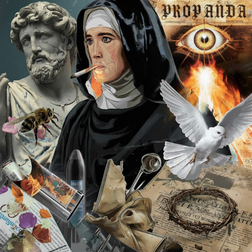
In this mind bending episode, we shift from the courtroom to the sanctuary. We examine the architecture of the altar: an ancient epistemological technology designed to convince human beings that truth, authority, and creative value exist outside themselves. Tracing the trajectory from Feuerbach's theory of religious projection to ancient hero cults, Euhemerism, and the political consolidation of scriptural canons, we dismantle the economics of perpetual mediation. Finally, we explore how this template persists today in corporate founder worship, political personality cults, and bureaucratized secular institutions, ultimately reclaiming the internal origin of human moral and creative authority. Key Conceptual Frameworks The Architecture of the Altar: Spatial and liturgical design that positions a single figure or symbol at the center of devotion, forcing individuals into perpetual reception rather than internal authority. Feuerbachian Projection: Ludwig Feuerbach's diagnosis showing how humans project their highest internal attributes outward onto an external deity, impoverishing themselves to create an all powerful cosmic authority. Hero Cults and Euhemerism: The historical mechanism of mythologizing real, flawed human figures into untouchable, immortal authorities whose legacies can be weaponized by governing institutions. Canonization as Institutional Control: The politically driven closing of scriptural texts, as seen at Nicaea and Carthage, designed to suppress unmediated spiritual authority and consolidate centralized control. The Political Economy of Mediation: Priesthoods and institutions maintaining an economic cartel by creating artificial barriers, enforcing credentialing, and monetizing access to localized grace, historical relics, or ideological authority. Secular Altars: The translation of religious mediation into modern structures, including corporate founder worship, authoritarian personality cults, and dogmatized academic systems. Neurobiology of Flow and Subconscious Synthesis: How Csikszentmihalyi's flow state and peak human focus explain divine inspiration as natural, subconscious processing rather than an external intrusion. Internal Locus of Evaluation: Drawing on Carl Rogers, Abraham Maslow, and oral traditions like West African griots to shift authority back into the human consciousness. Episode Outline and Act Breakdown Act I: The Empty Chair at the Head of the Table: Moving from the courtroom to the sanctuary to examine who possesses the intrinsic right to speak for truth. Act II: The Manufacture of the Untouchable Figure: Ancient hero cults, Euhemerism, imperial apotheosis, and the deliberate political closure of scriptural canons. Act III: The Economics of Perpetual Mediation: The business model of institutional priesthoods, medieval relic trades, corporate founder worship, and modern political personality cults. Act IV: The Spark That Was Never Borrowed: Deconstructing divine inspiration through neuroscience, humanistic psychology, flow states, griot traditions, and reclaiming internal sovereignty.

Deconstructing: The Myth of Absolute Free Will
Explicit
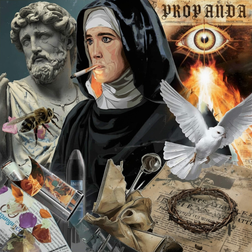
In this episode, we confront the load bearing contradiction at the center of monotheistic architectures and modern power systems: the insistence that human beings possess total moral choice, existing alongside an all powerful framework that predetermines every outcome. We trace this conflict from ancient theological disputes to modern neuroscience and algorithmic control, revealing how maintaining this paradox serves as a dual tool for social engineering and institutional control. Finally, we move past the myth of unconditioned free will toward situated agency and systemic liberation. Key Conceptual Frameworks The Core Paradox: The structural contradiction between absolute human moral accountability and absolute divine foreknowledge. Individuals are held personally responsible for outcomes already written into the design. The Historical Trajectory: The evolution from Pelagian concepts of human agency to Augustine's Original Sin, intensifying through Luther's bound will and Calvin's Double Predestination, which codified systemic human powerlessness. Philosophical and Neurological Determinism: How the Argument from Foreknowledge, Schopenhauer's insights on desire, and Libet's and Haynes's fMRI research demonstrate that brain decision pathways precede conscious awareness. Colonial Weaponization: The strategic deployment of predestination to justify conquest and docility, instantly shifting to the language of free will to punish resistance and enforce individual liability. Secular Calvinism and Algorithmic Control: How neoliberal capitalism preaches complete personal responsibility while subjecting individuals to hyper deterministic predictive algorithms that engineer behavior and monetize impulse. Situated Agency vs Fatalism: Abandoning retributive cosmic justice for restorative models. Rejecting absolute free will allows us to move past external verdicts and cultivate practical, real time agency within our environmental conditions. Episode Outline and Act Breakdown Act I: The Interrogation Room With One Chair: Deconstructing the cosmic paradox of free choice under absolute foreknowledge and total design control. Act II: The Historical Evolution of the Trap: From Pelagius and Augustine to Erasmus, Luther, Calvin, and the Synod of Dort. Act III: The Philosophical and Neurological Deconstruction: Aquinas, Schopenhauer, Libet, and Haynes testing moral agency against hard science. Act IV: The Systemic and Colonial Weaponization of Predestination: Colonial justification, chattel slavery, Weber, and shifting between providence and moral blame. Act V: Secular Calvinism and Algorithmic Determinism: Modern surveillance capitalism, predictive policing, and automated individual liability. Act VI: Living Without the Verdict: Moving beyond retributive punishment toward transformative justice and cultivating situated agency in an unscripted world.

Deconstructing: The Internal Prosecutor
Explicit
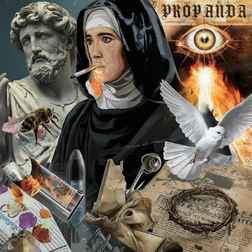
In this episode, we shift from macro architectures of control to the micro architecture of the mind. We dissect how external authority colonizes belief, installs an internal surveillance system, and turns the individual into their own warden. Key Conceptual Frameworks The Great Psychological Hand Off: Moving from physical garrisons to internalized policing. Indoctrination creates a zero overhead prison within the skull. The Internal Panopticon: Using Bentham and Foucault, we map how an omniscient gaze forces the individual to police their own thoughts continuously. Religious Trauma Syndrome (RTS): Coined by Dr. Marlene Winell, RTS outlines chronic anxiety and hypervigilance caused by ongoing religious surveillance. Somatic Mutilation: The Internal Prosecutor intercepts survival instincts (anger, boundaries) and labels them as sins, driving suppressed energy into depression and bodily dissociation. Horizontal Violence: Suppressed individuals project internal rage outward, becoming enforcers who police the freedom of others. The Illusion of Choice: True free choice cannot exist when compliance is forced through existential terror installed early in life. Episode Outline and Act Breakdown Act I: The Great Psychological Hand Off: Why mind control is cheaper than standing armies. Act II: Architecture of the Internal Panopticon: Formatting the prefrontal cortex with eternal surveillance. Act III: Anatomy of Self Prosecution: The physical toll of the internal court. Act IV: Spillage of Horizontal Violence: Internalized oppression turned outward. Act V: The Illusion of the Choice: Questioning agency under threat. Recommended Reading and References Bentham, J. Panopticon (1791) Du Bois, W. E. B. The Souls of Black Folk (1903) Fanon, F. Black Skin, White Masks (1952) Foucault, M. Discipline and Punish (1975) Freire, P. Pedagogy of the Oppressed (1968) Herman, J. Trauma and Recovery (1992) Van der Kolk, B. The Body Keeps the Score (2014) Winell, M. Leaving the Fold (1993)

Deconstructing: The Architecture of Heaven and Hell
Explicit
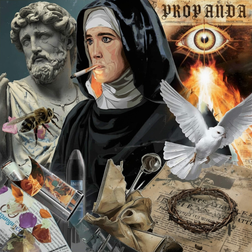
We step back from physical exploitation to examine the invisible spiritual architecture making domination possible. We analyze the supreme historical irony of empires marketing celestial real estate to the very populations they oppress. By tracing how early shadow lands mutated into hyper stratified moral sorting systems, we expose how the concepts of Heaven and Hell serve as psychological blueprints for urban planning, financial speculation, military recruitment, and modern geopolitical containment. Deep Dive Segment Breakdown The Spiritual Hacking of the Soul We examine how oppressors disarmed the biological self defense instinct of the enslaved. Using the 1807 Slave Bible, which excised ninety percent of the Old Testament and half of the New Testament, the ruling class weaponized scripture. They deleted Exodus and left commands of submission, redirecting the innate drive for physical freedom into a vertical pursuit of celestial real estate. The Afterlife as Imperial Urban Planning We trace the historical mutation of the afterlife from egalitarian shadow lands like Kur, Sheol, and Asphodel into bureaucratic surveillance tools. As tribal societies transitioned into stratified empires, rulers designed deferred compensation models. This framework recast earthly poverty as a heavenly investment, successfully preventing peasant rebellions. Dante and the Cartography of Guilt We audit Dante Alighieri Inferno as a technical architectural blueprint for behavioral conditioning rather than mere poetry. By positioning human impulses within a strict concentric funnel, the matrix created an internal prison system. This vertical axis completely erodes human presence by transforming the earth into a temporary, disposable testing ground. The Securitization of Salvation We connect the sixteenth century Catholic indulgence system to modern subprime mortgage crises. Pope Leo X and Johann Tetzel securitized grief by selling access to the Treasury of Merit to finance earthly luxury. This speculative real estate scam continues today through modern prosperity theology, which exchanges financial tithing for elite celestial placement. The Celestial Military Recruitment Center We expose how empires use afterlife mechanics to override the human biological aversion to killing and dying. From the Norse warrior paradise of Valhalla to the plenary indulgences offered to Crusaders and the concept of martyrdom in Islamic empires, the matrix manufactures disposable military labor by framing state sanctioned slaughter as a holy passport to paradise. The Real World Sorting Model We bring the architecture down to earth, mapping how the zoning laws of Heaven and Hell are poured into concrete and digital algorithms today. We examine the stark parallels between celestial sorting and modern gentrification, urban redlining, social credit systems, and corporate surveillance capitalism. Finally, we confront the ultimate manifestation of this systemic containment in modern geopolitical crisis zones like Gaza, the Congo, and Sudan, where theological software is actively used to justify human erasure and industrial scale suffering. Key Takeaways From Our Monologue "The afterlife was redesigned to mirror the municipal zoning laws of the state. The ruling elite realized they could use the empty canvas of the cosmos to solve their most pressing political problem: the uneven distribution of earthly justice." "We have rebuilt Dante’s sorting machine using fiber optic cables and machine learning algorithms." "True spirituality does not live in submission, it lives in radical, unyielding autonomy. When you purge the fear of Hell from your nervous system, you reclaim your moral agency."

Deconstructing: The Delectable Negro

Explicit
We expose the terrifying continuity of human domination beneath modern consumer culture. We connect three phenomena into a single transactional matrix of control: the physical consumption of the enslaved body as unearthed by scholar Vincent Woodard, the intellectual laziness of the modern literary marketplace, and the deep psychological bankruptcy embedded within the demanded submission of organized religion. We audit how our appetite for low friction narratives is systematically conditioned by centuries of theological and institutional processing. Deep Dive Act Breakdown Movement 1: The Flesh on the Table We challenge the sanitized macroeconomic framing of American chattel slavery that reduces the plantation to a simple factory of early capitalism and balance sheets. Drawing from Vincent Woodard’s text, The Delectable Negro, we confront the raw psychosexual undercurrents of absolute ownership. The slaveholding apparatus literally, symbolically, and erotically consumed the Black body. This parasitic ruling class ingested the raw vitality, flesh, and blood of the enslaved to soothe their own internal psychological vacuum. Movement 2: The Economy of the Easy We audit the modern intellectual marketplace and its obsession with comfort reads. Because deep critical thought expends massive metabolic resources, true deconstruction causes severe cognitive dissonance and somatic stress. Intellectual laziness functions as a neurological defense mechanism. Modern consumers actively flee high cost friction texts, running instead toward pop psychology and fast food authors who process complex historical tragedies into cheap, digestible moral platitudes. Movement 3: The Architecture of Divine Surrender We trace the lineage of modern intellectual passivity to its orthodox roots. For thousands of years, theological architectures have laid the groundwork for mass submission by branding critical skepticism as a dangerous sin and unconditional faith as the ultimate virtue. This systemic intellectual lobotomy trains the mind to bypass its native cognitive defense mechanisms, leaving it vulnerable to authoritative control and conditioning it to accept dogma without empirical verification. Movement 4: The Shared Lineage of Abuse We map the historical pipeline where the slaveholder weaponized the religious template of divine surrender to enforce absolute compliance. By editing the holy text to create the historical Slave Bible of 1807, the ruling class systematically excised all narratives of liberation while leaving verses commanding servants to obey masters with fear. The pulpit was transformed into a preprocessing kitchen, using the promise of a post mortem heavenly reward to ensure non violent submission to an earthly slaughterhouse. Movement 5: The Psychological Deficit We analyze the ultimate cost of trading critical faculties for safety: the creation of an internalized master. When individual capacity for radical friction is stripped away, the consumer becomes the active policeman of their own mind, reacting with protective rage against structural critique. Key Takeaways From Our Monologue "If you want to sell a multi generational spiritual insurance policy, you must manufacture an incurable existential disease. You must convince the mark that their very mind is a corrupt instrument." "The modern book industry has perfected the art of selling indulgence slips, handing you an intellectually lazy text that absolves you of the duty to think while keeping you complicit in ongoing economic extraction." "True spirituality does not live in submission, it lives in radical, unyielding autonomy. True education does not live in the validation of your existing comfort, it lives in the complete, agonizing destruction of your illusions."
1 of 2