
Episode notes
Google DeepMind has shown that AI-designed proteins can carry a hidden, detectable signature and still work. The catch is that the watermark only helps if the people designing proteins choose to use it.
This episode is a narration of "A Hidden Signature for AI-Designed Proteins." It covers SynthID Bio, a method DeepMind described in a Nature paper published September 30, and what it could mean for one of biosecurity's main checkpoints: the screening of DNA synthesis orders.
In this episode:
- Why AI-designed proteins are hard for DNA synthesis companies to screen
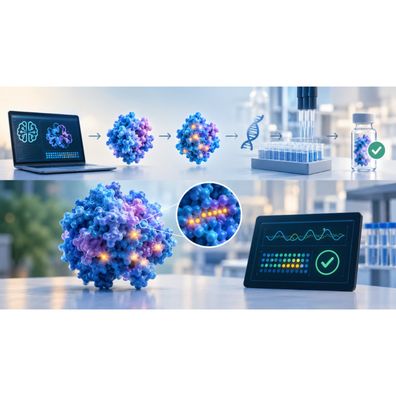
- How SynthID Bio hides a statistical pattern in protein sequences (using ProteinMPNN) and in 3D structures (using AlphaFold 3)
- Lab results comparing hundreds of watermarked and unwatermarked binders across three targets
- How synthesis companies could use the watermark to speed up orders from trusted design tools
- The limits the authors acknowledge: bad actors can opt out, the marks can be removed or diluted, testing was narrow, and real-world use would require shared standards
Read the original article: https://dailyaisafety.substack.com/p/a-hidden-signature-for-ai-designed
Sources:
- SynthID Bio paper (Nature): https://www.nature.com/articles/s41586-026-10965-y
- DeepMind's announcement: https://deepmind.google/blog/introducing-synthid-bio/
- Microsoft's 2025 research on AI-redesigned toxins (MIT Technology Review): https://www.technologyreview.com/2025/10/02/1124767/microsoft-says-ai-can-create-zero-day-threats-in-biology/
Written by Claude and fact-checked by Nathan Nguyen.