Campus Podcast @ Metro State University

Campus Podcast @ Metro State University

by Mr. Lucky — Educator, MAPL, M.S. Urban Education Student
Season 17
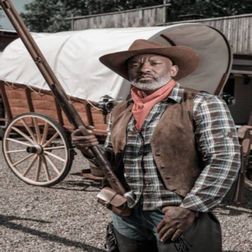
WANTED Metro Students Make More Money
Order My Book: www.weusoursluckybooks.com Metro Grads: Use Your Education to Earn More Purpose This lesson guides you step‑by‑step in using your education, skills, and life experience to create income beyond your full‑time job. Your degree is more than a credential — it is a tool for independence, creativity, and financial growth. What You Will Do 1. Identify Your Skills Start by listing the skills you already have. Think about what you learned in school, at work, and through life. Include skills people often ask you for help with. This helps you see that you already possess valuable abilities that others need. 2. Identify Who Needs Your Skills Next, look at the world around you. Ask yourself who benefits from what you know. Consider students, families, coworkers, small businesses, or community members. You will begin to see how your knowledge solves real problems. 3. Turn One Skill Into One Service Choose one skill and convert it into a simple service. Use this formula: Skill → Problem → Solution → Service → Price This shows you exactly how to turn knowledge into income. Keep it small, clear, and easy to start. 4. Build Your Service Plan Create a short plan for your new service: What you will offer Who you will help What problem you solve What you deliver The first step you will take to begin This makes your idea real and ready to launch. 5. Practice Sharing Your Service Explain your service to one person you trust. Tell them what you offer, why it matters, and how your education supports it. This builds confidence and helps you refine your idea. Objectives You will identify at least three skills that can generate income. You will design one actionable service based on your education. Outcomes You will understand how your education becomes a business asset. You will walk away with a ready‑to‑launch service plan. 5E Learning Model (Personal to You) Engage: Reflect on the idea that education creates opportunity beyond employment. Explore: List your skills and experiences. Explain: Learn how degrees and experience create credibility. Elaborate: Build your service plan using the formula. Evaluate: Share your idea with one person and refine it. Closing Write one personal commitment: “This week I will use my education to earn more by…” Contact: radiotalklr@gmail.com 0r 773-809-8594 Enough Said. Do Something
WEDDINGS=Discount for College Students
Order My Book: www.weusoursluckybooks.com Email: radiotalklr@gmail.com
Season 15
Attention Licensed Realtors: 5.0 CE Hours
Attention Licensed Realtors! Earn 5.0 Continuing Education Hours — State Approved. Don’t wait until the rush before June. Let’s knock out your 5.0 hours now and stay ahead of the deadline! Mr. Lucky radiotalklr@gmail.com 773-809-8594
Register for This Class Now
Registration Information: radiotalklr@gmail.com See my book at: www.weusoursluckybooks.com
Dr. Megan Johnston: Critiquing Racism in Art
Dr. Megan Johnston: Critiquing Racism in Art Lesson Plan: Power, Identity, and Bias in Art & Museum Studies Lesson Focus Listeners examine how race, gender, disability, theory, and curatorial practice shape artistic meaning, institutional power, and public interpretation. Objectives (2) Objective 1: Listeners will analyze how visual, curatorial, and institutional choices reinforce or disrupt racial, gender, and disability hierarchies. Example: A listener explains how Western art centers whiteness through composition, symbolism, or narrative framing. Objective 2: Listeners will evaluate how theory (CRT, feminist theory, postcolonial theory) informs contemporary artistic practice and museum ethics. Example: A listener identifies how feminist or postcolonial artists challenge traditional norms through material, performance, or spatial intervention. Outcomes (2) Outcome 1: Listeners produce evidence‑based critiques of museum practices. Example: A listener cites how curation or acquisition histories exclude disabled or non‑Western artists. Outcome 2: Listeners propose strategies for more equitable artistic and curatorial approaches. Example: A listener recommends contextual labels or redesigned displays that address racial or gender bias. 5E Learning Model Engage: Present artworks showing racial, gender, or disability bias. Explore: Listeners analyze museum labels, placement, omissions, and narrative framing. Explain: Instructor connects observations to theory and historical patterns. Elaborate: Listeners redesign a display or reinterpret an artwork using theory. Evaluate: Listeners justify their redesign using ethical and theoretical reasoning. Formative Assessment Listeners submit a short critique answering one of the provided questions, demonstrating: identification of bias use of theory proposed corrective strategy Contact Mr. Lucky: 773-809-8594 or radiotaklr@gmail.com
Professor: Dr. Robinson — Introducing Black Studies
Lesson Plan: Black Studies & Voice — Featuring Dr. James A. Robinson Learning Objective (1) For the Worksheet That Goes with This Lesson Plan email: radiotalklr@gmail.com Students will analyze how Black Studies is defined, practiced, and shared by examining Dr. Robinson’s scholarship and the Metro State Black Student Achievers Podcast as parallel forms of knowledge production. Example: A student explains how Robinson’s research on Black railroad labor and the podcast’s student stories both recover voices often excluded from mainstream narratives. Learning Outcome (1) Students will identify one way Black Studies empowers communities and provide evidence from either Robinson’s work or a podcast episode. Example: “The podcast shows how Black students narrate their own academic journeys, which aligns with Robinson’s learner‑centered approach.” 5E Learning Model Engage Play a 30–45 second clip from the Metro State Black Student Achievers Podcast. Ask: Whose voices are centered here? Why does that matter? Explore Students read short excerpts from Dr. Robinson’s biography. In groups, they connect his work to the podcast’s mission: defining Black Studies, elevating community knowledge, and documenting lived experience. Explain Students answer: What is Black Studies? Where is it learned? They use evidence from Robinson’s research AND the podcast’s storytelling. Elaborate Students map the eight guiding questions onto the podcast: e.g., What do students learn in Black Studies? How does the podcast model that learning? Evaluate (Formative Assessment) Exit Ticket: “Using Dr. Robinson’s work or a podcast episode, explain why Black Studies is important for students and communities.”
Dr. Walter D. Greason: African American Life and History
See My Book: www.weusoursluckybooks.com Contact Dr. Greason; wgreason@macalester.edu The Graphic History of Hip Hop https://www.graphichistorycompany.com/graphichistoryofhiphop Lesson Plan: Reimagining Communities through Afrofuturism and Economic Justice (Based on themes from WalterDGreason.com) Overview Dr. Walter D. Greason’s work blends history, economics, Afrofuturism, and digital innovation to show how communities can rebuild themselves through cultural preservation and creative problem‑solving. His projects demonstrate how understanding the past helps us design a more just future. Learning Objectives Students will analyze how Afrofuturism and historic preservation can transform vulnerable communities. Example: Students review Greason’s Eatonville preservation work and explain how protecting cultural history strengthens community identity. Students will evaluate how digital innovation can promote racial and economic equity. Example: Students explore The Graphic History of Hip Hop and identify how technology communicates social justice messages. Learning Outcomes Students will demonstrate understanding of interdisciplinary approaches to community uplift. Example: Students create a short presentation connecting Afrofuturism to a local urban renewal effort. Students will apply Greason’s model of cultural preservation to propose solutions for modern issues. Example: Students design a mini‑plan to revitalize a local landmark using digital storytelling. 5E Learning Model (Student‑Friendly Version) Engage — Get Curious Students watch a short clip or explore images from Greason’s Eatonville project. They discuss: “Why does preserving history matter for our future?” Explore — Investigate the Ideas Students work in small groups to explore one of Greason’s projects (Eatonville, Gallier House, Graphic History of Hip Hop). They take notes on how history, art, and economics connect. Explain — Make Meaning The teacher breaks down how Afrofuturism, economics, and cultural design work together. Students share what they discovered and connect it to real‑world community issues. Elaborate — Apply What You Learned Students create a digital poster, short essay, or mini‑proposal showing how they would preserve or redesign a local space using Greason’s principles. Evaluate — Show What You Understand Students reflect on how creative history can inspire social change. They share their ideas with peers and give feedback. Formative Assessment Reflection Journal Prompt: How does Afrofuturism help us imagine better communities? What lessons from Dr. Greason’s work could help improve your city or school? To Be a Guest on This Podcast Email: radiotalklr@gmail.com
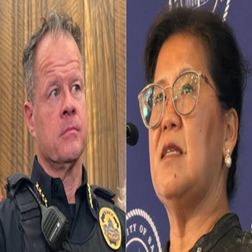
Mayor Her: If Any Man, Even Mayor Carter, Were Accused of Her Conduct
WIN $200 Email Your Essay To: radiotalklr@gmail.com RUBRIC (100 Points Total) Clarity of Argument – 25 points Clear thesis addressing the double standard Focuses specifically on the female‑chief/male‑mayor scenario Evidence & Reasoning – 25 points Uses social‑science reasoning and real‑world patterns Supports claims with logical analysis Depth of Insight – 20 points Goes beyond surface observations Includes racial dynamics when relevant Organization & Structure – 15 points Strong introduction, body, and conclusion Logical flow and transitions Writing Quality – 15 points Professional tone Clear, persuasive, and grammatically strong Comments: 773-809-8594
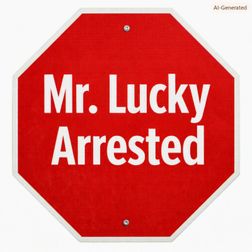
Mr. Lucky ARRESTED -Police Misconduct-Listen Now
Call With Legal Donations to 773-809-8594 Start a free Lucky Release His Snickers Movement Outside the Jail chanting "Free Mr. Lucky quicker — they jailed him for Snickers." I can hear you all now. "Free Mr. Lucky quicker — they jailed him for Snickers."
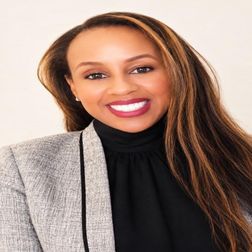
Black Women: Untold Truth and Power
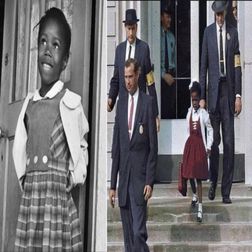
Order My Book: www.weusoursluckybooks.com Lesson Plan Segment: The Truth Liberal Faculty Hide About Black Women Learning Objectives (with examples) Students will analyze how academia sanitizes Black women’s histories Example: Students compare the textbook version of Rosa Parks (“tired seamstress”) with her actual work investigating the gang rape of Recy Taylor. Students will evaluate the impact of omitted violence on historical understanding Example: Students examine how removing Fannie Lou Hamer’s forced sterilization changes the meaning of her political activism. Learning Outcomes (with examples) Students will identify at least three ways institutions distort Black women’s stories Example: A student explains how Wangari Maathai’s beatings are erased, how Althea Gibson’s poverty is hidden, and how Miriam Makeba’s exile is reframed as a “career move.” Students will produce a written or verbal critique demonstrating the need for "unsanitized" history Example: A student writes a paragraph arguing that Wilma Rudolph’s fight against segregation is more historically significant than her Olympic medals. Four Questions Students May Ask Faculty Why are Black women’s experiences with state violence, sexual assault, and medical racism rarely included in our curriculum? Who decides which parts of Black women’s history are “appropriate” for classrooms — and why? Why do textbooks highlight Black women’s achievements but erase the brutality they survived to reach them? How does faculty discomfort shape what we learn about women like Daisy Bates, Fannie Lou Hamer, and Miriam Makeba? Contact: radiotalklr@gmail.com or 773-809-8594
1 of 11