"Almost" - A Novel by Stefan Molyneux

"Almost" - A Novel by Stefan Molyneux

by Stefan Molyneux, MA
Season 2

"Almost" Part 21: Book 2, Part 11

The Night of the Long Knives After Tom left Germany, Klaus fell into a depression. He felt as if he were at the bottom of a deep pit, and his friend had just levitated to safety and light. And around him, large pincers were sliding out of a crumbling wall. Tom had wondered about Klaus’s relationship to Nazism. Klaus wondered this as well. He did not respect reason as an absolute, and so was deeply, tragically susceptible to passion. When reason falls, whoever screams the loudest will rise. It is an iron law. Klaus did not believe in the supremacy of objective reason, and so he had no choice but to take an anthropological and fate-based approach to his own society. What was ‘right’ was whatever happened. Nothing could be opposed in the face of passion. How could he question passion? With what faculty would he oppose it? More passion? But Klaus was an intellectual, and not given to screaming fits. If he proved that a Nazi’s reasoning was illogical, that meant nothing. Reason was not the essence of life. It was dry, analytic, illusory. It did not touch the heart of things. Only emotions were essential. Reason was an invention of man. Emotions were given by God, the World Spirit, the Essential Animal. Reason divided men. Only passion could unite. Reason was boring. Passion was pleasure! Human reason was limited, pointless. Individual emotions were the endless movements of the Collective Soul. The rejection of reason also sped up the decision-making process. Rather than get tied down into endless chattering debate – as in the Weimar Republic – the most passionate voice would always win the day. And, to be frank (and this was always understood implicitly), if arguments got out of hand, violence could always resolve matters. And why not? A man willing to maim and kill for a course of action was clearly the most passionate, the most committed to it. And if he won the day, then certainly the World Spirit was behind him. Might was right. Actually, ‘right’ had ceased to exist. ‘Might’ just was. Now when the terrors of competing tribes descend upon helpless humanity, all the oldest instincts come into play. When dangerous hordes roam the land, individuals begin casting about for a protective group. Klaus fervently hoped that it would not come to that. But things did not look good. On the night of January 30, 1933, endless columns of torch-bearing Nazi Stormtroopers marched through all the major cities of Germany. They had two main missions in the months that followed: show their might, and destroy the Fuhrer’s enemies. They had pillaged the offices of the Socialist, Fascist, Nationalist and Communist parties, and gathered the names of all members. After that, it was open season. On February 28, the parliamentary Reichstag was set on fire. The Nazis used the event as an excuse for the most bloody persecutions. Herman Goering was in charge of the Prussian police, and he gave them the authority to shoot without consequences. He attached to the police thousands of young Nazis as Hilfspolizi – ‘assistant police’ – and then pointed them at the Communists and Socialists. On March 2, Wilhelm Frick passed Schutzhaft – protective custody – which gave the police powers to imprison citizens without trial or cause, in the newly-formed concentration camps. Hindenburg – then still the titular head of state – suspended civil liberties after the Reichstag fire. Citizens no longer had freedom of the press, of speech, of association or protection from arbitrary arrest...
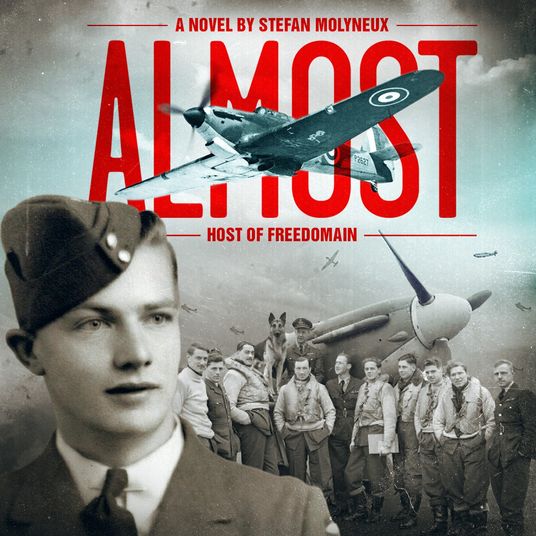
"Almost" Part 22: Book 2, Part 12

Tom Wakes Up With Jacqueline Tom stared at Jacqueline as she slept. I have always been a blubberer, he thought. So, why on earth am I not crying now? The answer was not long in coming. Because you have been weak, Tommy… He nodded slowly. He could barely see her face in the dim, pre-dawn light. Her dark hair was a perfect black; her cheek a faint haze of gray. He wondered just what she was dreaming about. She could be flying in her mind, but is still to me… A violent wave of sexual desire rocked his body. Tom remembered every detail of the night before. A great mystery had been solved for him. For as long as he could remember, he had wondered about the moment of Sexual Will. The women he had bedded in university had all been conquests of one kind or another. They had been blinded by his athletic prowess or good looks. They had felt honoured to be going out with him. But still, at the end of every evening, he had felt the moment of Sexual Will, where he had made the decisive move which would result in either acceptance or rejection. Most times, it was acceptance. Nonetheless, it was still a frightening moment, when he let his fingertips tickle a woman’s ear in a motion-picture house, or let his lips rest on the little depression between one of her knuckles. None of that had happened with Jacqueline. Tom had missed the company of women. He had been so damn polarized in his youth, between Catherine and his mother (and it did not escape his attention that he generally thought of them in that sequence: ‘Catherine and his mother’) – that he either bedded pretty women, or was fast friends with plain ones. The concept of ‘sexy female friend’ was rather beyond him. Tom’s womanizing – which had been fairly extensive, but not compulsive – had left him sated but unsatisfied. To his great discredit, he had been rather blasé about it at times. “One enjoys a great meal,” he said, once to Hart. “One does not marry the chef.” (This had been rather cruel to Hart, who had no idea, so to speak, how to even get to the restaurant district.) He felt physical excitement, the thrill of the explorer trekking across new flesh, and truly enjoyed displaying his sexual prowess. He loved the little sighs and coos of surprise he was able to wring from a woman. He loved undermining their prudery with unprecedented licking and unknown angles. In bed, as in life, Tom was a sportsman to the hilt. But last night had been something quite different. The moment of Sexual Will had, he realized in hindsight, actually been Jacqueline’s. She had put her hand on his forearm twice, and had consciously applauded his return of her caress. He had wanted to kiss her all at once, to forestall something, if felt. But he had sensed that whatever his rush of desire wanted to forestall was a good thing, which should be experienced. So he continued to talk and listen to her, and something began to mount in his chest. Some sort of wonderful floating spiritual thing which was utterly beyond the flesh. Not alien to it – just beyond it. The body is the pedestal whose base goes to the center of the world. Love is the statue which reaches beyond the sky…

"Almost" Part 23: Book 2, Part 13

Wendy Finds Out She Is Pregnant Again The feeling hit Wendy with a dull, cavernous shock. She thought that, if a railway carriage were sentient, it would feel this way, when coupled with a locomotive. She was on the toilet. Her period was late. She knew. She felt nothing but that shock. A man gets a job, she thought, which will pay him well, but which he does not want… Or, more likely, a man gets conscripted for a war to defend another man’s homeland… She shrugged, then laughed, rubbing her forehead. Time to pop out another one, breeder. Tom’s face rose in her mind, and she felt a strange starfish of pain deep within her. She had been fantasizing about Tom for some time. It was quite gruesome, actually. Greek. Incestuous. She fought with Tom, overtly or covertly, every time they met. She found herself forever driven to test him. It was very primitive. Wendy needed to be sure that the man she desired could never be broken. Never ever. So she had to test him. Forever. I mean – what if he has gotten weak overnight? The ‘why’ of the testing was never really explored. She had, lost in the hedge-rows of her hidden heart, one of the deep secrets of femininity, which is a bottomless pool of acidic contempt for male weakness. In Wendy’s world, English men were like England itself – a sinking island surrounded by this rising sea...

"Almost" Part 24: Book 2, Part 14

Tom Convinces Hart Tom thought long and hard about going to the continent again. He felt a great excitement in his belly at the very prospect. No, he thought, not ‘going’ to the continent – flying to the continent! All thoughts of Jacqueline vanished from his mind for the next two days – except for the occasional burst of self-congratulation about having made the right decision. He made long lists of things he needed, and planned possible routes, determining how and when to stop to pick up fuel and more money. The current crop of pilots were due to graduate in four weeks. When Tom entered the classroom, he was greatly surprised – and slightly alarmed – to see Jacqueline sitting in her usual seat. His eyes raked over her, to see if she had dressed up – or down – to impress or frighten him. She returned his gaze without guile. He felt the force of her will, and suddenly remembered that she was the kind of woman who could sit in a class of men without fear. After the class, she remained sitting while the others filed out. He felt sad, suddenly, after everyone had left, and she was alone, staring at him, her books stacked neatly in front of her. “I don’t mean to alarm you, Tom, but I don’t accept your reasons.” Her voice was even. Tom nodded slowly. “I don’t hand myself over to men. I’m not a party favour. Or a conquest.” She smiled. “And if I felt that, even a little, I would curse myself and never speak up. But I wasn’t a conquest, was I?” Tom shook his head. “No, I was much more than that. I was – the possibility of love. Not that quick, not that way, we were both greedy. But the possibility.” “If I didn’t think that,” said Tom, “I wouldn’t have said what I said.” Her lips pursed so tight it looked painful. “Sorry,” said Tom. “I don’t want to be cryptic.” “A friend of mine had her bloke sleep with another woman, and he tried to convince her that he did it out of love for her. Don’t be that bloke.”

"Almost" Part 25: Book 2, Part 15

Tom Returns The size of the crowd was completely unbelievable. Tom had never seen even a tenth of the number in any single place. Tens of thousands of people milled, surged, boiled and cascaded down streets like broken rivers. They changed directions madly, contradictorily, but in strangely consistent patterns, like the flights of small birds in high winds. Many of the protesters had curled lips and out-thrust jaws, and carried bats or sticks or knives or axes. It was medieval; torches flowed up over the crowd like the bright spurting blood of headless devils. The steam of the crowd’s hot breath surrounded the flames, giving the fires a swirling, ghostly base. The voices of the crowd rose and fell. Tom asked every English-speaker for the latest news, the safest routes. The rumours flew that the government had brought in tanks and cannons to break up the crowd – and even that aeroplanes were being flown in from the military airport to strafe the streets. Everyone was ready to be outraged, violated, to enact the blackest acts of vengeance. Cries of horror and rage swept through the crowd. Tom tried to follow them, with his mind’s eye. He imagined that one man had been injured somehow, and howled out. The crowd, imagining that this was the first ‘whiff of grapeshot,’ or strafing airplanes, or rolling machine-guns, became panicked and hostile. More and more took up the screams of terror and rage, and they swept through the mob, which surged to defend the stricken and avenge the fallen. The crushing crowd caused more casualties, and it took some time for the crowd to understand that, in its zeal to protect life, it was actually taking it. The bodies would become so tightly packed – and this could happen at any time – that Tom sometimes found that he was pressed up against someone who was grievously injured. One lolling face turned, missing an eye. Another man was missing an arm from the elbow down; his face was pale, rapt. Twice, Tom pushed back at bodies squeezing him tight, only to realize, with a feeling as if he had received an electrical shock, that they were dead men, just being carried along. More base hands were also at work, both for material and sexual profit. Tom gave up trying to protect his watch, his wallet and his genitals at the same time. There was a constant cross-current through the crowd, which is what made it so crushing and insistent. There was always some imagined front, where atrocities were being committed and vengeance could be had. The recreational protesters were always trying to get away from these fronts, while the political ones were always trying to get to them. There was, most of all, a sense of invincibility among the crowd. Tom realized why Rousseau had titled his book ‘The Social Contract,’ because that cold February night, it was clear that here were several tens of thousands of people who simply refused to be ruled. And so they could not be ruled. It didn’t take much. Tens of millions of people in France. Tens of thousands – a tenth of a percent – decide to refuse to be ruled, and it all comes crashing down. Government is an illusion of acceptance, thought Tom. Leaders who forget the fragility of their power can destroy the world…

"Almost" Part 26: Book 2, Part 16

Chapter 63 In October 1935, Mussolini’s Grand Army crossed the border into Abyssinia. This land had been independent since the days of King Solomon. It was the only African country to successfully resist European invasion in the nineteenth century. The Italians had modern aeroplanes, tanks and flame-throwers. The Abyssinians had war-drums, camels and twelve obsolete biplanes. The Italians used poison gas and bombed Red Cross hospitals. The League of Nations applied some sanctions, but not enough to stop the war. The British let oil and coal sail through the British-controlled Suez canal. The French sold oil to the Italians. The League forbade arms sales to either side. The Abyssinians were slaughtered. Cuthbert was outraged. It was the first time any of his employees had seen him anything other than bored and distemperate. It made them all panic. Each of them ran around, feeling the weight of the Abyssinian crisis as he had been directly responsible for it. Cuthbert acted as if he had been against the League of Nations from the start, but had been overruled by his underlings – and now had the full magisterial right of a man who had given good but unheeded advice. The truth was that the FO was in quite a bind, and Cuthbert felt it most keenly. Throughout his career, he had been in the position of unequalled expert. His detailed knowledge was consulted, deferred to, sought after and never questioned. His position was a kind of weapon; his heavy, bludgeoning personality saw that it never went unused. But now, things were crawling out into the open. The British public – largely due to propaganda coming out of the FO – were almost fetishistically enamoured of the League of Nations. The League of Nations served Cuthbert perfectly, because he could blame the other members if a British initiative failed, and take personal credit if something succeeded. The greatest engine of the mortal world is the drive to avoid responsibility and fuel vanity. The League of Nations was popular with the people because it served the vanities of the leaders. Cuthbert was in a very privileged position, and this position was directly threatened by Mussolini. He was the chief civil servant under Samuel Hoare, the Secretary of State for Foreign Affairs. Cuthbert had seen quite a few ministers stumble through the FO – it did not tend to attract the best and brightest – and had loved them all. They had the microphones and interviews, but spoke little but what Cuthbert wanted them to say. The word ‘democracy’ always made him smile. Ministers who went against the policy of the civil service – surely a more permanent and skilled layer – found unpleasant information leaked to the newspapers, or were given poor advice which got them kicked out. In the palaces of power, the civil service were neither king, queen or courtier, but oxygen. An invisible, unfelt substance on which all pomp and power depended. Being a great civil servant required two things, according to Cuthbert. One had to be very certain, and very patient. “The great virtue of the civil service,” he would say, “is that we are not subject to the vagaries of public opinion. We are the ballast of the ship of state.” He was not a great fan of democracy, except insofar as the illusion of participation created the moral requirement of obedience. “They vote in the figureheads,” he smiled, “and we tell them what to do. If they succeed, they preen. If not, they leave. But we remain. We always remain.”

"Almost" Part 27: Book 2, Part 17

Chapter 68 Klaus was astounded at the amount of human energy that can be released by pushing all conflicts into the unconscious. He was an educated man; he knew that the Nazis represented a radical break with European traditions – but then, Germany had never really been a part of Europe anyway. That Europe. The Europe he had studied in England. The Europe of reason and compromise and all the natural difficulties of different viewpoints. In Germany, there were no different viewpoints. There was one note; you could play it loud, or soft. Klaus had been out of Germany for six years. When he had returned, he had mostly stayed at his father’s house. He had spent a little time in the larger cities – mostly Berlin and Hamburg, but they became depressing as the Depression worsened. His city friends had scattered with the onset of Nazism; a few had fled, most had joined. His local friends – the rural idiots, he called them – were largely indifferent to politics. They were happy that the Nazis were in power, because they got to keep their farms, which had been mortgaged to the hilt during the Depression, when it was impossible to make a living from honest crops. But such city matters as freedom of the press didn’t trouble them much. In his new ‘Nazi experiment,’ Klaus had tried talking to them about Hitler, but it didn’t do any good. It was quite fascinating, and he found it hard to avoid the alienating contempt of the intellectual. They could only see politics in the most local, tangible and practical of terms. They cared nothing for freedom, the Reichstag or the death of the Republic. They wanted good rains and dependable insurance. They wanted their sons to work and their daughters to get married. They wanted to go to church and sit with a pipe. They wanted to know the words to every song that could be sung. They were the rhythm of the land, of the seasons, of the decades between birth, marriage and re-birth. When he was younger, Klaus thought that they might be wise, in their own slow, stolid way. But now, he knew that it was not so. Extend that principle, he thought, and trees become sages. The Nazis were a curious bunch. Klaus could never quite decide if they believed their own propaganda or not. They would seem to – some at the salon evenings at Count Orsky’s were most passionate on this point – but in their very next breath, they could as easily say that all these lies were only designed for the masses, and that whoever swallowed such idiotic bait was utterly unsophisticated. Klaus could not follow their transitions. Another curious item was the Nazi’s ability to combine a hatred of authority with an absolute allegiance to the Fuhrer. When Klaus, early on, began to point out some of the contradictions inherent in the Nazi theory of life and history, he was reviled. Any attempt to bring the authority of logic or experience on their beliefs was considered more insulting than a physical attack. They hated external authorities, but crawled before the image of Hitler without a thought. Most odd...

"Almost" Part 28: Book 2, Part 18

Chapter 70 A child can go down, into the depths of parental numbness. It doesn’t matter how old the child is, or the parent. The umbilical is sometimes a lifeline, thrown to the future, with which a mother can hope to haul herself up the well of her own dying. And children can so rarely tear themselves from around that well. A parent present, but absent, can be the bottomless quicksand of an entire lifetime. Tom thought about his mother’s revelation long and hard. It consumed him. Invaded him. He thought about it before going to sleep. He dreamt about it. It greeted him on awakening, during the instant evolution of abandoning sleep. I am a carbon-based life form. I am human. I am Tom. I am not my father’s son. He briefly considered writing to Gunther, but got stuck on the salutation. Dear… And it really should be something they talked about face-to-face. It became more and more important, because in the weeks after the Rhineland crisis, Ruth seemed to go down even further. Something was gnawing at the root of her soul, and Tom knew that it wouldn’t be long until that root would give way, and she would fall further, into the numb, floating center of the earth. The lengths of his responsibilities gnawed at him as well. Tom began to truly hate Quentin. It was not a resentful hatred. It was not just reactive. He hated both Quentin and Reginald, because they provoked suffering and then stood by with slight smiles as it writhed at their feet. They weakened people with scorn and indifference, then turned them over with their toes to mock their weakness. It’s like knocking someone down, then calling them lazy for lying around… He felt some frustration with his mother as well, but much, much less. It is always harder to pin responsibility on the feminine. Ruth was not free; not politically, not economically, not socially. She had been forced to make a choice – by society, biology, it didn’t matter which – in the full blindness of youth, when her future was almost completely unconscious, and so inevitable. Tom wept on waking one morning, thinking of his mother’s potential, and felt that he had come as close as he ever had to the root of her depression. She is a wonderful political wife. She is very intelligent. She is moral, quite moral, in her own way. She chose her husband for all the shallow, impractical reasons of youth. She was passionate – imagine her having an affair, then covering it up, then being so full of anger that she denounced her lover at every step. The will to keep such secrets..! For they were kept, and magnificently too! To have Gunther in our house, during the war… My God – I wonder if they made love that rainy day, when Reginald refused to put the destroyer away, when Gunther locked him away… She had a headache, and he ordered her back to bed. And Quentin let it all happen. Quentin had no idea – unless, of course, Quentin did have an idea, but felt that it assuaged something. Took responsibility away from him. To make her happy. And, of course, Quentin has secrets of his own. You can almost smell his secrets; they waft from his pores like spices left damp and underground…

"Almost" Part 29: Book 2, Part 19

Chapter 75 Tom had never seen such joy, and it was a terrible thing to behold. Even the German troops were taken aback. Crowds of men, women and children lined the streets, screaming themselves hoarse. Shimmering clouds of flower petals rained down on the armed columns, like unicoloured butterflies. He was watching the parade from the balcony of the British Embassy, with Sir Palairet. The Ambassador was in silent tears. Tom was not far behind. “The strangest thing,” murmured Sir Palairet, “is that they genuinely believe that they are being liberated.” “No Jews,” said Tom, looking for yarmulkes in the crowd. “No, but they haven’t left. They think that… Oh, I don’t know what they think.” “Where in Europe would they go? Can’t go East. Can’t go West.” Tom sighed. “I don’t know why they’re so happy.” “Race…” “Why do they care about race?” “It’s what failures cling to. So they don’t have to do anything to be special.” “This is more than the work of failures,” said Tom with a shudder. “This is something far darker. Deeper. Older.” “Well, we handed it to them, didn’t we?” asked Sir Palairet sadly. He could not tear his eyes away from the procession. “How?” “We told them that a country was defined by culture. By race. By history. By… language.” He almost seemed to spit out the last word. “What do you think a country is defined by?” “The good,” said Sir Palairet softly. The word was almost lost among the clatter of boots and the clashing of arms, but it hit Tom solidly, in the solar plexus. The good…
Season 3

"Almost" Part 30: Book 3, Part 1

BOOK THREE Chapter 81 Runciman was almost too much for Reginald to bear. Cuthbert had had his faults, but had been able to rouse himself to some sort of passion about British interests and international affairs. Runciman was almost to urbane to draw breath. He smoked endlessly, through a long black cigarette holder. He had lazy eyes, a long nose and a tiny moustache. He was imperturbable. He yawned when their aeroplane had hit a chilly downdraft over some mountains. Reginald was used to yawns from Cuthbert, but this was quite another matter. Cuthbert’s indifference had been an affectation. Runciman’s was innate. On the aeroplane, Runciman had made things very clear to Reginald. “You see, my boy, it’s quite simple. All our negotiation will be a show. We’ve already talked to the German Foreign Office and asked them to give us a list of their demands. We’ve assured them that we are going to press Benes into two dimensions to accept them. Classic diplomacy. We go, we lie, we return. We hint to Hitler what we might do – fight. We hint to Benes what we might not do.” Another yawn. “Fi-ight.” As Runciman dozed, Reginald’s hands kept wandering over the armrests of his humming seat. The image of his tiny little brother, in a garden shed, turning blue, kept coming back to him. It was accompanied by a question, which he tried to bat away with all the mental hands he could summon, which was enough for a hall-full of riotous applause. But the question made it through anyway: What am I doing here? He glanced over at Runciman’s dozing profile. He saw that the older man had fallen asleep holding a cigarette, still burning in its holder, between two fingers. Reginald reached out and took it, to put it out. “I say, old fellow,” murmured Runciman, not opening his eyes. “You want one, just ask.” “Sorry,” said Reginald. “I thought you were done.” Runciman grunted, turning to the window. Reginald stabbed out the cigarette. He remembered a time, as an undergraduate, when he had tried to smoke for a week, and had been driving when his cigarette fell from his lips into his groin, scalding his testicles, and he had felt trapped panic at his need to keep his eyes on the road, as well as to stop the burning… Reginald sighed, closing his eyes. If I ever figure out the point of these random little visions…
3 of 4