Future of Foods Interviews - Alt Proteins, Cell Agriculture, an End to Factory Farming.

Future of Foods Interviews - Alt Proteins, Cell Agriculture, an End to Factory Farming.

by Alex Crisp
Season 1
The First Ever Cultivated Meat Farm - Ira Van Eelen - Respect Farms
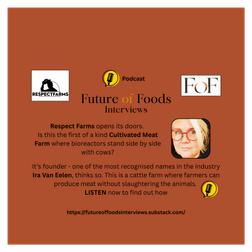
What happens when the daughter of the man who first imagined cultivated meat decides to bring that vision back to the farm? In this conversation, Ira van Eelen, co-founder of RespectFarms and daughter of cultivated meat pioneer Willem van Eelen, shares the story behind one of the most ambitious projects in food innovation today: the world’s first cultivated meat farm. Built in collaboration with the farmer, the project integrates cultivated meat production directly into a working farm, creating a new model that keeps farmers at the centre of the protein transition. We explore the legacy of Willem van Eelen’s groundbreaking work, the challenges of turning a decades-old vision into reality, and why Ira believes the future of food should be farmer-led rather than factory-driven. The discussion also covers the opening of the RespectFarms Experience Centre, designed to bring together farmers, scientists, policymakers, and the public to explore what food production could look like in the decades ahead. This is a conversation about reimagining agriculture, and building the future of meat from the farm up.
Why Netherlands is Becoming a Global Leader in Cellular Agriculture? - Tom Van Duijn
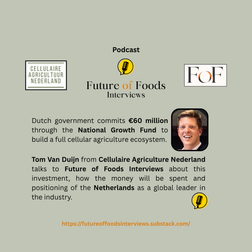
On this episode of Future of Foods Interviews, I speak to Thomas Van Duijn, from Cellulaire Agricultuur Nederland, about how the Netherlands is building one of the most ambitious cellular agriculture ecosystems in the world. Backed by €60 million from the Dutch National Growth Fund, this national programme brings together researchers, startups, and industry leaders to accelerate the development of cultivated meat and other cell-based food technologies. The goal: to move breakthroughs out of the lab and into scalable, real-world production. Thomas shares how this funding is being put to work—supporting collaboration across the ecosystem, investing in research and infrastructure, and tackling key challenges such as cost reduction and scale-up. We also explore what it takes to turn cellular agriculture into a viable part of the global food system, and why the Netherlands is uniquely positioned to lead in this space.
Keep Your Customers Close - Lessons Learned at Impossible Foods - Reed McCord
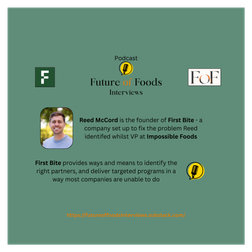
In this Future of Foods interview, Reed McCord, founder of First Bite, reflects on the realities of scaling food brands in the complex foodservice ecosystem. McCord explains how First Bite was built to solve a critical gap he experienced at Impossible Foods—a lack of visibility into customers and purchasing behavior once products move through distributors. Today, First Bite provides manufacturers with data, CRM tools, and digital rebate systems to identify restaurant partners, track performance, and build direct relationships with operators. The conversation centers on the importance of staying close to customers despite these structural barriers. McCord argues that the most successful food companies are those that actively seek feedback, understand where and why their products are used, and iterate quickly. Drawing from his experience, he offers a clear takeaway: growth in food isn’t just about distribution—it’s about maintaining genuine, data-informed connections with the people actually serving your product.
Putting Meat Alternatives on the Menu - ProVeg International - Jasmijn De Boo
Jasmijn de Boo is Global CEO of ProVeg International. Drawing on more than two decades at the forefront of animal advocacy and food system transformation, she shares how her career has evolved into a pragmatic, globally focused mission to shift diets at scale. From navigating criticism of plant-based claims to unpacking the recent slowdown in alternative protein sales, de Boo brings clarity, realism, and optimism. She explains why this moment represents not a setback, but a turning point and where the biggest opportunities now lie for industry, policymakers, and institutions. The discussion spans everything from UK school meals and NHS procurement to global momentum across Europe, China, and Africa, highlighting how change is already happening in unexpected places. De Boo also tackles the cultural tensions around meat reduction, offering a thoughtful perspective on how to engage rather than divide. Jasmijn is a billboard for showing how working together can achieve real change.
The Pork Sausage of the Future - Cultivated Pork Fat from Mission Barns - Bianca le
In this episode of Future of Foods Interviews, Alex discovers how cultivated pork fat could transform the future of sausages. Dr. Bianca Lê, is Head of Special Projects and External Affairs at Mission Barns. Mission Barns is developing cultivated pork fat grown directly from animal cells, designed to be combined with plant proteins to recreate the flavour, aroma, and cooking performance of conventional meat. Fat is a critical component of meat’s taste and texture, and Mission Barns believes that producing real animal fat through cellular agriculture could unlock a new generation of realistic alternative meat products. We discuss how cultivated fat is made, why fat plays such an important role in meat, and the challenges of scaling this technology for commercial production. Bianca also shares insights into the evolving regulatory landscape and the broader promise of cellular agriculture to reshape how we produce and consume meat.
Adding a Little Extra to Traditional Meat - Giuseppe Scionti from Novameat
Giuseppe Scionti, the bioengineer and founder of Novameat, disusses with Future of Foods Interviews the future of meat - and why the next wave may be hybrid. Trained in tissue engineering, Scionti has developed patented technology that restructures plant proteins to recreate the fibrous texture of real meat, enabling products like whole-cut steaks and shredded beef made from ingredients such as pea and rice protein. But rather than replacing meat entirely, Novameat is now exploring a more pragmatic path: working with traditional meat processors to create hybrid products that combine meat with plant-based structures. These blends can reduce the environmental footprint of meat while maintaining the taste and experience consumers expect. In the conversation, Scionti discusses the technology behind Novameat’s “microforce” texturisation process, why whole-cut alternatives are the hardest challenge in alt-protein, and how partnerships with the meat industry could accelerate the protein transition.
'Scaling Up' Needs The Right People - Arjen van der Wijk (Cebus Nexum)
Arjen van der Wijk is the CEO of Cibus Nexum, a company that operates in one of the most challenging parts of the food industry: scaling. It’s the phase after the excitement of product development, when a brand has traction and ambition — but now needs to produce consistently, at volume, without losing quality or control. Through Cibus Nexum, Arjen works with both fast-growing food startups and established global players, helping them navigate outsourcing, co-manufacturing, and supply chain decisions. His focus isn’t on hype or trends. It’s on execution. Finding the right production partner. Structuring agreements properly. Anticipating the risks that can derail growth. At its core, Cibus Nexum is about bringing the right people together - aligning brands, manufacturers, and technical experts so that innovation can survive real-world manufacturing. Because in food, a great idea is only the beginning. The real test is whether it can be made reliably, profitably, and at scale.
Holding Food Corporates to Account - Glenn Hurowitz (Mighty Earth)
In this episode of Future of Foods, Glenn Hurowitz, Founder and CEO of Mighty Earth, explains how strategic advocacy is reshaping global agriculture. From deforestation linked to soy and beef supply chains to methane emissions and industrial livestock production, Mighty Earth has built a reputation for turning investigative research into high-impact corporate pressure campaigns. Glenn explains how NGOs identify leverage points inside multinational food businesses, how public campaigns translate into boardroom action, and why voluntary corporate commitments so often fall short. We explore the tension between collaboration and confrontation, the growing scrutiny on greenwashing, and what real climate leadership in food and agriculture actually looks like. This conversation goes beyond headlines to examine power, accountability, and the mechanisms that drive systemic change. This episode offers a candid look at how pressure from the outside can move some of the world’s most powerful companies.
How to Navigate the Novel Food, US Regulatory Maze - Gregory Jaffe
In this episode of Future of Foods, we dive into one of the most complex—and often misunderstood—parts of food innovation: the U.S. regulatory system. Our guest, Gregory Jaffe, brings clarity to the question every novel food founder eventually asks: How do I actually get this approved? From cultivated meat and precision fermentation to entirely new food categories, innovation is moving fast. Regulation, understandably, is not. Gregory walks us through the real structure behind the “regulatory maze,” unpacking who oversees what, why approvals take time, and where companies most often get tripped up. We talk GRAS determinations, FDA vs. USDA jurisdiction, data expectations, and the critical difference between what’s legally required and what’s strategically smart. This conversation isn’t just about compliance—it’s about de-risking your roadmap. Gregory shares practical advice for engaging regulators early, building credible safety narratives, and avoiding costly missteps that can stall a product for years. Whether you’re a startup founder, investor, policymaker, or just curious about how the future of food makes it to your plate, this episode offers an insider perspective on navigating U.S. food regulation with confidence.
Cultivated Bluefin Tuna - Good for Health and the High Seas - Lou Cooperhouse (Blue Nalu)
Future of Foods Interviews' Alex speaks with Lou Cooperhouse, Founder, President, and CEO of BlueNalu, to explore one of the most ambitious ideas in food today: cultivated bluefin tuna. Bluefin tuna is prized for taste and nutrition, yet tied to overfishing, supply volatility, and concerns about mercury and other contaminants common in large, predatory fish. BlueNalu’s approach—growing real seafood directly from fish cells in a controlled environment—aims to deliver the same culinary experience while addressing some of the hardest challenges facing ocean-based protein. We talk about how cultivated seafood works, why tuna is such a critical species to start with, and what differentiates seafood from cultivated meat when it comes to safety, scalability, and consumer trust. Lou also explains why 2026 is shaping up to be a pivotal year to move ever closer to meaningful commercialization. Listen now to find out why.
1 of 9