
Episode notes
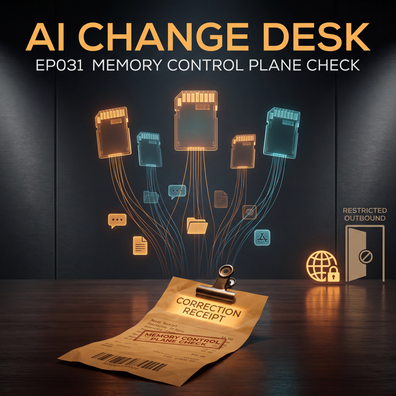
AI memory is becoming more useful, but usefulness creates a new operating surface. If the system can carry context forward, teams need a memory control plane: summary, source, correction, deletion, sensitive-work mode, and disclosure.
- Why better memory is not just personalization; it is source-of-truth pressure.
- What OpenAI's June 4 memory rollout changes for operators.
- Why memory summaries, source tracing, correction, and deletion paths matter.
- How Lockdown Mode fits sensitive browsing and hostile-input workflows.
- Why audience disclosure still belongs in the release workflow.
- A 45-minute memory-control-plane check for Monday teams.
What would have to be true for your team to trust remembered AI context in production work?
- OpenAI memory rollout: https://openai.com/index/chatgpt-memory-dreaming/
- OpenAI Memory FAQ: https://help.openai.com/en/articles/8590148-memory-faq/
- ChatGPT release notes: https://help.openai.com/en/articles/6825453-chatgpt-release-notes
- Lockdown Mode: https://help.openai.com/en/articles/20001061-lockdown-mode
- YouTube AI labels: https://blog.youtube/news-and-events/improving-ai-labels-viewers-creators/
- Podnews AI disclosure guide: https://podnews.net/update/ai-disclosures
AI-assisted tools were used in parts of the research and production workflow. Final editorial judgment, risk posture, and release approval stayed human-led. This is operational guidance, not legal advice. These are my opinions and are not representative of any organization.