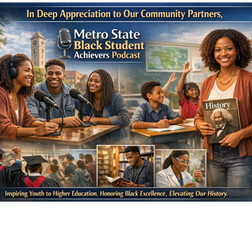
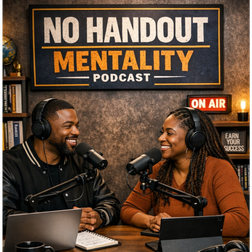
Campus Podcast @ Metro State University

Campus Podcast @ Metro State University

di Mr. Lucky — Educator, MAPL, M.S. Urban Education Student
Stagione 3

Ms. Yasmin: Business Major

To be a guest on the podcast email radiotalklr@gmail.com

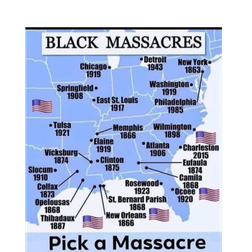
Black Massacres: Untold American History-Why?

"“Avoiding Black massacres fuels campus fragility, deepens division, and blocks the honest dialogue required for real unity and justice, making a mockery of the college mission, vision, and anti‑racism page in courses dealing with race, psychology, education, social work, and other social studies.” Mr. Lucky Ask For My PowerPoint: radiotalklr@gmail.com Short Lesson Plan: Truth, Fragility, and Historical Accountability Lesson Focus: How “colorblindness,” fragility, and historical denial prevent unity — using Black Massacres = Today’s Unity as the anchor text. Learning Objective 1 Students will analyze how claims of “colorblindness” function as a form of fragility rather than unity. Example: A student explains how ignoring race on campus erases lived Black experiences and protects the comfort of those who avoid discussing racism. Learning Objective 2 Students will evaluate why confronting historical events such as Black massacres is essential for genuine unity. Example: A student connects a specific massacre (e.g., Tulsa 1921) to modern conversations about racial justice and community healing. Learning Outcome 1 Students will be able to explain why “truth is not divisive” using evidence from historical events. Example: A student states, “Discussing the Colfax Massacre doesn’t divide us — it exposes the roots of inequality so we can address it together.” Learning Outcome 2 Students will compare the ‘stop talking about racism’ mindset to the cancer analogy and articulate why silence is harmful. Example: A student writes, “Ignoring racism is like ignoring cancer — silence allows it to spread.” Discussion‑Based Assessment Prompt: In small groups, discuss the following: “How does acknowledging painful historical truths create more unity than pretending we are colorblind?” Students must reference: one massacre from the map, the fragility/colorblindness concept, and the cancer analogy. The assessment is complete when each student contributes a spoken or written response demonstrating understanding of the lesson’s objectives and outcomes. To be a guest on this podcast email: radiotalklr@gmail.com Mr. Lucky — Social Studies Teacher, currently completing my second master’s degree in Urban Education

Black Biologists: Excellence Against Every Barrier

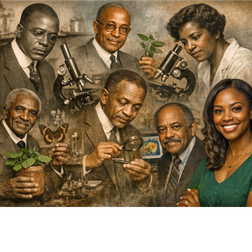
The first 5 people to email will get a copy of my book free. radiotalklr@gmail.com Black Biologists: Excellence Against Every Barrier Lesson Plan: Black Biologists Who Shaped American Science Lesson Title Black Biologists: Pioneers of Discovery, Excellence, and Scientific Leadership Thesis Statement Black biologists have shaped the foundations of American science—from cell biology to ecology—despite exclusion from laboratories, universities, and scientific institutions. Their achievements prove that Black excellence is not an exception but a tradition. Learning Objectives 1. Students will identify major contributions of Black biologists across different scientific fields (cell biology, botany, zoology, ecology, neuroscience). o Example: Students explain Ernest Everett Just’s breakthroughs in cell fertilization. 2. Students will analyze how systemic barriers shaped the careers of early Black scientists and how they still achieved excellence. o Example: Students compare Roger Arliner Young’s challenges in graduate school with modern STEM barriers. Learning Outcomes 1. Students will create a chronological timeline showing at least five Black biologists and their scientific contributions. o Example: Students place Just (1910s), Turner (1920s), Young (1930s), and modern scientists like Angeline Dukes (2020s). 2. Students will write a short reflection on how one biologist’s journey inspires their own academic or career goals. o Example: A student connects Dr. Warren Washington’s climate modeling to their interest in environmental justice. 5E Learning Model Engage Show students photos of early 1900s labs and ask: “Who was allowed to do science in these rooms—and who wasn’t?” Explore Students rotate through stations with short bios of Black biologists and identify each scientist’s field and discovery. Explain Facilitate a discussion on how these scientists advanced biology despite segregation, underfunding, and exclusion. Elaborate Students connect each biologist’s work to a modern scientific issue (climate change, genetics, neuroscience, ecology). Evaluate Students complete a formative assessment (below). Assessment Tool (Formative) Exit Ticket: Students answer in 3–4 sentences: “Which Black biologist stood out to you and why? How does their work connect to science today?” Mr. Lucky — Social Studies Teacher, currently completing my second master’s degree in Urban Education

Lies My Teachers Told Me: Blacks American Revolution

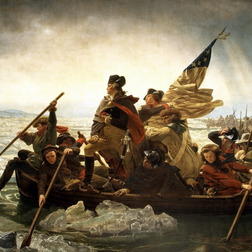
See My Book: https://www.barnesandnoble.com/w/relationships-the-power-of-illusion-lucky/1149325667?ean=9781663277930 See My Lesson Plan Below Comments call: 773-809-8594 Black Americans: Nothing But the Truth All parents, teachers, and fellow Americans must listen to this episode. Share it with someone—then ask them to share it with someone else. Keep it moving. Keep the truth alive. "We were never told the full story about Black Americans and the American Revolution. Pull up images of the Battle of Bunker Hill and Washington’s crossing of the Delaware. Look closely. Find the Black patriots. Learn the truth." Mr. Positive. 🧭Lesson Plan to Be Used with This Podcast: Reclaiming Black Patriots of the American Revolution Presented by the Positive People USA Podcast 🎯 Learning Objectives (with Examples) Students will: Identify and explain the contributions of Black patriots in the Revolutionary War, such as:Wentworth Cheswell, the first Black elected official in U.S. history, who rode north in 1774 to warn of British troop movements. James Armistead Lafayette, a double agent whose intelligence helped secure victory at Yorktown in 1781. Analyze how post-Civil War political forces erased Black contributions from historical narratives, using:David Barton’s claim that Southern Democrats rewrote textbooks between 1870–1890 to support segregation and suppress Black patriotism. "Verbal Presentation." Evaluate primary sources to restore historical truth, including:William Cooper Nell’s 1855 book, The Colored Patriots of the American Revolution, which documents figures like Crispus Attucks and Salem Poor. 📈 Learning Outcomes By the end of the lesson, students will be able to: Name and describe at least five Black patriots, including:Peter Salem, who killed British Major Pitcairn at Bunker Hill (June 17, 1775). Phillis Wheatley, who corresponded with George Washington in 1775–76, praising his leadership through poetry. Explain the mechanisms of historical erasure, such as:The removal of Black figures from post-Reconstruction textbooks to justify Jim Crow policies and white supremacy. Create a civic restoration message that reclaims a forgotten legacy, such as:A podcast script honoring Lemuel Haynes, the first Black ordained Protestant minister, who preached liberty and pastored churches in Massachusetts and New York. 🧪 Assessment Formative: Quick write: “Why was Wentworth Cheswell’s election in 1768 historically significant?” Group discussion: Analyze Prince Whipple’s symbolic presence in Washington Crossing the Delaware and its implications for visual legacy. Draw a picture and explain the significance of any part of the podcast that strikes you as important. Summative: Civic Restoration Project: Students will produce a mini-podcast script, PSA, or infographic that reclaims one Black patriot’s legacy and critiques the mechanisms of historical erasure. Rubric will assess:Historical accuracy (dates, locations, roles)

Practice College Excellence

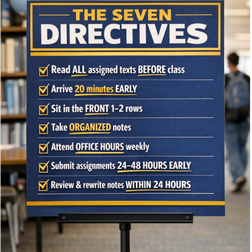
Order My Book: www.weusoursluckybooks.com Lesson Plan: Practicing Black Scholarly Excellence Mr. Lucky-Social Studies Teacher Thesis Statement: Black Scholarly Excellence is practiced through disciplined habits that strengthen identity, agency, and academic power. Learning Objectives (with examples) Students will identify key habits of Black Scholarly Excellence by analyzing the Seven Directives. Example: A student explains how arriving 20 minutes early helps them build rapport with instructors and reduces anxiety before class begins. Students will demonstrate how disciplined behaviors build agency by connecting directives to real situations. Example: A student describes how attending office hours weekly helped them clarify confusing assignments and improve grades. Learning Outcomes (with examples) Students will articulate how preparation shapes academic identity, shown through written or verbal responses. Example: A student writes, “Reading before class allows me to lead discussions instead of reacting to them.” Students will apply at least two directives to their own routines, demonstrated through a personal plan. Example: A student commits to rewriting notes within 24 hours and submitting assignments 48 hours early. How Students Hold Instructors Accountable Use office hours strategically: Bring specific questions, request clarification, and document responses. Example: “Professor, last week you said the rubric would be updated. Can you confirm when it will be posted?” Request transparency: Ask for clear grading criteria, timelines, and expectations. Example: “Can you show an example of what an ‘excellent’ response looks like for this assignment?” Follow up in writing: Email instructors after conversations to create a record. Example: “Thank you for meeting today. I’m confirming that my revised due date is April 22.” 5E Learning Model Engage Students view the Seven Directives poster and respond to: “Which directive would change your academic life the fastest?” For the poster email: radiotalklr@gmail.com Explore Groups analyze short scenarios (e.g., a student who never rewrites notes) and match each scenario with the directive that would improve the outcome. Explain Students discuss how each directive represents Black Scholarly Excellence—discipline, preparation, and cultural agency. Teacher clarifies how these habits shift academic identity. Elaborate Students create a two‑directive action plan explaining how each habit will strengthen their academic presence and how they will hold instructors accountable. Evaluate (Formative Assessment) Students write a one‑paragraph reflection answering: “How will practicing Black Scholarly Excellence change the way I show up and advocate for myself in academic spaces?” Teacher checks for understanding, clarity, and application. Comments: radiotalklr@gmail.com or 773-809-8594

Thanking: High Schools, Youth Centers, Churches and Other Entities

“As of the date of this episode, we have over four thousand downloads.” Order My Book: www.weusoursluckybooks.com Lesson Plan: From Classrooms to Community — What I Can Do Grade Level: 7–12 Length: 20–30 minutes Theme: Agency, resilience, and self‑determination Core Quote: “During struggles, always ask what I can do—never what I can’t do.” — Lucky 1. Learning Objectives Students will be able to: Identify how focusing on “what I can do” builds momentum, confidence, and problem‑solving skills. Apply the “can‑do” mindset to real academic, social, or personal challenges they face. 2. Learning Outcomes By the end of the lesson, students will: Outcome 1: Describe a struggle they’ve experienced and name at least one action they can take to move forward.Example: “I’m behind in math, but I can ask for help after school.” Outcome 2: Demonstrate the ability to reframe negative thinking by turning a “can’t” statement into a “can” statement.Example: “I can’t afford college” becomes “I can explore scholarships, grants, and community programs.” 3. Mini‑Lesson (Teacher Script – 3 minutes) “Struggle is not a sign of weakness. It’s a sign that you’re growing. When challenges hit, most people ask, ‘What can’t I do?’ That question builds walls. But when you ask, ‘What can I do?’ you open doors. You activate your power, your creativity, and your next step. This mindset is how students become achievers — in high schools, recreation centers, churches, and every community space that believes in you.” 4. Activity: “Flip the Script” (10 minutes) 1. Give students a list of common struggle statements: “I can’t pass this class.” “I can’t focus.” “I can’t see myself in college.” “I can’t change my situation.” 2. Students rewrite each one into a can‑do action: “I can ask for tutoring.” “I can put my phone away during work time.” “I can explore majors that fit me.” “I can take one step today.” 3. Invite 2–3 volunteers to share. 5. Community Connection (3 minutes) Teacher says: “High schools, recreation centers, and churches are not just buildings — they are launchpads. They are places where adults invest in you, believe in you, and help you see what you can do. This is why the Metro State Black Student Achievers Podcast exists: to show you real students who chose action over limitation.” 6. Formative Assessment (Quick Check – 2 minutes) Students complete one prompt: “One struggle I’m facing is ____. One thing I can do about it is ____.” Teacher collects or has students share aloud. 7. Closing Affirmation (Teacher Reads Aloud) “Struggles don’t define you. Your next step does. Ask what you can do — and watch your life move.” Contact: 773-809-8594 DO NOT TEXT

Not Begging the College for $$ or Anything

Oder my book www.weusoursluckybooks.com Lesson Plan: The No‑Handout asking to Validate Black Mindset Thesis Statement Excellence requires self‑sufficiency, discipline, and personal responsibility; students who reject dependency and embrace independent effort strengthen their voice, their credibility, and their long‑term success. Learning Objectives Students will explain the concept of a no‑handout mindset Example: A student can describe how self‑funding a project increases ownership and credibility. Students will identify how freedom of speech protects independent student work Example: A student can point to campus policies that allow student‑run podcasts or organizations to operate without institutional funding. Learning Outcomes Students articulate why independence strengthens academic identity. Example: A student explains how relying on personal discipline rather than external validation builds long‑term confidence. Students connect historical struggles for free expression to modern student voice. Example: A student references how movements from the American Revolution to the Civil Rights Movement shaped today’s expressive rights. Formative Assessment (Research‑Based) Quick Reflection Card Students write a 3–4 sentence response to: “How can adopting a no‑handout mindset improve your academic excellence and personal leadership?” Instructor checks for clarity, connection to lesson themes, and evidence of critical thinking. To be a guest on the podcast email radiotalklr@gmail.com or call 773-809-8594

BREAKING NEWS WIN $100

Give the best time to call you. radiotalklr@gmail.com See my book at www.weusoursluckybooks.com

Race Based Trauma: Acting Inferior

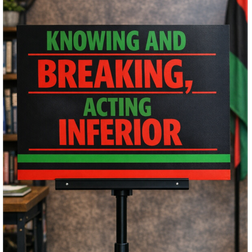
Order my Book: www.weusoursluckybooks.com “Race‑based trauma can distort self‑perception, teaching people to internalize harmful hierarchies. Chronic exposure to racism can make ‘Black as low’ and ‘white as high’ feel normal. The Clark doll experiment showed how children absorbed these false racial value messages early.” Watch This Black Doll, White Doll Experiment https://youtu.be/PZryE2bqwdk?si=xwp9pAGVc6SSDzwE Thesis Statement Race is a social construct designed to assign superiority to whiteness and inferiority to Black and Brown people; by understanding how these roles are created, taught, and enforced, students can step outside assigned identities and reclaim personal power. Learning Objectives (with Examples) Students will explain how the race construct and linguistic racism shape beliefs about superiority and inferiority. Example: A student explains how calling Black English “improper” and white speech “professional” reinforces racial hierarchy. Students will identify examples of internalized racial roles and describe what it means to step outside those roles. Example: A student identifies doubting their intelligence in white spaces as internalized inferiority and describes speaking confidently as stepping outside that role. Learning Outcomes (with Examples) Students articulate at least two ways society teaches Black/Brown inferiority and white superiority. Example: A student writes: “People assume white leadership is more legitimate” and “Black students are labeled ‘aggressive’ for the same behavior white students show.” Students describe one personal or observed example of stepping outside an assigned racial role. Example: A student shares how they challenged a teacher’s low expectation by advocating for placement in an advanced class. 5E Learning Model Engage Students respond to a scenario: a Black student choosing a white dentist because “they’re probably better.” Students journal where this belief comes from. Explore Groups examine examples of internalized inferiority, superiority, and linguistic racism (e.g., assuming white programs are “more legitimate,” calling Black communication “unprofessional”). Explain Teacher defines the race construct, linguistic racism, and assigned roles. Students connect definitions to the examples they explored. Elaborate Students discuss what happens when people step outside assigned roles—Black/Brown students reclaiming voice, white students releasing superiority, classrooms shifting toward shared power. Evaluate Students write a short reflection naming one assigned racial role they’ve seen and one way stepping outside that role creates personal or collective power. Mr. Lucky-Social Studies Teacher Comments: 773-809-8594
Stagione 2

Minnesota’s First Black Lawyer and First Black Female Realtor

Get a copy of my book www.weusoursluckybooks.com To be a guest on the podcast to share your positivity call 773-809-8594. Lesson Plan — Black Excellence in Every Major Thesis Statement Black excellence is not confined to one field; it is the disciplined pursuit of purpose, leadership, and impact in any major — business, STEM, arts, law, education, or trades. Every student can achieve greatness through commitment and vision. Learning Objectives (with examples) Students identify examples of Black excellence across multiple majors. Example: A business major names Ursula Burns; a science major names George Washington Carver; an arts major names Alvin Ailey. Students explain how discipline and purpose drive achievement. Example: Students discuss how consistent study habits or internships build long‑term success. Students reflect on how their own major can become a pathway to leadership. Example: A nursing major explains how they can advocate for patient equity. Learning Outcomes (with examples) Students name three fields where Black achievers have made national impact. Example: “Business, engineering, and performing arts.” Students describe one personal strength that supports excellence in their major. Example: “I am detail‑oriented, which helps me in accounting.” Students identify one concrete next step toward academic or career success. Example: “I will meet with an advisor to plan my internship.” 5E Learning Model Engage with a Vision Statement Open with the message that Black excellence exists in every major and invite students to name someone they admire in any field. Explore Real Examples Students examine short profiles of Black achievers across majors to see how diverse excellence looks. Explain Personal Pathways Students connect their major to future leadership by identifying strengths, goals, and opportunities. Elaborate Through Application Students write or discuss one concrete action they can take this semester to move toward excellence. Evaluate Growth and Commitment Students share reflections or exit tickets showing how they will embody excellence in their chosen field. Mr. Lucky-Social Studies Teacher
9 di 12