Campus Podcast @ Metro State University

Campus Podcast @ Metro State University

di Mr. Lucky — Educator, MAPL, M.S. Urban Education Student
Stagione 2

Challenging Instructors’ Bias with King’s Street Sweeper Speech

Thesis Statement Dr. King’s street sweeper message teaches that dignity is not assigned by status but revealed through excellence, purpose, and self‑respect; when students honor their work, they honor themselves, their community, and the legacy of those who labored before them. Short Lesson Plan — “Excellence as Identity: Dr. King’s Street Sweeper Message” Learning Objectives (with Examples) Students will explain Dr. King’s message that excellence is a form of dignity and resistance. Example: A student explains that sweeping streets “like Michelangelo painted” means every role has worth and deserves honor. Students will analyze how society assigns value to people based on status and how King challenges that hierarchy. Example: A student analyzes how “low‑status” jobs are treated as less important and how King rejects that idea. Learning Outcomes (with Examples) Students articulate how excellence can be an act of self‑respect and community uplift. Example: A student writes that doing their work with pride “pushes back against stereotypes about who is capable or valuable.” Students identify one way they can practice excellence in their own lives regardless of role or circumstance. Example: A student shares that they will approach class assignments with the same seriousness as a job, honoring their future self. Assessment — Centering Human Dignity and Instructor Self‑Reflection Prompt for Students: Write a short reflection explaining how Dr. King’s street sweeper message challenges society’s assumptions about “important” and “unimportant” people. Connect the message to your own life or community. Instructor Reflection Challenge (Non‑negotiable): Before scoring student work, the instructor must write a brief self‑assessment answering: Where might I unconsciously assign more value to students based on their ascribed status (race, class, language, disability, gender, neighborhood, or perceived ability)? How might those assumptions shape my tone, expectations, or grading? What will I do today to ensure I do not dehumanize any student or treat their effort as less worthy of excellence? This ensures the lesson does not reproduce the very hierarchy Dr. King warned against. Comments: radiotalklr@gmail.com or 773-809-8594

Listeners: Win My Book and $50

See The Link/Code Below to Redeem Your Free Book. Click into the webpage and use one of the codes to redeem my book Relationships: The Power of Illusion. Hurry and claim a code before someone else does. Please do not use more than one code. www.iuniverse.com/en/redeem 10600000441446 10600000441447 10600000441448 10600000441449 10600000441450 10600000441451 10600000441452 10600000441453

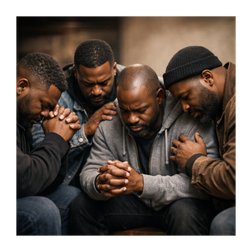
When Black Men Pray

Let me know what you think about this episode. Call 773-809-8594 When Black men lift their voices in prayer for their families, their communities, and the struggles facing our people, the atmosphere shifts. Prayer becomes direction, protection, and inner steadiness. It moves obstacles because it strengthens a man’s focus, resolve, and emotional balance. A praying Black man brings brightness into places once marked by fear, confusion, or generational weight. His presence becomes firmer, his choices become wiser, and his leadership draws from a source deeper than circumstance. In moments of celebration and in seasons of hardship, the prayers of Black men weaken forces designed to limit or discourage us. They interrupt despair, break harmful cycles, and create room for healing and hope. This spiritual strength is the same force that carried our ancestors through bondage, segregation, migration, and movement-building. A praying Black man is not passive — he is grounded, steady, and a threat to hopelessness. His prayer lifts families, strengthens neighborhoods, and pushes darkness back where it belongs. Mr. Lucky

Max Graves-End Slavery Minnesota

See my book at www.weusoursluckybooks.com Thesis: End Slavery in Minnesota is a statewide movement working to remove the slavery clause from Minnesota’s Constitution and transform prison labor into a system grounded in dignity, fair wages, and real rehabilitation. Minnesota’s Constitution still permits slavery “as punishment for a crime,” mirroring the 13th Amendment’s exception clause. Because of this language, incarcerated Minnesotans can be forced to work for pennies—often twenty‑five to fifty cents an hour—without the rights or protections granted to every other worker. The End Slavery in Minnesota coalition argues that this is not rehabilitation, but a continuation of a historical system designed to extract labor from people who cannot refuse. Contact: max@mnendslavery.org The movement brings together formerly incarcerated leaders, labor unions, educators, faith communities, and justice‑reform advocates. Their goals are twofold: remove the slavery exception from the state constitution and pass legislation that reclassifies incarcerated people as workers with fair wages, safety protections, and meaningful job training. Supporters argue that ending prison slavery is both a moral obligation and a public‑safety strategy. When people leave prison with no savings, no skills, and no economic stability, the cycle of poverty and re‑incarceration continues. Fair wages and real work opportunities reduce recidivism and strengthen communities. End Slavery in Minnesota positions its work within a broader struggle for human rights and constitutional integrity. By removing the slavery exception and transforming prison labor, the movement seeks to align Minnesota’s laws with its values—affirming that dignity and freedom must apply to every person without exception. Lesson Plan Learning Objectives (with examples) Students will explain the constitutional slavery exception using a concrete exampleExample: Students describe how the phrase “otherwise than as punishment for a crime” allows Minnesota prisons to pay workers $0.25/hour. Students will analyze how forced labor affects re‑entry outcomes using a real scenarioExample: Students examine a case where a person leaves prison with $50 in savings and discuss how that limits housing and employment options. Learning Outcomes (with examples) Students articulate how the exception clause enables forced laborExample: A student writes a short paragraph connecting the constitutional text to current prison work assignments. Students evaluate whether fair wages could reduce recidivismExample: Students cite evidence from the movement to argue how higher wages could support stable re‑entry. 5E Learning Model Engage Students read the constitutional clause and react to the phrase “except as punishment for a crime.” Explore Students examine wage data (e.g., $0.25–$0.50/hour) and compare it to basic living costs. Explain Students discuss how the exception clause shapes prison labor practices. Elaborate Students evaluate proposed reforms and debate whether fair wages improve public safety. Evaluate Students complete a short-written reflection explaining whether Minnesota should remove the slavery clause and why. Ti be a guest on this podcast call 773-809-8594

Ms. Talia, BBA

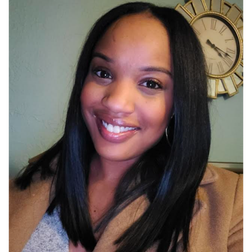
To be a guest on the podcast call 773-809-8594 See my book at: https://www.barnesandnoble.com/w/relationships-the-power-of-illusion-lucky/1149325667?ean=9781663277930 Congratulations Message Congratulations on your wonderful son and on your extraordinary journey you’ve carved with your own personal power. You built a new life for you and your son. You pushed through challenges, matriculated into college, earned your business degree, and stepped boldly into entrepreneurship. That is strength. That is vision. That is legacy. Your story is a reminder that motherhood and ambition are not opposites — they are fuel for one another. You are showing your son and family, your community, and every woman listening what it looks like to rise with purpose. May your business flourish, your dreams expand, and your light continue to inspire others.

CLAY-Sharing Her Own Business

See My Book: https://www.barnesandnoble.com/w/relationships-the-power-of-illusion-lucky/1149325667?ean=9781663277930 clayr@letskeepingcreating.com At Let's Keep Creating Studios, we offer custom painting services tailored to your vision while respecting specific limitations regarding size, medium, and subject matter. To ensure a smooth and professional collaboration, we require a deposit before starting any project. I work closely with you to capture your ideas accurately, delivering unique, high-quality artwork that suits your style and space. Clear and detailed descriptions of your desired painting help create a perfect piece that meets your expectations and enhances your environment. To Be A Guest on This Podcast call 773-809-8594

Venesa: Becoming Obedient

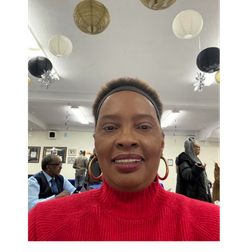
To be a guest on this podcast call 773-809-8594 Mr. Lucky, MAPL MSU student Venesa has overcome the impossible to pursue her education at Metropolitan State University. No matter where you hear her story—churches, beauty salons, recreation centers, or high schools—you’ll find that her personal power echoes the spirit of Harriet Tubman: the strength to keep going, no matter the obstacles. Romans 8:18 to Venesa

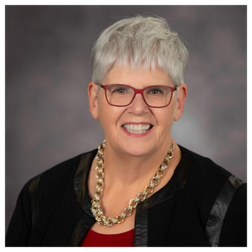
Virginia “Ginny” Arthur, JD. - Our President and Lesson Plan

My Shameless Plug-Order My Book: https://www.barnesandnoble.com/w/relationships-the-power-of-illusion-lucky/1149325667?ean=9781663277930 My Ms. Arthur Leadership Lesson Plan Leadership Lesson Plan: The Leadership of Virginia “Ginny” Arthur, JD Learning Objectives Students will identify two core leadership principles demonstrated by President Virginia “Ginny” Arthur. Students will analyze how her leadership advances equity, social mobility, and student-centered decision-making. Learning Outcomes Students will explain how Arthur’s leadership philosophy aligns with servant, task, and transformational leadership. Students will apply one of her leadership strategies to a real-world educational or community scenario. 5E Learning Model 1. ENGAGE Show a brief profile of President Virginia “Ginny” Arthur. Ask: “What qualities must a university president possess to lead a diverse, first‑generation student population?” Students share quick impressions. 2. EXPLORE Students examine short excerpts or summaries of Arthur’s leadership work:Social mobility achievements Diversity and inclusion initiatives Her philosophy: “Ask students what problem they want to solve.” Small groups identify patterns in her leadership style. 3. EXPLAIN Instructor connects Arthur’s actions to three leadership frameworks:Servant Leadership: Centering students, equity, and community needs Task Leadership: Operational excellence, academic innovation, measurable outcomes Transformational Leadership: Vision-driven change, inspiring faculty and students Students explain which framework best fits her leadership and why. 4. ELABORATE Students apply Arthur’s leadership approach to a scenario: “Metro State wants to increase first‑generation student retention by 15%. Using Arthur’s leadership style, what steps would you take?” Groups create a short action plan using her principles. 5. EVALUATE Students complete a quick reflection:“Which of Arthur’s leadership traits do you want to strengthen in your own practice?” Instructor uses a 3‑question exit ticket to assess understanding. To be a guest on the podcast call 773-809-8594 Mr. Lucky (MAPL).
Attn: CJS and Law Enforcement Students

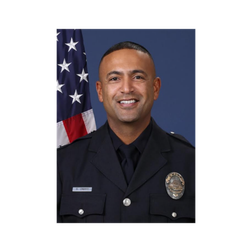
Like Chief Salim Omaris-Set Your Standards High See My Book: https://www.barnesandnoble.com/w/relationships-the-power-of-illusion-lucky/1149325667?ean=9781663277930 Community Lesson Plan: Chief Salim Omari’s Appointment 🎯 Learning Objective Participants will understand the significance of Chief Salim Omari’s appointment in Eagan, identify seven key takeaways from his career and vision, and connect these lessons to community values of trust, equity, and honorable policing. 📌 Learning Outcomes By the end of the session, participants will be able to: Recognize Chief Omari’s professional journey and leadership record.Example: Describe his transition from Bloomington PD to St. Paul PD and now Eagan. Explain how his appointment reflects Eagan’s commitment to diversity, inclusion, and public trust.Example: Connect his emphasis on collaboration to Eagan’s broader equity goals. Discuss the role of community-focused policing in building collaboration and safety.Example: Identify how trust-building with residents and businesses can reduce conflict. Identify Omari’s contributions to state and national recognition in law enforcement.Example: Cite his IACP 40 Under 40 honor or service on the Sentencing Guidelines Commission. Connect his academic and leadership training to effective civic service.Example: Relate his master’s in police leadership to operational excellence in Eagan. Reflect on the importance of honorable policing as a community legacy.Example: Share how his St. Paul service modeled dignity and accountability. Apply lessons from Omari’s leadership to local civic engagement and community building.Example: Suggest a neighborhood initiative inspired by his bridge‑building approach. 📝 Assessment: Reflection Prompt: Write a short response (3–4 sentences) on what “honorable policing” means to you, inspired by Omari’s career. Group Activity: In small groups, design one practical community initiative (e.g., listening sessions, mentorship programs, equity forums) that embodies Omari’s bridge‑building approach. Salim Omari was sworn in as Eagan’s Police Chief on December 2, bringing more than 21 years of experience from Bloomington and St. Paul police departments. He has led units ranging from Internal Affairs and Major Crimes to SWAT, earning recognition such as IACP’s 40 Under 40 and appointments to the Minnesota Sentencing Guidelines Commission. With advanced degrees in criminal justice and police leadership, Omari is praised for his focus on collaboration, equity, and building trust across the community. To share what you are doing that is positive on Positive People USA Podcast. Call 773-809-8594 Mr. Positive 773-809-8594

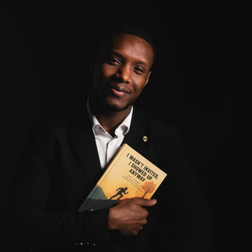
Brother Justin Shukuru-Foundation of Strength, Discipline

Order Justin's book at: showupanyway.org A child who spent twenty years growing up in the uncertainty of a refugee camp has transformed that long season of hardship into a foundation of strength, discipline, and purpose; now a college student pursuing a dual major in Business Administration and an MBA, they stand as living proof that resilience can outgrow circumstance, and they are on track to graduate in December 2026, carrying a story that inspires everyone who witnesses their rise. Comments to: blackfreedomofspeech@gmail.com
10 di 12