
Consistency is king, but most creators are short on time.
How many times have you planned to release an episode … only to miss the deadline?
Or worse, you hit the deadline, but stayed up until 2 a.m. editing to make it happen?
Over the past 15 years running a network of podcast and YouTube shows, the content team at The Podcast Host has refined a workflow that’s fast, efficient, and still produces pro-level results. And now you get the playbook.
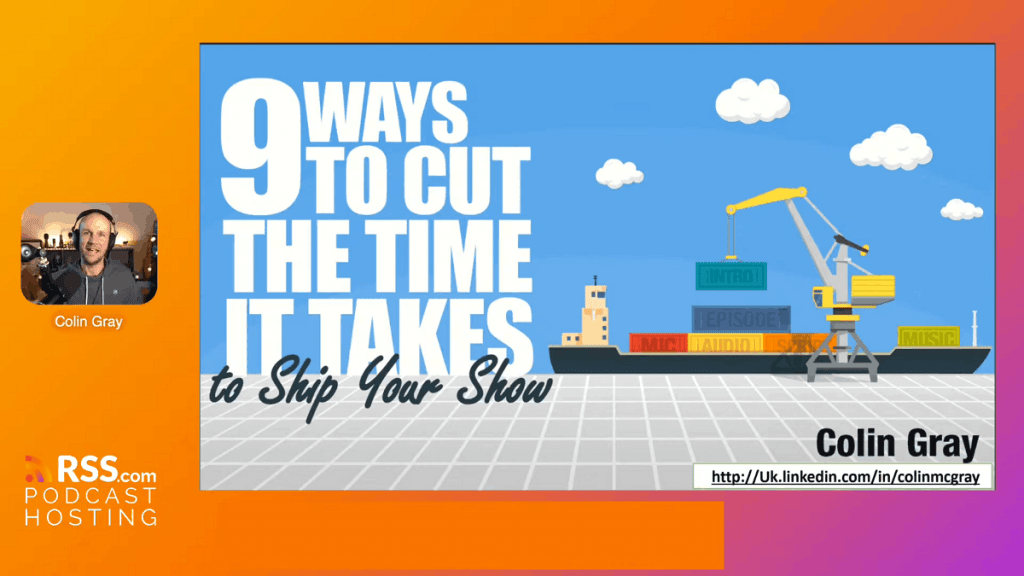
Back in January, RSS.com’s Head of Relationships, Greg Wasserman sat down with Colin Gray, podcaster, international speaker, PhD, and founder of The Podcast Host and Alitu, for a free YouTube Live training that will teach you how to ship episodes faster, grow your audience, and reclaim your time.
Below is a recap of everything Colin covered. And if you want the full experience, the replay of 9 Secrets to Create Better Content, Faster can be viewed right here:

Why This Matters
Most podcasters quit within the first eight episodes. Not because they run out of ideas, but because they run out of systems. Colin’s approach comes from over a decade of producing shows, helping hundreds of podcasters do the same, and building Alitu to streamline the entire process.
1. Go Solo
Solo episodes eliminate scheduling headaches, give you full control over the content, and let you create tight, focused episodes that are pure value. They also build your authority faster since there’s no splitting the spotlight.
You don’t have to go fully solo. Even mixing one solo episode into your monthly rotation can cut production time while strengthening your connection with listeners.
2. Think in Seasons
Pick a topic, break it down into four to twelve episodes, and teach it start to finish. Colin used the example of a mountain biking show where “how to build a bike” became individual episodes on wheels, frames, saddles, and brakes.
Seasons save time because you can plan two to three months of content in a single 20 to 30 minute session. They make batch recording easy since one afternoon can cover you for weeks. They give you built-in breaks between seasons. And they create natural opportunities to ask listeners what they want to hear next, so your audience helps direct the content.
3. Smart Repurposing
If you already have blog posts, emails, or social content that’s performing well, use that as your episode foundation. The topic is proven, the structure exists, and the research is done.
The key is adding something that makes the audio version stand on its own. Layer in stories, case studies, behind-the-scenes details, or specific homework for listeners. This way, your written and audio content complement each other and drive traffic back and forth rather than just duplicating the same material.

4. Go Live (the Right Way)
Whether you actually broadcast live or not, adopt a live recording mindset. If you make a mistake, keep going. Don’t lean on editing as a crutch.
This saves massive editing time, but it also forces you to become a better speaker faster. Colin recommends committing to at least five episodes with no editing beyond a basic trim.
If you do broadcast live for growth, structure it: welcome and chat for five to ten minutes, deliver your main content uninterrupted, then open up for Q&A. When you publish the podcast version, just cut the opening chatter and start where the real content begins.
5. Automate Your Interview Prep
Most podcasters use booking tools like Calendly just for scheduling. Colin says the real time savings come from setting up automated email sequences that fire after a guest books.
His sequence includes tech prep instructions, a summary of the audience, two or three key interview questions that need thought, a form requesting the guest’s bio, headshot, social handles, and best stories, and reminders before the interview. All of this runs on autopilot, your guests show up better prepared, and you spend almost no time on research.
6. Signal Editing
When you make a mistake while recording, don’t stop. Pause, give a clear signal (three claps or a phrase like “edit point one”), then restart the sentence.
In your editor, those signals are easy to spot. Claps create obvious spikes in the waveform.
Verbal cues can be found by searching the transcript. Five or six mistakes in a one-hour recording can be cleaned up in under ten minutes instead of listening through the entire thing.
You can expand this system with custom signals like “highlight point” for great moments worth clipping or “ad insert” for sponsor placement.
7. Minimum Effective Editing
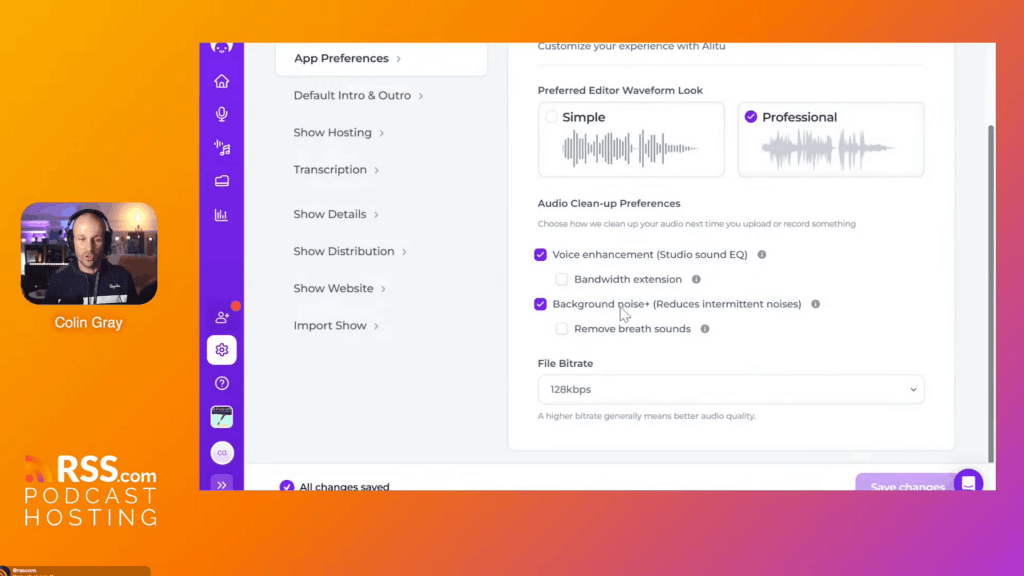
Most podcasters spend far too long editing. Colin’s advice: trim the silence at the beginning, trim the dead air at the end, handle your signal edits, and stop there.
Modern AI-powered tools handle noise reduction, leveling, and EQ automatically. You don’t need to be an audio engineer. Even intro music, while nice, isn’t essential.
Think about the last few podcasts you listened to. Did you notice whether they had music?
Every extra step in your editing workflow is another weekly task. If it doesn’t meaningfully improve the listener experience, cut it.
8. Collaborative Scripting and Planning with Notion
Colin’s team uses a Notion database where every episode gets its own entry built from a reusable template. The template includes sections for the intro, sponsors, tips, and whatever segments your show uses, so you never plan from a blank page.
If you have collaborators, everyone works in the same place and knows exactly what format to follow. A standout feature: you can embed listener audio clips directly into the episode plan and press play during recording. No hunting through files, everything lives in one spot.
9. Take Control of Your Interviews
Unstructured interviews lead to filler, rambling, and heavy editing. Colin’s solution is taking more control up front.
Tell your guest to keep answers to about 60 seconds to two minutes and that you’ll guide the deeper dives. Use your automated prep emails to identify their best story and plan questions to draw it out conversationally.
Let them know you may interrupt to redirect, framed as you have an understanding of what your audience values most. Guests are never offended when you put it that way.
Finally, craft a strong intro that covers their credentials and mentions what they’re promoting. When guests feel properly introduced, they relax, skip the self-promotion, and get straight to the good stuff.
The Big Picture
Colin boiled it down to two principles. First, keep your weekly routine as simple and repeatable as possible through seasons, solo episodes, live recording mindsets, and minimal editing. Second, use fewer tools but go deep with them. Make sure every tool in your workflow is actually saving you time.
The time you save isn’t just about convenience. It’s time you reinvest into what actually grows your show: connecting with listeners, promoting episodes, and showing up consistently.
Start Putting This Into Practice
If you’re looking for a podcast host that makes distribution, monetization, and publishing simple so you can focus on creating great content, RSS.com has a free plan that lets you get started today. Build your systems, apply what you learned here, and keep podcasting.
Missed the live session? Be sure to subscribe to our YouTube channel so you don’t miss our upcoming training sessions!