Zion Empowered

Zion Empowered

by Avi N
Season 2

Mercy in the Assembly

“Assemble, Remember, Do: Mercy That Trains” Episode Focus Before God sends a sword, He sends a sermon. Micah’s closing mercy and Moses’ seven-year assembly teach a discipline of prophetic memory: assemble → hear → learn → revere → do. Scripture Set Psalm 103:8–13 — Compassion that outlasts anger. Micah 7:18–20 — God casts sins into the sea; truth to Jacob, ḥesed to Abraham. Deuteronomy 31:10–13 — The septennial public reading: gather everyone (men, women, children, converts) to hear and keep Torah. Mercy isn’t leniency; it’s apprenticeship. Forgiveness clears the ledger so grace can train us (Titus 2): from assembled hearing to embodied doing. Key Moves (160-IQ, but plain) Prophetic Memory: In Jeremiah 26 the elders remember Micah and de-escalate death; in our house, elders’ memory guards the future. Five Verbs of Covenant Practice (Deut 31): Assemble (qāhāl) → Hear (shema: listen to obey) → Learn (internalize pattern) → Revere (Godward posture) → Do (public fruit). Mercy’s Architecture: Ḥesed (loyal love) + ’emet (reliable truth) = stable community. AME Zion application: men model loving-kindness; the body practices reliable truth. Wrath Reframed: In Hebrew, wrath = hot breath that refines, not obliterates; God’s “heat” protects mercy and restores order. Inclusion Is Commanded: Children and converts are not spectators; they are formed by the same hearing and doing. (BUDS and children’s church aren’t childcare; they’re covenant compliance.) Practice This Week Write a 5-sentence “What I Must Remember” card (one Scripture, one testimony, one action). Read it daily. Invite one elder to tell a memory that protects our future. Replace a taped-over “check engine” light: name one avoided truth; act one small obedience. Discussion Starters Where do your “courtyard collisions” (worship vs. profit) occur, and what would not omitting a word look like there? Which verb do you skip most—assemble, hear, learn, revere, or do—and why? When have you felt God cast a chain into the sea—and how did you walk differently?

The Servant Who Restores

Strength often looks like silence and steadiness. God’s Servant brings restorative justice—healing what’s bruised, fanning faint embers, freeing the bound—rather than retaliatory payback. Deuteronomy’s promise of circumcised hearts explains how this is possible: God reshapes us to love rightly, then sends us to be light. Key Text Highlights Isaiah 42:1 – “Look at my servant… I have put my Spirit upon him.” Isaiah 42:3–4 – “He will not break a bruised reed… until justice prevails.” Deut 30:3–6 – God gathers the scattered and cuts away what blocks love, enabling true covenant faithfulness. Teaching Notes Whose justice? Not Pilate’s, not partisan—God’s justice: restorative, not merely punitive. Gentle leadership: Divine authority is meekness (power under control)—it protects the fragile and rekindles the fading. Restorative > retaliatory: God’s pruning (e.g., Sodom/Gomorrah) restrains harm and restores shalom; vengeance is easy—repair is holy. Micro & macro: This applies in public witness (à la Dr. King’s nonviolence) and in homes: discipline that guides without “snuffing out the wick.” From Deuteronomy to Isaiah: Circumcision of the heart (Deut 30:6) is the inner surgery that produces the Isaiah-42 posture—quiet strength, compassion, justice that heals. Discipleship lens: If we see Christ in the passage and we are to be Christ-like, then the call falls on us: we become a symbol of the covenant and a light to the nations. Simple Chiastic Glimpse (Isaiah 42:1–7) A. Chosen Servant (v.1) B. Gentle Means—no shouting, no crushing (v.2–3a) C. Justice Prevails (v.3b–4) ← center B′. Covenant Light—open eyes, free captives (v.6–7) A′. Creator’s Backing—the One who gives breath (v.5) Application At church: Guard the tender; organize for justice that repairs. At home: Correct without extinguishing the child’s “light.” At work: When life delivers consequences, show mercy + truth, not score-settling. In witness: Become a living symbol of covenant faithfulness—steady, bright, invitational. Discussion Questions Where have you experienced restorative (not retaliatory) justice—and what fruit did it bear? What does “not breaking a bruised reed” look like in your leadership at home or work? Which “heart habits” might God be cutting away (Deut 30:6) so you can love Him—and others—more freely? Who around you is sitting in a “dark dungeon” (Isa 42:7)? What would opening eyes/doors look like this week? How can our congregation embody gentle strength while still confronting real injustice?

Love Written on the Heart

Texts: Psalm 19 • Matthew 22:36–40 • Deuteronomy 26:16–19 Big Idea: Jesus doesn’t give us one rule to out-argue the others—He gives us the living hinge the whole covenant swings on: love of God, love of neighbor, as yourself. Receive Love → Love Yourself → Love Your Neighbor. String of Pearls (takeaways) Love is commanded, not optional. Love is multi-channel (heart • soul • mind). Love is studied—we train for it. Love is received daily; otherwise our “good works” wobble. Love outlasts fear, slogans, and politics. This Week’s Rule of Life (3R) Receive: Daily 3 minutes of stillness simply receiving the Father’s love. Reflect: End each day with Psalm 19:14—did my words/thoughts please God? Respond: One concrete act of neighbor-love that costs you time or comfort. Discussion Prompts (class/podcast) Why does Jesus give two when asked for one? What does that reveal about covenant wholeness? What does healthy self-love look like for a believer—and how do we cultivate it? Where have I confused charitable gestures with godly love? How does holy fear stabilize love in a fearful culture? “Study how to perform” (Deut 26): What skill of love will you practice this week (listening, boundary, forgiveness, generosity, restraint)? “May the covenant of love be written deeper than law, stronger than fear, and wider than tradition. May our hearts keep time with the Spirit’s song; may our lives rise like incense before the throne. May our neighbors glimpse God’s face in us. And may the words of our mouths and the meditations of our hearts be acceptable in His sight—our Rock, our Redeemer, and our Rest. Amen.”

Cleansed to Bear Fruit

Series: Zion Empowered – Sunday Study Texts: Psalm 145:1–12 | Matthew 3:4–12 | Isaiah 6:1–8 🔥 Theme: Repentance that shows, not just says. Holiness that burns away what can’t stay. Titles don’t protect you—fruit does. Opening Vibes (00:30–14:00) Tech checks, laughter, quick prayers, and the reminder: “All things be done decently and in order.” Psalm of the Day (15:23–17:27) Psalm 145 — God’s greatness can’t be measured. Verse 8 becomes the anchor: “The Lord is merciful and compassionate, slow to get angry, abounding in love.” Gospel Heat (18:11–21:03) John the Baptist shows up wild: camel hair, leather belt, locusts, honey. Baptism in the Jordan = covenant reboot. Pharisees and Sadducees? He calls them a brood of snakes. 🔥 Prophetic Vision (21:03–24:24) Isaiah sees the Lord high and lifted up. Seraphim. Smoke. A coal to the lips. And the call: “Here I am—send me.” Prayer & Creed (24:24–29:12) Intercession for the sick, shut-in, and broken. Apostles’ Creed — the faith handed down. Deep Dive Teaching (30:09–59:56)John’s outfit = Elijah’s outfit. 🔗 Prophetic cosplay with a purpose. Jordan River baptism = a symbolic re-entry into the Promised Land. Wordplay punchline: banim (children) vs. abanim (stones). Heritage ≠ guarantee. Isaiah’s coal cleanses lips; John’s fire tests hearts. Same God, same holiness. Q&A & Reflection (49:38–56:14)What happens when the coal touches your lips? What does John actually demand? (Hint: not just “sorry,” but a life turned around.) Closing Charge (1:04:20–1:06:52) Heritage and titles don’t shield us. Fruit is the proof. Repentance is direction, not just declaration. Final Benediction & Song (1:06:52–End) “Here I am, Lord—send me.” 🎶 He will supply. Takeaways Repentance = return to God, not just words. Holiness = coal + fire: painful, but it transforms. Lineage, titles, and rituals? They don’t protect you. Only fruit does. God still asks: “Whom shall I send?” The only answer: “Here I am—send me.” 🗣️ Questions for You Where have you felt God’s “coal” — a burn that actually healed? What’s your “Jordan River moment” — a chance to step back into covenant faithfulness? What fruit in your life proves repentance? Are you relying on titles and heritage, or on living transformation? 🙏 Closing Prayer “Lord, cut what’s rotten, burn what’s false, grow what is true. Make us wheat, not chaff. Purify our lips, so we can answer, ‘Here I am—send me.’” Vibe Check: This episode mixes Eastern depth (wordplay, prophetic signals) with real-world challenge (fruit over titles). Think fire + poetry + scripture study in one sitting.

The Potter and the Inheritance

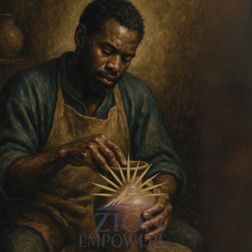
Episode Summary This week we journey through Psalm 51, Deuteronomy 18, and Isaiah 29. Together we discover that God does not desire our performance but our openness, that the Levites’ inheritance was not land but God Himself, and that Isaiah warns against worship that is only lips and not heart. The throughline: to be chosen is to be shaped—sometimes pressed, sometimes broken, always remade—by the Potter’s hand.What You’ll Hear in This Episode 📖 Psalm 51:12–19 – the true sacrifice is a broken and contrite heart. 📖 Deuteronomy 18:1–5 – Levites remind us: chosenness means service, not privilege. 📖 Isaiah 29:13–16 – the danger of performative religion and the Potter/clay metaphor. 💬 Conversation on inheritance vs. legacy: what we leave behind in spirit is greater than possessions. 🕊️ A benediction: may our inheritance be found not in land or possessions, but in the living presence of the Lord. Key Takeaways God values transformation over ritual performance. Spiritual inheritance outweighs material legacy. To be chosen often means sacrifice and service, not entitlement. Worship must flow from heart and spirit, not just lips and ritual. The Potter shapes us for His purpose—we are clay, not the craftsman. Scripture References Psalm 51:12–19 Deuteronomy 18:1–5 Isaiah 29:13–16 Amos 5:4–8 (supporting text) Reflection Questions for Listeners What does it mean for you personally to live as if God Himself is your inheritance? Where do you notice performative worship or “lip-service religion” in your own context? How can you leave behind a spiritual legacy that outweighs material inheritance? How does the Potter/clay image challenge your sense of control and self-making? Closing Benediction May your lips and heart sing the same song until the world knows you are His—not by claim, but by transformation.
Season 1

When the Bed is Too Short

In this week’s episode of Zion Empowered, we opened our time together with prayer and reflection, grounding ourselves in Psalms, Deuteronomy, and Isaiah. Our focus was on the message “When the Bed is Too Short”—a reminder that when we build on lies, alliances, or worldly success, the coverings we trust will never be enough. We reflected on how God’s justice is not about punishment but restoration. Just as Judah once made false covenants, today we too can fall into misplaced trust—whether in consumer culture, prosperity teachings, or even our own achievements. Yet God, in His love, removes what cannot hold us so that His true cornerstone can be laid. Together, we wrestled with the dangers of idolatry in every age—possessions, music, technology, or success—and remembered that our security cannot come from created things but only from the Creator. The good news is that God always provides a firm foundation in Christ: wide enough for our rest, strong enough for our fears, and eternal in its covering. Closing Blessing: “May the Lord break every false contract signed in fear and tear every blanket too narrow to cover the soul. May He free us from the slavery of things and teach us to rest in the wealth of His presence. May His tested cornerstone stretch farther than our fear, hold firmer than our striving, and cover deeper than our craving until we find our rest in Him alone.” 👉 Join us on Sundays and Tuesdays for scripture, discussion, and community. Visit www.zionempowered.com to connect and support the mission.

From Ruin to Temple: Seeking God Together

This week we step inside the prophets and hear their cry: God’s justice is not about breaking us down, it’s about restoring us. From Zechariah’s call to love truth and peace, to Joel’s summons to tear our hearts instead of our clothes, we see that repentance is not performance — it’s transformation. We wrestle with what it means to walk in truth (emet — from Aleph to Tav), and how faith without works is empty breath. Deuteronomy challenges us to love God with the whole heart — the good, the bad, and the parts we wish we could hide — and Psalms 150 reminds us to praise with everything that has breath (and even with the clanging cymbals at 3 a.m.). This is a call to be the temple of the Spirit: restored, truthful, persistent in prayer, shameless in praise. May this week’s word stir us to live with authenticity, courage, and joy as we build together on the foundation God laid.

A Temple Not For Rent

Keywords Summary This conversation explores the concept of the body as a temple, emphasizing the importance of spiritual health, community support, and personal integrity. It delves into biblical teachings, particularly from 1 Corinthians, discussing the implications of unity in Christ and the significance of guarding one's heart and body. The dialogue also touches on the challenges of maintaining health and wellness as a form of holiness, and the necessity of understanding one's value in the eyes of God. The session concludes with a call to action for personal reflection and commitment to living a life that honors God. Takeaways Our bodies are sacred and meant for the Lord. We must guard our bodies and spirits from immorality. The body of Christ is a collective temple. Prayer is essential for community support. Understanding the Apostles' Creed strengthens faith. Health and wellness contribute to spiritual holiness. Personal integrity is crucial in our spiritual journey. Redemption is available for all, regardless of past actions. Unity in Christ calls for accountability and love. We must not allow external influences to corrupt our temple. Titles The Sacredness of the Body Unity in the Body of Christ Sound bites "Your body is a temple." "Everything is not for sale." "We belong to God." Chapters 00:00 The Body as a Temple 02:12 Prayer and Community Support 06:38 Understanding the Apostles' Creed 07:47 The Lesson Plan: A Temple Not for Rent 09:55 Exploring 1 Corinthians 6:12-20 17:20 The Role of Prostitution in Spiritual Context 23:50 Unity and the Body of Christ 30:03 Guarding the Heart and Body 37:04 Health and Wellness as Holiness 43:38 The Importance of Personal Integrity 47:46 Conclusion and Benediction

Stones That Remember Fire: Inheritance and the Architecture of Belonging

In this episode of Zion Empowered, we step into the sacred tension between legacy and responsibility. Drawing from Psalms 132, 1 Corinthians 3:10–23, and Deuteronomy 1:12–21, the teaching reminds us that the true temple isn’t built by hands—it’s you. You are the house where God has chosen to dwell. We explore Moses' burden of leadership, Paul’s call to humility, and the blueprint of a community that must be built on more than personalities. Through testimony, reflection, and real talk, the session calls us to inspect what we're building, question what we’re still carrying, and ask ourselves—are we passing down inheritance or unfinished repairs? Whether you're building a family, a ministry, or a life worth living, this episode challenges you to build wisely, forgive freely, and stand unshaken when the fire comes. Key Themes: Legacy and structure in leadership The weight and wisdom of spiritual responsibility Becoming a temple—where God chooses to dwell Letting go of what no longer serves, and owning what’s yours to carry “Your burden becomes your blueprint.” “When the fire comes, may it not consume you, but reveal gold within you.” Join Us Live Be part of the journey every Sunday at 9:30 AM (Alaska Time) and Tuesdays at 8 PM for Crossing the Read Sea Bible Study. Stream the latest episode and support our mission at www.zionempowered.com Help us grow: Share this episode with a friend Leave a review wherever you listen Sow into the work: every dollar helps us reach more souls Zion Empowered. Ancient truth. Living temple. You.
Not One Stone: Birth Pains and the Land Beyond the River

This week’s Sunday Service episode of Zion Empowered explores what it means to receive a promise through the lens of destruction, discomfort, and spiritual growth. Drawing from Matthew 24 : 1–8 and Numbers 33 : 50–53, the teaching weaves together Jesus’ prophetic warning about the fall of the temple and God’s instructions to Israel before entering the promised land. What appears as collapse or hardship is reframed as birth pains—a sign that something new is being born. We dive into the cost of inheritance, asking: Why must we fight for what God has already given? The answer lies in spiritual readiness. Idols must be torn down. Pagan altars—both literal and metaphorical—must be cleared to make room for holy habitation. The process of letting go is rarely painless. Whether it’s pride, career, relationships, or even our self-image, the lesson calls us to examine what we’ve made sacred that must be surrendered. The discussion highlights how spiritual transformation often feels like loss, yet can be mercy in disguise. Just as physical birth is painful but leads to new life, so too are the disruptions in our lives sometimes necessary for divine renewal. Leadership, vulnerability, and the discomfort of growth are all unpacked with humility and humor. Ultimately, the message is clear: Inheritance is not passive. It requires purification, struggle, and a willingness to release the old. Collapse is not the end—it may be the beginning of what God is making room for. Key Themes: Birth pains as signs of transformation, not judgment Inheritance requires action: demolishing idols, clearing space The discomfort of spiritual growth and leadership Letting go of sacred things (even “good” ones) to receive the promise Discerning struggle as growth rather than punishment Reflection Questions What physical things have we made sacred that Jesus or Moses might tell us to tear down? How do ‘birth pains’ in Matthew and ‘driving out idols’ in Numbers hint at the hidden cost of transformation? If the land has already been given, why does God require us to fight for it? What if collapse is not judgment, but mercy? Memorable quote: “You can't receive a blessing if your hand is full of idols.” 💬 Want more? Listen to full episodes, support the mission, and join the live Sunday Service at 👉 www.zionempowered.com – where tradition meets truth and faith comes alive.
2 of 4