Women in History

Women in History

by Sherry Crowther
Season 1

Wallis and Edward: Part II - The Real Story Behind The Crown

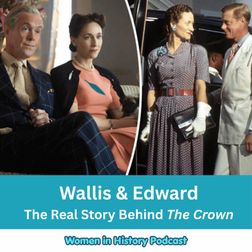
We know the story: an American divorcee, a king who gave up his throne, and a royal scandal that changed the British monarchy forever. But how much of the Wallis Simpson and Edward VIII story shown in Netflix's The Crown is actually supported by the historical record? In this episode of Women in History, we take a closer look at how The Crown portrays both Wallis and Edward, their relationship, the abdication crisis, their controversial connections to Nazi Germany, and their complicated relationship with the British royal family. We explore what the series gets right, where it takes dramatic liberties, and why historians continue to disagree about the motives and personalities of these two fascinating and controversial figures.

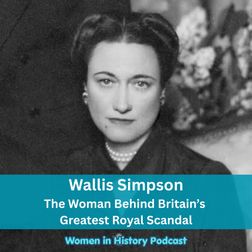
Wallis Simpson: The Woman Behind Britain’s Greatest Royal Scandal

She was the American divorcee who became one of the most controversial women in the world. Wallis Simpson is remembered as the woman who inspired King Edward VIII to give up his throne, but how much do we really know about the woman behind the headlines? In this episode of Women in History, we go beyond the familiar abdication story to explore Wallis's remarkable journey from Baltimore socialite to Duchess of Windsor. We look at her marriages, her relationship with Edward, the extraordinary crisis that brought down a king, and the question of what Wallis actually wanted. We also explore the darker chapters of her story, including the Windsors' controversial 1937 visit to Nazi Germany and the continuing debate over their connections to Hitler's regime. Was Wallis a calculating social climber, a woman caught in circumstances beyond her control, or something much more complicated?
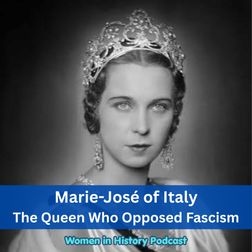
Marie-José of Italy: The Queen Who Opposed Fascism

Marie-José of Italy lived through some of the most turbulent decades in European history. Born a Belgian princess, she married Prince Umberto of Savoy and found herself at the heart of the Italian monarchy during the rise of Benito Mussolini and the Fascist dictatorship. Marie-José developed relationships with anti-Fascist politicians and intellectuals and, during the Second World War, attempted to encourage opposition to Mussolini. But how significant was her political role? Was she truly an anti-Fascist working from within the royal establishment, or has her reputation been shaped by later attempts to rehabilitate the Italian monarchy?

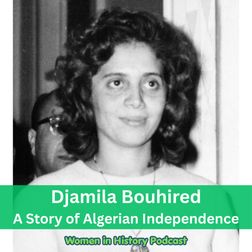
Djamila Bouhired: A Story of Algerian Resistance

Djamila Bouhired was just 22 when she was sentenced to death by a French military court. A member of the Algerian independence movement, she became involved in the underground struggle against French colonial rule and was arrested, tortured and sentenced to the guillotine during the brutal Battle of Algiers. However, Djamila's story is about much more than her famous trial. In this episode, we explore the history of Algerian resistance to French colonial rule, the difficult choices made by the FLN, the role of women in the independence struggle, and how Djamila became an international symbol of resistance. Her story raises controversial questions about resistance, political violence, and colonialism.

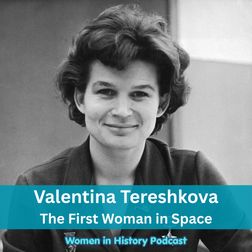
Valentina Tereshkova: The First Woman in Space

In 1963, Valentina Tereshkova became the first woman to travel into space, orbiting the Earth 48 times in a tiny Soviet spacecraft. But her journey to the stars began far from the world of rockets and cosmonauts. Born into a working-class family and employed in a textile factory, Tereshkova discovered parachuting almost by chance—and it changed the course of her life. In this episode, we explore her extraordinary rise from factory worker to international celebrity, the intense competition to become the first woman in space, and the reality of spending nearly three days alone in orbit. We also look at the complicated role she played as a symbol of Soviet achievement, her international work promoting women's rights and peace, and the political career that followed. Valentina Tereshkova's story is more than a tale about being first. It's a story about ambition, politics, gender, propaganda and what happens when an ordinary person finds herself at the centre of extraordinary events.

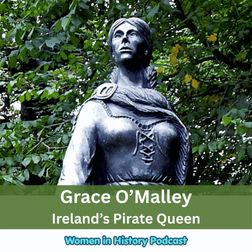
Grace O’Malley: Ireland’s Pirate Queen

Grace O’Malley has gone down in history as Ireland’s legendary “Pirate Queen”, a woman who commanded ships, fought rival families, challenged English authority, and eventually came face-to-face with Queen Elizabeth I. But how much of the legend is actually true? In this episode of Women in History, we explore the remarkable life of Grace O’Malley, from her childhood in a powerful seafaring Gaelic family to her rise as a political and maritime leader. We look at her marriages, the death of her first husband, her conflicts with the English governor Richard Bingham, the imprisonment and killing of members of her family, and her extraordinary decision to travel to England to plead her case directly to Elizabeth I. Was Grace really a pirate? A rebel? A political leader? Or something more complicated?

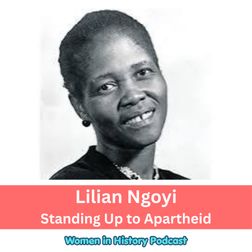
Lilian Ngoyi: Standing Up to Apartheid

Lilian Ngoyi was one of the most important women in South Africa’s struggle against apartheid, yet her story is still not widely known outside the country. A garment worker, mother, trade unionist and gifted political organizer, Ngoyi rose to become a leading figure in the African National Congress and helped organize the historic 1956 Women’s March, when around 20,000 women gathered outside South Africa’s government buildings to protest the pass laws. But her activism came at a tremendous personal cost. Arrested for treason and later subjected to years of banning orders and surveillance, Ngoyi spent the final years of her life largely silenced by the government she had challenged. This is the story of the woman who helped thousands find their political voice.

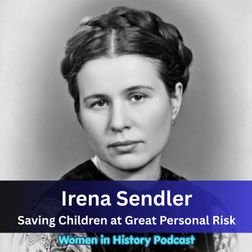
Irena Sendler: Saved Children at Great Personal Risk During WWII

During the Nazi occupation of Poland, social worker Irena Sendler became part of an underground network helping Jews survive the Holocaust. Working inside and around the Warsaw Ghetto, she helped smuggle Jewish children to safety, arrange hiding places and preserve records of their real identities. When the Gestapo arrested and tortured her, she was sentenced to death, but her colleagues managed to secure her release. In this episode, we explore Irena’s extraordinary wartime work, the difficult choices faced by parents and rescuers, the children who survived, and the remarkable story of how this largely forgotten woman became internationally recognized decades later.

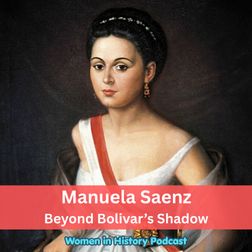
Manuela Saenz: Beyond Bolivar's Shadow

Manuela Sáenz is often remembered as Simón Bolívar’s passionate lover and as the woman who saved his life during an assassination attempt. However, there is far more to her story. A committed supporter of South American independence, Manuela became a politically influential figure in Bolívar’s inner circle, challenging the expectations placed on women in the revolutionary world of the nineteenth century. This episode explores her courage, political involvement, unconventional life, and the complicated legacy of a woman whose story deserves to be told.

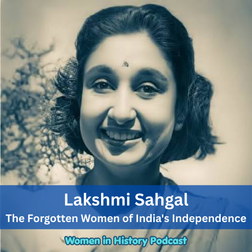
Lakshmi Sahgal: The Forgotten Women of India's Independence

Lakshmi Sahgal was a doctor who left behind a successful medical career to fight for India's independence in the 1940s. As "Captain Lakshmi," she commanded the Rani of Jhansi Regiment, an all-female unit of the Indian National Army during World War II. However, her story is more complicated than a simple tale of heroism. Her alliance with Subhas Chandra Bose and Imperial Japan raises questions about nationalism, war, and moral compromise. In this episode, we explore Lakshmi's remarkable journey from physician to revolutionary, and the woman who dedicated her life to serving others.
1 of 2