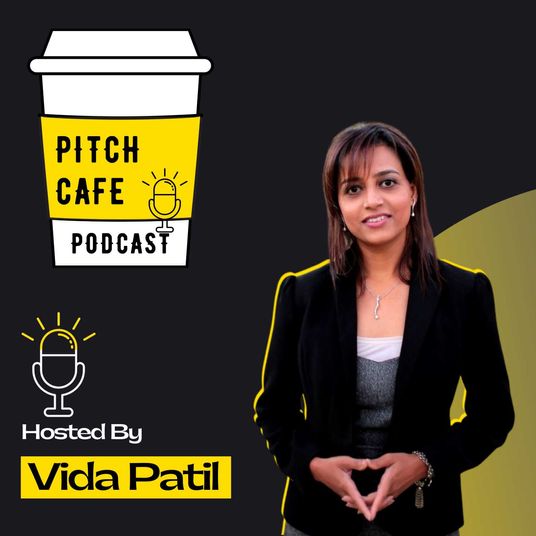
Pitch Cafe Podcast

Pitch Cafe Podcast

by Vidyangi S. Patil (Vida)
Season 2

Podcast #13 Sanjit Dang Sanjit Dang on one successful exit per year, going to the basics during COVID and more..
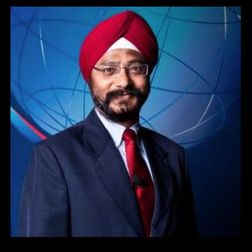
A podcast with Sanjit Dang, a seasoned Silicon Valley investor who has spanned corporate venture capital and successfully had one successful exit per year. His innovative ideas on tapping into upcoming industry trends, and helping corporations work with upcoming startups by U First Capital with the Venture-As-A-Service model. He has been an advisor, mentor, and innovation catalyzer all the way from Richard Branson’s team to the United Nations and Intel Capital. He brings great courage and deep insights to founders during COVID and shares incredibly actionable tips to founders on approaching investors.

[Podcast #12 P2] R. Paul Singh, silicon valley investor - to startups, during COVID, about winning/keeping your enterprise customers
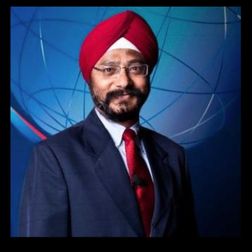
Paul Singh, seasoned silicon valley investor, serial entrepreneur, and executive talks about building startups in enterprise space during COVID. How can you train your team to get into a culture of customer success, and why the founder is the first salesperson for the company. It is true that hiring a sales team for a startup's initial success is important, it is equally important for the founder or co-founder with a sales streak to engage deeply with the customer and sales duties. Learn more in this podcast about surviving and thriving in the B2B space during COVID.

[Podcast #12 P1] Don't lose your customer to COVID-Paul Singh, Silicon Valley's successful investor-entrepreneur

Paul Singh, seasoned silicon valley investor, serial entrepreneur, and executive talks about how there is no excuse for digital transformation, and founders and corporations did not have to wait for COVID for reinventing themselves. For startups and large corporations alike, Paul Singh endorses quick experimentation during COVID-situation to see what works and not limit your opportunities because of COVID e.g., Uber, Lyft, and Airbnb were started during the recession. He asks founders and executives to focus on an increase in productivity with remote work facilities, how he decided to roll out his first company amidst the recession, how good entrepreneurship and innovation is about risk avoidance/mitigation, how there is no excuse to quick technology adoption e.g., Kaiser is already prepared for virtual healthcare scenarios, and when COVID hit us, they were ready to roll! Paul also drives home an important message as to not lose your customers to your competitor during COVID, instead, how it is a top priority to invest in learning about your customers, understand their needs, and engaging them. He shares what are his criteria for investing in a founder as well....listen on.
Season 1

PODCAST#11: Ashish Seth on surviving and thriving in COVID times: startups and corporations
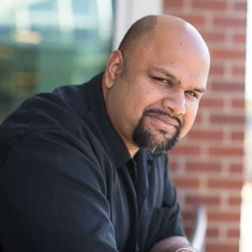
PODCAST#11: Surviving and thriving in COVID times with Ashish Seth seasoned entrepreneur and corporate professional with cross-border stints in both India and Silicon Valley. He advises start-up ecosystems and works on enabling digital tools for professionals to work from home during the COVID-19 lockdown. In his current role, he runs and leads the Partner Program and Strategy at NICE InContact, a leader in cloud contact-centered solutions. He offers valuable and holistic guidance for entrepreneurs and corporates in large organizations in resilience building and anti-fragility in uncertain times. A few thoughts from podcast-When entrepreneurs plan things, the sales cycle often tends to comes later. Sales should be included in your initial plan because it is the most reliable and efficient way to understand where the market is going. When you’re hit, it helps to know your surroundings. Plan for the unexpected: It is always good to expect the unexpected, whether as an entrepreneur, a large company, or in your personal life e.g., economic downturns or pandemics. If it’s a problem you’re solving as an entrepreneur, understand if the solution is a painkiller or vitamin. Try to create painkillers. #covid19 #startupsuccess #sales #productstrategy #b2b

PODCAST#10: Intel’s Innovation Coach sphere heads a Maker movement for COVID-19 crowdsourced PPE manufacture

I recently had the chance to have a fascinating conversation with the prolific Shashi Jain, Associate Entrepreneur in Residence and Innovation Manager at Intel. He was most recently in the news for equipping frontline workers with 3D printed protective equipment (PPE) for the ongoing COVID-19 response. Jain is an advisory board member at the Innovation Leader forum and a serial entrepreneur with a specific interest in inducting youth into the innovation ecosystem. His attitude as an innovator is experimental and entrepreneurial - he finds ways not just to improve but also to disrupt existing systems. Read more: https://www.linkedin.com/pulse/creating-pop-up-supply-chain-covid19-ppe-shashi-jain/ Mentoring Entrepreneurs Inside and Outside Intel For 10 years, he has been an early-stage start-up entrepreneur both in and outside Intel. At Intel, one of his roles with the emerging group incubator is to turn employee ideas into start-ups. He helps new intrapreneurs navigate the corporation, advising them on when to push their roles and when to use the brand to help them. He encourages corporate employees to develop startup skills for intrapreneurial ventures. Outside Intel, he has founded start-ups in image tagging and retail, 3D printing, and manufacturing. He mentors tech entrepreneurs and incubators. As domain experts, they find themselves often too close to the problem. He helps them identify gaps in their work by offering his own experience and expertise as an outsider. Read more: https://medium.com/@vidyangispatil/podcast-9-intels-innovation-coach-sphere-heads-a-maker-movement-for-covid-19-crowdsourced-ppe-877b913365fd

Podcast#9 - Inseparable twins: Creativity and Innovation, a tête-à-tête with Naveen Lakkur
Inspiration, Ideation and Innovation — chat with Naveen Lakkur For this episode, I had a very stimulating conversation with Naveen Lakkur, the founder and Chief Innovation Coach at the Institute of Inspiring Innovation and a serial author with three books to his name. As a practitioner, he has built companies, mentored and implemented commercial ideas worldwide, and identified methods and models from these experiences that can enrich the experiences of entrepreneurs and innovators. Mr. Lakkur defines innovation as the creation of something that is new or doing something different or making something better. It is viewed not as an exclusive exercise but a democratic one and an opportunity for all entrepreneurs and executives to expand their horizons by combining creativity with innovation and imbibing human values to generate meaningful ideas. Learnings from Books In his first book “Inseparable Twins”, Lakkur introduces the concept of paired principles, such as values and innovation — concepts that are dissimilar from each other but generate a new power when they come together. The second book, “FOUND: Transforming Your Unlimited Ideas Into One Sustainable Business” is a Book for Ideation, won four international awards, including the ‘USA Best Book Awards’ in the entrepreneurship category. It is targeted at people looking to work smart by helping them categorize different ideas and identify the winning one. No idea is a bad idea, and the book teaches readers to classify them by sorting and distilling, take responsibility and action, and utilize them to bring out their potential. It emphasizes that ideation is a crucial step in the innovation journey that many entrepreneurs tend to overlook. His third book “a Little Extra™: A Book of Illustrations for Extraordinary Results” uses brief and powerful messages for developing the right mindset for success. Lakkur pushes the point that only a little extra is required to change the outcome, to overcome the gap between the ordinary and extraordinary. All three books emphasize the need to link human values with innovation to make it meaningful and to democratize innovation by giving everyone the knowledge and power to innovate. Create. Operate. Disrupt. Lakkur uses Indian mythology or the principle of God as a metaphor to explain the fundamentals of innovation. He identifies the holy Hindu Trinity of Brahma, Vishnu, and Shiva with the three letters in GOD — ‘G’ as Generator, played by Brahma; ‘O’ as Operator, the role played by Vishnu, and ‘D’ or disruptor, which is Shiva. Through this, he shows how even godly roles are organizationally well-defined and are metaphors for an innovation journey or a product lifecycle. One has to create, operate, and disrupt, and keep reinventing — these elements are the foundation of entrepreneurship. Another principle is that of the inseparable twins. The consorts of these gods represent the paired principles that Lakkur proposes. Brahma’s wife, Saraswati, as a goddess of knowledge, counterbalances his role as a generator, rather main resource provider for creation. For Vishnu, the cash flow required for operations — from fundraising to revenue generation to expense management and investment — is represented in the form of his wife, Lakshmi, goddess of wealth. Shiva’s wife Shakti symbolizes the power that is the essential resource for disruption. They are ideally paired to bring optimal results. The takeaway is that entrepreneurs need to realize that it is not a single approach, but the application of these paired principles that enhance their creativity and enables their mission & vision.

PODCAST#8: Nate Ramanathan, serial-entrepreneur, investor, operations and 10X scaling expert
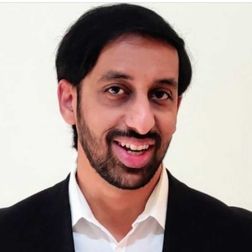
In this episode, I have an insightful conversation with Nate Ramanathan, Vice President of Operations at AEye, Inc. and a serial entrepreneur. Nate shared some valuable advice about preparing for risk in times like this when the COVID-19 pandemic has created massive disruptions in businesses around the world. Right from when he got word of the virus in December, Nate said he started making preparations—calling his Chinese suppliers, asking them what their plans were, and planning for alternative supply routes. While it may have seemed paranoid at the time, it paid off when China went into a complete lockdown and AEye faced no delays or disruptions. Nate shares that going through disruptions like the dotcom bubble, the 2007 tsunami, and the mortgage crisis have taught him that things can change in a day and that businesses always need to be prepared. In a globalized world, we must be prepared for geopolitical risks—where events in one part of the world can have far-reaching consequences in other regions. That’s why when he looks at a product, Nate immediately identifies the risks in the supply chain and prepares for the worst. Business continuity, which is his term for effective risk management in business, is of utmost importance to him. Nate states that scalability is what makes an invention valuable to humanity. Only when an invention can be scaled up can it be of service to many people. With scalability, of course, comes the need to manage risks efficiently. I asked him about how to build resilient business models that can weather any storm. Here are some nuggets of advice that he offered: - Be aware of geopolitical risks - Learn from your experiences. Nate said that people will either forget about the COVID-19 experience or they will build better systems and be better prepared for similar (or worse) situations in the future. - Prioritize risks. Nate follows the Failure Mode & Effects Analysis (FMEA) template. He recommends putting numbers to the Occurrence of an Event (the likelihood of it occurring), Severity of the Event (what effects it will have), and Detection of the Event (if it can be predicted and negated). - Balance passion and risk management. Start-up founders and inventors tend to be passionate and eager to make their businesses grow. It may be undesirable to burden them with risk management since it may take away their spark or they may become defensive of their product. Nate also shared some great insights on how intrapreneurs, who lead spinoffs of larger companies, should approach business: - They need to have the mentality of a large corporation and the flexibility of a start-up. - They should have similar incentives as investors. - They need autonomy from the parent company to be able to grow and create independently.

FULL EPISODE #7: Aakarsh Naidu on founders going from 0 to 1 and 1 to 10X | Startupreneur

In this episode, I interviewed Aakarsh Naidu, founder and CEO of The Startupreneur (along with his brother, Adhikar Naidu) and well-known start-up enabler and talks about essential traits of successful startup founding like networking, identifying a cofounder, when to startup? developing negotiation skills, ecosystem exploration, communication skills, and more. He is an alumnus of the London School of Economics and has valuable experience helping start-ups at NSRCEL – IIMB, one of India’s top start-up incubators. The Startupreneur works with corporates, government officials, educational institutions, and incubators to provide a support system for entrepreneurs. They help start-ups in the 0–1 stage and the 1-10x stage. At the 0–1 stage, which is when the start-up is about 6 months to 2 years old. The Startupreneur offers an experiential entrepreneurship program that is specially designed for first-time founders. The modules involve founders learning how to build a business model, price their product, negotiate with co-founders, and many more tasks that help build the practical skills that founders need in their everyday business. They also receive feedback on their performance from experienced mentors. At the 1–10x stage, start-ups have found a good footing in their market but need some added expertise or funding to scale up. Startupreneur offers them an accelerated program that gives them access to the market, institution-based incubators, or venture capital firms, depending on the situation. Aakarsh believes that more than the theoretical jargon, there are essential skills and qualities that founders need to imbibe to stay in the game. Big Picture Thinking: This is, Aakarsh says, the default mode of start-up founders, who are always focused on the problem they are solving. This is what differentiates them from a regular business, so they should never lose it. Leverage Your Network: At the start, Aakarsh built his business almost entirely through his personal network. Founders need to learn how to build networks and then use them effectively; the key is to create a mutually beneficial, symbiotic relationship with the people in your network that you want to get on board. And there's more, check out the full podcast

TEASER PODCAST#7:Aakarsh Naidu on founders going from 0-to-1 and 1-to-10X space and Startupreneur journey
In this episode, I interviewed Aakarsh Naidu, founder and CEO of The Startupreneur (along with his brother, Adhikar Naidu) and well-known start-up enabler and talks about essential traits of successful startup founding like networking, identifying a cofounder, when to startup? developing negotiation skills, ecosystem exploration, communication skills, and more. He is an alumnus of the London School of Economics and has valuable experience helping start-ups at NSRCEL – IIMB, one of India’s top start-up incubators. Aakarsh believes that more than the theoretical jargon, there are essential skills and qualities that founders need to imbibe to stay in the game. The Startupreneur works with corporates, government officials, educational institutions, and incubators to provide a support system for entrepreneurs. They help start-ups in the 0–1 stage and the 1-10x stage. At the 0–1 stage, which is when the start-up is about 6 months to 2 years old.

PODCAST #6 [FULL] Venture partner Dr. Srinivas Rao on lifestyle-innovation , founder screening & more

For Dr Rao, innovation is more than just an approach to problem-solving, it is part of the DNA of all human beings. It is not a business process, but the fundamental desire within each of us to improve our condition. We just need to mindfully experience the world, reflect on it, learn from it, and grow. Mindful reflection The first step toward innovation is to mindfully notice one’s work. It is only when we are continually aware of problems—and their potential solutions—can we grow continually. Dr Rao compares this mindful awareness to a spiritual feeling. While awareness equals mindfulness, mindlessness or mere repetition provides no insights to improvement. What one requires is mindful reflection. The ‘Aha moment Learning from one’s mistakes and continuous improvement can lead to a quantum jump, which becomes the ‘aha’ moment of innovation. The ‘Aha’ moment is an awakening which comes through recognition of problems towards an improvement of processes for greater outcomes. To identify this opportunity, one needs both, awareness and reflection, which in turn lead to an awakening—the ‘Aha’ moment! Mindful project management Dr Rao provides a framework for mindful project planning for start-ups: 1. Mindful thinking; 2. Mindful processing; 3. Mindful execution. Imbibing this discipline can help entrepreneurs cultivate innovation, harness that energy, and make it a sustainable process. The thumb rule of mindfulness is to be aware of what is asked of you, put those principles into practice, aided by flawless execution at all levels of performance. Understand your market His advice to new founders would be to understand what problem the project is solving and tweak the product accordingly. Finding the perfect product–market fit is like finding diamonds in the rough and cleaning, polishing, and embellishing the product, based on active feedback. To learn, absorb, and put things into practice is to constantly keep innovating to improve. About the interviewer: The podcast host, Vidyangi Patil, is a coach and co-author of The Solution Book.
12 of 14