
Episode notes
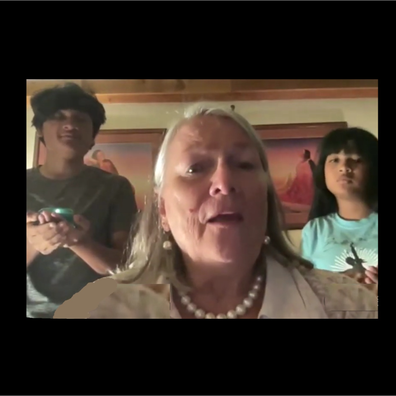
The sermon, delivered by the Reverend Denise Tracy for UUMUAC’s August Vespers service, centers on the theme “Beyond Words: Seeing Beyond Our Assumptions and Learning to See to the Heart of Life.” Tracy begins by situating her own life story: growing up in an all‑white town, entering ministry as one of the earliest women in UU leadership, and learning—through adoption, community work, and personal relationships—to see human complexity beyond surface differences. As she says, “My church taught me to see beyond color. Adopting brown children opened my heart, mind, and life and faith to understand a unity and complexity beyond words.” Her biography frames the sermon’s central message: that genuine human connection is a spiritual practice.
She illustrates this message through vivid stories about her father, a man whose curiosity and openness allowed him to connect with anyone. Tracy recounts a moment on a tourist bus when her father sat beside a young African American woman and asked about her cornrows. His sincere interest led to a warm conversation that crossed racial and generational lines. She also describes how he welcomed Mormon missionaries, housed international visitors, and befriended people others overlooked—including a minister with no arms who ate at their dinner table using utensils held between his toes. These stories demonstrate how small acts of curiosity and respect can dissolve barriers and create trust.
Tracy then reflects on her own childhood experiences of diversity, despite living in a racially homogeneous town. Her Native American grandmother taught her traditional plant knowledge, and a church camp experience introduced her to Black peers whose lives were shaped by segregation just five miles away. These early encounters taught her to “go sit with people who are the most unlike you,” to ask questions, and to “see with the heart.” She connects these lessons to her later ministry, where welcoming diverse families and community groups helped her first congregation flourish.
A major portion of the sermon recounts the adoption of her daughters from Thailand, including the painful history of DDT exposure that left thousands of Thai children disabled. Tracy describes the prejudice these children faced and the courage of her daughter, adopted at age fourteen, who rebuilt her life in the United States. Decades later, Tracy brought her daughter and grandchildren back to Thailand, where the orphanage staff—still working after 36 years—received her daughter as a “living goddess,” a testament to their work and to the power of human connection across cultures, disabilities, and histories of harm.
In closing, Tracy affirms that overcoming racism and building unity require openness, listening, and a willingness to cross boundaries. She praises UUMUAC for fostering community through relationship‑building and trust. The sermon ends with a ritual invitation to imagine holding a chalice flame and to carry that flame inward as a symbol of ongoing commitment to justice, love, and human connection. As she concludes, “Sometimes the smallest action, the smallest kindness can save the world, one person or one situation at a time.”